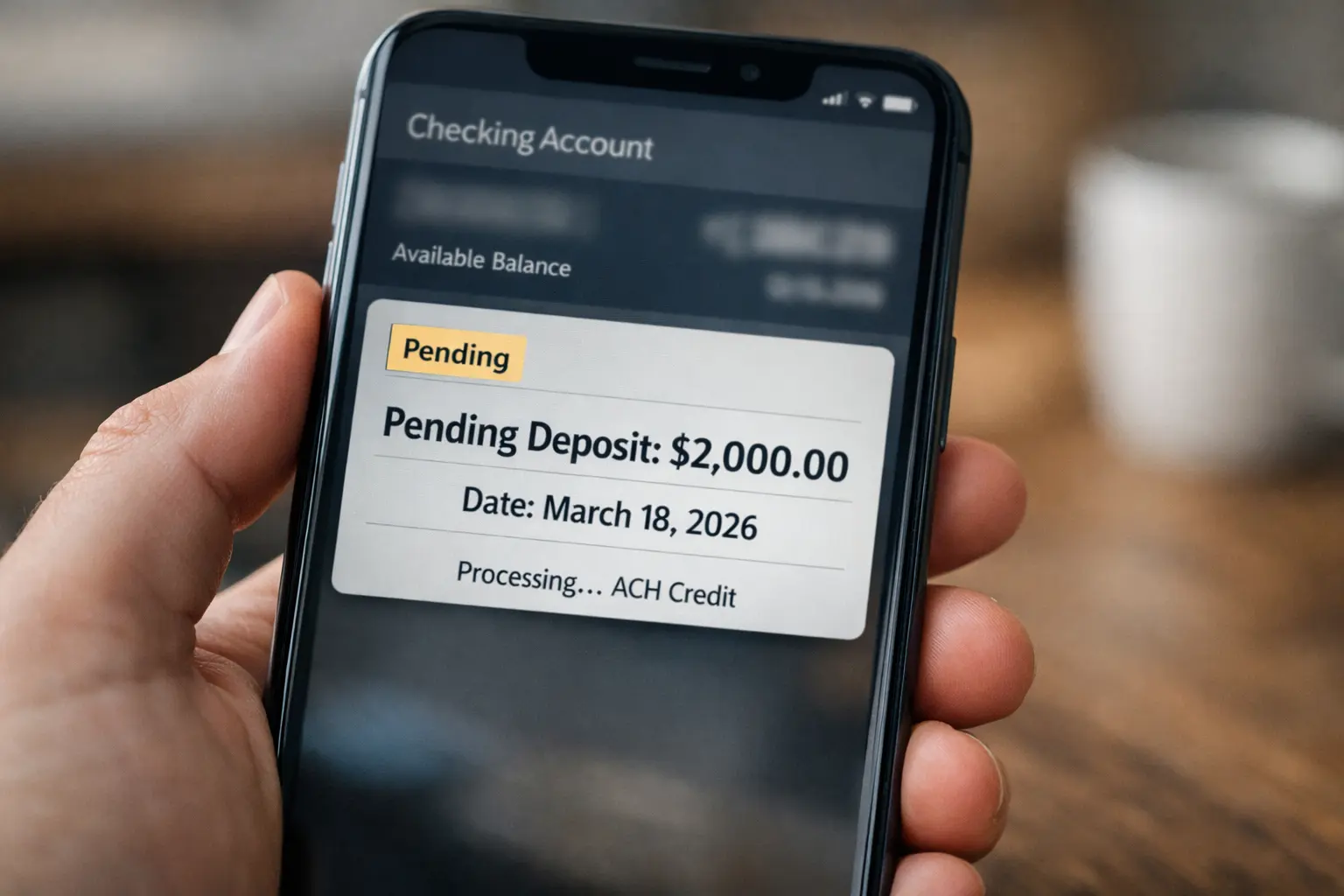
You pick up your phone and open your banking app. You see a notification that makes your heart skip a beat. There is a deposit sitting there. It might list an amount close to $2,000. But the status doesn’t say available. It says “Pending.”
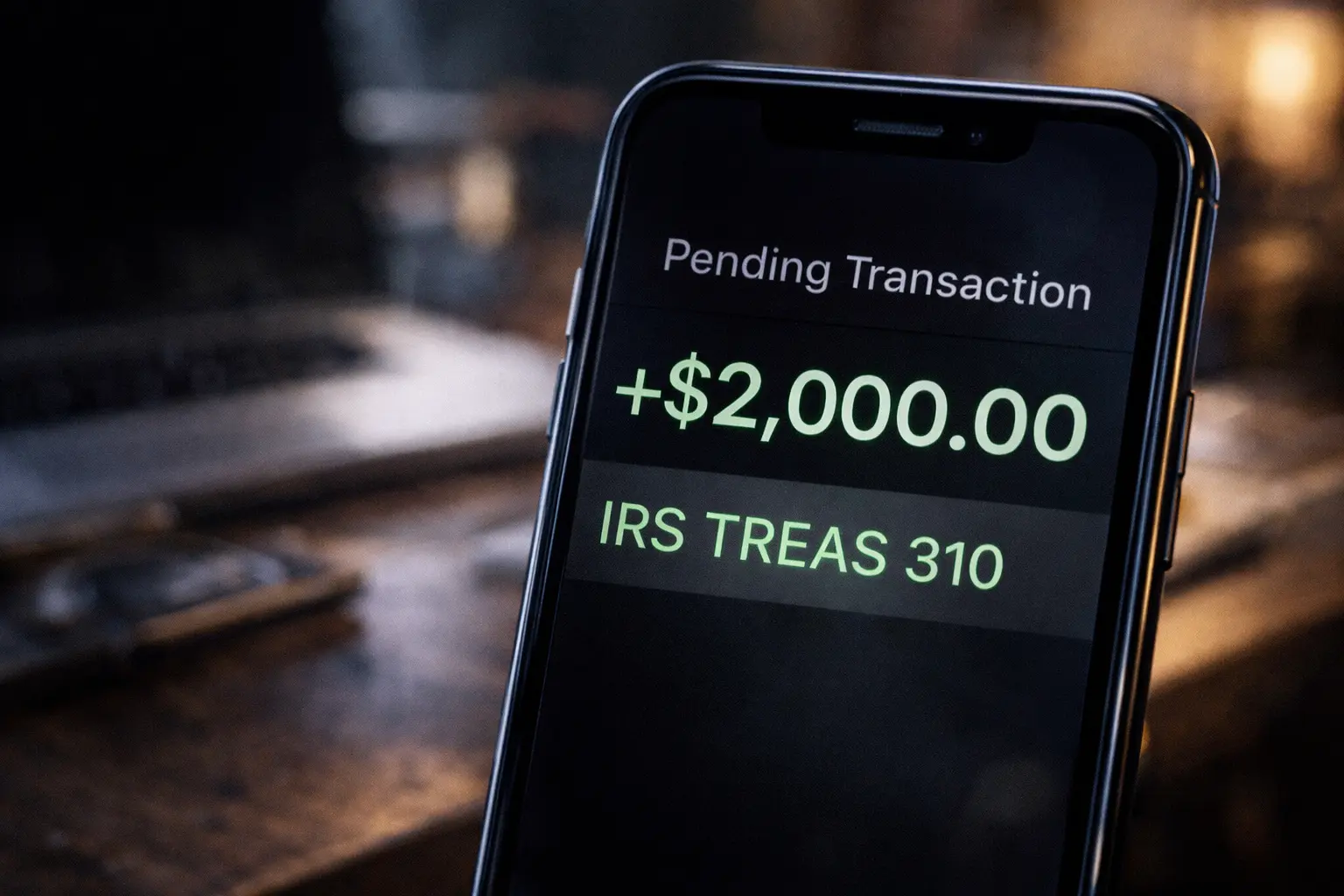
For millions of Americans staring at their screens this afternoon, that single word causes instant anxiety. You are likely wondering if the money is real or if it will disappear overnight. You might see a confusing string of letters like IRS TREAS 310 or XXSOC SEC next to the amount.
If you have been tracking the rumored 2026 Federal Deposit eligibility, understanding these codes is the only way to find peace of mind. A pending status does not always mean you have cash to spend. It often means your bank is holding the funds for a final security check.
This guide decodes those confusing transaction labels so you know exactly when your money will clear.
Decoding the ‘IRS TREAS 310’ Label
The most common code appearing in accounts this February is IRS TREAS 310. When you see this, do not panic. This is the standard label for an official electronic payment from the U.S. Treasury. It is the government’s way of moving money without printing a paper check.
The number 310 is the specific identifier for an Automated Clearing House transaction. It tells your bank that this money is coming from a federal source and not a private business. It is a sign of legitimacy.
You need to look closely at the text description following that code. If the label includes TAX REF, the money is almost certainly your 2025 tax refund.
If the text says benefit or includes a generic reference code, it could be a separate federal disbursement. Reading the fine print helps you budget correctly before the funds even hit your balance.
Why Your Deposit Status Says ‘Pending’
Seeing a $2,000 direct deposit pending status can be frustrating. You see the money, but you cannot touch it. This delay is actually a normal part of the banking safety process. It usually lasts between 24 and 48 hours.
The delay happens because of the Federal Reserve’s processing window. The Treasury sends the payment file in the morning. Your bank receives the notification by the afternoon. However, they often hold the cash until the next business day to ensure the sender has the funds.
Some modern banking apps like Chime or Cash App might release these funds immediately. They call this a Provisional Credit. Traditional banks like Chase or Wells Fargo are more conservative. They will likely make you wait until the official settlement date before allowing you to withdraw a single cent.
The ‘XXSOC SEC’ Code Explained
Social Security recipients will see a completely different code. If you are on fixed income, look for the label SSA TREAS 310 XXSOC SEC. This is the gold standard for authorized benefits.
The XXSOC SEC part of the code confirms that the money is a scheduled benefit payment. It is not a tax refund. If the amount you see does not match your usual monthly deposit, do not be alarmed.
A mismatch in the total often indicates a retroactive payment or a Cost-of-Living Adjustment. These deposits align strictly with the official SSDI payment schedule.
If you see this code land in your account outside of your assigned birthdate window, you should contact the SSA immediately to verify the payment type.
Is It a Scam or Real Money?
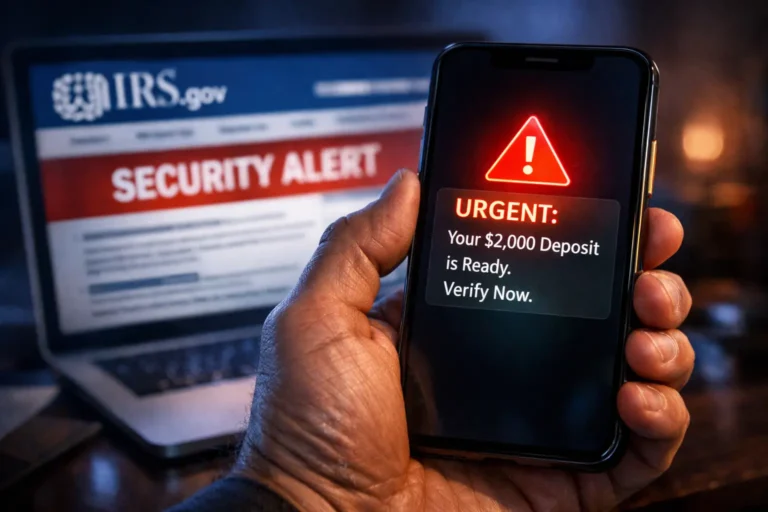
We are currently seeing a massive rise in the $2,000 deposit scam. Knowing the difference between a bank code and a fake text message is vital for your safety.
A real deposit will always appear inside your banking app’s transaction history. It will have a specific date and a transaction ID. It will never ask you to click a link to “accept” the money. The money simply appears.
A fake notification usually comes via text message or email. It will claim your deposit is “waiting” or “on hold.” It will demand you sign in to a website to claim it. If you see a message like “FED GOV PAY” or a personal name attached to an IRS claim, delete it immediately. It is a trap designed to steal your identity.
What to Do If the Status Is Stuck
Sometimes the “Pending” label refuses to disappear. If your deposit has not cleared by 5:00 PM on the expected date, you need to take action.
Your first step is to call your bank directly. Ask them if there is a “soft hold” on the deposit. Sometimes a bank’s internal security system flags a large deposit for manual review. A quick phone call can often release the funds instantly.
If the bank says the issue is not on their end, check your income data. A discrepancy in your W-2 Box 1 can sometimes freeze a refund at the IRS level. Ensuring your paperwork matches your deposit amount is critical for avoiding these freezes.
Most ACH transfers settle overnight. If you wake up tomorrow and that “Pending” label is gone, your funds are safe. By reading the codes correctly today, you can stop worrying and start planning your financial future.
Author

 IRS Alert: Why Your $2,000 Deposit Notification Could Be a Scam
 SSDI and SSI Payment Schedule February 2026: Official Dates
 How to Qualify for the February 2026 $2,000 Federal Deposit | Eligibility Rules