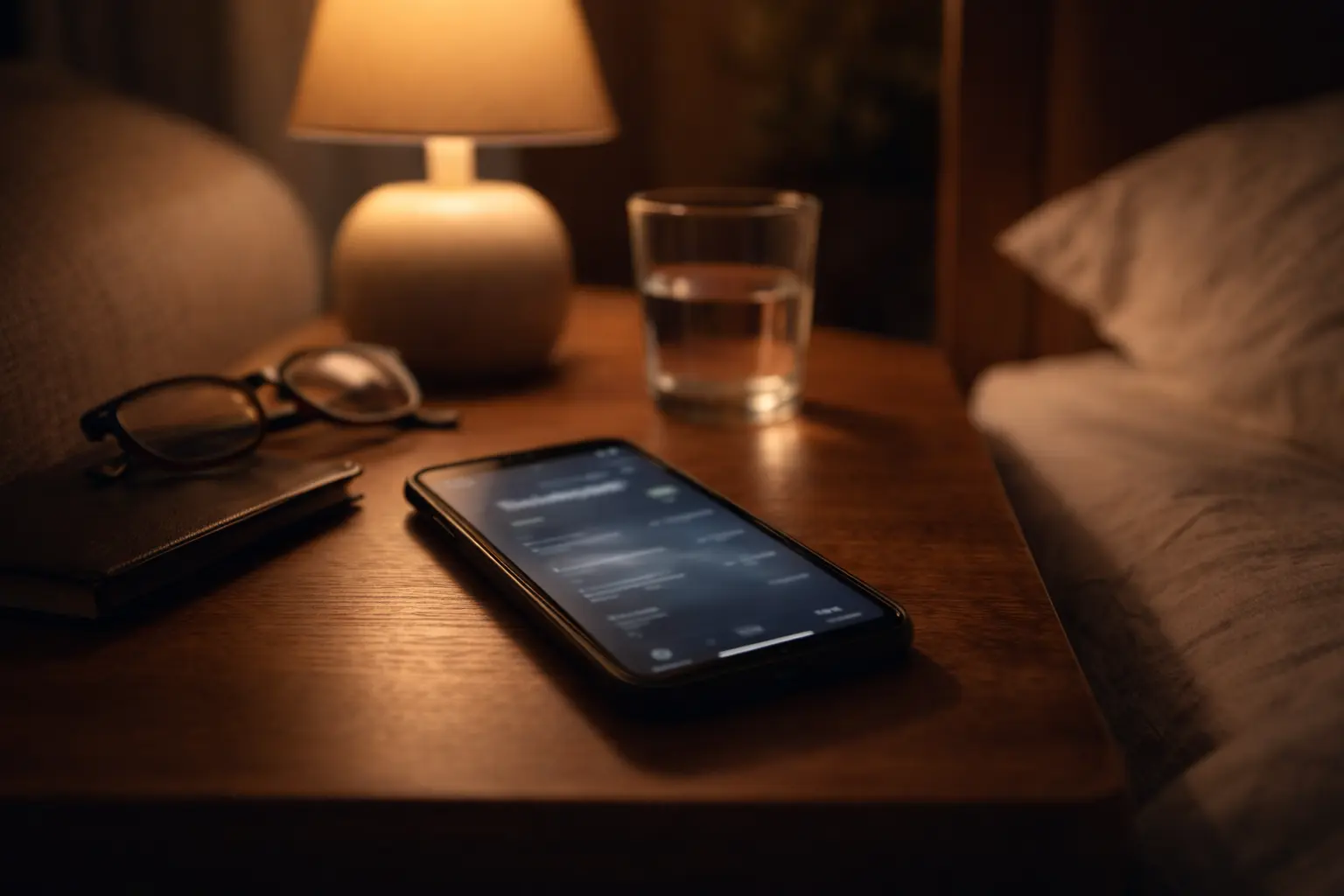
It’s late. The house is quiet. Maybe the TV is still on, maybe it isn’t. Before putting the phone down for the night, you open your banking app. You’re not worried. You’re not expecting bad news. You just want to see the number.
For some people, it happens early in the morning instead—coffee brewing, phone in hand, a quick glance before the day begins. Nothing is wrong. Bills are paid. There’s no emergency. And yet, the habit is there.
Across the U.S., this small, quiet check has become surprisingly common. It doesn’t come with panic or urgency. It’s more like a reflex—a moment of reassurance, curiosity, or grounding.
People don’t always talk about it, because it doesn’t feel dramatic enough to explain. But it’s real, and it says something important about how money feels today.
This isn’t about overspending or poor planning. It’s about how modern banking quietly reshaped our relationship with certainty.
This is a new money habit
A generation ago, checking your bank balance required effort. You waited for a statement in the mail. And you visited an ATM. You logged in on a desktop computer, often during business hours. Money lived at a distance.
Mobile banking erased that distance. Today, your balance lives in your pocket. It’s available at 2 a.m. or 6 a.m., during a commercial break or while brushing your teeth.
Access became constant — and with it, awareness changed. The way accounts are organized and labeled also plays a role, something many people don’t think about until they notice how often they’re checking, especially as they learn more about how bank accounts work in everyday life.
What used to be a monthly or weekly check-in slowly turned into something closer to monitoring. Not because people became anxious by nature, but because the system invited it. When information is always there, it quietly asks to be looked at.
This shift didn’t come with a cultural conversation about how often is “normal.” It just happened. And so many Americans built new habits without labeling them as such.
Why bank balances feel less certain today
One reason people keep checking is simple: balances don’t always mean what they seem to mean. Modern banking is layered. There’s the number you see, and then there’s the money that’s actually settled.
In between are pending charges, authorizations, delayed postings, and automated payments — all moving on different timelines. Broader shifts like changing savings rates and internal system updates have also made balances feel more fluid than they once did, even when nothing is technically wrong.
None of this is new. What’s new is how visible—and confusing—it can feel when everything updates in near-real time. A grocery charge might show as pending for days. A subscription renews overnight. A paycheck appears before it’s fully available. The balance moves, but not always in ways that feel intuitive.
When money moves through multiple systems, certainty softens. Checking becomes a way to re-orient — not because something is wrong, but because clarity feels temporary.
Why a Bank Balance Can Feel Confusing — Even When Nothing Is Wrong
Part of the confusion comes from how banking systems display and process transactions. The numbers shown in an app don’t always reflect the same stage of a payment. Seeing the difference helps explain why balances can feel uncertain at times.
| What you see in your banking app | What it usually means |
|---|---|
| Current balance | The total shown after recent activity, including transactions that may not be fully settled yet |
| Available balance | The amount you can actually spend right now without triggering overdrafts |
| Pending charge | A transaction that has been authorized but hasn’t fully processed through the system |
| Posted transaction | A payment that has completed processing and permanently affected your balance |
How banking news and system glitches shape trust
Most people will never experience a major banking failure. But most people hear about them. Headlines about fraud spikes, data breaches, or temporary outages travel fast — especially around holidays, weekends, or system updates.
Even when events are rare or resolved quickly, they leave an impression. Trust isn’t just built on personal experience. It’s shaped by awareness.
When people read about delayed deposits during a holiday or a brief system outage affecting thousands, they don’t panic. But they do absorb the message that the system is complex — and occasionally imperfect.
That feeling can be even stronger in households using joint bank accounts, where more than one person sees the same balance and notices changes at different moments.
That awareness subtly changes behavior. Checking a balance becomes less about fear and more about staying oriented in a system that feels larger and more abstract than it once did.
The emotional cost of constant checking
Here’s where the habit becomes less visible but more meaningful. Constant checking doesn’t always create panic. More often, it creates low-level mental noise. A pause before spending. A second thought at the checkout screen. A moment of hesitation over something routine.
The balance becomes a background presence — not stressful enough to name, but present enough to shape decisions. For many people, this quiet vigilance connects to a broader sense of why money feels harder than it used to. Over time, that attention can feel tiring. Not dramatic. Just heavy enough to notice.
This isn’t bad money management
It’s important to say this clearly: checking your account often is not a moral failure or a sign of poor discipline. In many ways, it’s a rational response to a system that became faster, more automated, and less transparent to the human eye.
Auto-payments happen in the background. Charges settle on different schedules. Notifications arrive after the fact. People adapted by staying closer to the information.
That adaptation deserves understanding, not judgment. Financial behavior doesn’t happen in a vacuum. It reflects the environment people are navigating. When systems change, habits change with them.
The Consumer Financial Protection Bureau often emphasizes transparency and clarity in consumer banking — not because consumers are careless, but because complexity increases cognitive load. Understanding that context helps remove shame from perfectly reasonable behavior.
What financial calm looks like now
Financial calm today doesn’t mean never checking your balance. It means understanding why certainty feels different — and not blaming yourself for responding to that shift.
Confidence isn’t about ignoring information. It’s about knowing what the information can and can’t tell you in a given moment. For some people, that understanding is closely tied to having emergency savings or another financial safety net, which quietly reduces how much weight each balance check carries.
For many Americans, calm now looks quieter than it used to. Less about set-and-forget certainty, more about gentle awareness. That’s not a step backward. It’s a reflection of how money systems evolved.
If you’ve ever noticed yourself checking at an odd hour and wondered why, the answer isn’t urgency or distrust. It’s adaptation.
Closing reflection returning to the moment
Back in that quiet moment — late at night or early in the morning — the habit makes more sense when you see it clearly. You weren’t looking for trouble, and you weren’t expecting bad news. In that moment, you were simply orienting yourself within a system that no longer pauses when you do.
That small glance at the screen isn’t a sign that something is wrong. It’s a sign that modern money asks for a different kind of attention — one that blends awareness with patience.
Understanding that can soften the habit. It can turn a reflex into a moment of recognition instead of unease. And sometimes, simply knowing why you do something is enough to bring a little more calm back into the room.

-
The information on this site is for educational and general guidance only. It is not intended as financial, legal, or investment advice. Always consult a licensed professional for advice specific to your situation. We do not guarantee the accuracy, completeness, or suitability of any content. For complete details, please review our full disclaimer.