January credit card bills hit hard. My kitchen was already full. So I tried something simple that quietly reset my budget.
It was early January, and I was sitting at my kitchen table with my phone in one hand and a cup of coffee in the other. I was looking at my balance, which felt heavier than usual after the holidays.
The room was silent, but my mind was loud. I had been thinking a lot about the quiet money decisions that shape our year, and looking at the numbers, I felt a familiar tension.
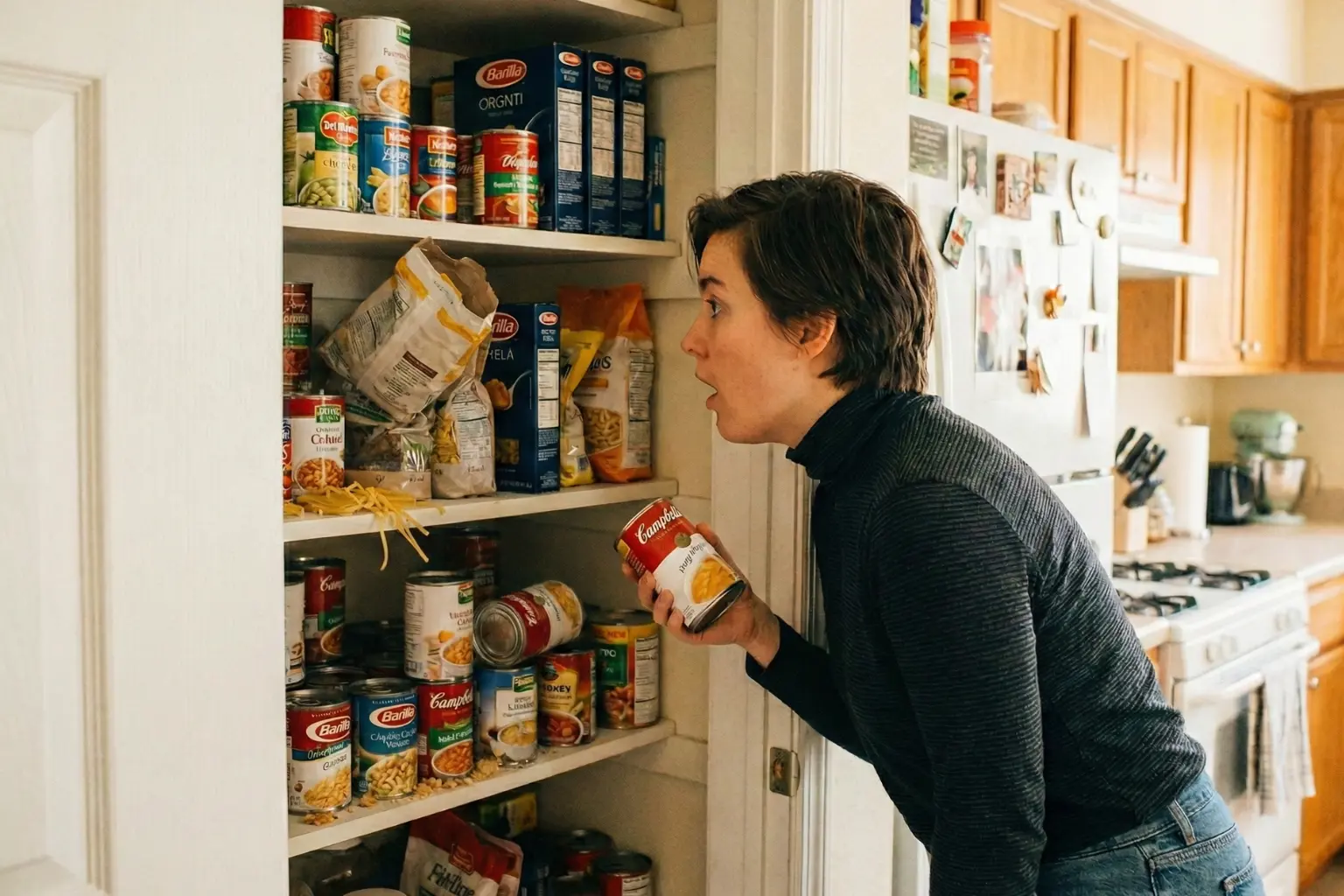
I glanced up and noticed my pantry door wouldn’t fully close. A half-eaten bag of chips was wedged in the hinge, and boxes of pasta were stacked precariously on top of each other.
I realized I was stressed about food prices—while staring at hundreds of dollars of food I had already paid for. I didn’t need a complex 50/30/20 budget to fix this moment. And I just needed to close the door.
The Decision
I made a simple rule right then: No grocery shopping for 7 days.
There were no exceptions. This wasn’t a diet, and it wasn’t about deprivation. The logic was practical: if I ran out of milk, I would drink water. If I ran out of bread, I would make oatmeal.
This wasn’t about discipline. It was about noticing. I wanted to see if I could survive on what I already had, or if my financial stress was actually coming from my own habits.
Opening the Pantry
When I stood up and really looked inside the cabinet, the clutter shocked me.
There were duplicate items I didn’t remember buying—three cans of pumpkin puree from November, two open boxes of rice, and a bag of frozen vegetables that had been there since last summer.
We often treat food like clutter—not money. But as I pulled items off the shelf, I realized that pantry wasn’t food storage. It was cash sitting on shelves. Government data shows families lose real money each year to food that never gets eaten — and I was looking right at mine.
Days 1–3: The Easy Confidence
The first few days were surprisingly easy.
We ate the leftovers from the weekend. We cooked the pasta that was sitting right in front. There was no stress because the options were familiar. It felt good to use things up.
A small sense of control returned. I wasn’t working harder to earn more money for groceries; I was simply utilizing the resources I already owned. The week felt manageable, and for a moment, I wondered why I ever stressed about the weekly shop.
Day 4: The Weird Meals Phase
Then came Thursday. The fresh produce was gone. The easy options were eaten. This was the turning point. I stood in the kitchen staring at a can of black beans, some salsa, and a box of corn muffin mix. I had to make a decision. And I couldn’t just order takeout, because that would break the rule.
So, we had “Whatever-Is-Left Soup.” It was a strange combination of pantry staples simmered together. Another night, we had breakfast for dinner because we had too many eggs.
It wasn’t fancy. But it was warm, filling, and already paid for. It reminded me that even when inflation data dominates the headlines, we often have more resilience at home than we think.
The Realization
By Day 6, I realized something uncomfortable. I wasn’t running out of food. I was running on autopilot.
As someone who writes about money every day, I often overlooked the simplest habits. Most of my shopping isn’t urgent; it is routine.
I buy snacks because I am bored, or I buy ingredients for a specific meal because I crave comfort.
With how expensive everything feels lately—and credit card costs remaining high—that autopilot habit adds up fast. Skipping just one trip didn’t just save me fifty dollars; it changed my entire cash flow for the week.
The Result
When the week ended, the result was quiet but powerful.
There was no grocery bill on my transaction list that week. My checking account didn’t take its usual dip. The emergency cash buffer I try to protect stayed intact.
It felt like keeping money I usually don’t even notice leaving. It wasn’t a lottery win, but it felt like a raise. For the first time in a while, my money felt calmer. I realized that fixing the savings rate gap wasn’t always about earning more, but wasting less.
The Aftermath
The physical change in the kitchen was the most satisfying part. The shelves were clear. I could see the back of the pantry. There were fewer decisions to make when opening the door. I stopped seeing food as something I needed to buy—and started seeing it as something I already had.
The Bigger Lesson
This experiment isn’t a permanent lifestyle. I went back to the store eventually. But I didn’t go back the same way.
One week is enough to reset how you think about spending. You don’t need to fear the cost of living every time you walk into a kitchen.
January has a way of making everything feel urgent. But when I finally looked behind the boxes I kept ignoring, the pressure eased a little. The money was not gone. It was already there.
Author

-
The information on this site is for educational and general guidance only. It is not intended as financial, legal, or investment advice. Always consult a licensed professional for advice specific to your situation. We do not guarantee the accuracy, completeness, or suitability of any content. For complete details, please review our full disclaimer.