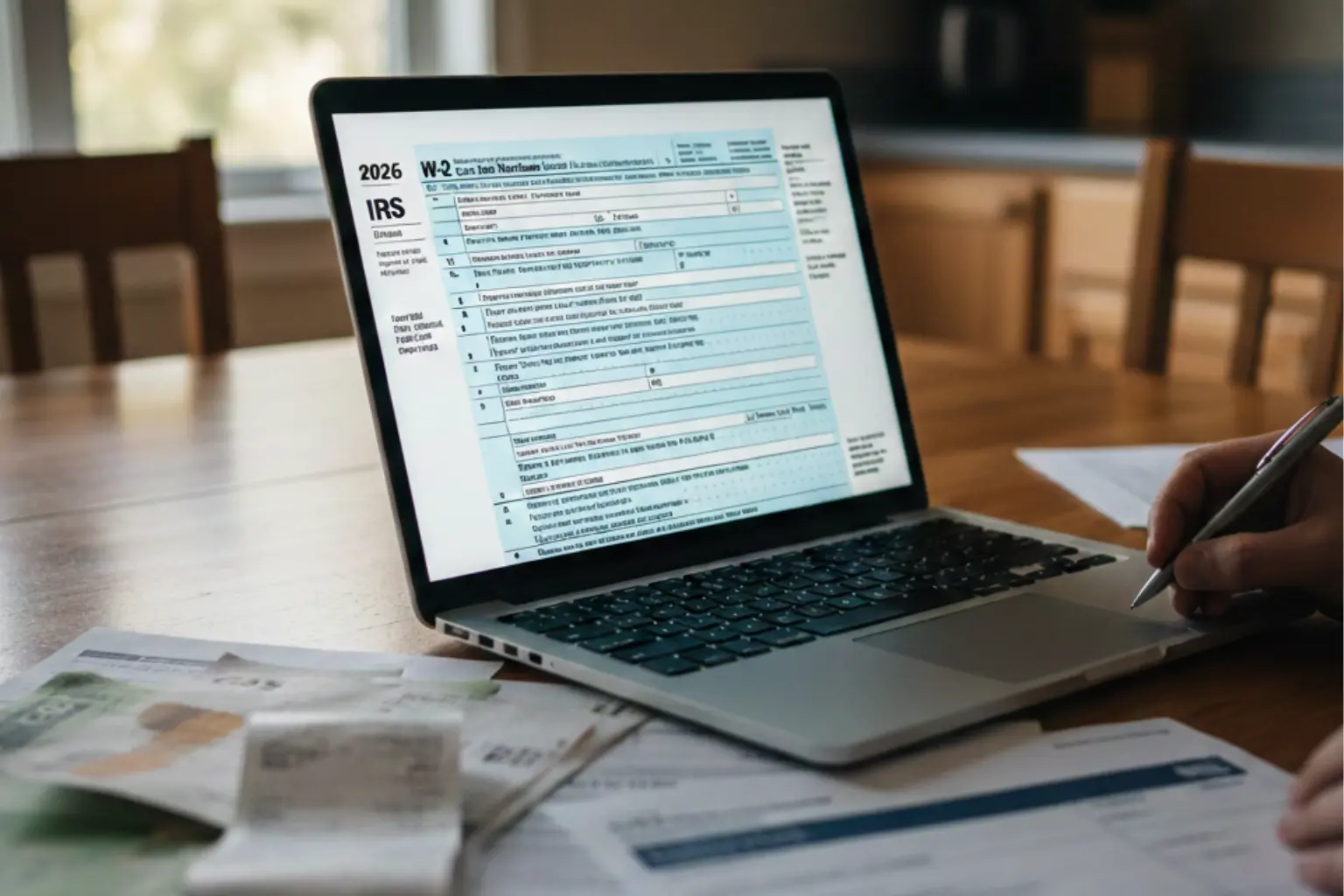
At 10:15 AM this Wednesday, millions of professionals are downloading a PDF document that creates an immediate sense of confusion. It is the final W-2 form for the 2025 tax year.
For a specific demographic of high-earners, staring at “Box 1” wages, tips, other compensation triggers a jarring realization today. The number on the screen suggests a life of comfort and abundance.
Yet, the reality of the bank account open in the next tab tells a completely different story. This disconnect is not a calculation error. It is the “W-2 Paradox.”
According to the latest Consumer Expenditure data from the Bureau of Labor Statistics, while nominal wages for professionals have risen, the cost of non-discretionary fixed assets housing, insurance, and childcare has outpaced income growth by nearly 16% over the last three years.
The money exists on the tax form, but it never actually enters the “Lived Life” of the earner.
The Asset Anchor Effect
The tension felt today is the difference between “Paper Wealth” and “Usable Wealth.” As tax season begins, many households discover they are trapped by an asset anchor.
Their net worth has increased due to home values or 401(k) contributions, but their liquidity, the ability to buy groceries without checking a balance has collapsed.
In 2026, a six-figure salary is often absorbed entirely by the upgrade treadmill. The income is high, but the transfer velocity the speed at which money moves from a paycheck to a fixed obligation is so fast that the earner never feels the benefit of their own labor.
The Hollow Victory
This Wednesday serves as a quiet confrontation with the affordability paradox. You did everything right. You secured the raise, maximized the tax-advantaged accounts, and maintained the credit score.
Yet, as the W-2 sits on the screen, the overwhelming feeling is not success. It is financial exhaustion. The numbers say you are winning, but the structural cost of modern life ensures you don’t feel it.
Author