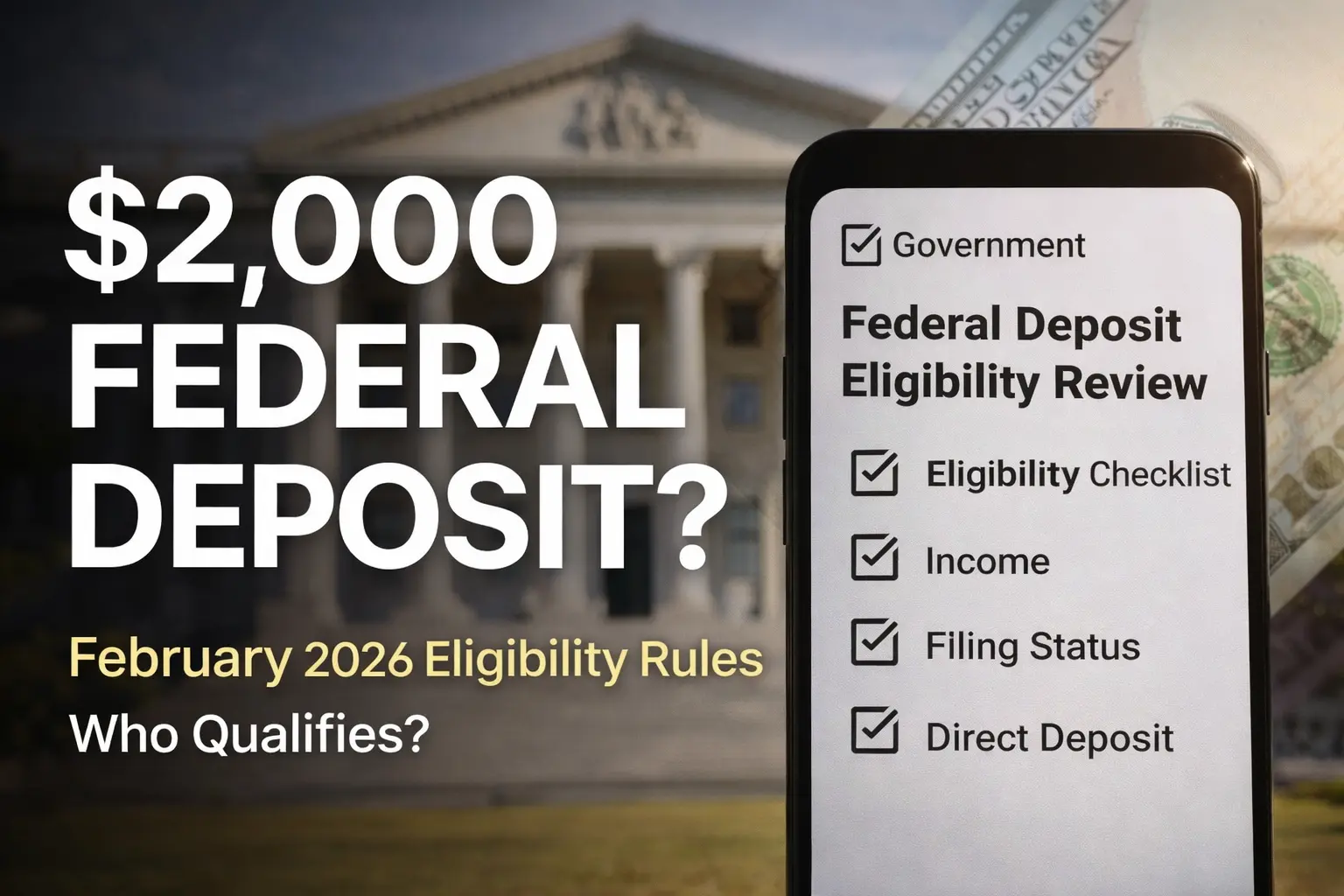
As February 2026 approaches, the idea of a $2,000 federal direct deposit has drawn widespread attention across the United States. Many taxpayers are asking whether this payment has been officially confirmed and whether they would qualify to receive it.
According to publicly available guidance from the Internal Revenue Service, federal payments when authorized are distributed using verified tax records and established eligibility standards.
As of February 11, 2026, there is no official IRS announcement confirming a universal $2,000 February 2026 payment.
Any federal direct deposit program would require formal legislative authorization and official confirmation from the IRS and the U.S. Department of the Treasury before funds are issued.
Reports of such deposits are often described within the context of broader federal financial support efforts aimed at easing economic pressure. Rising costs for housing, food, healthcare, and utilities have made budgeting more difficult for many households.
What the $2,000 Federal Payment Represents
A $2,000 federal direct deposit, if formally authorized, would not be an automatic payment sent to every American. Federal payments are structured programs tied directly to IRS records, income verification, and government guidelines.
Their purpose is to ensure financial assistance reaches individuals and families who meet clearly defined eligibility criteria.
For qualifying recipients, such a payment could provide short-term relief. Households might use the funds to address essential bills, manage rising living expenses, or cover unexpected financial obligations.
However, federal deposits of this nature are designed to offer temporary support rather than replace regular income or long-term benefits.
Why the IRS Is Using Tax Records
The IRS uses tax records to determine eligibility because those records contain verified income and household information. Relying on existing data allows the agency to process payments efficiently while minimizing fraud risk and administrative delays.
Taxpayers who have filed recent returns are easier to identify and reach through established direct deposit systems. This method reduces the need for new applications in most cases.
However, outdated bank account details, incorrect personal information, or unfiled returns may slow or prevent payment delivery. Maintaining accurate and up-to-date tax filings significantly improves processing reliability.
Income and Filing Status Matter
Eligibility for any potential February 2026 payment would depend primarily on income level and filing status. Federal assistance programs historically apply income thresholds to direct support toward households within specific financial ranges.
Single filers, married couples filing jointly, and heads of household are evaluated under separate income brackets. Payments, when structured this way, may phase out gradually for individuals earning above defined limits.
Filing a complete and accurate tax return increases the likelihood of eligibility without processing complications. Income verification remains central to federal payment qualification.
The Role of Federal Program Participation
Participation in certain federal assistance programs may sometimes help verify eligibility status when combined with income and filing information.
While enrollment alone does not guarantee qualification, it can contribute to overall eligibility evaluation under structured federal guidelines.
Taxpayers should rely exclusively on official IRS and Treasury communications for confirmation of any payment program. Social media posts, viral claims, and unofficial websites frequently circulate incomplete or inaccurate details when discussions of government payments gain public attention.
How the Payment Will Be Delivered
If authorized, most eligible taxpayers would likely receive funds through direct deposit. When valid banking information is already on file from a recent tax refund, payments are typically transmitted directly to that account.
Individuals without updated banking details may receive a paper check or another approved distribution method. Reviewing and updating personal financial information in advance helps prevent delays or returned deposits.
Direct deposit remains the fastest and most secure method for distributing authorized federal payments.
What to Expect From Payment Timing
If a payment were formally issued, distribution would likely occur during February 2026. Some recipients could see funds earlier in the month, while others might experience delays depending on filing method, verification requirements, or banking information accuracy.
Paper returns, identity verification reviews, and account discrepancies can extend processing time. The IRS generally provides an official online tracking tool once payments begin, allowing taxpayers to check status securely.
Why Some Payments May Take Longer
Processing speed varies based on individual circumstances. Taxpayers who filed paper returns, corrected prior filing errors, or require identity confirmation may face additional review time. Fraud prevention safeguards are a routine part of federal payment distribution.
Although delays can be frustrating, they are typically temporary and related to verification procedures designed to protect taxpayer information. Monitoring official IRS portals remains the most dependable way to stay informed.
The Importance of Accurate Information
Accurate tax reporting plays a critical role in determining eligibility and payment timing. Correct income details, proper filing status selection, and current banking information all influence processing outcomes.
Fraud attempts often increase when discussions of federal payments circulate widely. Verifying updates directly through IRS.gov helps safeguard personal and financial information.
How This Payment Fits Into Broader Support Efforts
Any February 2026 direct deposit, if authorized, would reflect a targeted approach to federal financial relief. Rather than universal distribution, eligibility-based payments are structured to assist households meeting defined income and filing criteria while maintaining oversight of public funds.
For qualifying recipients, such a payment could provide temporary financial flexibility during periods of elevated living costs.
However, qualification would depend entirely on confirmed federal rules and verified IRS records.
Preparing for the February 2026 Deposit
Taxpayers who believe they may qualify should review recent tax filings, confirm banking details, and monitor official IRS updates. Taking proactive steps reduces the risk of delays and helps manage expectations.
Recognizing that eligibility is limited and determined by formal criteria prevents unnecessary confusion. Staying informed through verified government announcements remains the most responsible course of action.
The discussion surrounding a potential $2,000 federal direct deposit in February 2026 has generated significant public interest.
While such a payment could provide meaningful short-term support if authorized, no federal deposit program is universal, and all eligibility determinations depend on income, filing status, and official IRS records.
Maintaining accurate information and relying on confirmed government communications will help taxpayers navigate any future announcements with clarity and confidence.
Author