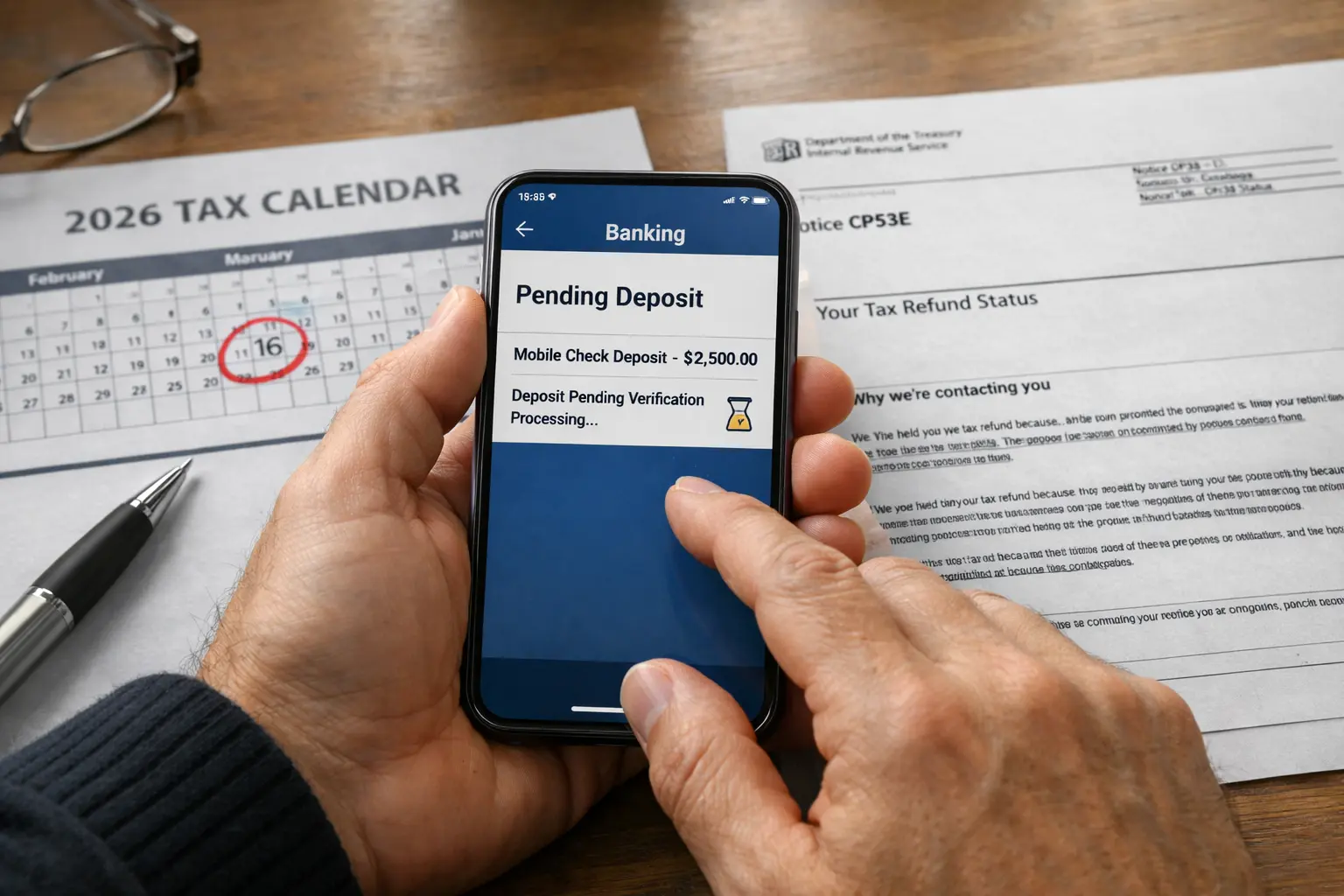
Few moments create more confusion on payday than this one: two coworkers are expecting the same direct deposit from the same employer, yet one account updates hours before the other. One person opens their banking app and sees the money already available.
The other refreshes repeatedly, wondering why the deposit hasn’t appeared yet. At first glance, it can feel like a mistake. But in most cases, nothing is wrong with the payment itself. The difference usually comes down to how banks process incoming payroll files once they move through the national payment infrastructure.
Even when deposits are issued at the exact same time, the moment they appear inside individual accounts can vary widely depending on how financial institutions handle settlement and posting.
Why Two People Receive Deposits at Different Times
When employers send payroll deposits, they typically transmit a single payment file containing transactions for every employee. That file enters the banking system as a batch and begins moving through clearing networks that distribute the funds to receiving banks.
Once the payroll settlement files reach those institutions, each bank must process the incoming transactions before posting them to customer accounts. This is where timing differences begin to emerge.
Financial institutions do not always release deposits immediately after receiving the payment file. Often moving funds through the ACH processing network. Instead, banks perform internal checks to confirm account details, settlement records, and transaction accuracy.
Only after those steps are completed does the bank schedule the deposit for the next posting window. Because each bank performs this process on its own timetable, deposits often appear at different times across different institutions.
How Bank Posting Schedules Differ
Every bank operates its own internal posting schedule. These schedules determine when incoming deposits become visible inside customer accounts.
Some financial institutions run their deposit posting schedule cycles very early in the morning, allowing customers to see payroll deposits shortly after settlement files arrive. Others release deposits later in the day as their systems complete verification and reconciliation procedures.
The difference in timing does not affect the underlying payment itself. The funds have already been transmitted through the banking network and allocated to the receiving institution.
What changes is the moment the bank updates its ledger and displays the deposit to customers. Which accounts for the common bank timing differences observed by consumers.
This is why two employees paid through the same payroll provider can see deposits hours apart even though their employer sent the payment file at the same time.
Why Payroll Files Move in Batches
The banking system processes most direct deposits in batches rather than as individual transactions. When employers submit payroll instructions, those payments enter clearing networks that coordinate settlement between banks.
The transactions are grouped together and transmitted through structured deposit batch cycles. Receiving banks then process these batches sequentially as they arrive.
Because payment files can contain thousands of transactions. Banks often release deposits in stages while processing different segments of incoming batches.
That staged processing helps maintain accuracy across the system but also contributes to the staggered settlement window timing customers experience. In practice, this means the order in which deposits appear inside accounts may not perfectly match the order in which they were sent.
What This Means for Deposit Timing
For people comparing deposits with friends, coworkers, or family members, the most important takeaway is that timing differences are normal.
A deposit appearing earlier in one account does not necessarily mean the payment was sent sooner; sometimes it is due to early deposit mechanics. More often, it simply reflects how different banks handle posting schedules and batch processing cycles.
As the day progresses and financial institutions continue releasing deposits from incoming settlement files, more accounts typically begin updating based on balance update timing. That is why someone who has not yet seen a deposit early in the day may still receive it later once the next deposit cycle opens.
Understanding how payroll files move through the banking system helps explain why the experience of payday can vary. Even when the payment itself was issued at the same time.
Author