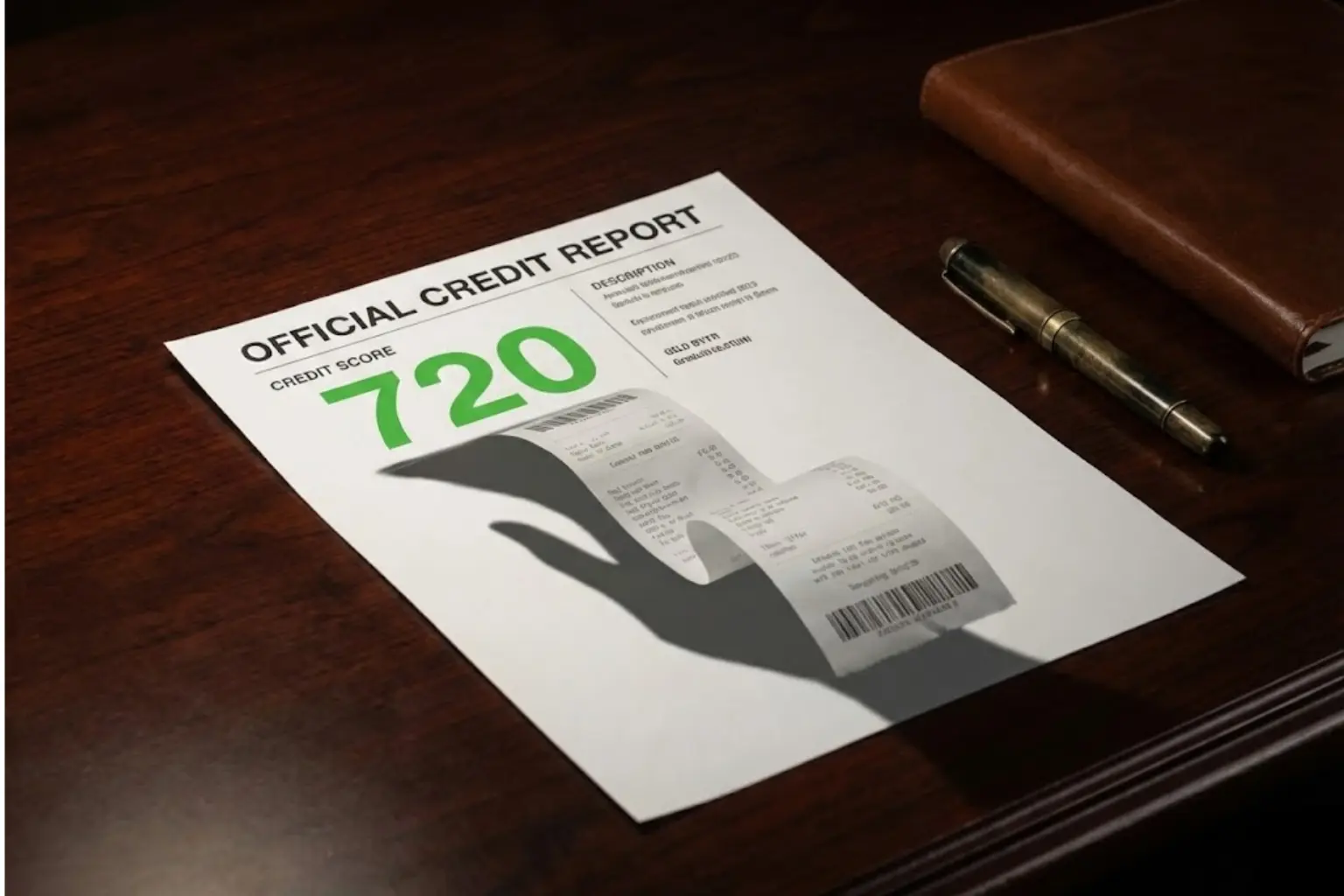
A shared feeling is emerging across the financial landscape this week. It does not stem from a specific crisis or a sudden market crash. Instead, it is a quiet, persistent lack of trust in the visible data.
On the surface, the numbers look strong. Corporate earnings beat expectations and household balance sheets appear healthy. Yet, an undeniable tension remains.
This is the confidence gap. It represents the growing distance between objective performance and subjective belief. When unease settles into both Wall Street and American living rooms, it is not a coincidence.
It is a structural signal. People no longer equate technical financial stability with a genuine presence of peace or long-term safety.
- The Psychology of Pause: Markets and households are both experiencing a lack of conviction despite strong technical performance.
- The Margin Requirement: Real confidence is built on the presence of slack, not the absence of waste.
- The Structural Shift: The widening gap reflects a transition toward resilience-based finance over leverage-based growth.
- The Path to Trust: Confidence is restored through simplification, high liquidity, and the reduction of cognitive load.
1. Markets Aren’t Nervous: They’re Unconvinced
The recent reactions to corporate earnings highlights a significant shift in investor psychology. Companies report record profits, yet their stock prices often struggle to maintain momentum.
This pattern suggests that the market is no longer satisfied with current performance alone. Investors are looking for clarity in a world defined by rapid technological shifts and high capital discipline.
The recent Wall Street caution following major tech reports proves that even the strongest balance sheets cannot buy enthusiasm.
This hesitation mirrors the broader institutional environment of early 2026. Capital is being deployed with extreme care rather than optimistic abandon.
According to broader market analysis from CNBC, guidance for the coming months remains unusually conservative across multiple sectors.
This is not a sign of fear, but a state of profound pause. The systems are functioning perfectly, yet the participants are waiting for the other shoe to drop.
This lack of conviction at the top eventually filters down into the broader economy.
The Confidence vs. Performance Audit
This framework highlights the gap between technical perfomance and structural confidence.
| Feature | Technical Performance (Noise) | Structural Confidence (Quiet) | Strategic Pivot |
|---|---|---|---|
| Wealth Status | Net Worth Mirage | Functional Liquidity | Build cash moat |
| Daily Effort | Decision Fatigue | Simplified Stewardship | Reduce micro-tasks |
| Safety Net | Credit score access | Liquidity Moat | Prioritize reserves |
| Market View | Short-term volatility | Resilience Arbitrage | Focus on ownership |
Source: Investozora Behavioral Research 2026, synthesized from household well-being reports from the Federal Reserve Board and consumer spending data from the Bureau of Labor Statistics.
2. Households Aren’t Broke: They’re Tired
In American homes, the feeling of unease is less about a lack of funds and more about a lack of margin. Stable incomes are flowing, but the effort required to manage them has reached a historical peak.
Families with consistent paychecks find themselves in a quiet squeeze where their purchasing power feels restricted despite their success. They are not facing a catastrophe; they are facing a slow erosion of their mental and financial flexibility.
This exhaustion is the primary driver of the confidence gap. The modern economy demands constant vigilance to maintain a baseline of security.
Navigating automated billing cycles and complex digital interfaces creates a high decision fatigue that saps mental energy.
When your brain is tired from the administrative work of living, the future feels like a chore rather than an opportunity.
Even when nothing is wrong, the system feels too heavy to carry. Stability no longer feels like a foundation; it feels like a high-wire act.
3. The Confidence Gap Explained
The Confidence Gap is the space between objective stability and subjective trust. It occurs when the numbers improve, but our belief in the future weakens.
In 2026, this gap is widening because our traditional measures of success have become detached from human experience.
We look at a rising portfolio and feel the net worth mirage because that wealth is often illiquid or locked behind restricted accounts. It looks good on a dashboard but provides zero comfort during a daily stress test.
This phenomenon is structural rather than emotional. It reflects a world where systems perform perfectly while people hesitate.
We have built an economy of high-velocity transactions and zero-margin optimization. This environment is ideal for algorithms but exhausting for humans.
When we lose the ability to trust the durability of our success, we enter a state of defensive stewardship. We stop building for the long term and start protecting what we have in the immediate present.
4. Why This Gap Is Widening in 2026
Several factors are pushing the confidence gap to record levels this month. Higher baseline costs for essentials like housing and insurance have created a permanent floor of spending.
This leaves less room for the discretionary slack that once provided a sense of freedom. According to the Bureau of Labor Statistics, consumer expenditures on fixed services remain elevated.
This rigidity means that even a minor disruption in income can trigger a systemic household collapse. Furthermore, the speed of information has outpaced our ability to process it.
We are bombarded with real-time data that often contradicts our personal experiences. AI and automation are changing expectations in the workplace, creating a quiet layer of career anxiety.
When the rules of the game feel like they are changing mid-match, confidence naturally evaporates. We are navigating a transition period where the old safety nets are gone, and the new ones have not yet arrived.
5. This Is Not a Crisis: It’s a Transition
It is important to recognize that a confidence gap is not a forecast of a collapse. It is a symptom of a structural recalibration. These periods occur whenever the economy shifts from one era to another.
We are moving from a world of cheap leverage to a world of resilience arbitrage. The most successful households are responding by shedding debt and prioritizing unencumbered ownership.
They are moving away from the noise of the markets and toward the quietness of their own foundations. This transition requires a change in how we measure progress.
Instead of chasing the loudest version of success, we must value the most durable version. Confidence is not rebuilt by higher performance alone; it is rebuilt by lower requirements.
When we reduce our dependence on complex systems, we reclaim our ability to trust our own resilience. This is a constructive process that eventually leads to a more stable and humane financial environment.
6. What Restores Confidence
Restoring confidence requires the reintroduction of slack into both markets and homes. For corporations, this means clearer guidance and sustainable growth over short-term optimization.
For households, it means achieving a state of quiet wealth where the absence of problems is the primary metric of success. We need to move away from a life of constant vigilance and toward a posture of confident stewardship.
Confidence returns when our systems feel survivable without needing perfection. It returns when we have enough liquidity to handle the friction of reality without fear.
By simplifying our accounts and focusing on functional safety, we close the gap between what the data says and how we actually feel. The goal is to reach a point where we no longer have to audit every second of our lives to feel secure.
Bottom Line
The confidence gap is the defining emotional reality of early 2026. It reminds us that numbers alone do not create security. True stability is found in the margin we intentionally keep, not the optimization we desperately chase.
When we stop trying to outrun the economy and start building our own sanctuary, the gap closes. We find that the most valuable form of wealth is not a glowing dashboard, but a quiet night.
Methodology
This article synthesizes market commentary, federal household finance data, and behavioral economics research to explain confidence dynamics without forecasting or personal financial recommendations.
Investozora uses only trusted, verified sources. We focus on white papers, government sites, original data, firsthand reporting, and interviews with respected industry experts. When relevant, we also use research from reputable publishers. Every fact is checked against a primary source so readers get clear, accurate, and up-to-date information, and we update our citations whenever official guidance changes.
- Federal Reserve Board — Household Economic Decisionmaking – Used to verify the disconnect between technical net worth and the subjective sentiment of financial well-being.
- Bureau of Labor Statistics — Consumer Expenditure Data – The primary source for data on elevated expenditures for fixed services and essential household costs.
- CNBC — Market Analysis & Institutional Guidance – Used for grounding the analysis in current institutional caution and corporate guidance trends.
Frequently Asked Questions
Author