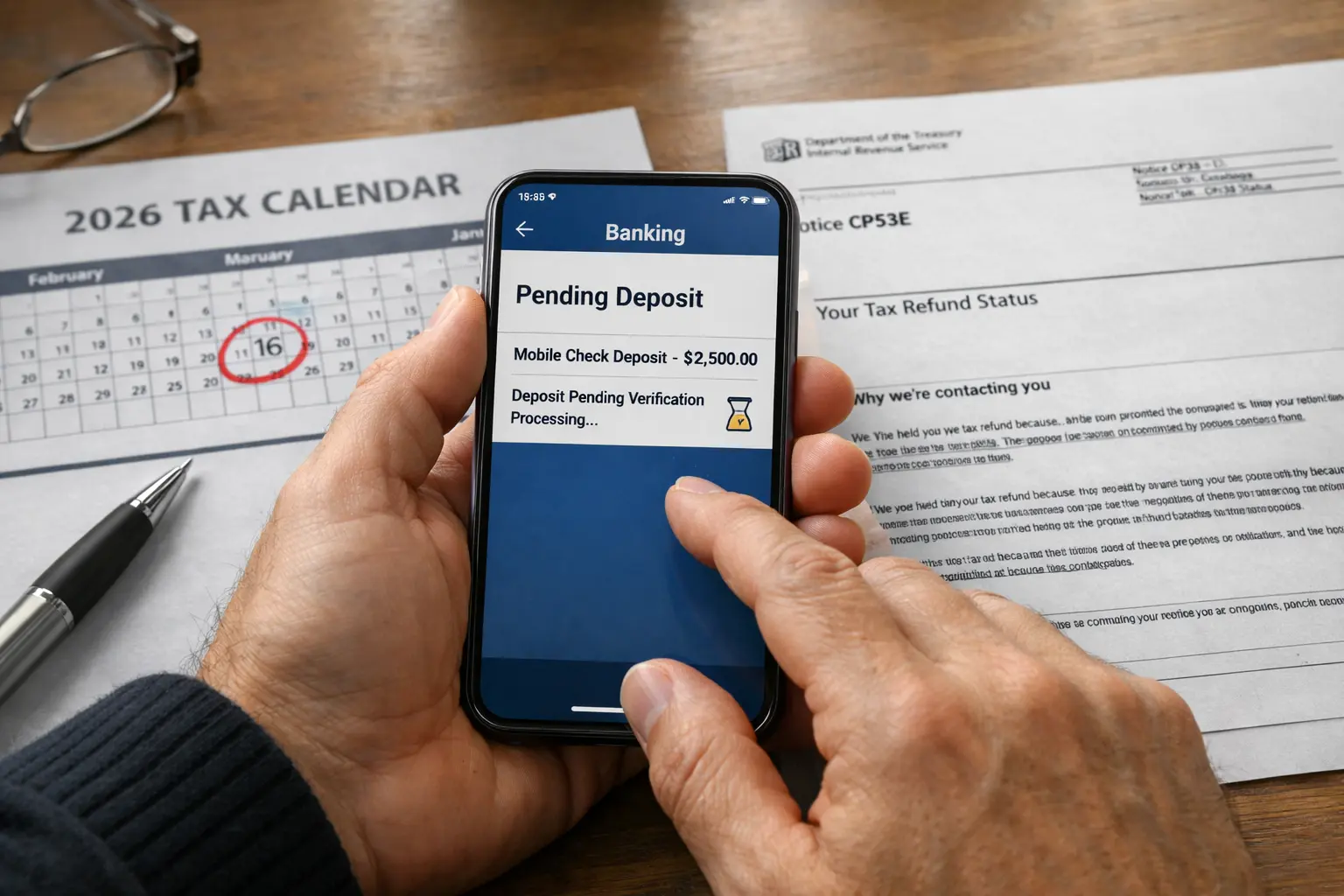
At 6:18 AM, thousands of taxpayers refreshed the IRS Where’s My Refund tool expecting to see a deposit confirmation. Instead, many saw the same confusing sequence: “Refund Approved,” then “Refund Sent,” but no direct deposit in their bank account.
In several cases, a new reference appeared, IRS Notice CP53E. That sudden shift is driving a spike in searches for “refund approved but not received,” “refund says sent but not in bank,” “IRS refund offset today,” and “why did IRS take my refund.”
If you are seeing IRS Notice CP53E on your refund status in 2026, this does not mean your return was rejected or delayed. It means your refund was processed, but it was redirected through the Treasury Offset Program before it reached your bank account.
During peak refund weeks, when processing volume accelerates overnight, this notice can appear suddenly and simultaneously for many filers. Here’s what it means, why it happens, and what to do next.
Why Your Refund Says “Sent” but No Money Arrived
When the IRS updates your refund status to “Sent,” it signals that your tax return has completed processing and the refund has been released into the Treasury payment flow. However, that stage is not the final step before funds reach your bank.
Every federal refund passes through an automated screening layer known as the Treasury Offset Program, administered by the U.S. Treasury’s Bureau of the Fiscal Service. This system checks whether you owe certain legally enforceable debts to federal or state agencies.
If a qualifying debt is identified, part or all of your refund is automatically applied to that obligation before the direct deposit stage occurs. That redirection triggers IRS Notice CP53E. From a taxpayer’s perspective, it appears as though the deposit simply never arrived.
In reality, the deposit was rerouted before it ever reached your financial institution. This is why so many people search “refund says sent not in bank account” or “refund approved but not received yet.” The gap between “sent” and “deposited” is where confusion forms.
What IRS Notice CP53E Means in 2026
IRS Notice CP53E confirms that your refund was offset. An offset means your approved refund was reduced or fully applied to an outstanding debt through the Treasury Offset Program. The IRS itself does not independently seize refunds.
Instead, it processes offset requests from agencies such as the Department of Education for defaulted student loans, state child support enforcement agencies, state tax authorities, or other federal entities authorized to collect debts.
If your entire refund was applied, no deposit will appear in your account. If only part of the refund was offset, you may still receive a smaller direct deposit representing the remaining balance. The CP53E notice will be mailed to you explaining the amount redirected and identifying the agency that received the funds.
Seeing irs.gov/cp53e referenced in your refund status simply directs you to the official IRS explanation page for this process. It does not indicate an audit, fraud review, or return rejection.
Why CP53E Searches Are Trending This Week
Refund processing operates in large overnight processing batches. When approval volume surges, particularly during peak filing periods or after system updates, the number of triggered offsets also increases.
That leads to a visible cluster of taxpayers experiencing the same refund pattern at once. As a result, search queries like “IRS notice CP53E 2026,” “IRS refund offset today,” and “why did IRS take my refund this week” spike simultaneously across multiple states within the same 12-hour window.
This surge does not mean enforcement rules changed. It reflects timing. When large numbers of refunds are released together, offset screening activity becomes more noticeable because more taxpayers are impacted at the same time. During refund season, that synchronization frequently surfaces in early-morning visibility spikes.
Does IRS Refund Status Update on Weekends?
Many taxpayers encountering CP53E ask whether the IRS updates refund status on Saturdays or Sundays. The answer is yes, but updates typically occur overnight through automated processing systems. Refund status changes often appear between late Friday night and early Saturday morning, and occasionally on Sunday.
If your refund status changed over the weekend to show CP53E, it was not manually reviewed on a Saturday. It reflects batch processing that occurred during standard Treasury settlement cycles. The Treasury Offset Program operates within those same automated systems, meaning offsets can appear after weekend status updates.
Why Your Bank Never Saw the Deposit
If CP53E was triggered, your bank never received the incoming transaction. The offset occurs before funds enter the banking network. That is why contacting your bank will not provide clarity in this situation. From the bank’s perspective, there is simply no pending or rejected deposit to trace.
This detail explains why many taxpayers mistakenly believe their bank delayed or blocked the refund. In offset cases, the deposit was redirected upstream within Treasury systems before it ever entered the ACH network for delivery.
Where the Offset Occurs in the Federal Payment Chain
An IRS refund does not move directly from the IRS to your bank. It moves through a money movement system sequence.
After your return is approved, the refund amount is transmitted to the U.S. Treasury’s Bureau of the Fiscal Service, which manages federal payments. Before any ACH file is generated for bank delivery, the refund is screened through the Treasury Offset Program database.
If a qualifying debt match is identified, the offset is applied at this stage, prior to payment file creation. In most cases, this screening occurs within the same overnight batch cycle that moves refunds into Treasury’s ACH release window, which is why many filers see the “Sent” status change and CP53E reference appear between late Friday night and early Saturday morning.
That timing is critical.
The original refund amount never enters the ACH cutoffs network. No provisional credit is sent to your bank. No “pending” transaction exists to trace. The adjusted amount, whether reduced or fully applied, is what proceeds into Treasury’s overnight settlement batch.
During peak processing weeks, thousands of approved refunds move through this screening layer simultaneously. When approval volume surges overnight, offset volume rises in the same batch cycle. That synchronization explains why CP53E notices often appear in clusters rather than individually.
From a system perspective, the refund completed its legal routing before it ever became a bank deposit. From a taxpayer perspective, it simply never arrived.
Partial Offsets Versus Full Offsets
Not every CP53E notice results in losing the entire refund. In some cases, only a portion of the refund is applied to a debt. When that happens, the remaining balance is deposited according to the normal refund schedule.
However, if the debt equals or exceeds the refund amount, no deposit will appear, and the mailed CP53E notice will confirm that the full amount was applied. The notice typically arrives within two to three weeks of the offset. There is no second deposit wave after a full offset unless the receiving agency later reverses the debt.
Can You Dispute an IRS Refund Offset?
The IRS cannot reverse an offset once it has been processed. If you believe the debt was reported in error, you must contact the agency listed in the CP53E notice. That agency controls the debt record. If it determines the debt was incorrect or already satisfied, it may issue a separate refund. The IRS does not manage that dispute process.
For immediate confirmation of whether your refund was offset, the Treasury Offset Program hotline at 800-304-3107 can verify if an offset occurred and identify the receiving agency after identity verification.
CP53E Versus a Simple Refund Delay
It is important to distinguish between a refund delay and a refund offset. If your refund is delayed, Where’s My Refund will usually display “Processing” or “Still Being Reviewed.” If CP53E appears, processing has already been completed. The refund was finalized, it was simply redirected.
That distinction matters because re-filing your return or contacting your bank will not resolve an offset situation. Understanding the system sequence prevents unnecessary steps.
The Broader Federal Payment Context
Every IRS refund travels through multiple settlement windows before reaching a bank account. Treasury screening, settlement confirmation, and debt offset systems operate at national scale. During high refund volume periods, visibility into these processes increases because more taxpayers encounter them simultaneously.
What feels sudden on an individual level is procedural at system level. When thousands of refunds are processed overnight, thousands of payroll settlement cycles and offsets, occur as well. That synchronized timing is what drives trending search behavior during active refund cycles.
Final Clarity for Filers Seeing CP53E Today
If IRS Notice CP53E appeared on your refund status today, your refund was not lost and it was not frozen. It was redirected under federal offset rules before deposit. During peak refund processing weeks, many taxpayers experience this update at once, creating heightened posting controls visibility and confusion.
Understanding how the Treasury Offset Program functions removes the early deposit risk and uncertainty. The refund completed processing. It fulfilled a prior legal obligation before reaching your bank account.
If you were expecting a deposit this morning and instead saw pending deposits that never turned into balance availability, the system did not malfunction, it followed a legally required routing sequence designed to prioritize debt obligations before ledger updates and bank delivery.
In federal payment systems, clarity reduces anxiety. And during refund season, knowing the difference between delay and offset matters more than ever.
Author