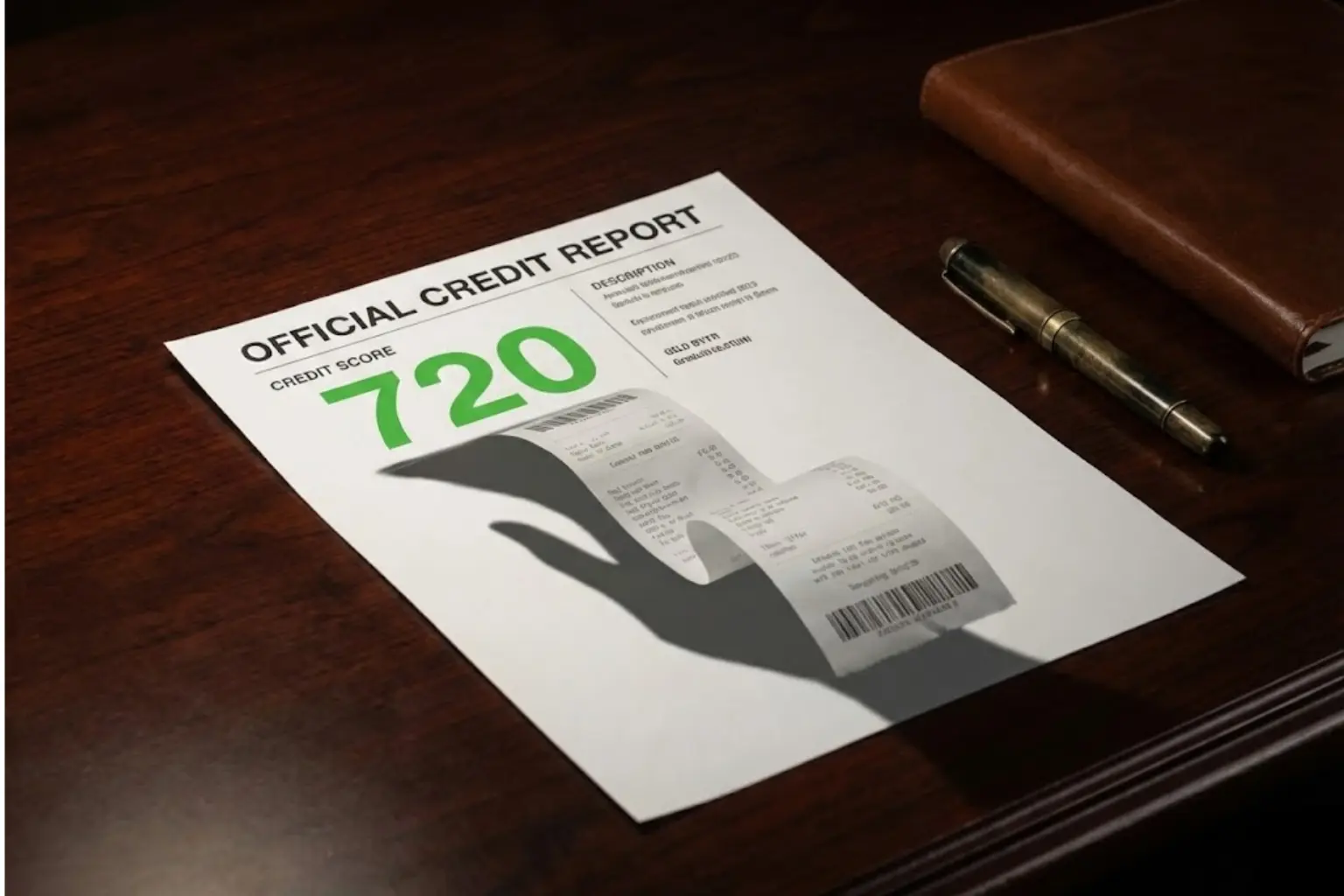
You check your FICO score. It says 720. You feel safe. You shouldn’t. For decades, the credit report was the gold standard of financial health.
If a debt wasn’t listed on Equifax, Experian, or TransUnion, it effectively didn’t exist. Lenders trusted the number, and borrowers relied on it as a shield.
But in 2026, a massive slice of the American debt load has gone off the grid. New analysis suggests that official delinquency rates are artificially low because they fail to account for the explosion of Phantom Debt unreported Buy Now, Pay Later BNPL obligations.
That are silently suffocating middle-class balance sheets. We are witnessing the bifurcation of the American borrower: prime on paper, but subprime in reality.
- New analysis reveals a massive divergence between official credit scores which remain high and real consumer liquidity which is rapidly deteriorating due to unreported Buy Now, Pay Later obligations.
- In a disturbing trend shift for 2026, data shows installment loans are migrating from discretionary luxury goods to essential categories like groceries and utilities, signaling deep middle-class distress.
- Lenders are currently approving loans based on a 30% Debt to Income DTI ratio, while the borrower’s actual DTI including phantom debt is often pushing 45%, creating a hidden default risk in the banking sector.
The Invisible Ledger
To understand why this is happening, we have to look at the broader economic picture. As we discussed in our analysis of the hollow raise, middle-class income is technically rising, but fixed costs like insurance and escrow shortages are eating the difference.
Phantom Debt is how families are bridging that gap. According to 2026 data from the consumer financial protection bureau, BNPL usage has shifted dramatically.
What started as a tool for luxury splurges (Pelotons and designer handbags) has morphed into survival spending. A growing percentage of installment loans are now being used for groceries, gas, and utilities.
The Problem: Most of these pay-in-4 loans are not reported to the major credit bureaus unless they go into collections. This creates a dangerous blind spot we call the Shadow DTI Debt-to-Income Gap.
The Investozora Shadow DTI Model
Lenders usually cap a borrower’s Debt-to-Income DTI ratio at 36% to 43%. If your monthly payments eat up more than 43% of your gross income, you shouldn’t get a mortgage.
But because BNPL is invisible, a borrower can technically have a visible DTI of 30% safe while carrying a real DTI of 50% insolvent.
The Math of a Prime Borrower in 2026:
- Gross Income: $6,000/month
- Reported Debts Mortgage, Auto and Visa: $1,800/month
- Official DTI: 30% Banks see this as low risk
- Hidden BNPL Payments: $600/month (Groceries, Clothes and Christmas) overflow
- Real DTI: 40% Approaching high risk
This borrower looks healthy to the bank, but in reality, they are living paycheck-to-paycheck. One flat tire or ER visit pushes them over the edge. This invisible leverage helps explain why personal finance feels harder right now, even for families earning six figures.
The Prime Borrower Mirage: Official vs. Real Solvency 2026
To quantify the risk, we modeled the financial profile of a typical prime borrower with a 720 FICO score. The breakdown below exposes the dangerous gap between what a bank sees on a credit application and the actual cash flow reality facing the household every month.
| Financial Metric | The Bank View (Official) | The Real View (Investozora) |
|---|---|---|
| Credit Score | 720 (Prime) | N/A (Hidden Risk) |
| Monthly Gross Income | $6,000 | $6,000 |
| Reported Debt Payments | $1,800 (Mortgage / Auto) | $1,800 (Mortgage / Auto) |
| Hidden BNPL Obligations | $0 (Invisible) | $600 (Groceries / Retail) |
| Debt-to-Income (DTI) | 30% (Safe) | 40% (High Risk) |
| Real Disposable Liquidity | $4,200 | $3,600 |
| Lending Decision | APPROVED | LIKELY DENIAL |
Source: Investozora Shadow (DTI) Model 2026, synthesizing consumer credit market data from the CFPB
and federal reserve bank of new york.
Why 2026 Is the Tipping Point
This shadow leverage works fine until liquidity dries up. We are entering a phase where the bill comes due. The massive volume of holiday spending financed through BNPL in Q4 2025 is hitting cash flows right now.
Unlike credit cards, which have minimum payments of ~2%, BNPL loans require 25% of the principal every two weeks. The cash flow shock is 10x more aggressive.
If you are wondering why credit card debt January delinquency is ticking up, this is the catalyst. Families are using their visible credit cards to pay off their invisible BNPL loans to avoid default. It is a shell game that eventually fails.
Compounding this pressure is the January paycheck drop, where the reset of Social Security taxes and higher health premiums has reduced take-home pay for millions. You have less cash coming in exactly when the Phantom Debt payments are ramping up.
The Grocery Warning Sign
The most alarming metric in our analysis is the category mix. When consumers use short-term financing to buy long-term assets like a TV, it is manageable.
When consumers use short-term financing to buy perishable goods like food, it is a classic signal of distress. Recent reports from the federal reserve bank of new york indicate a rise in consumable financing.
You are effectively financing a sandwich over six weeks. By the time you pay it off, you need another one. This cycle creates a rolling debt snowball that never appears on a credit report until it is too late.
It is a symptom of the quiet money shift, where Americans are silently changing their habits to mask a loss of purchasing power.
The Liquidity Trap vs. Savings
Many households try to solve this cash flow crunch by draining their savings, but 2026 inflation has made that dangerous. As we detailed in our guide on the emergency fund amount, the old $1,000 rule is no longer sufficient.
If you use your emergency fund to pay off Phantom Debt, you leave yourself exposed to the next shock whether that’s a mortgage escrow shortage or a car repair. The smarter move is to treat BNPL debt as an emergency itself.
The Bottom Line: Audit Your Ghost
If you have more than two active pay-in-4 plans running right now, you are statistically more leveraged than your bank realizes. Do not wait for the credit bureaus to catch up. They won’t see this debt until you miss a payment.
The Strategic Move: Perform a shadow audit this weekend. Log into your Affirm, Klarna, PayPal, and Apple Pay accounts. Add up the total outstanding principal. And treat this number as high-interest debt.
This weekend, instead of shopping, execute a financial reset after holidays. Calculate your real DTI including these ghost payments.
If the number scares you, it’s time to pause all spending until the ghost is gone. The economy isn’t just dealing with inflation; it’s dealing with invisible leverage. And what you can’t see can hurt you.
Methodology
This report synthesizes Q1 2026 consumer credit trends using primary market data from the Consumer Financial Protection Bureau and the Federal Reserve Bank of New York. We cross-referenced official delinquency rates against alternative credit reporting datasets to isolate the Shadow DTI gap.
The model assumes a standard middle-class household profile to demonstrate the disproportionate impact of unreported Buy Now, Pay Later obligations on realized liquidity vs. reported solvency.
Investozora uses only trusted, verified sources. We focus on white papers, government sites, original data, firsthand reporting, and interviews with respected industry experts. When relevant, we also use research from reputable publishers. Every fact is checked against a primary source so readers get clear, accurate, and up-to-date information, and we update our citations whenever official guidance changes.
- Consumer Financial Protection Bureau (CFPB) — Buy Now, Pay Later Market Report (2024) – Federal analysis of BNPL usage, consumer risk, and emerging credit reporting gaps.
- Federal Reserve Bank of New York — Household Debt and Credit Report – Quarterly data tracking U.S. household debt levels, delinquencies, and credit trends.
- Equifax — Buy Now, Pay Later and Your Credit Score – Credit bureau guidance on how BNPL obligations are reported and factored into lending decisions.
Frequently Asked Questions
Author