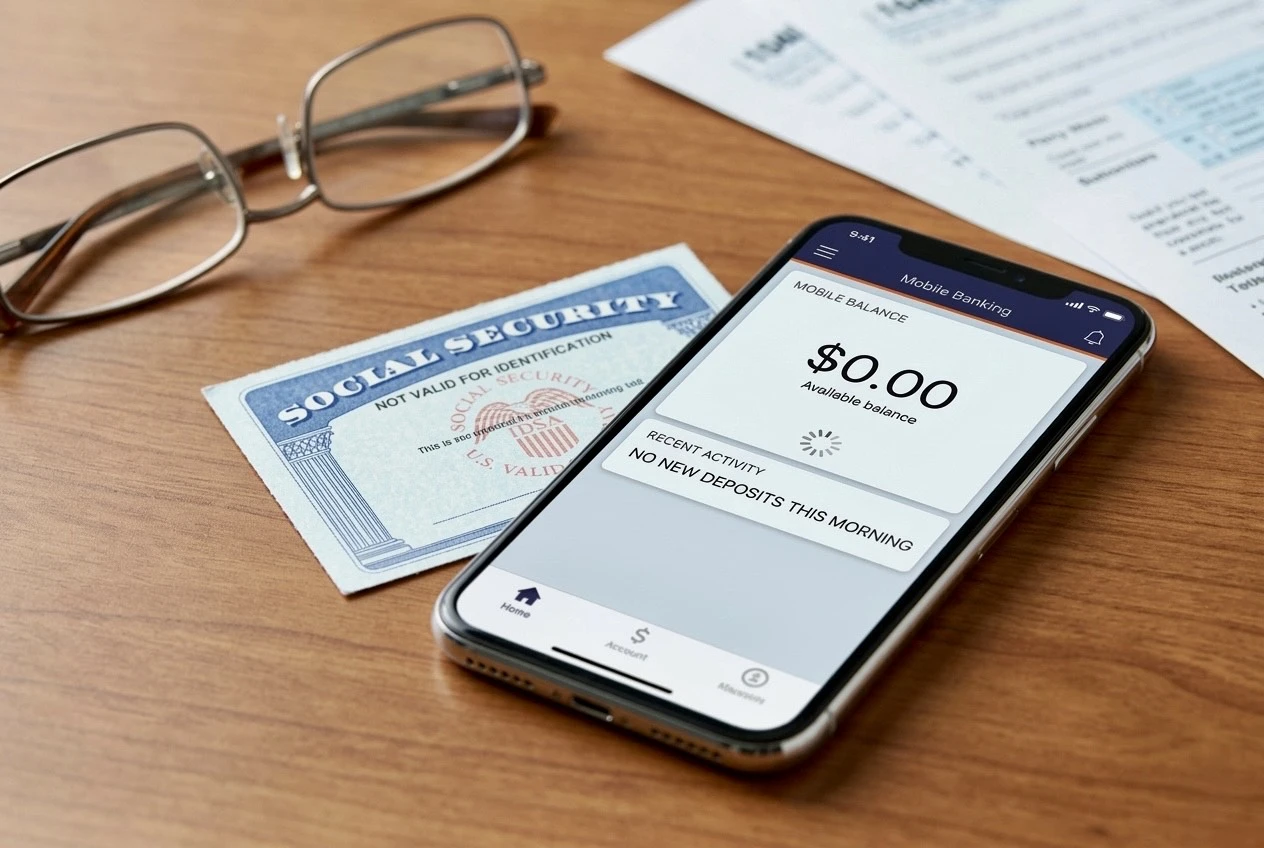
If you were expecting your Social Security check to hit your account this morning but are met with a $0.00 balance, you aren’t alone, and your payment isn’t necessarily late.
Millions of retirees are currently caught in the “Wednesday Wave” transition. While the first group of beneficiaries received their funds on March 11, a massive secondary group is currently waiting for the March 18 deposit.
Understanding the mechanics of the U.S. financial payment system is the only way to determine which “wave” you belong to and why your specific birth date timing might have shifted your expectations this week.
The Birthday Rule: Why Some Received Money on March 11
The Social Security Administration (SSA) does not send all payments at once. To prevent a total collapse of the banking infrastructure, they use a staggered system based on your day of birth. Recipients born between the 1st and 10th of their birth month belong to the first wave, which successfully cleared the federal payment pipeline on Wednesday, March 11.
If your birthday falls in this range and you still have a deposit not there status, you may be facing an individual bank delay or a technical rejection. However, for those born after the 10th, the “missing” money today is simply a result of the SSA’s rigid Wednesday calendar.
Why the March 18 Wave is the Largest of the Month
The next major disbursement is scheduled for Wednesday, March 18. This wave covers everyone born between the 11th and 20th of any month. Because this date range captures a significant portion of the “Baby Boomer” retirement peak, the volume of transactions entering the treasury payment rails on this day is historically high.
How the 48-Hour “Pre-Clearance” Affects Your View
Many modern banking apps now show “Pending” transactions up to two days before the actual settlement. If you are in the March 18 wave, you might see your payment appearing as a grayed-out entry as early as Monday or Tuesday. This is part of the deposit settlement process where the bank acknowledges the Federal Reserve’s “Intent to Pay” but has not yet released the funds into your available balance.
If you don’t see this pending status yet, don’t panic. The invisible payment rails often don’t deliver the final file to smaller credit unions until the late-night bank clearing cycle on the Tuesday before the payment date.
The Exception for Pre-1997 and SSI Recipients
It is critical to distinguish between regular Social Security retirement and Supplemental Security Income (SSI). As covered in our report on the ssi payment missing crisis, SSI recipients were paid back on February 27.
Additionally, if you began receiving benefits before May 1997, or if you receive both Social Security and SSI, your payment date does not follow the “Wednesday Wave.” Instead, you were likely paid on March 3. If you missed that window, you might be facing a irs cp53e notice style freeze if your banking information was recently flagged for a mismatch.
Why Some Deposits Shifted from 12 AM to 8 AM
A new trend in 2026 is the “Liquidity Hold” implemented by several major retail banks. Even if the SSA settles the money on Wednesday, some banks are shifting their settlement window from a midnight refresh to an 8:00 AM ET “Hard Post.”
This shift is designed to ensure that the bank has the physical liquidity from the Federal Reserve before allowing customers to withdraw cash. If you are used to seeing your money at midnight but it isn’t there until breakfast, this is a bank-level change, not an SSA delay.
Managing the Gap Until the March 25 Final Wave
For those born on the 21st or later, the wait is even longer. Your funds are not scheduled to move until Wednesday, March 25. This creates a difficult end-of-month scenario for those who have already spent their previous checks.
This staggered timing is becoming even more complex as the IRS rolls out the new trump accounts rule, which is causing some cross-agency verification delays for families who receive both tax credits and SSA benefits.
What to Do if Your Wave Passes Without a Deposit
If your scheduled Wednesday passes and your balance is still $0.00, do not call the SSA immediately. The official advice is to wait three business days to account for overnight bank clearing cycles. Often, a file is simply stuck in a “re-batching” queue at the Federal Reserve.
If you are a PATH Act filer who also receives Social Security, your return may be under the path act hard freeze, but this should not affect your SSA benefits. If both are missing, it indicates a larger identity verification issue with your Treasury Master File.
Final Outlook on the March SSA Schedule
The Social Security “Waves” are a predictable part of the U.S. financial landscape, yet they cause thousands of hours of anxiety every month. By knowing your birth date group, March 11, March 18, or March 25, you can stop refreshing your app and start planning your month with confidence.
The system is currently running at peak capacity as the 2026 COLA increases continue to process. Stay focused on your specific Wednesday, and use the Official SSA Schedule to verify any future changes to your payment timing.
Author