
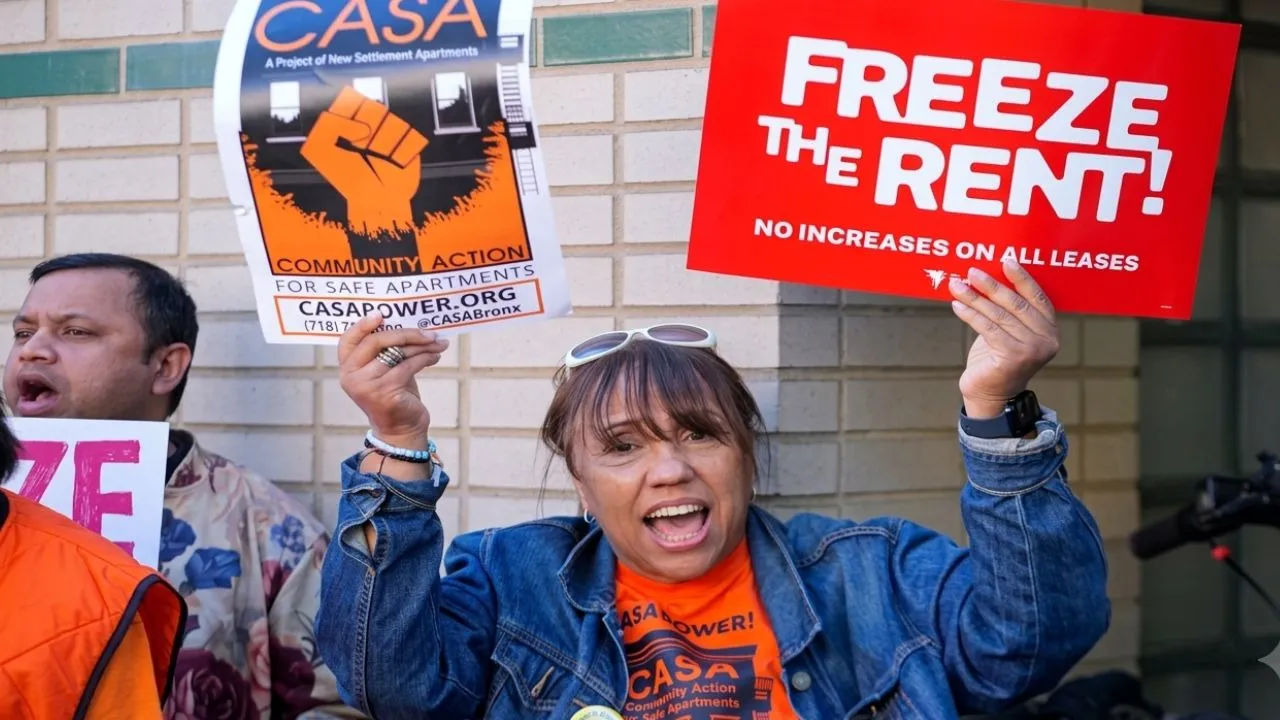
As of June 2026, the New York City Rent Guidelines Board has held the rent stabilization increase to 2.75 percent for one-year leases, locking in rates for approximately 1.07 million regulated apartments across all five boroughs, per the official RGB record at nyc.gov.
The rent freeze that New York City has effectively maintained on stabilized apartments is now pulling a second lever that most tenants and landlords alike did not expect: it is dismantling a foundational assumption inside the city’s property tax system.
When rental income is capped and documented, assessed property value must follow the same ceiling, and landlords across every borough are now positioning their portfolios for the largest coordinated property tax challenge the city has seen in over a decade.
The mechanism is straightforward once you understand how New York calculates tax on residential income property. The city uses the income approach for buildings with more than ten units, which means assessors derive property value from the net operating income the building generates.
When that income is legally constrained by the rent freeze, the assessed value should, in principle, compress as well. That compression is the argument landlords are now filing at the Tax Commission, and it is an argument rooted not in financial grievance but in the arithmetic the city itself uses to set the tax.
The practical scale of this matters. The federal money movement architecture that governs how property tax revenue is aggregated and distributed to municipal services connects directly to how much liquidity New York’s Department of Finance can project in any fiscal year. A successful large-scale appeal cycle does not produce refunds overnight.
The city operates on a lagged assessment calendar, meaning that a 2025 income figure feeds into a 2026 assessed value and a 2027 tax bill. Appeals filed now will resolve across a multi-year window, and landlords who understand this cycle are moving early to establish the baseline income documentation the Tax Commission requires.
What This Means for Tenants
The counterintuitive reality is that a rent freeze winning landlords a property tax reduction does not automatically improve the building or the tenant’s position. Tax savings accrue to ownership, not to maintenance reserves or capital improvement funds unless lease agreements or local law create that specific obligation.
Tenants in rent-stabilized buildings are protected from direct rent increases above the RGB ceiling, but property tax savings are a separate cash flow that flows entirely to the building’s income statement. Understanding this distinction is essential before interpreting any claim that tax relief will translate into housing investment.
New York’s rent stabilization rules govern the ceiling on what owners may charge, but they do not govern what owners do with operating cost reductions. The Department of Finance has not publicly signaled any blanket reassessment policy change in response to the current RGB cycle, meaning individual building appeals will proceed case by case through the existing administrative process.
The Banking Layer Nobody Explains
Behind every property tax appeal cycle in New York City, there is a settlement flow that moves through ACH rails just as federal payment disbursements do. When the Tax Commission approves a credit or refund, that payment originates from the city’s general fund, clears through the same federal payment infrastructure that governs all large institutional disbursements, and lands in the landlord’s designated bank account on a schedule the city controls.
Tenants who believe property tax savings should show up as lower rents or improved services are correct that the law does not require this transfer to occur automatically. The cash flow stops at ownership unless the building is financed under a regulatory agreement that mandates reinvestment.
This is the structural reason why housing advocates and tenant organizations in New York are closely monitoring the appeal volume this cycle. Each successful appeal reduces the city’s property tax revenue base, compresses the fiscal projections that fund schools, transit, and social services, and produces a windfall for landlords with no regulatory pathway back to tenants.
That dynamic is not unique to New York, but New York’s scale makes the numbers consequential. The approximately 1.07 million stabilized units represent a meaningful slice of the city’s total residential assessed value.
The interaction between federal reserve policy and local real estate taxation also surfaces here in a way that is rarely reported. When the Federal Reserve holds rates elevated, the capitalization rates that assessors apply to income streams rise as well, which in principle should lower assessed values further.
That is a secondary compression operating alongside the rent freeze’s income ceiling, and landlords who understand both levers are filing appeals that incorporate both arguments simultaneously.
For readers tracking how this story develops, the practical signal to watch is the volume of Tax Commission filings published in the city’s public hearing calendar between now and September 2026.
A sharp increase in commercial-class residential filings relative to prior cycles will confirm that the rent freeze is functioning as a coordinated property tax reduction trigger rather than individual building responses. That aggregate signal is where the real fiscal impact to the city becomes visible, and where the downstream effects on municipal services begin to be calculable.
The housing cost data that flows through federal tax filings will eventually capture this shift as well, though on a delay that makes real-time tracking difficult through federal sources alone.
The conversation about the rent freeze has always been framed around affordability and tenant protection. The property tax layer reframes it as a municipal finance question, and that is the framing that will govern how the city responds when the appeal volumes become impossible to ignore.