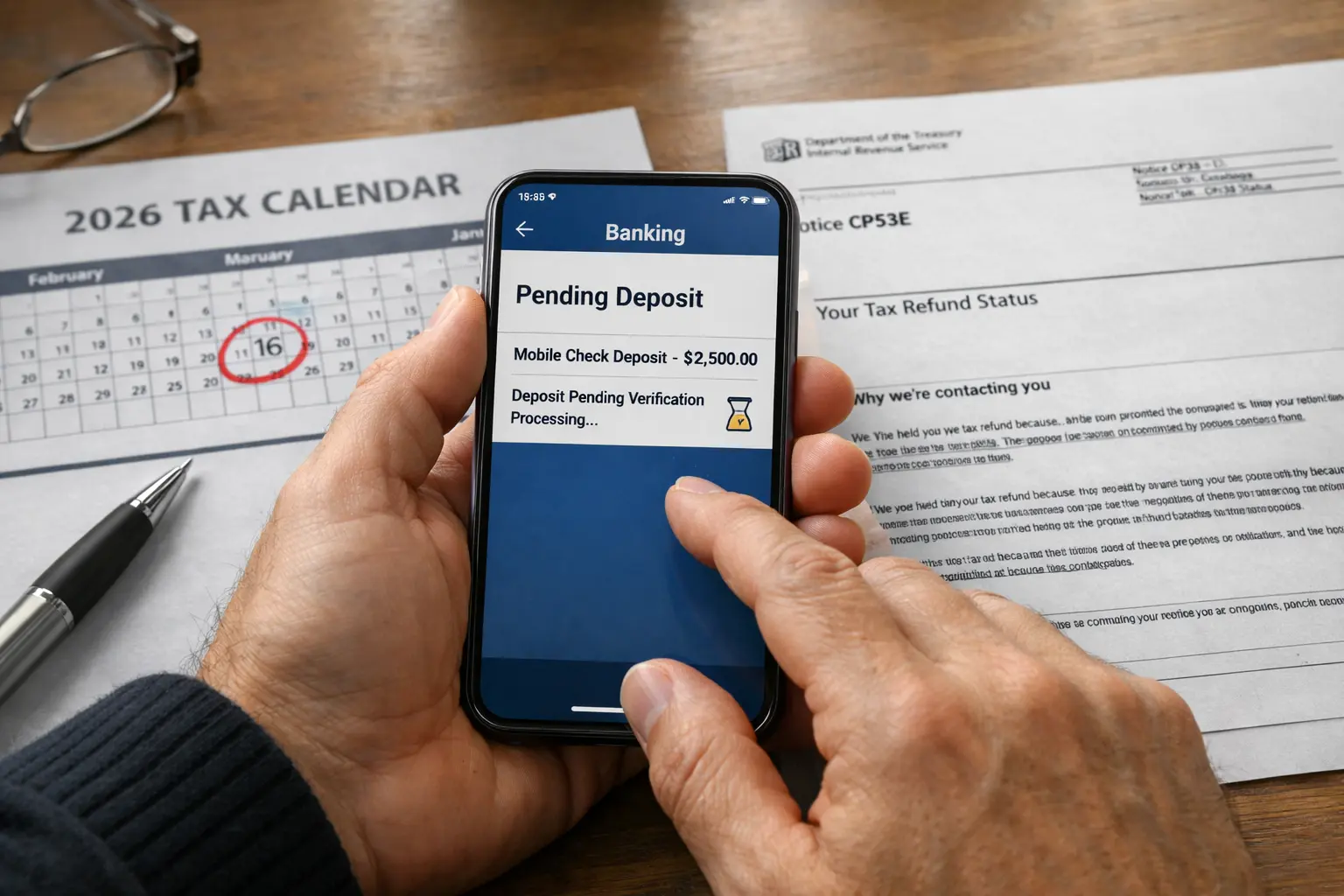
At 7:18 AM, the phone screen lights up. “Deposit received,” it says. The balance still shows zero.
The message suggests certainty. The balance suggests nothing changed. You refresh the app. The notification remains. The available funds do not. It feels like a system error — especially when bills are due. In reality, it is controlled sequencing, the kind built into modern deposit timing across U.S. banks.
The interface delivers instant reassurance. The ledger waits for institutional confirmation. That gap is not a glitch. It reflects how the U.S. money movement system separates acknowledgment from availability.
What the Notification Actually Confirms
A 7:12 AM alert usually confirms file receipt, not final balance release.
Overnight, payroll and Treasury payments move through ACH batches. Settlement completes inside Federal Reserve systems before most households wake up. Retail posting follows a separate operational cycle. Often, this results in a direct deposit pending status on your mobile dashboard.
The Federal Reserve outlines ACH operations coordination through FRB Services documentation. When settlement finalizes, the receiving bank’s master account balance updates at the Federal Reserve. Reserves increase immediately. Your checking account does not.
The notification confirms the bank accepted the credit entry. It does not confirm the bank released it to the retail ledger.
The Quiet Layer: Early-Morning Reserve Verification
Between roughly 6:45 AM and 8:00 AM ET, many banks conduct internal reserve verification. This step rarely appears in consumer explanations, yet it defines deposit timing discipline.
Even after payroll file settlement, institutions reconcile inbound credits, outbound debits, and prior-day adjustments. During this window, treasury desks compare ACH net positions against projected obligations. They confirm a banking liquidity shift before opening retail posting gates.
The Bureau of the Fiscal Service details federal disbursement sequencing in its Green Book guidance. Until reconciliation completes, customer balances remain unchanged. The system favors confirmed liquidity over visible speed.
Clearing Hierarchy Inside Retail Banks
Deposits do not post in simple arrival order. Banks operate internal clearing hierarchies. Large-value settlements and interbank exposures receive priority review. Retail ACH credits follow once exposure thresholds align.
This sequencing protects capital stability. Before markets open, secondary liquidity channels remain limited. Institutions limit early posting risk until reserve confirmation aligns with exposure caps. That structural separation explains why acknowledgment may appear at 7:12 AM while funds post closer to 8:30 AM. For additional context, see our review of settlement window timing.
The 8:00–9:00 AM Posting Window
Most major U.S. banks finalize customer credit posting between 8:00 and 9:00 AM ET. By that hour, overnight ACH batches have settled and reserve balances have been verified. Only then does the institution synchronize its retail ledger with a true liquidity balance.
Posting occurs in controlled waves. One bank may release credits at 8:05 AM. Another may stage releases closer to 8:45 AM. The variation reflects internal liquidity policy, not payment validity. Nothing “arrives” at 8:32 AM. The funds settled earlier; the ledger simply catches up.
Ledger-Day Rollover Mechanics
Banks close and reopen their accounting day overnight. During that rollover, institutions process overnight processing updates and prepare systems for the new cycle.
Mobile applications sometimes display transaction acknowledgment before full ledger synchronization completes. The system records the credit but waits to display spendable funds until reconciliation finishes. Readers seeking deeper operational detail can explore our technical analysis of Fedwire ACH liquidity for additional context.
Intraday Liquidity Positioning and Exposure Controls
Banks manage daylight overdraft exposure carefully. Before capital markets open, backup liquidity sources remain narrower. Institutions pace credit release deliberately, aligning posting with confirmed reserve strength.
The Federal Reserve’s Payments System Risk framework governs this behavior. This layer operates invisibly, yet it directly shapes the gap between acknowledgment and availability.
Returning to the Morning Screen
At 7:18 AM, the message felt final. The balance suggested otherwise. By 8:37 AM, the numbers update quietly.
Nothing failed. Nothing stalled. The 7:12 AM alert marked acknowledgment. The 8:37 AM balance marked finality. Deposit timing shapes perception because acknowledgment travels faster than liquidity release. The delay was never uncertainty. It was sequencing.
Author