

The U.S. financial system doesn’t move money in a single continuous stream, it operates through tightly coordinated settlement layers that determine when liquidity becomes usable across banks, businesses, and households.
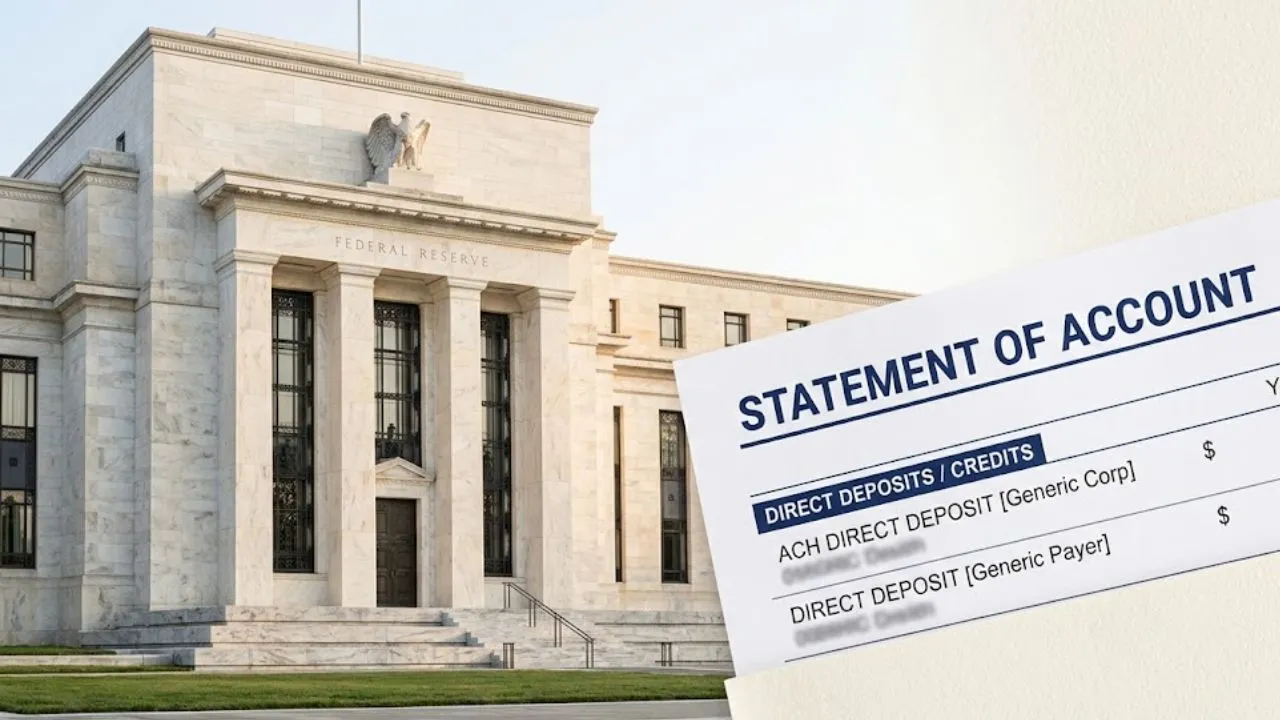
While most people only see deposits, withdrawals, and bill payments on their account statements, those visible movements are the final step of a much larger infrastructure cycle driven by Federal Reserve settlement systems, banking windows, and scheduled payment rails.
Understanding Fedwire and ACH timing is essential to understanding why money sometimes feels delayed, clustered, or unusually fast across certain days of the week. These patterns are not random. They reflect how liquidity is created, transferred, and released through the U.S. financial backbone.
How Everyday Americans Experience Liquidity Without Seeing the System
While these institutional mechanisms operate at the banking level, their effects ultimately surface in the timing and predictability of everyday account activity.
Most Americans interact with money emotionally. A paycheck arrives and relief follows. A payment posts late and anxiety creeps in. When balances change unexpectedly, people assume errors, delays, or bank decisions are to blame.
What almost no one sees is the invisible choreography beneath those moments.
Money in the United States does not flow continuously; it moves in timed waves. Some funds settle instantly between banks, while others wait in structured batches before becoming usable. These rhythms shape when households feel liquid, when businesses feel comfortable spending, and when markets appear calm or tight.
The experience feels personal. The cause is systemic. Every week, the same settlement structure repeats, quietly transforming institutional cash into everyday money.
Inside the Two Settlement Rails That Power the U.S. Money Flow
At the core of U.S. payments infrastructure sits the Federal Reserve, which operates the Fedwire system, a real-time gross settlement network that moves large-value payments between banks with immediate finality.
Fedwire is where liquidity becomes real. Treasury transactions, securities settlements, interbank transfers, and reserve adjustments clear instantly. Once settled, funds are available without delay or reversal.
Conversely, the ACH network works differently. It is designed for scale rather than speed. Payroll deposits, bill payments, tax refunds, and consumer transfers move in scheduled batches that settle at specific windows during the business week.
Fedwire establishes institutional balance sheet reality.
ACH distributes that liquidity outward into the economy.
Together, they form a two-rail system where speed creates stability and scheduling creates accessibility. Neither could function alone.
How Federal Reserve Policy Interacts With Fedwire Settlement Timing in Real Time
While Fedwire provides real-time settlement for high-value transfers, its operational rhythm is still influenced by broader Federal Reserve policy cycles and liquidity management decisions. Changes in interest rate policy, reserve conditions, and intraday liquidity planning directly influence how aggressively banks position their balances within Fedwire windows.
This becomes especially important during periods when monetary policy is shifting or markets are adjusting expectations. Even when Fedwire itself remains technically instant, the behavior around it, bank reserve allocation, liquidity hoarding, and intraday settlement prioritization, changes meaningfully.
These dynamics are closely tied to how rate decisions, policy guidance, and balance sheet conditions feed into daily banking liquidity behavior.
Together, these mechanisms form a continuous liquidity transmission system where Federal Reserve policy decisions influence not only interest rates, but also the timing and behavior of interbank settlement flows.
Why Weekly Timing, Not Cash Volume — Drives Liquidity Behavior
What shapes liquidity is not how much money exists—it is when settlement occurs. Banks rely on Fedwire transfers to maintain sufficient reserves that support ACH obligations.
When large institutional settlements clear early in the day or week, ACH processing becomes smoother. When Fedwire windows compress due to holidays or operational timing, ACH batches shift accordingly.
This is why certain weeks feel financially distorted even when income stays constant. During periods like holiday flows, Fedwire closures compress institutional settlement into fewer windows. Banks respond by tightening liquidity positioning, which ripples outward into delayed or clustered ACH postings.
Households interpret the effect emotionally; the system is simply following structure. Liquidity pulses are not disruptions. They are settlement mathematics.
Even small shifts in settlement sequencing can create visible changes in when funds appear available, despite no change in underlying account balances.
How Holidays and Federal Closures Reshape Liquidity Timing
Liquidity timing is also heavily influenced by structural pauses in the U.S. financial calendar. Federal holidays and bank closure cycles compress settlement activity into shorter operational windows, forcing both Fedwire and ACH systems to adjust batch timing and reserve coordination.
When settlement days are reduced, banks must concentrate their liquidity preparation earlier, which can lead to clustering effects in ACH postings and delayed visibility of incoming funds for households. These shifts are not system errors, they are timing compressions created by non-operational days in the Federal Reserve schedule. DOJ drops Powell probe FOMC impact
Understanding these pauses is critical to interpreting why certain weeks feel unusually “tight” or delayed even when underlying income and payment volume remain unchanged.
How Federal Infrastructure Quietly Synchronizes Financial Stability
The brilliance of the U.S. money movement system is that most of this coordination happens without public attention. Each day, banks adjust reserve balances through Fedwire transfers aligned with Federal windows. These movements ensure institutions can meet ACH settlement obligations without triggering systemic stress.
This process stabilizes markets by controlling timing risk:
A dollar settling at 9 a.m. provides liquidity flexibility.
A dollar settling at 4 p.m. restricts intraday activity.
Institutional cash managers focus obsessively on these differences because liquidity availability determines lending behavior and risk exposure. Over time, firms that master timing discipline build what many quietly treat as a liquidity moat: always controlling when money becomes usable rather than reacting when it finally clears.
What Fedwire and ACH Timing Means for Paychecks, Bills, and Bank Balances
For households, these systems shape daily financial reality more than any budgeting trick. They determine:
When payroll deposits become spendable.
Why some bills post earlier or later than expected.
Why refunds cluster on certain days.
None of this reflects bank behavior or personal error; it reflects settlement structure. When ACH batches post later due to compressed Fedwire funding windows, it feels like a delay.
When multiple batches clear at once, it feels like sudden liquidity. Emotion rises, but the system remains mechanical. Understanding this removes the sense of randomness from everyday money movement.
The Structural Truth Behind How U.S. Money Actually Moves
Fedwire and ACH are not competing technologies. They are synchronized engines that convert institutional liquidity into household cash through precise timing mechanics.
Fedwire handles real-time financial truth inside the banking system, while ACH translates that truth into scheduled economic life. Together, they create the weekly rhythm of U.S. money movement. When deposits feel early, late, or oddly timed, you are not seeing dysfunction, you are seeing settlement choreography.
This is the central insight behind the broader understanding of how U.S. money movement operates, including the treasury payment system: that liquidity flows through infrastructure, not emotion, and stability is built on timing discipline rather than guesswork.
Money does not simply arrive. It settles. Once you understand that structure, financial life stops feeling random and starts revealing its rhythm.
Editorial Note: This article explains U.S. liquidity timing using publicly available Federal Reserve and banking settlement system structures. It is intended for informational and educational purposes only.