
Today is the meeting. Decision at 2:00 PM ET at federalreserve.gov. Warsh’s press conference at 2:30 PM ET is his first public statement as chair post-vote. Track the balance sheet signal in today’s statement language.
The June 16 and 17, 2026 FOMC meeting is when the Federal Reserve’s new chair Kevin Warsh announces his first interest rate decision. The Fed either raises rates, holds them steady, or lowers them. That decision directly affects what your bank pays on savings accounts and charges on mortgages within weeks of the announcement.
The June 16 and 17, 2026 FOMC meeting is the most consequential Federal Reserve meeting since the rate hike cycle peak in July 2023. It is the first meeting chaired by Kevin Warsh following his 54-45 Senate confirmation on May 13.
It includes the Summary of Economic Projections, the first dot plot under Warsh’s leadership. And it arrives with PPI at 6% year-over-year and CPI at 3.8%, the most inflation-pressured conditions Warsh has operated in since his previous Fed tenure ended in 2011.
This is the complete preview of what happens on June 16, why it matters, and what every American with savings, a CD, or a mortgage needs to know before that decision hits.
What the June 16 meeting is and why it is historically important
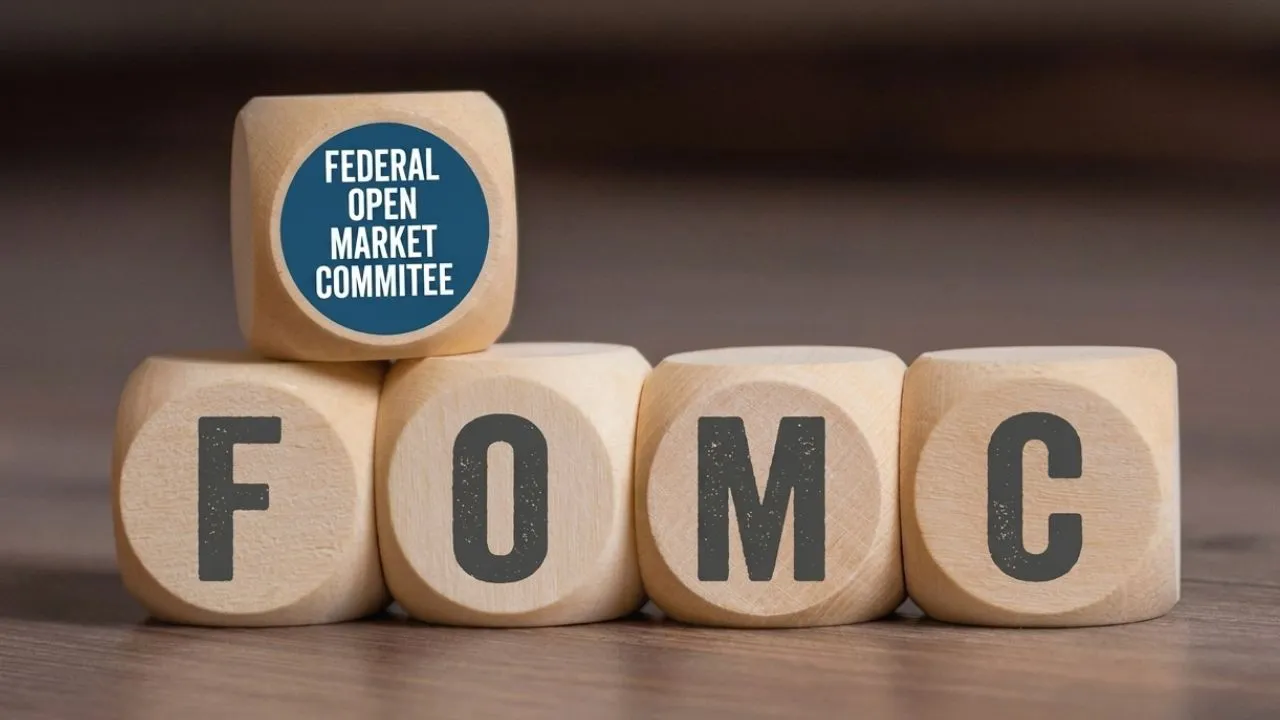
The Federal Open Market Committee meets eight times per year to set the federal funds rate, confirmed at federalreserve.gov. The June 16 and 17 meeting is historically significant for three specific reasons that distinguish it from any other 2026 FOMC meeting.
First, it is Warsh’s inaugural meeting as chair, his first opportunity to signal a new direction for monetary policy after eight years of the Powell era. Every chair’s first press conference sets the communication framework that markets, banks, and investors use to anticipate future decisions. Warsh’s first press conference will be the most closely watched Fed communication event in years.

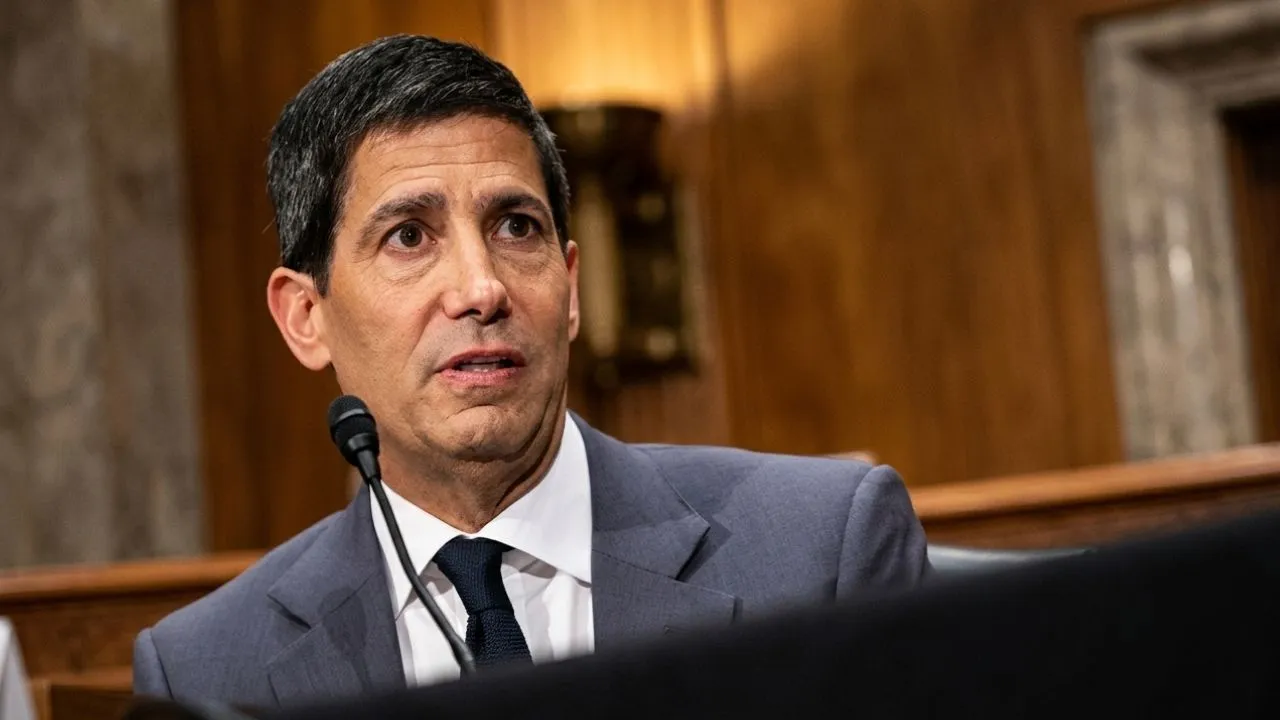
Second, the June meeting includes the Summary of Economic Projections, the document commonly called the dot plot. All 19 FOMC participants submit their forecasts for the appropriate federal funds rate path.
The dot plot reveals the committee’s internal distribution of views far more precisely than any statement language. Three participants dissented from the April 29 easing bias. The June dot plot will show whether that dissent has grown to six, nine, or more participants, which is the clearest available signal of the rate direction Warsh is managing.
Third, Warsh has publicly stated he wants Federal Reserve meetings with more genuine debate than the Powell era produced. That means the June 16 press conference may contain more direct policy signal than the carefully managed communications approach Powell used throughout his tenure.
For readers of money movement system analysis, the Warsh era represents a shift from predictable forward guidance to meeting-by-meeting data dependence.
The FOMC has 12 voting members: the seven Federal Reserve governors plus five rotating regional bank presidents, confirmed at federalreserve.gov. All 19 participants speak at meetings. The dot plot reflects all 19 views.
Jerome Powell, who remains on the Board of Governors through January 2028, will vote alongside Warsh at June 16. His vote counts equally. His institutional knowledge of the inflation trajectory since 2021 remains in the room. See the Warsh confirmed article for the full governance structure under the new chair.
The inflation environment Warsh inherits for June 16
As of June 16, 2026, Kevin Warsh chairs his first FOMC meeting with inflation running above the Federal Reserve’s 2% target on all three key measures: April 2026 CPI at 3.8% year-over-year confirmed by BLS, April 2026 PPI at 6% year-over-year confirmed by BLS, and three FOMC participants dissenting from the April 29 easing bias toward rate hike language.
The inflation sequence since the start of 2026 is a trajectory of acceleration, not moderation. February 2026 CPI came in at 2.4% year-over-year. March 2026 CPI rose to 3.3%, the month the Strait of Hormuz disruption moved fully into consumer prices. April 2026 CPI reached 3.8%. Each release has been higher than the previous month. PPI at 6% in April means the consumer price acceleration has not yet fully materialized in CPI data.
Dallas Federal Reserve research published in April 2026 confirms a three-quarter Hormuz closure, running approximately from March through September 2026, adds 1.1 percentage points to headline inflation for the year. That research is available at dallasfed.org.
Boston Fed President Collins told CNBC on May 13 that she sees scenarios where the Fed could be tightening. Yardeni Research published on May 14 under the title “From Cuts to Hikes: The Fed’s Shifting Calculus.”
The Social Security CPI-W data for the 2027 COLA calculation is accumulating above the 3.9% annual rate at ssa.gov/cola. PPI at 6% feeding into CPI over Q3 2026 supports a 2027 COLA at the high end of the current forecast range. See our April CPI analysis and PPI rate hike article for the full inflation chain.
Three possible June 16 outcomes and what each means for your money
The three possible outcomes at the June 16 and 17 FOMC meeting are: a 25-basis-point rate hike to 3.75% to 4.00%; a rate hold at 3.5% to 3.75% with removal of the easing bias language; or a rate hold at 3.5% to 3.75% with the easing bias retained.
Outcome A, a 25-basis-point hike to 3.75% to 4.00%: This is the most likely outcome given current inflation data. For savers, savings account rates and CD yields rise within two weeks.
The 30-year fixed mortgage rate, currently above 6.3%, increases approximately 0.15 to 0.25 percentage points within weeks. Variable-rate loans, home equity lines of credit, and adjustable-rate mortgages become more expensive immediately as the prime rate adjusts.
Outcome B, a rate hold with the easing bias removed: Rates remain unchanged at 3.5% to 3.75% but the statement language changes to neutral. Markets interpret this as a hike at the July 28 and 29 meeting. Savings rates may begin rising in anticipation even before July. Mortgage rates may tick up modestly on the forward guidance signal.
Outcome C, a rate hold with the easing bias retained: The least likely outcome given PPI at 6%, CPI at 3.8%, and three prior dissenters. Markets would interpret this as a surprise dovish outcome. Savings rates unchanged. Mortgage rates may ease slightly. This outcome requires Warsh to look past confirmed above-target inflation on all measures.
Each outcome’s impact is transmitted through the banking system within days to weeks. The federal funds rate sets the floor commercial banks pay each other for overnight lending.
Banks then adjust their prime rate, which cascades into savings accounts, home equity lines, credit cards, and adjustable-rate mortgages. The Bureau of Fiscal Service at Treasury and FedACH handle federal payment disbursement unaffected by any rate change.
Your Social Security payment and IRS refund timing remain identical regardless of the June 16 outcome. Only the interest environment on what you save or borrow changes. For the full payment flow mechanics, see our Fed rate and deposit timing guide.
What the May 20 FOMC minutes reveal about June 16
The FOMC minutes for the May 6 and 7 meeting release May 20 at 2:00 PM ET at federalreserve.gov. These minutes document the last full FOMC meeting before Warsh was confirmed and before PPI at 6% was published on May 13. They are the baseline from which to measure how dramatically the conditions for June 16 have shifted in a single week.
Three specific signals to look for in the May 20 minutes that directly forecast June 16 outcomes.
First: count how many of the 19 participants’ views included rate hike language or flagged rate hike scenarios. The April 29 meeting had three formal dissenters. If the May 6 and 7 minutes show six or more participants discussing rate hike scenarios, June 16 becomes near-certain for Outcome A. If the minutes show only three to five, the committee remains divided and Outcome B becomes the more likely result.
Second: look for the phrase “two-sided risks” or “symmetric risks” in the inflation assessment section. This language signals the committee views a rate hike as equally plausible as a cut, representing a fundamental departure from the easing bias language in the April 29 statement.
Third: examine how participants characterized the energy inflation component. If the minutes describe energy-driven PPI as potentially transitory, Warsh has rhetorical cover for a hold. If participants describe it as structural and persistent, the June 16 hike case is airtight in data terms.
The minutes are published as full plain text at federalreserve.gov. A 20-minute read of the primary source on May 20, rather than news summaries of the minutes, gives the most accurate picture of where all 19 FOMC participants stood before PPI confirmed the inflation trajectory. See our FOMC minutes May 20 full reading guide and FOMC minutes signals analysis for the complete preview framework.
Long-term implications for Federal Payments, Social Security, and Mortgage markets
The June 16 rate decision by Warsh will affect savings rates and mortgage rates within weeks. It will not affect Social Security payment timing, IRS refund disbursement, or the schedule of any federal payment. The rate level affects the interest environment on what you save or borrow.
The mechanics of how federal payments are disbursed are governed by the Bureau of Fiscal Service at Treasury through FedACH, which operates independently of the federal funds rate.
Social Security and the 2027 COLA: The 2027 COLA formula uses CPI-W data from July, August, and September 2026, confirmed at ssa.gov. Two scenarios now apply. If Warsh raises rates June 16 and the hike works, meaning inflation begins moderating through Q3, the 2027 COLA may come in at the lower end of the 3.9% to 4.2% current forecast range.
If PPI remains at 6% and CPI continues accelerating through Q3 because the Hormuz disruption persists, the 2027 COLA could reach 4.2% or higher. That represents the highest Social Security benefit increase since 2023.
IRS overpayment interest: The IRS interest rate for delayed tax refunds is tied to the federal short-term rate under IRC Section 6621, confirmed at irs.gov. The formula is the short-term federal rate plus 3 percentage points. If Warsh raises the federal funds rate on June 16, the Q3 2026 IRS overpayment interest rate increases. Delayed refunds for Q3 2026 will earn more interest as a result.
Mortgage markets through 2026 and 2027: The 30-year fixed mortgage rate is above 6.3% and the data trajectory makes a rate cut before mid-2027 implausible under current inflation conditions. Every month PPI remains above 5% is another month in which the Fed has confirmed data-driven justification to hold or raise rates.
Mortgage shoppers should factor a 6.3% to 6.75% rate environment into 24-month planning horizons. For the FOMC signals article on what the minutes will reveal about the mortgage rate trajectory through 2026, see the full analysis. For the IRS interest connection, see our IRS late refund interest guide.
What you should do now
- Mark May 20 at 2:00 PM ET on your calendar. The FOMC minutes at federalreserve.gov are the most important preview of June 16 available before the meeting. Reading the primary source takes 20 minutes and eliminates the noise of media interpretation.
- Assess your savings position now: are you in a high-yield savings account earning 4.5% to 5.0%? If not, that move is worth making today, before June 16, regardless of the rate outcome.
- If a CD matures between now and July 31, hold in high-yield savings through June 17 and reinvest after the June 16 decision at the potentially higher post-hike rate.
- If a mortgage decision is pending, the data supports a rate hike on June 16 rather than a cut. Calculate the cost of waiting: approximately $40 more per month on $350,000 for a 25-basis-point hike.
- Return to this article on June 16 at 2:00 PM ET. The LIVE UPDATE box will be updated with the actual rate decision, dot plot summary, and press conference key signals within hours of the announcement.