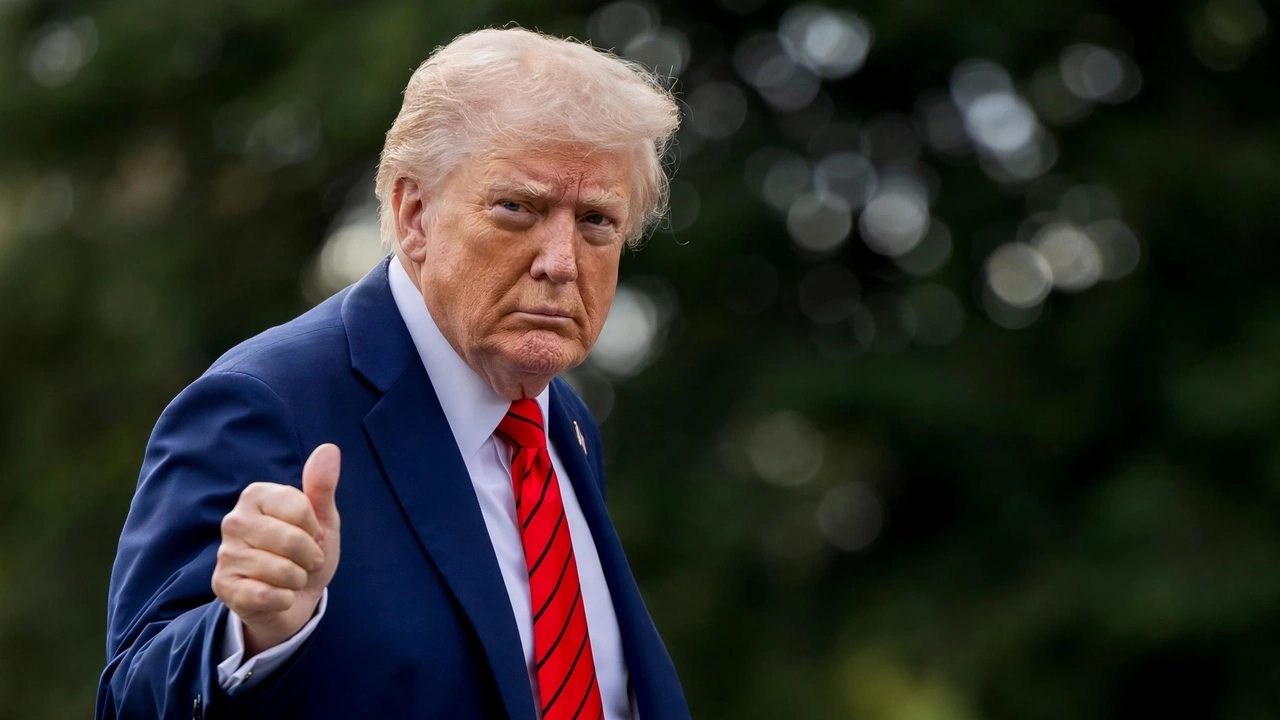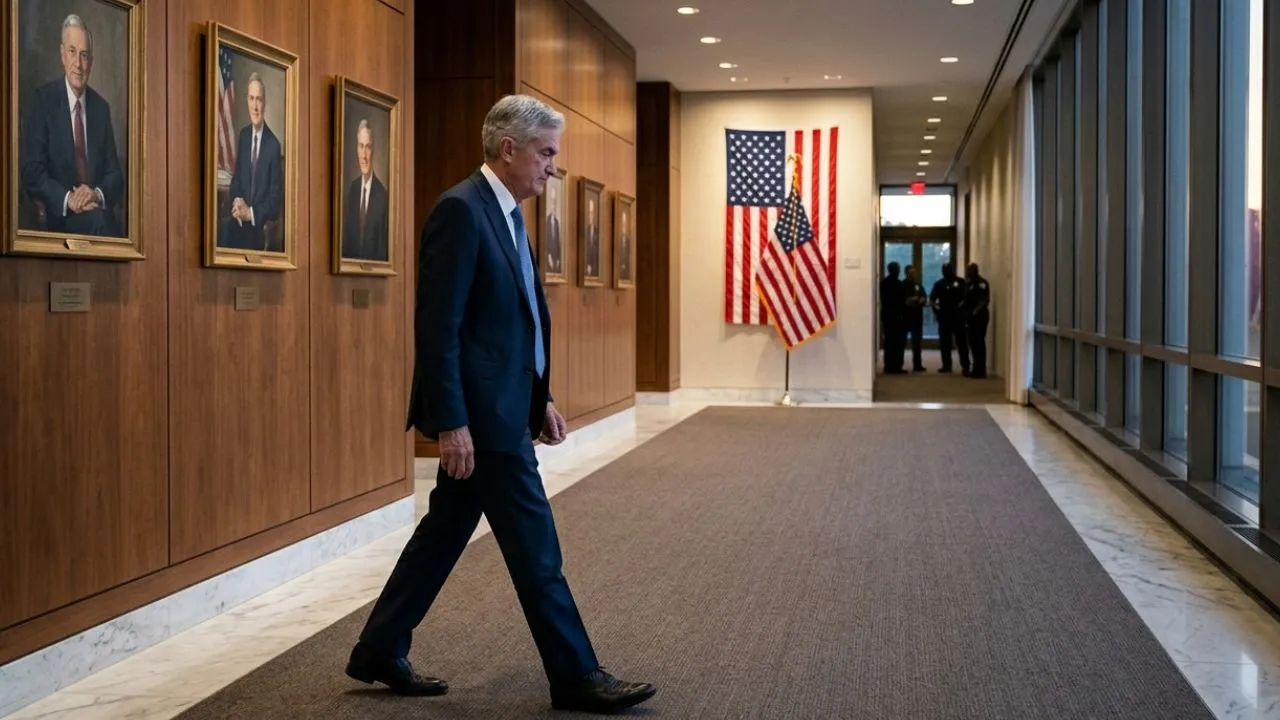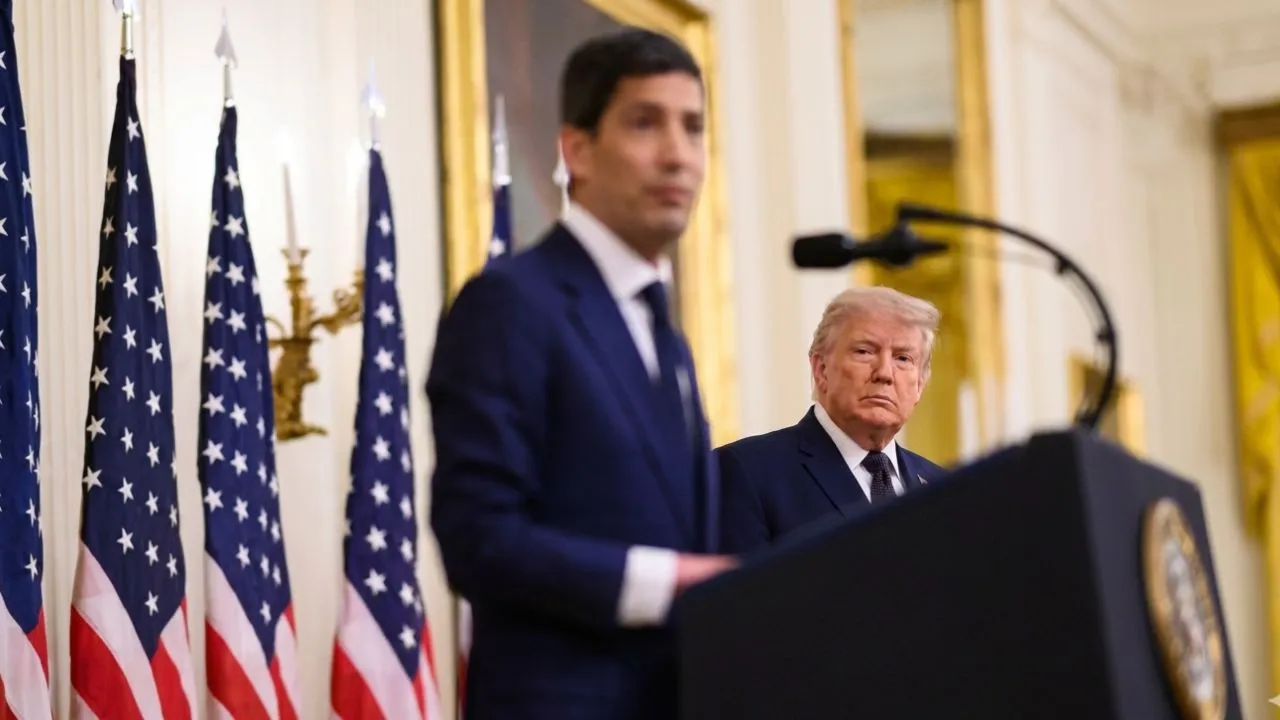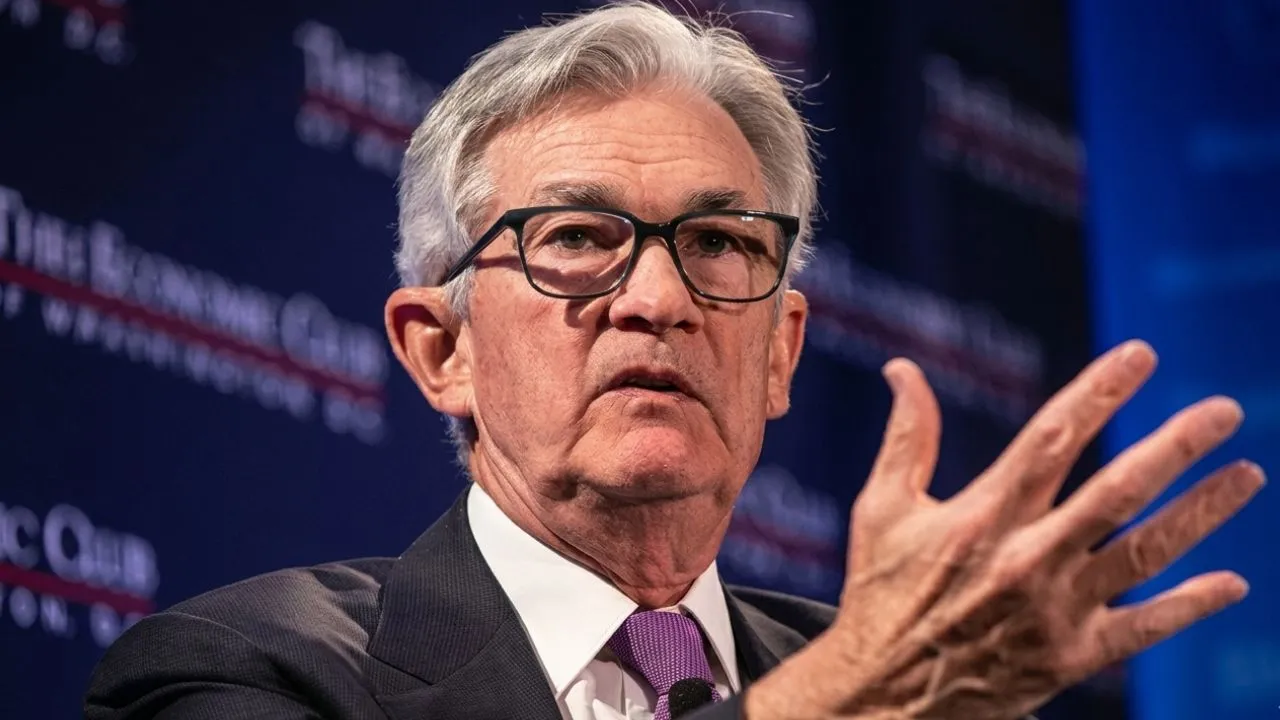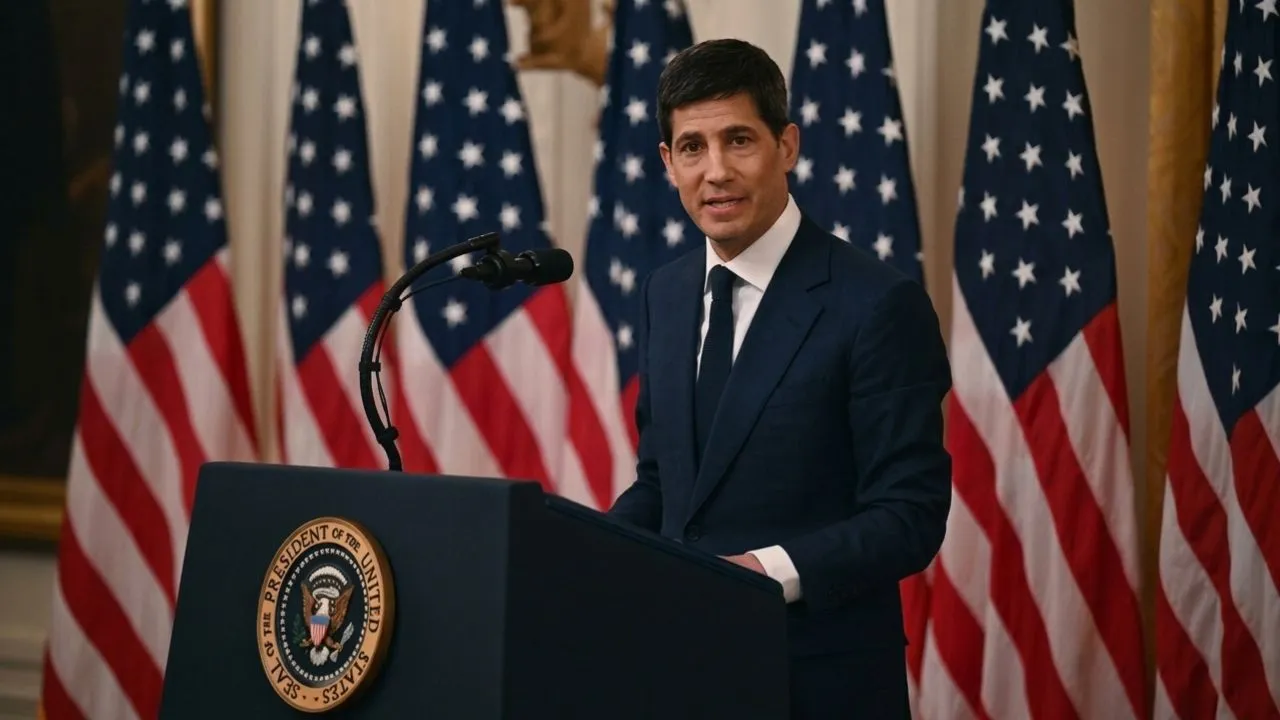
This is the decision day this article was built around. Statement releases at 2:00 PM ET, press conference at 2:30 PM ET. The dot plot projections publishing simultaneously will define Warsh’s rate path through 2027.
Kevin Warsh became the 17th Federal Reserve chair on May 14 in a 54-45 Senate vote. His first FOMC rate decision is June 16 to 17, 2026. The outcome directly affects 130 million American households through mortgage rates, savings APYs, and CD yields. Inflation is running at a three-year high of 3.8%.
Kevin Warsh is now running the Federal Reserve. The Senate confirmed him on May 14, 2026, in a 54-45 vote, the closest and most partisan confirmation in the institution’s modern history. One Democrat voted yes. Every Republican voted yes. Jerome Powell, whose eight-year tenure ended today, stays on as a Fed governor with a vote but no gavel.
The first decision Warsh makes in that chair, at the June 16 to 17 FOMC meeting, will directly determine what your mortgage costs, what your savings account pays, and what your CD yields before summer ends.
No other event on the U.S. financial calendar between now and August carries more dollar consequence for ordinary American households. The federal funds rate currently holds at 3.5% to 3.75%, confirmed by the April 29 FOMC implementation note. That target range is the single number that every American bank uses to price what it charges and what it pays.
Warsh inherits it under the most complicated inflation conditions since 2022. What he does with it on June 16 is not a Wall Street abstraction. It is arithmetic that lands in your bank account within 30 days of the vote.
The U.S. money movement system explains the exact path from a Fed vote to your bank balance, including why the timing differs by account type and institution.
The inflation problem Warsh inherits on day one and what it forces at June 16
Every existing analysis of Warsh focuses on his confirmation, his Senate timeline, or what his appointment means for savings rates in general terms. None addresses the specific constraint that the current inflation data places on his first vote and what that constraint means in dollar terms for the people sitting across from that rate decision.

Here is the constraint. The Producer Price Index rose 6.0% in the 12 months through April 2026, per the Bureau of Labor Statistics. That is the largest annual increase in wholesale prices since December 2022. CPI rose 3.8% annually in April, its highest reading since May 2023, also confirmed by BLS.
Fed funds futures traders, per CME Group’s FedWatch tool, are currently pricing no rate cuts for the remainder of 2026. The probability of a rate hike by year end has been rising every day since the PPI data dropped on May 13.
Warsh told the Senate Banking Committee at his April 21 confirmation hearing that he would act as an independent actor and not set policy based on White House preferences. Trump has demanded rate cuts loudly and repeatedly for months.
The inflation data that Warsh now owns as chair argues against cuts and makes a June 16 hold, or even a hike, the statistically more defensible outcome. This is the tension that defines his first meeting. He will face it with a divided committee, a watching White House, and bond market traders pricing Treasury yields based on every word he speaks between now and June 16.
The PPI inflation signal and rate hike analysis covers the direct arithmetic from wholesale price data to rate decision probability. The Fed rate hold from May 7 is the policy baseline Warsh inherits going into his first vote.
What a June 16 hike, hold, or surprise cut does to your money in exact dollar terms
This is the question no existing article has answered for June 16 specifically. Not the general direction of rates under Warsh. Not whether savings accounts might go up. The exact dollar impact of each scenario on the three products that cover the financial reality of most American households: the 30-year fixed mortgage, the high-yield savings account, and the 12-month CD.
If Warsh holds rates steady on June 16: The federal funds target range stays at 3.5% to 3.75%. High-yield savings APYs hold near current levels. The 30-year fixed mortgage rate, which has already moved higher in anticipation of inflation-driven policy, may ease slightly as the hold removes some of the hike premium bond markets have priced in.
CD rates remain near current levels with modest variation by institution. For a household with a $50,000 savings balance, monthly interest income stays approximately constant.
If Warsh leads a 25 basis point rate hike on June 16: The target range moves to 3.75% to 4.00%. High-yield savings APYs at competitive online institutions will rise approximately 20 to 25 basis points within 14 to 30 days.
A savings account at 4.20% APY reprices to approximately 4.40% to 4.45%. On a $50,000 balance, that is roughly $100 to $125 in additional annual interest, realized within a month of the vote. Traditional brick-and-mortar banks take the full 30 days to reprice. The savings rates and Warsh transition guide covers institution-by-institution repricing timelines in full.
For mortgages, the 30-year fixed does not wait for the Fed vote. It prices off the 10-year Treasury yield, which moves on expectations, not announcements. Bond markets are already pricing in higher-for-longer rates under Warsh. If June 16 confirms a hike, the 30-year fixed adds approximately 10 to 20 basis points within two weeks of the announcement, per historical rate transmission data from the Federal Reserve H.15 release.
On a new $400,000 mortgage at 7.00%, a 20 basis point increase raises the monthly payment by approximately $53. Over 30 years that is $19,000 in additional interest on a single loan. The June 16 mortgage and savings action guide covers the step-by-step response for each product.
If Warsh surprises with a cut: Markets currently assign this low probability given April inflation data. But if the May 20 FOMC minutes release at 2 PM ET, five days from now, show language that is significantly more dovish than markets expect, the probability of a June cut rises.
A 25 basis point cut would reverse all of the above. Savings APYs would fall 20 to 25 basis points within 30 days. Mortgage rates would ease in advance of the vote. CD rates would fall fastest. The FOMC minutes May 20 full analysis is the critical preview document that narrows which of these three scenarios is most likely.
The four structural changes Warsh is making beyond the rate number
Rate decisions get the headlines. But Warsh has signaled four structural changes to how the Fed operates that have longer-lasting implications than any single rate vote and that no previous article on this site has addressed as a unified picture.
First, he plans fewer FOMC meetings, potentially cutting from eight per year to four. That means longer gaps between policy events, more volatility in between, and less frequent opportunities for the committee to respond to new data.
For variable-rate borrowers, this means rate adjustments tied to FOMC decisions will occur less often. For savers, it means APY changes will happen in larger, less frequent jumps rather than a series of gradual moves.
Second, Warsh intends to pull back on forward guidance. Since 2012 the Fed has told markets in advance where rates are going. Warsh considers this a policy mistake that constrains the committee’s flexibility.
Ending forward guidance means mortgage lenders, CD pricing committees, and savings account managers will have less information to price from. The result is wider spreads between the federal funds rate and consumer products, not narrower ones, while institutions absorb the uncertainty.
Third, he wants to accelerate balance sheet reduction. The Fed’s balance sheet currently holds $6.7 trillion in assets per CNN reporting confirmed from Warsh’s own testimony.
Selling those assets faster than the current pace drains reserves from the banking system, which puts upward pressure on short-term rates independently of the federal funds rate target. It is a second tool of tightening operating alongside the rate vote.
Fourth, Jerome Powell stays on the board as a governor. He has a vote at every FOMC meeting for two years. Three Biden-appointed governors also have votes. Warsh needs to build consensus at each meeting, not command it. The June 16 vote will be the first public test of whether he can hold a majority for whatever direction he advocates.
The Bureau of the Fiscal Service at the U.S. Treasury disburses every government payment, including Social Security benefits and federal tax refunds, through the FedACH network. The overnight rate environment that Warsh manages directly affects the settlement costs inside that network. The June 16 FOMC first meeting preview covers the full committee composition and what each bloc is likely to vote.
What you should do now before June 16
- Check your variable-rate mortgage or HELOC terms today. Find your index, your rate cap, and your next adjustment date. A June 16 hike does not arrive without warning. The 10-year Treasury yield in the two weeks before June 16 is your daily early indicator.
- If you have a CD maturing before July, evaluate whether to wait for the June 16 announcement before rolling it. A confirmed hike moves CD rates higher within days. Rolling before the vote locks you into today’s rates. Rolling after captures the new environment.
- If your current savings APY is below 4.00%, compare high-yield options now. After a June hike, competitive institutions will offer higher rates within two to three weeks. Being in the right account before that window closes means capturing the full repricing without a transfer delay.
- Read the FOMC minutes on May 20 at 2 PM ET directly at federalreserve.gov before any media commentary. The dissent section, which records what four officials disagreed about at the April 29 meeting, is the clearest signal of what June 16 will produce.
- Monitor the Federal Reserve H.15 daily rate release. When the 10-year Treasury yield moves above 4.60%, mortgage lenders begin quoting higher rates within 48 hours. That number is your personal early warning system for June 16.