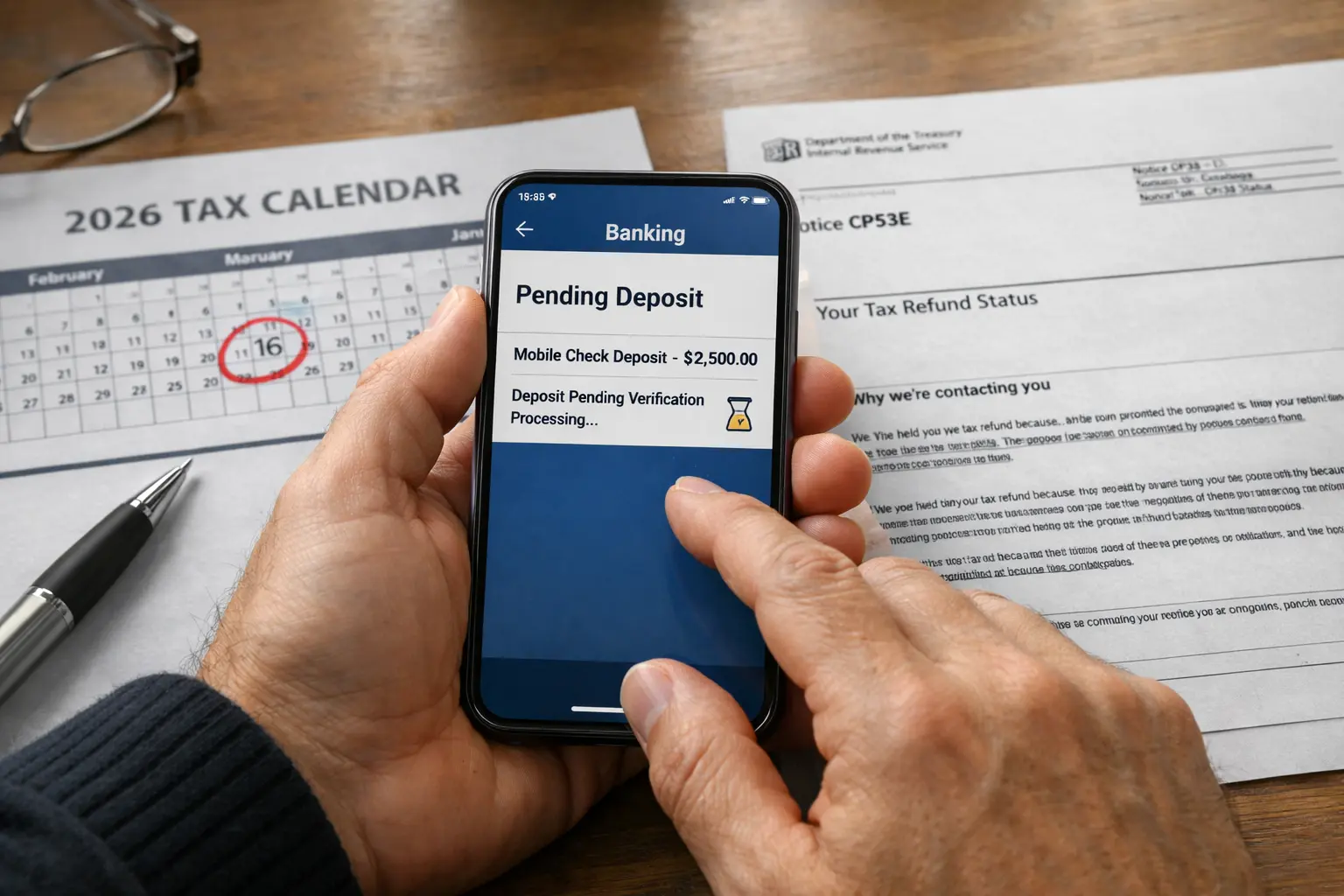
At 6:12 a.m., before coffee, you check your banking app. The deposit is there. But not really. It says “pending.” For millions of Americans this week, that small word creates immediate tension. Rent is due.
Credit cards auto-draft. Payroll depends on timing. And when you see a direct deposit pending status, your mind jumps ahead. Is it stuck? Is it delayed? Did something go wrong? In most cases, none of those are true. What you are seeing is timing, not trouble.
Why Pending Appears Before Money Lands
When a payment payroll, IRS refund, federal benefit, or employer transfer is initiated, it moves through clearing rails before final settlement. That means the payment file is transmitted, the receiving bank confirms receipt, funds are queued for posting, and settlement finalizes.
Some banks display deposits as pending the moment they receive the file. Others wait until final posting. So two people receiving the same payment at the same time may see completely different screens. The difference is not in the money. It’s in the posting policy.
For a deeper look at how U.S. money actually moves, check the core systems handling these transfers. The Federal Reserve payment systems overview explains the infrastructure reliably.
Why It Feels Worse Before Friday
Friday matters. Most employers schedule payroll to settle Thursday night into Friday morning. Federal disbursements often follow similar timing cycles. Banks batch-process high volumes overnight. If a file arrives close to a cutoff window, your bank may display a direct deposit pending status until the next posting cycle completes. That delay is often measured in hours, not days.
But emotionally, hours feel longer when bills are waiting. Understanding settlement windows shows why these cutoffs create the illusion of delay.
Federal Timing Adds Another Layer
When payments originate from the U.S. Treasury, they move through structured processing windows. Heavy refund weeks, benefit releases, or holiday-adjusted cycles can compress those windows. That does not stop deposits. It changes when they become visible.
Our breakdown of Treasury payment system processing shows how files move from authorization to settlement. Approval does not equal finality. The same pattern explains why IRS refunds can show approved but not paid before clearing. Pending simply means the funds are inside the system, following NACHA ACH processing rules for secure handling.
What Actually Signals a Problem
There are only a few red flags: pending remains unchanged for multiple business days, account numbers were entered incorrectly, the bank rejects the deposit, or the payment was reversed by the sender. Otherwise, pending is operational. Banks must reconcile incoming ACH batches, confirm account status, and apply internal risk checks before releasing funds fully available. That process protects the system. It does not block your money randomly.
The Human Side of Waiting
Pending deposits trigger more than financial anxiety. They trigger memory. Maybe last month’s shortfall. Maybe a late fee. And maybe the moment your balance dipped lower than expected. So when you see pending, your brain prepares for stress. But most of the time, the system is simply finishing its cycle. Money moves in stages. Understanding that removes unnecessary panic.
What To Expect Next
If your deposit shows pending today: it may post later this afternoon, overnight posting is common, most resolve within one clearing window. Watch for status changes after typical bank batch times, often late evening or early morning. The key is this: Pending means in motion. Not in danger.
Author