The Moment You See ‘Pending’
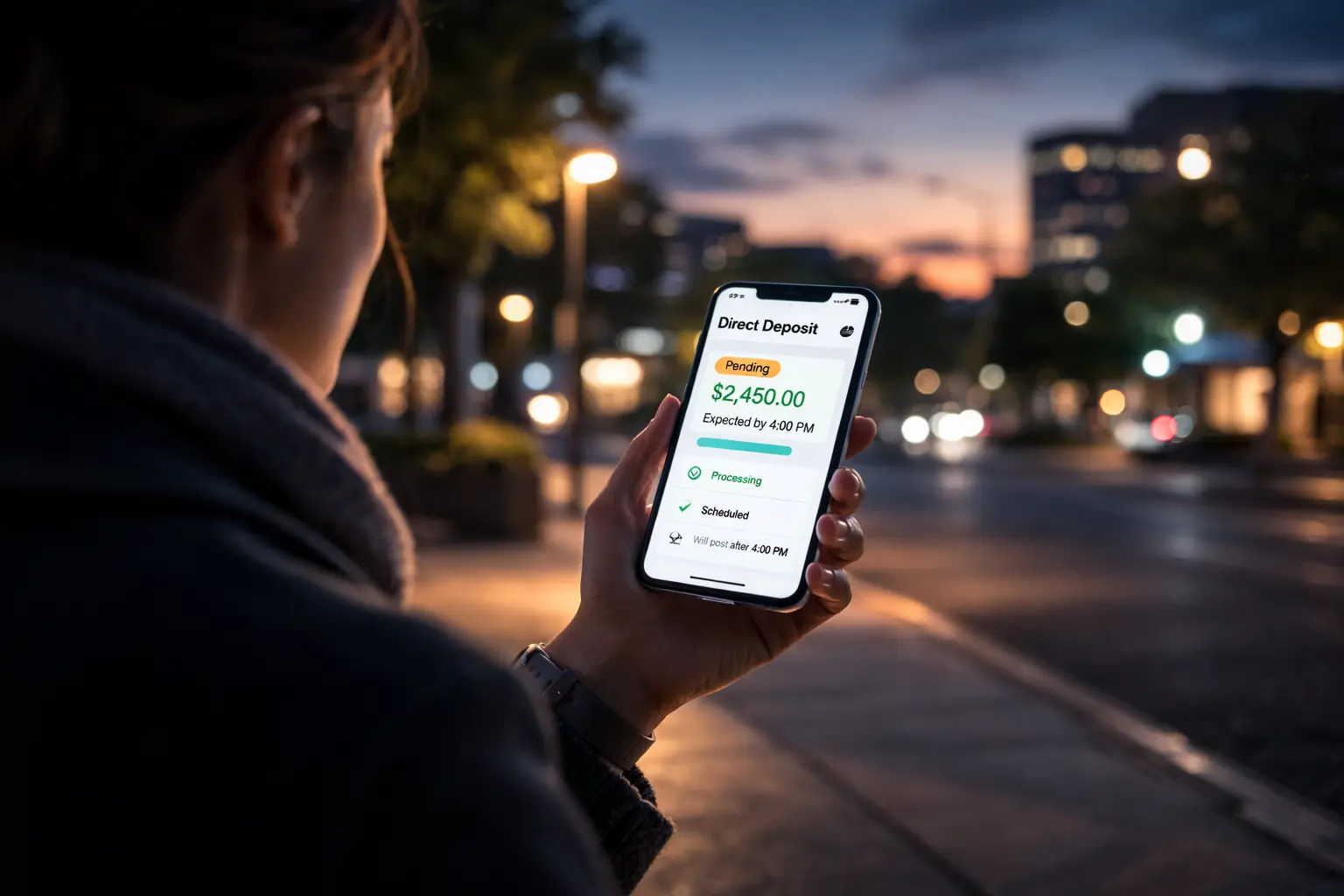
It’s 6:48 PM. You’ve finished work. You open your banking app. There it is. “Pending.” The direct deposit is visible, but your available balance hasn’t changed. You expected the money to land today. It technically has. But it hasn’t become usable yet.
When your direct deposit shows pending tonight, you’re seeing the space between authorization and settlement, and that space often widens after 4:00 PM Eastern. For many Americans, 4:00 PM feels like a deadline. If funds aren’t fully posted by then, anxiety rises. Will it clear tomorrow? Did the employer send it late? Did the bank hold it? The reality is structural.
How ACH Processing Actually Works
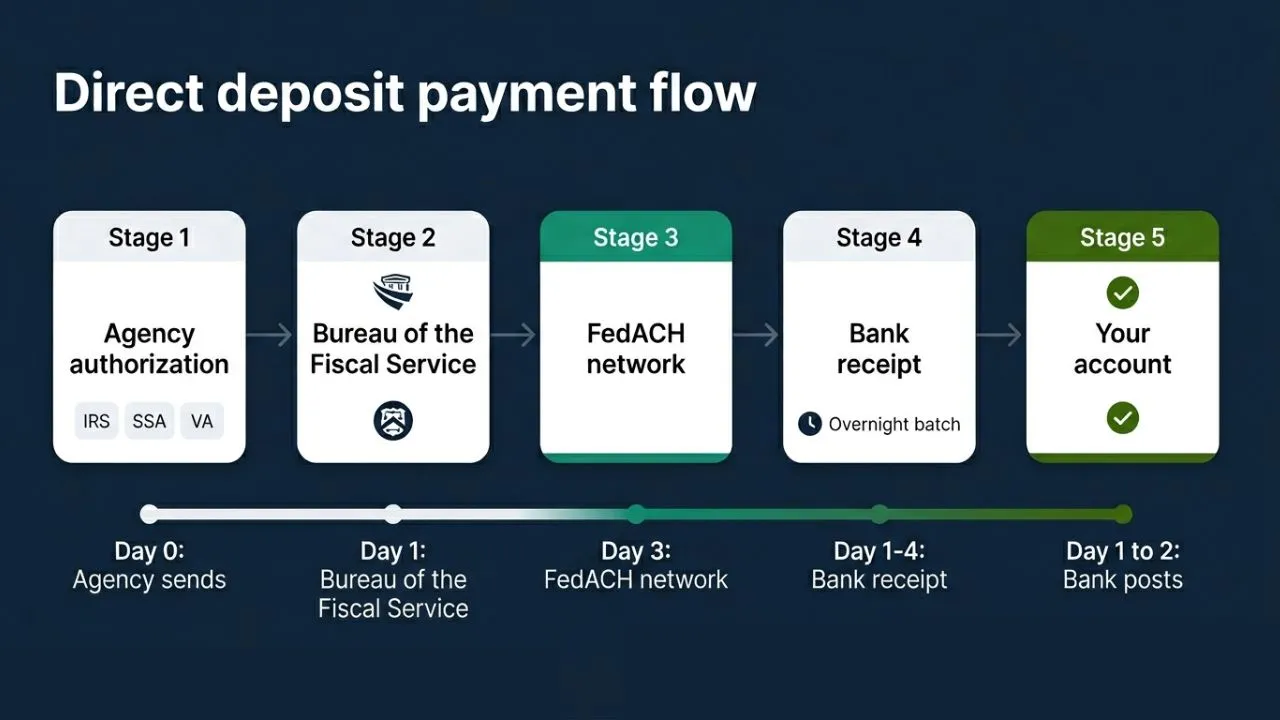
Most payroll files move through ACH batch windows during business hours. Employers typically submit payroll one to two days before pay date. The ACH network processes those files in scheduled cycles, as outlined in the official NACHA ACH schedule.
But banks decide when to reflect incoming credits as “available” inside consumer accounts. After 4:00 PM, many institutions close or reduce internal same-day posting windows. That does not stop settlement. It simply means the next visible update may occur during the following processing cycle, often early the next morning.
In other words, the file is there. The posting queue continues. But the visible ledger update waits. For more on how these settlement windows dictate timing, check the details on money movement cycles.
Why This Happens Most Late in the Week
This is especially common on Thursdays and Fridays. Payroll concentration peaks toward the end of the week. When thousands of employers submit files, banks reconcile credits in structured order. Even when funds are authorized, the balance update depends on ledger sequencing. Pending is not a warning.
It is a status indicator, much like what’s explained in this guide to direct deposits showing pending before clearing. The emotional friction happens because the word “pending” feels uncertain. In practice, it usually means the funds are mid-clear. You are seeing the payment before final posting completes.
Settlement Windows and Posting Cycles
To understand this fully, consider how settlement windows function. ACH operates in batch cycles tied to business days, with liquidity timing influenced by systems like those from the Federal Reserve Services. When files arrive late afternoon, they may settle technically but miss internal availability cutoffs for that day’s visible ledger refresh.
Banks prioritize accuracy over immediacy. That discipline protects against reversal risk and reconciliation mismatches. So the system waits for the next posting interval. That is why many deposits that show pending at 7:00 PM appear fully available between 6:00 AM and 9:00 AM the next morning. The money did not pause overnight. It completed its posting cycle. Dive deeper into Fedwire ACH liquidity timing for the mechanics behind it.
Why Holidays and Weekends Stretch the Gap
This distinction becomes even more noticeable before long weekends or federal holidays. Compressed settlement schedules increase the gap between authorization and availability. What feels like delay is often just calendar alignment, similar to how weekend banking feels slower.
There is also a behavioral layer. Evening is when households calculate bills, rent timing, or weekend spending plans. Seeing “pending” in that moment amplifies uncertainty. The timing creates psychological pressure. But structurally, nothing unusual is happening.
What Really Matters When You See Pending
When your direct deposit shows pending tonight, it is typically part of routine ledger sequencing. The key question is not whether the deposit was sent. It is whether you are viewing it before the posting window closes.
If the employer’s payroll was transmitted correctly, and the pending status confirms it was, the next clearing window usually resolves the gap automatically. Between late evening and early morning, banks finalize inbound credits. Internal reconciliation completes. Available balances update. Relief follows quietly.
The Bottom Line
Understanding this rhythm removes much of the emotional spike attached to the word “pending.” It is a staging phase, not a disruption. The U.S. payment system runs on schedules, not sentiment. After 4:00 PM, visibility shifts to the next operational window.
That is why evening pending often becomes morning availability. And in most cases, by the time you check your phone again over breakfast, the balance has changed, without drama, without explanation, just completion.
Author