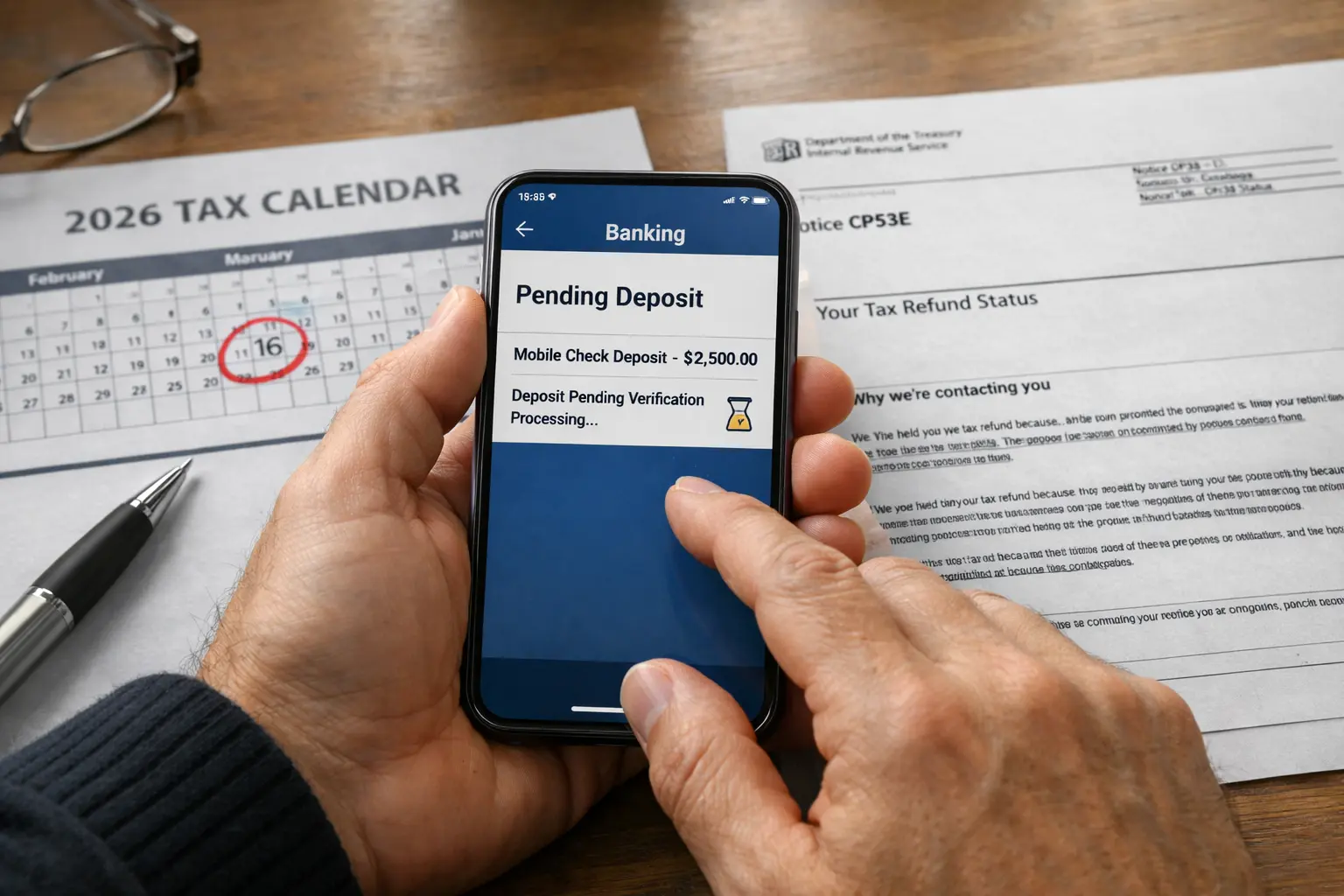
At 7:26 AM, someone checks their account before work. Payroll was scheduled for today. The deposit still has not moved.
The instinct is to question processing. Yet early paycheck posting is not about speed. It is about controlled exposure during a narrow liquidity window. When a bank releases funds before final settlement, it extends unsecured credit. That decision sits inside a regulated capital framework.
It reflects more than file reliability. The missing layer is stress modeling. Banks do not only price probability; they price failure scenarios before sunrise.
Provisional Credit Inside a Capital System
ACH payroll files move through clearing queues overnight. Net positions settle through Federal Reserve reserve accounts. Finality occurs only after that net settlement completes. Within the broader U.S. money movement architecture, provisional credit precedes reserve confirmation.
That credit creates temporary daylight exposure. Federal Reserve daylight overdraft policy defines how reserve shortfalls are treated. Fees apply when balances dip below zero, and pricing escalates with duration and size.
The Federal Reserve details daylight overdraft pricing and capacity limits here. Early posting therefore interacts directly with regulatory liquidity rules. A bank must ensure its reserve position can absorb unexpected reversals.
Capital does not merely protect against loss. It absorbs timing gaps. Basel III liquidity standards reinforce that discipline. Large banks maintain Liquidity Coverage Ratios calibrated for stressed outflows. Institutional risk positioning assumptions include provisional payroll credit. Thus, early paycheck posting exists inside capital guardrails, not outside them.
The 8:00–9:00 AM Reconciliation Threshold
Most consumer balances update between 8:00 and 9:00 AM Eastern Time. That settlement window timing reflects reserve verification cycles. It does not reflect file arrival.
ACH batch reconciliation completes earlier. However, institutions wait for reserve alignment before converting provisional funds. That conversion marks the shift from risk exposure to a true available balance.
Fedwire liquidity timing remains open overnight, yet internal liquidity dashboards refresh during early morning review. This rhythm connects to prior analysis of payroll settlement mechanics. The visible balance changes only after internal net positions confirm. A surplus allows confirmation; a marginal shortfall delays it.
Stress Scenario Modeling Before Sunrise
Now consider a concentrated payroll file of $40 million. The originator has a strong history. Return rates remain negligible. Still, risk teams model failure anyway.
If that file were reversed unexpectedly, provisional credits would become unsecured losses. Reserve balances could fall below daylight thresholds. Liquidity desks would need immediate funding through repo markets or Federal Reserve credit facilities.
Pre-holiday or autopay compression events amplify stress potential. Stacking events increase exposure density. Probability remains low, yet capital modeling assumes clustering. In extreme stress tests, institutions simulate multi-originator reversals. These simulations influence morning posting decisions more than consumer demand does.
Treasury Sequencing and NSS Netting
Federal benefit payments add another layer. The Bureau of the Fiscal Service schedules transmission files through defined settlement rails. Those payments settle via the National Settlement Service (NSS).
The Bureau of the Fiscal Service outlines federal payment processing within its Green Book guidance. Treasury sequencing can coincide with large corporate payroll batches. When that alignment occurs, reserve volatility rises temporarily.
Liquidity managers anticipate those overlaps days in advance, forecasting inflows and outflows hour by hour. Yet forecasting cannot eliminate all uncertainty. Early paycheck posting continues only when stress coverage remains intact.
Loss Containment and Unwind Mechanics
If a payroll file fails after provisional credit posts, containment protocols activate. The receiving bank issues return entries under NACHA rules, and customer balances may reverse. Internal caps limit how much provisional payroll credit can post relative to capital.
These caps reflect same-day ACH timing constraints and adjust to systemic conditions. This provides the necessary liquidity timing stability required to protect the institution.
Returning to the Household Perspective
From the outside, the morning check feels binary. Funds appear or they do not. Inside the institution, certainty unfolds through stress modeling. Risk desks confirm reserve sufficiency under adverse scenarios. Only then does provisional credit become final.
If a deposit appears at 8:41 AM, the system passed its stress check. If it appears later, buffers required adjustment. Neither outcome implies malfunction. Early paycheck posting reflects a calibrated decision inside a capital framework.
The visible balance is the final step of a larger process. Only when the system clears its own stress assumptions does the household balance update.
Author