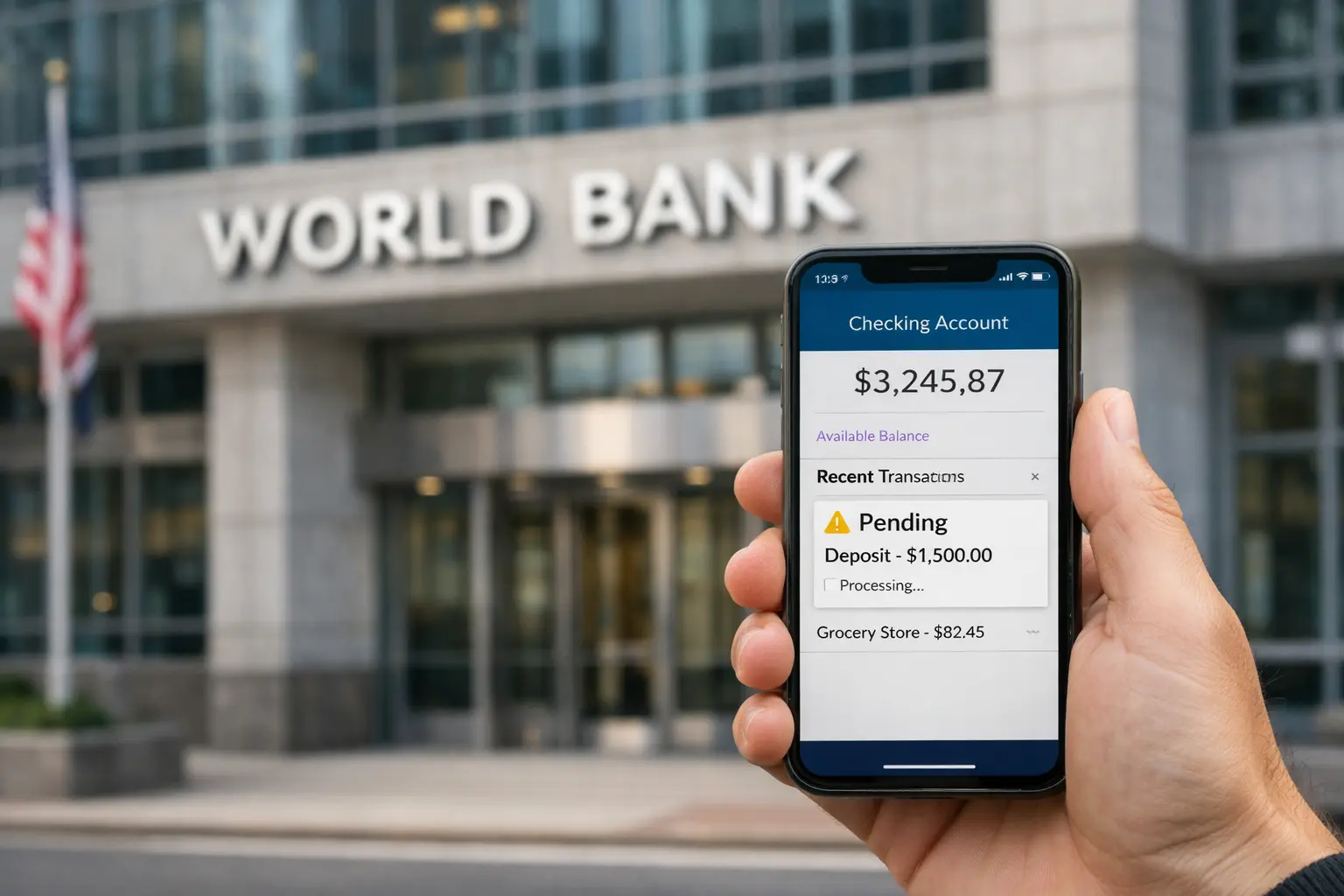
Most Americans are feeling the pressure of rising living costs, higher borrowing rates, and an unpredictable job market and that’s exactly why an emergency fund matters more than ever in 2025.
A well-planned cash cushion can protect you from sudden expenses, layoffs, medical bills, or even a temporary drop in income. This guide explains how much you should save, where to keep it, and the smartest steps to build a safety net that actually works for your life.
- Most U.S. households now face higher surprise expenses than in previous years, making a three-to-six month cash buffer more important for long-term stability.
- High-yield savings accounts remain the safest and fastest way to store emergency money while still earning strong interest in 2025.
- Families with variable income freelancers, gig workers, and self-employed benefit most from building a slightly larger cushion to handle slow-income months.
What Is an Emergency Fund
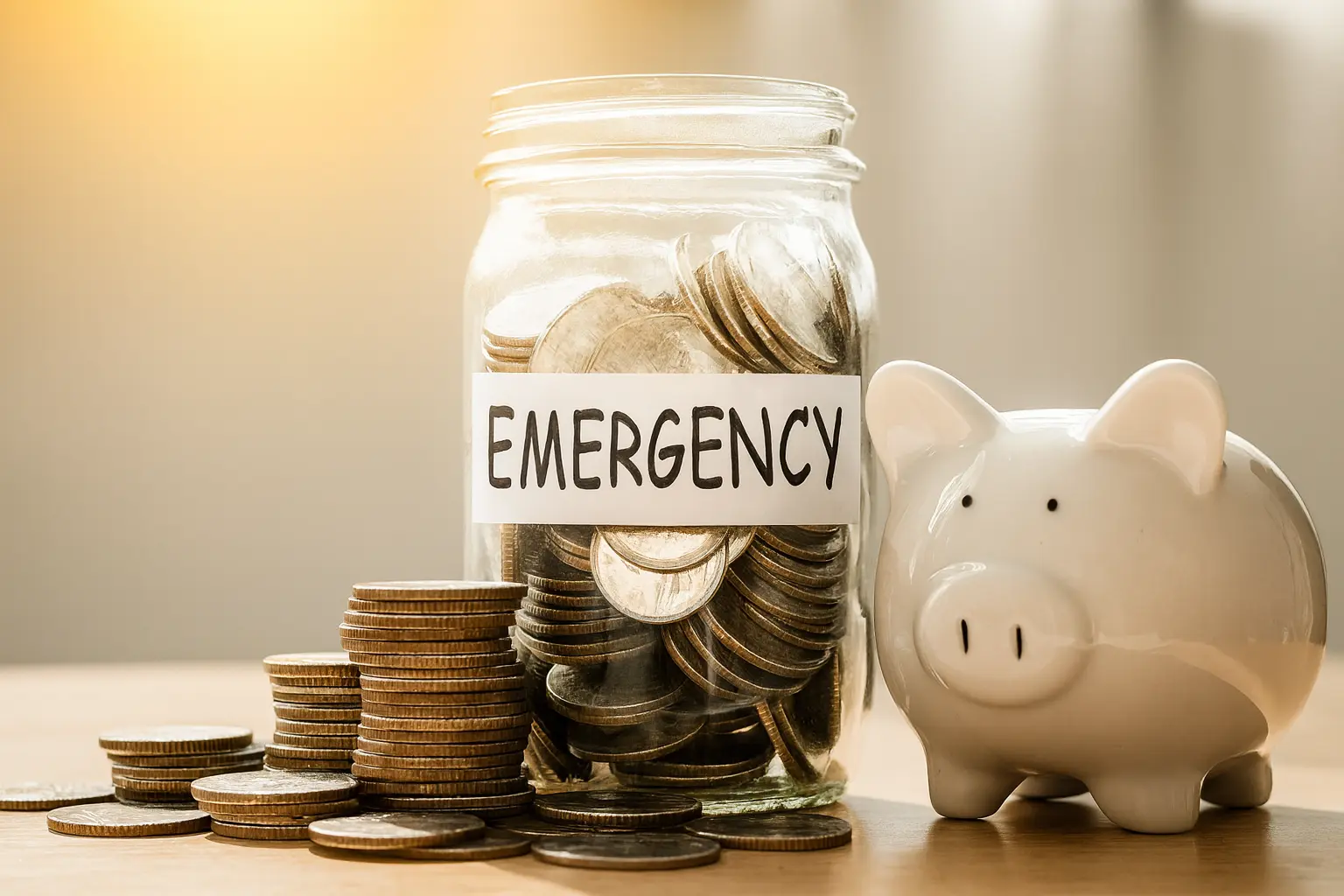
An emergency fund is a separate pool of money you set aside for unexpected expenses the kinds of financial surprises that hit without warning. This includes urgent medical bills, job loss, car repairs, home damage, or any situation where your normal income isn’t enough to cover the cost.
It’s not a savings account for vacations or upgrades. Its only purpose is to protect your financial stability when life becomes unpredictable. Having this dedicated buffer keeps you from relying on high-interest credit cards or personal loans at stressful moments.
It also prevents short-term problems from disrupting long-term goals such as retirement saving or building a solid financial base, which we discuss in guides like beginner investing and high-yield savings breakdowns. By separating this money from everyday spending, you create a clear safety layer that supports your overall financial health.

Emergency Fund: How Much Should You Save in 2025?
Learn exactly how many months of expenses you need in 2025, based on rising costs, income stability, and your household type. This guide walks you through real numbers, expert-backed rules, and smart savings strategies anyone can follow.
LEARN MOREWhy an Emergency Fund Matters More in 2025
An emergency fund matters even more in 2025 because financial risks are rising faster than most people’s ability to adjust. Prices for essentials like food, rent, insurance, and healthcare remain elevated even as overall inflation slows.
This means the same emergency like a car repair or medical visit now costs significantly more than it did two or three years ago.
The job market is also shifting, with more Americans working in contract, gig, and hybrid roles that come with less predictable income. A single missed paycheck can create immediate financial strain, especially for renters and families.


Without a cash buffer, many people fall back on credit cards where APRs often sit above 25%, as shown by recent Federal Reserve reports. This debt cycle becomes harder to break once interest builds.
Savings conditions have also changed. Checking accounts still pay close to zero interest, while high-yield savings accounts now offer far better returns. Keeping your safety money in the right place helps protect its value over time something we cover in our guide to best savings accounts.
With the cost of emergencies rising and borrowing becoming more expensive, having a dedicated emergency fund is one of the strongest protections for financial stability in 2025.
How Much Should You Really Save? 1–6 Months Rule Explained Simply
Most experts recommend saving between one and six months of essential expenses, but the right number depends on your lifestyle, income stability, and household responsibilities. Think of it as a range rather than a strict rule because every situation is different.
If your job is steady and your monthly costs are predictable, one to three months of expenses may provide a comfortable cushion. Renters or single adults often fall in this category. Households with children, homeowners, freelancers, or those with variable income generally need a larger buffer closer to three to six months to protect against longer job searches or unexpected repairs.
Start by adding up your necessary monthly expenses: rent or mortgage, groceries, utilities, transportation, insurance, and minimum loan payments. Multiply this amount by the number of months you want covered.
For example, if your essentials cost $2,800 per month, a three-month fund would be $8,400, while six months would require $16,800. Even saving half of your target makes a meaningful difference and reduces reliance on credit during emergencies.
To plan these numbers more accurately, you can review your banking habits and spending patterns through our guides on bank account types and budgeting steps across related financial topics. Meeting your own number is more important than hitting a universal benchmark and small, consistent contributions are usually enough to reach it over time.
Where Should You Keep Your Emergency Fund in 2025
The best place to keep your emergency fund in 2025 is somewhere safe, liquid, and earning reliable interest. For most households, a high-yield savings account is the strongest option because it pays far more than traditional banks while still keeping your money accessible within one or two business days.
These accounts also remain FDIC-insured, which protects up to $250,000 per depositor. You can compare different options in our guide to top savings accounts.
Money market accounts can also be a smart place for a larger fund, especially for homeowners or families who want slightly better yields without sacrificing safety. They typically offer check-writing access and ATM withdrawals, although limits vary by bank.
Some people also keep a small amount of cash at home for immediate needs such as short power outages or emergency travel. What you want to avoid is storing your entire safety money in checking accounts earning near-zero interest or in long-term investments.
Checking keeps your balance accessible but fails to protect your purchasing power. Meanwhile, locking up emergency cash in CDs or other fixed products can make withdrawals harder, especially when you need the money quickly.
Best Places to Keep Your Emergency Fund in 2025 Comparison Table
| Account Type | Safety | Liquidity | Average Yield (2025) | Ideal For | Notes |
|---|---|---|---|---|---|
| High-Yield Savings Account | Very High (FDIC/NCUA) | High (1–2 days) | 4.25%–5.00% | Most households | Best balance of safety + growth; easy online access |
| Money Market Account | Very High | High | 4.00%–4.75% | Larger households & homeowners | May allow checks/ATM; often requires higher balance |
| Short-Term CDs (3–6 months) | Very High | Medium | 4.50%–5.30% | Stable income earners | Higher rates but early withdrawal penalties apply |
| Checking Account | High | Very High (Instant) | 0%–0.30% | Small starter fund | Useful for $100–$300 immediate access only |
| Cash at Home | Medium | Instant | 0% | Immediate emergencies | Keep only $100–$200; not FDIC-insured |
| Treasury Bills (4–13 weeks) | Very High (U.S. Gov) | Medium | 5.00%+ | Advanced savers | Requires planning; not instantly accessible |
Source: FDIC National Rate Data | U.S. Treasury Rates
What Not to Do With an Emergency Fund Common Mistakes
Many people unintentionally weaken their emergency fund by placing it in the wrong accounts or using it for non-urgent spending. One of the biggest mistakes is investing this money in the stock market. While investments can grow over time, they also fluctuate daily.
A sudden drop can leave you with too little money when you need it most. Instead, investing should stay separate and focused on long-term goals like retirement or diversified portfolios such as those explained in our guide to robo-advisors.
Another common mistake is leaving the entire fund in a checking account. While convenient, checking earns almost nothing, meaning inflation slowly erodes your buying power.
Some people also end up dipping into it for everyday expenses simply because it’s too easy to access. A separate savings account builds a mental “barrier” that helps preserve the fund for true emergencies.
Using emergency savings for lifestyle purchases is also a costly habit. Vacations, new electronics, or upgrades should never come from your safety money. Once that cash is gone, you’re vulnerable to debt if something unexpected happens. Keeping the fund purely for emergencies protects your financial stability long-term.
How to Build an Emergency Fund Even If You’re Living Paycheck to Paycheck
Building an emergency fund feels impossible when money is tight, but small, consistent steps can create surprising progress. Start by automating a small transfer even $10 or $25 per week into a separate savings account.
Automation removes the pressure and helps you grow your cushion without constantly thinking about it. Over time, this habit builds a meaningful balance without major budgeting changes.
Look for one monthly expense you can temporarily cut or reduce. This could be unused subscriptions, dining out less, or adjusting phone and streaming plans. Redirecting even $30 to $50 each month toward your emergency savings makes a visible difference.
You can also use small windfalls like tax refunds, cashback, or bonuses to make quick progress without touching your main budget. Side income is another effective tool. Even a few hours of freelance work, deliveries, or seasonal jobs can accelerate the process.
Many U.S. families use side gigs to build savings faster, especially during periods when costs rise. Guides like personal loans also explain how to avoid high-interest debt while you build your safety net.
Pros and Cons of Building an Emergency Fund 2025 Overview
Building an emergency fund gives you a level of financial stability that most households never fully realize until they face a sudden setback. It protects you from relying on high-interest credit, helps you stay on track with long-term goals, and reduces stress during unpredictable moments. But, like any financial tool, it comes with both benefits and limitations, especially in today’s economic environment.
- Prevents expensive debt: A strong emergency fund reduces reliance on credit cards, where APRs often exceed 25%, according to Federal Reserve data.
- Protects long-term goals: Emergencies won’t interrupt retirement contributions or investing habits.
- Improves peace of mind: Knowing your essentials are covered for months reduces financial stress, especially in 2025.
- Supports income stability: Freelancers and gig workers benefit from extra liquidity during slow cycles.
- Boosts financial discipline: Keeping savings separate naturally reduces impulse spending.
- Takes time to build: Saving several months of expenses can feel difficult for paycheck-to-paycheck households.
- Opportunity cost: Emergency savings don’t grow like long-term investments
- Interest rates can fluctuate: HYSA rates move with the market. Check trends via the FDIC.
- Requires clear boundaries: People may spend it accidentally unless it’s in a separate account.
- Inflation pressure: Rising living costs in 2025 may require adjusting your emergency fund target.
What Counts as a Real Emergency and What Doesn’t
A real emergency fund withdrawal should be reserved for events that threaten your financial stability or basic needs. True emergencies include sudden job loss, an unexpected medical bill, a major car repair, or essential home damage such as a broken water heater or electrical failure.
These situations are unpredictable and require immediate attention, making your safety savings essential. Non-emergencies include vacations, gifts, phone upgrades, subscription renewals, or non-essential shopping.
These may feel urgent in the moment, but they don’t affect your ability to live safely or maintain income. Using your emergency savings for lifestyle spending weakens your protection and increases the likelihood of relying on expensive credit later.
If you’re unsure whether something counts as an emergency, ask yourself one question: “Would delaying this purchase for a few weeks create a real hardship?” If the answer is no, it’s likely not an emergency. Keeping clear boundaries ensures your fund lasts when you truly need it.
Should You Prioritize Debt or an Emergency Fund First?
Choosing between paying off debt and building an emergency fund depends on your interest rates and financial risk. If you hold high-interest credit card balances above 20%, it’s smart to split your efforts and pay more than the minimum while still saving a small amount monthly.
Ignoring one side entirely creates long-term trouble because debt grows quickly, but having no emergency savings forces you back into borrowing when the next surprise hits.
For low-interest loans like federal student loans or affordable car payments it often makes sense to prioritize savings first. This gives you breathing room while still keeping your repayment schedule on track.
Once you have at least one month of expenses saved, you can increase your payments to debt more aggressively. Your personal situation matters too.
Freelancers, gig workers, or families with unpredictable income usually benefit from building a slightly larger cash cushion before focusing on debt because their financial stability depends heavily on available savings. You can explore additional strategies in guides like tax-efficient investing and long-term planning resources.
How Often Should You Rebuild or Refill Your Emergency Fund
You should rebuild your emergency fund as soon as possible after any withdrawal, even if you can only add small amounts at first. Emergencies rarely come one at a time, and having a partial cushion is still better than having none at all.
Start by restoring at least one month of expenses, then work back toward your full target. Small, automated transfers like $20 or $50 weekly make the process manageable.
Seasonal moments also help you refill quickly. Tax refunds, yearly bonuses, and annual raises give many Americans the opportunity to restore part of their savings without straining their monthly budgets.
Federal data from the IRS shows that millions of households receive refunds each spring, making this a practical time to rebuild your reserve. You can also free up cash by reviewing insurance coverage or banking fees using guides like our detailed look at insurance basics.
If your income is inconsistent, review your savings every quarter. This helps you adjust for months with higher expenses or irregular pay. What matters most is maintaining steady progress until your fund reaches a level that feels secure for your situation.
Emergency Fund Examples for 2025 Realistic Savings Goals
Your ideal emergency fund depends heavily on your monthly expenses and household structure. Seeing real examples makes the numbers easier to understand, especially when planning your own target. These case studies reflect common U.S. situations and the typical amount each household might aim for based on 2025 living costs.
A single adult spending $2,200 monthly would need roughly $6,600 for a three-month cushion. A couple spending $3,800 each month would benefit from saving around $11,400.
Families with children often aim higher because unexpected school, medical, or childcare expenses can appear without warning. For example, a family of three with monthly essentials of $4,500 should consider a $13,500 safety reserve.
Remote workers or freelancers may need a slightly larger cushion because income patterns vary. Someone earning variable income might target four to six months saved to avoid taking high-interest credit during slow months.
For students or part-time workers, even a $1,000 starter fund provides meaningful protection while they focus on building credit through resources like our guide to student credit cards
Emergency Fund Targets by Household Type 2025 Guide
| Household Type | Monthly Essentials | 3-Month Fund | 6-Month Fund |
|---|---|---|---|
| Single Adult | $2,200 | $6,600 | $13,200 |
| Couple | $3,800 | $11,400 | $22,800 |
| Family of 3 | $4,500 | $13,500 | $27,000 |
| Freelancer | $3,000 | $9,000 | $18,000 |
| Student | $900 | $2,700 | $5,400 |
Source: U.S. Bureau of Labor Statistics Consumer Expenditure Survey (CES) | Federal Reserve Household Spending Estimates
You can adjust these examples based on your city, rent level, or transportation costs. Government data from the Bureau of Labor Statistics can help you track price trends when estimating future expenses.
Expert Tips to Stay Consistent and Motivated While Saving
Staying consistent with your emergency fund is easier when the process feels simple and automatic. Start by separating your savings into its own account so it doesn’t blend with everyday spending.
Many U.S. banks now allow automated transfers every payday, which reduces the mental pressure of deciding when to save. Even if you start small, automation ensures steady progress without constant effort.
Visual tracking also helps. Some people use budgeting apps, but a simple savings meter inside your banking dashboard can be just as effective. Watching your balance grow even slowly builds motivation.
If you need more structure, reviewing your financial habits through guides like joint accounts or tax-efficient saving can help you identify small areas to improve. Another strategy is splitting your goal into milestones.
Instead of thinking about thousands of dollars, focus on your first $500, then $1,000, then one month of expenses. Celebrate each step in a realistic way without overspending. This approach creates psychological wins that keep you moving forward even during tight months.
The Bottom Line
At the end of the day, your emergency fund should reflect your real lifestyle, not a rigid number found in financial textbooks. Most U.S. households fall within the three-to-six-month range because it balances protection with practicality.
But your ideal target may be higher or lower depending on your job security, rent level, or health needs. What matters most is choosing a number that helps you sleep comfortably at night. The goal isn’t perfection it’s resilience.
A well-built fund prevents everyday surprises from derailing your long-term goals, whether that’s investing wisely, preparing for retirement, or exploring safer low-risk options like those described in risk-free investments. With steady habits and a clear plan, anyone can build the financial stability they need in 2025’s challenging environment.
Investozora uses only trusted, verified sources. We focus on white papers, government sites, original data, firsthand reporting, and interviews with respected industry experts. When relevant, we also use research from reputable publishers. Every fact is checked against a primary source so readers get clear, accurate, and up-to-date information, and we update our citations whenever official guidance changes.
- Federal Reserve SHED Survey – Household financial stability, $400 emergency statistics, and yearly well-being metrics.
- Bureau of Economic Analysis (BEA) – Monthly U.S. personal saving rate and income trends.
- Federal Reserve G.19 Consumer Credit – Credit card APR trends, revolving debt, and national borrowing data.
- Federal Deposit Insurance Corporation (FDIC) – National deposit rates, insurance coverage, and bank safety standards.
- Consumer Financial Protection Bureau (CFPB) – Consumer finance research, regulatory reports, and market monitoring.
- U.S. Bureau of Labor Statistics (CPI) – Inflation data, cost of living trends, and consumer price changes.
- Consumer Expenditure Survey (CES) – Household spending, budgets, and annual consumption patterns.
- U.S. Treasury – Treasury bill yields, auction results, and short-term interest rate benchmarks.
Frequently Asked Questions
Author

-
The information on this site is for educational and general guidance only. It is not intended as financial, legal, or investment advice. Always consult a licensed professional for advice specific to your situation. We do not guarantee the accuracy, completeness, or suitability of any content.