April 3, 2026 • 4:20 AM ET
As of April 2026, millions of Americans are receiving direct deposits from the IRS, Social Security Administration, and VA that total near or above $2,000. Scammers are actively using fake $2,000 federal deposit notifications to steal banking credentials. Verify every payment only through official .gov portals before taking any action.
Millions of Americans search for information about a $2,000 federal deposit every year. Some are waiting on a real IRS refund that is taking longer than expected. Some received a confusing bank code and do not know what it means.
Some got a suspicious text message claiming they have unclaimed federal money. And some read a headline about the Treasury General Account or Federal Reserve losses and worried their direct deposit was at risk. This article answers every version of that question in one place.
What You Need to Know Right Now
- No single universal $2,000 federal deposit program exists. The $2,000 figure typically reflects a combination of IRS refunds, SSA monthly benefits, or VA disability payments arriving together.
- Your bank statement will show the code IRS TREAS 310, SSA TREAS 310, or VA TREAS 310 depending on which federal agency sent the payment.
- Treasury General Account processing means some accounts receive federal deposits hours before others, even within the same bank.
- The Federal Reserve’s financial position does not affect the safety or timing of your federal deposit. Government payments clear through a separate federal payment infrastructure.
- Any text, email, or social media message claiming you have an unclaimed $2,000 federal deposit is a scam. No real federal agency contacts you this way.
- Verify all federal payments at irs.gov/refunds, ssa.gov/myaccount, or va.gov/va-payment-history before taking any action.
It covers which real federal programs pay amounts near $2,000, what the Treasury bank codes on your statement mean, how Treasury processes and routes deposits through the banking system, whether Federal Reserve news affects your payments, and how to identify and report the scams that use fake $2,000 deposit claims to steal from Americans.
Which Federal Programs Can Total $2,000
No single federal government program issues a universal $2,000 direct deposit to all Americans. The $2,000 figure you see discussed online almost always refers to a combination of real federal payments arriving in the same deposit window, or to a specific individual circumstance where one program’s payment happens to total near that amount.
The IRS issues tax refunds as a federal deposit through the FedACH network. The average federal tax refund in recent years has ranged between $2,500 and $3,100, meaning many individual refunds do land near the $2,000 range depending on filing status and credits claimed.


Your IRS refund is not a universal payment. It is calculated from your specific return. You can verify your exact refund amount and delivery status at irs.gov refunds.
The Social Security Administration issues monthly retirement, disability (SSDI), and Supplemental Security Income (SSI) payments as federal deposits. A retiree at full retirement age receiving the average SSA benefit receives approximately $1,800 to $1,900 per month as of 2026.
Combined with a spousal benefit or a retroactive payment, a single deposit can reach or exceed $2,000. These payments are verified at ssa.gov my account.
The Department of Veterans Affairs issues VA disability compensation payments as federal deposits. A veteran rated at 70 percent disability or higher receives monthly payments that can exceed $1,700 to $2,200 depending on dependent status.
A retroactive VA payment covering multiple months can produce a single federal deposit well above $2,000. VA payment history is verified at va.gov payment history.
When multiple payments arrive together
Many Americans receive more than one federal deposit in the same banking period. A taxpayer who is also a Social Security recipient may receive an IRS refund and a monthly SSA benefit in the same week.
Those two deposits may appear as separate line items or, depending on how your bank batches incoming ACH credits, may reflect on your available balance simultaneously.
This is the most common reason a person’s total federal deposit activity in a given period reaches or exceeds $2,000 without any single program issuing that exact amount. For a full breakdown of how overnight ACH processing cycles create these same-day delivery windows, see our guide on overnight deposit processing.
What Treasury Bank Codes Mean for Your Federal Deposit
When a federal deposit arrives in your bank account, your statement displays a specific originator code that identifies which federal agency sent the payment. Understanding these codes is the fastest way to verify whether a deposit is real and which agency to contact if you have questions.
IRS TREAS 310 is the code that appears when the Internal Revenue Service sends a payment through the Treasury’s fiscal service. This code covers federal tax refunds, Economic Impact Payments, and advance Child Tax Credit disbursements.
If you see IRS TREAS 310 on your statement, the payment originated from the IRS. The description field following the code will typically include a reference such as TAX REF for a refund.
SSA TREAS 310 identifies payments originating from the Social Security Administration. This code covers retirement benefits, SSDI, SSI, and survivor benefits. The description field will show SUPP SEC for SSI payments or SOC SEC for retirement and disability payments.
VA TREAS 310 identifies payments from the Department of Veterans Affairs covering disability compensation, pension, education benefits, and other VA programs. VACP TREAS 310 specifically denotes VA compensation and pension payments.
Why your deposit shows pending before it clears
Federal deposits transmitted through the FedACH system are pre-advised to your bank before the actual settlement occurs. Your bank receives notification of an incoming federal deposit one banking day before funds are available, which is why your account may show a pending credit before the balance updates.
Some banks release federal deposits early based on their own policies. Others hold the deposit until the official settlement window, typically between 6:00 AM and 9:00 AM Eastern time on the settlement date. This pending status does not mean your payment is delayed or in question.
It means the standard federal deposit processing cycle is working as designed. For context on why early morning deposit timing varies by bank, see our breakdown of early morning deposit delays.
How Treasury Processes and Routes Federal Deposits
All federal payments originate from the Bureau of the Fiscal Service, which is a division of the U.S. Department of the Treasury. The Fiscal Service maintains the Treasury General Account, commonly called the TGA, which is the primary operating account the federal government uses to pay obligations including tax refunds, Social Security benefits, VA payments, and all other federal disbursements.
When the Treasury releases a batch of payments, those payments enter the Federal Reserve’s FedACH network. The Federal Reserve then routes each payment to the appropriate receiving bank based on the routing number in the payment file.
From the Federal Reserve, the payment moves to your specific bank, then to your specific account. This entire journey from Treasury authorization to your account typically completes within one to two business days for standard federal deposits.
Why some accounts clear before others
Within a single bank, different accounts may receive the same batch of federal deposits at different times. This happens because large banks process incoming ACH files in sequential batches organized by account type, account number range, or branch code depending on internal processing architecture.
A savings account at one branch may clear a federal deposit two to three hours before a checking account at another branch, even if both deposits were transmitted in the same Treasury payment file.
This is normal and does not indicate a problem with your payment. For a detailed breakdown of how FedACH settlement sequencing works, see our guide on FedACH settlement delays.
Does the Federal Reserve’s financial position affect your federal deposit
No. The Federal Reserve has operated with a negative unrealized portfolio position in recent periods due to interest rate movements affecting the value of its bond holdings. Headlines about Federal Reserve losses or Treasury insolvency concerns have caused widespread confusion about whether individual federal deposits are at risk. They are not.
The Federal Reserve’s role in federal payment processing is as a payment infrastructure operator, not as a guarantor of funds. Federal deposits are authorized and funded by the U.S. Treasury through Congressional appropriations.
The Federal Reserve’s own financial position is legally and operationally separate from the safety of your IRS refund, SSA benefit, or VA payment. For a broader understanding of how all these systems connect, see our overview of the U.S. money movement system.
How to Identify $2,000 Federal Deposit Scams
The $2,000 federal deposit has become one of the most actively exploited themes in financial fraud targeting Americans. Scammers use the believability of real government payment programs to craft messages that prompt victims to click links, provide banking information, or pay fees to claim money that does not exist.
Never Click or Respond to These
- Text messages claiming you have an unclaimed $2,000 federal deposit with a link asking you to verify your identity.
- Emails using IRS or U.S. Treasury logos stating your $2,000 payment is pending and requires banking confirmation.
- Social media posts or ads announcing a new $2,000 federal relief program with a sign-up or claim link.
- Phone calls from someone claiming to be the IRS or Treasury asking you to confirm your bank account number to receive a deposit.
- Websites designed to mimic official sites like irs.gov, ssa.gov, or treasury.gov but using slightly altered or misspelled URLs.
The IRS does not initiate contact through text message, social media, or email to notify you of a refund or payment. The Social Security Administration does not text you about unclaimed benefits. The Treasury does not send unsolicited emails with deposit confirmation links.
Every legitimate federal payment notification arrives through your official agency online account, through official U.S. mail, or as a direct deposit to the account you registered with the agency during enrollment.
If you received an unsolicited message claiming you have a $2,000 federal deposit, do not click any link in the message. Do not call any phone number provided in the message.
Open a new browser window and navigate directly to irs.gov, ssa.gov, or va.gov to check your account. If no deposit is shown in your official account, the message was fraudulent.
Report scams to the Federal Trade Commission at reportfraud.ftc.gov. Report IRS impersonation scams specifically to the Treasury Inspector General at treasury.gov TIGTA.
Reporting protects other Americans from the same scam. For a detailed look at how federal payment fraud connects to broader payment system vulnerabilities, see our article on federal payment balance issues.
When Your Federal Deposit Does Not Arrive as Expected
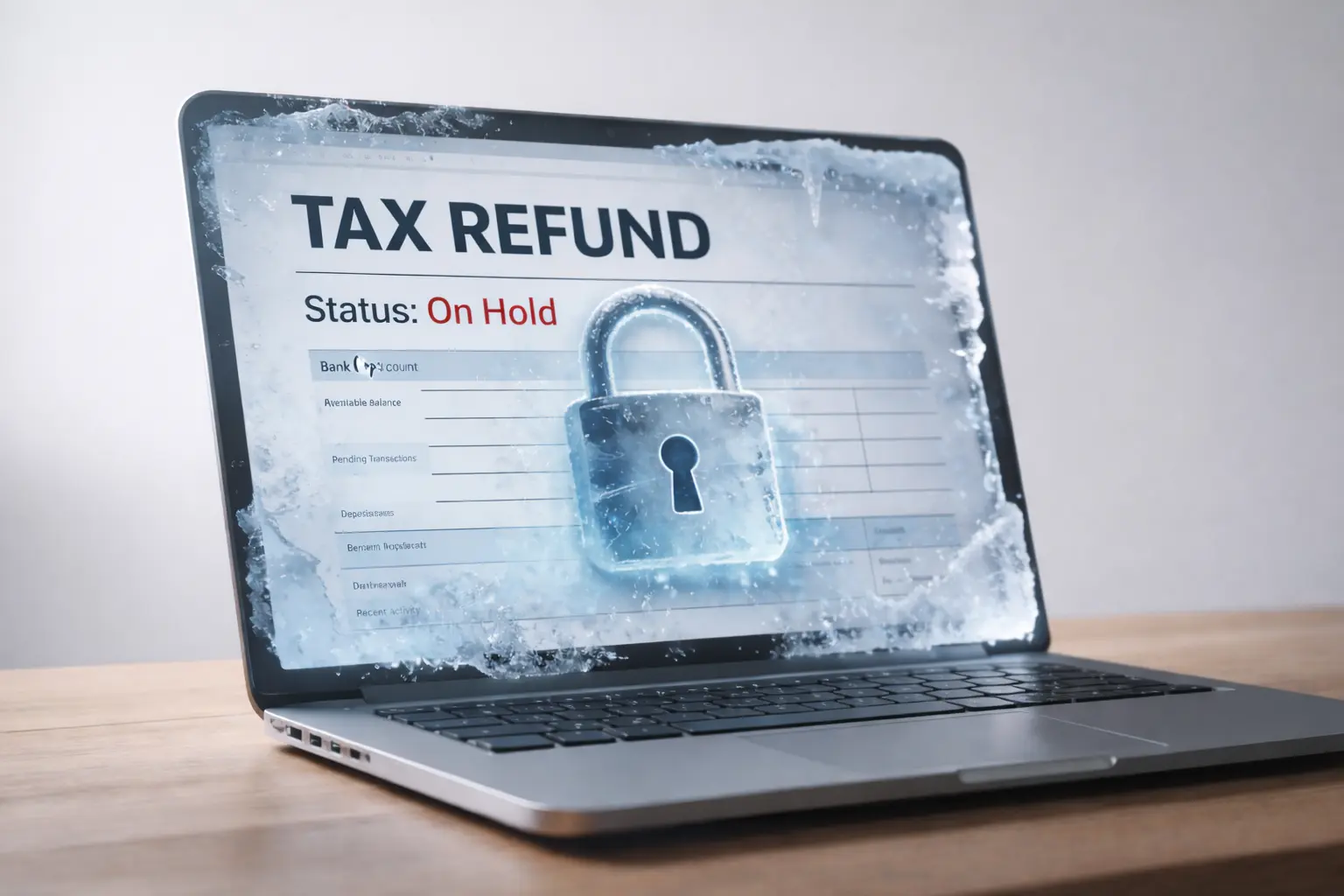
If you are expecting a real federal deposit and it has not arrived within the expected window, the cause is almost always one of four things: an incorrect bank account number on your original filing, a bank processing delay in the FedACH settlement cycle, a refund freeze triggered by a verification requirement on your return, or a mailing address issue if your deposit was converted to a paper check.
For IRS refunds, check your status at irs.gov/refunds before taking any other action. The tracker updates once per day and will show whether your refund is approved, sent, or held for review.
If your refund shows as sent but has not appeared in your account, the issue is typically a one to three day ACH settlement lag rather than a true payment problem. For the full explanation of why a payment can show sent while your balance remains at zero, see our guide on refund approved zero balance.
For SSA and VA payments that have not arrived on their expected payment date, contact the relevant agency directly. SSA recipients can call 1-800-772-1213.
VA recipients can call 1-800-827-1000. Both agencies can initiate a payment trace if the deposit cannot be located within three business days of the scheduled payment date.
Weekend and banking holiday timing affects all federal deposits. Federal deposits scheduled to arrive on a Saturday, Sunday, or federal holiday are processed on the next banking business day.
If your expected federal deposit date falls on a weekend, your account will reflect the payment on the following Monday morning. For detail on how weekend timing affects deposit availability, see our guide on weekend banking slowdowns.
What You Should Do Now
- Verify your federal deposit amount and status directly at irs.gov/refunds, ssa.gov/myaccount, or va.gov/va-payment-history. Use only these official URLs typed manually into your browser.
- Check your bank statement for the IRS TREAS 310, SSA TREAS 310, or VA TREAS 310 code. If the code is present, your federal deposit was received. Contact your bank if the funds are not yet available.
- If you received a text, email, or social media message about a $2,000 federal deposit, do not click any link. Report it immediately at reportfraud.ftc.gov.
- If your federal deposit shows sent by the agency but has not posted to your account, wait three banking business days before escalating. FedACH settlement lags of one to two days are normal.
- If three banking business days have passed and your federal deposit has still not arrived, call the relevant agency and request a payment trace using your Social Security number and the expected payment date.
- Edge case: if your return included an address or banking change, your federal deposit may have been converted to a paper check. Check your IRS account at irs.gov to confirm delivery method and mailing address on file.
A real federal deposit follows a documented, traceable path from Treasury authorization through FedACH settlement to your account. Every step of that path is verifiable through official agency portals. If your federal deposit is real, the evidence will be in your official account. If it exists only in a text message or social media post, it is not real.
Editorial Note: Investozora is an independent news publication. This content is for informational purposes only. For official guidance, please visit the relevant .gov website.