When Calm Markets Don’t Mean Balanced Markets
Most investors notice it instinctively: some days the market barely seems to move. Prices drift slowly, headlines grow quieter, and the emotional intensity of active trading fades.
What looks like stability, however, is rarely the result of perfect balance. It is usually the result of fewer participants moving through the financial system at the same time.
In everyday life, stability means equilibrium—like a steady bridge. Financial markets work differently. When volume falls, prices do not necessarily reflect agreement; they reflect absence.
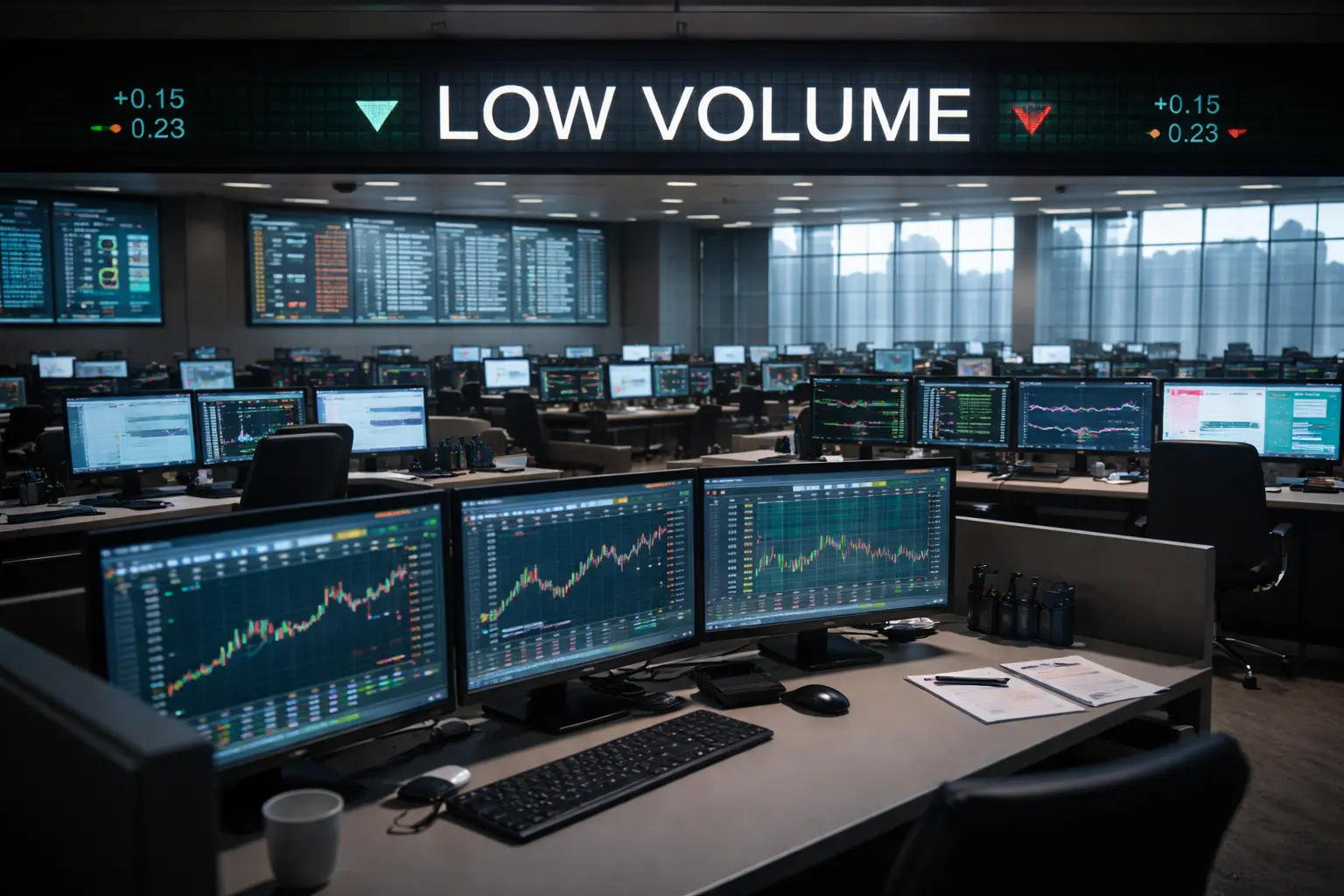
During low-activity periods, a small number of trades can move prices disproportionately. The market may look peaceful, but it is thinner and more sensitive to sudden flows of capital.
How Volume Becomes Liquidity in Practice
Trading volume is the visible expression of liquidity—the ease with which money moves without distorting prices.
- High Volume: Deep order books, multiple participants, and continuous price discovery.
- Low Volume: Fewer counterparties, wider spreads, and fragile stability.
In U.S. markets, liquidity flows through clearing systems and institutional balance sheets. When participation declines, those channels still operate, but with thinner buffers.
A trade that barely registers during high-volume hours can shift prices noticeably during a thin market. This is structural calm, not structural strength.
Timing Effects That Quietly Shape Prices
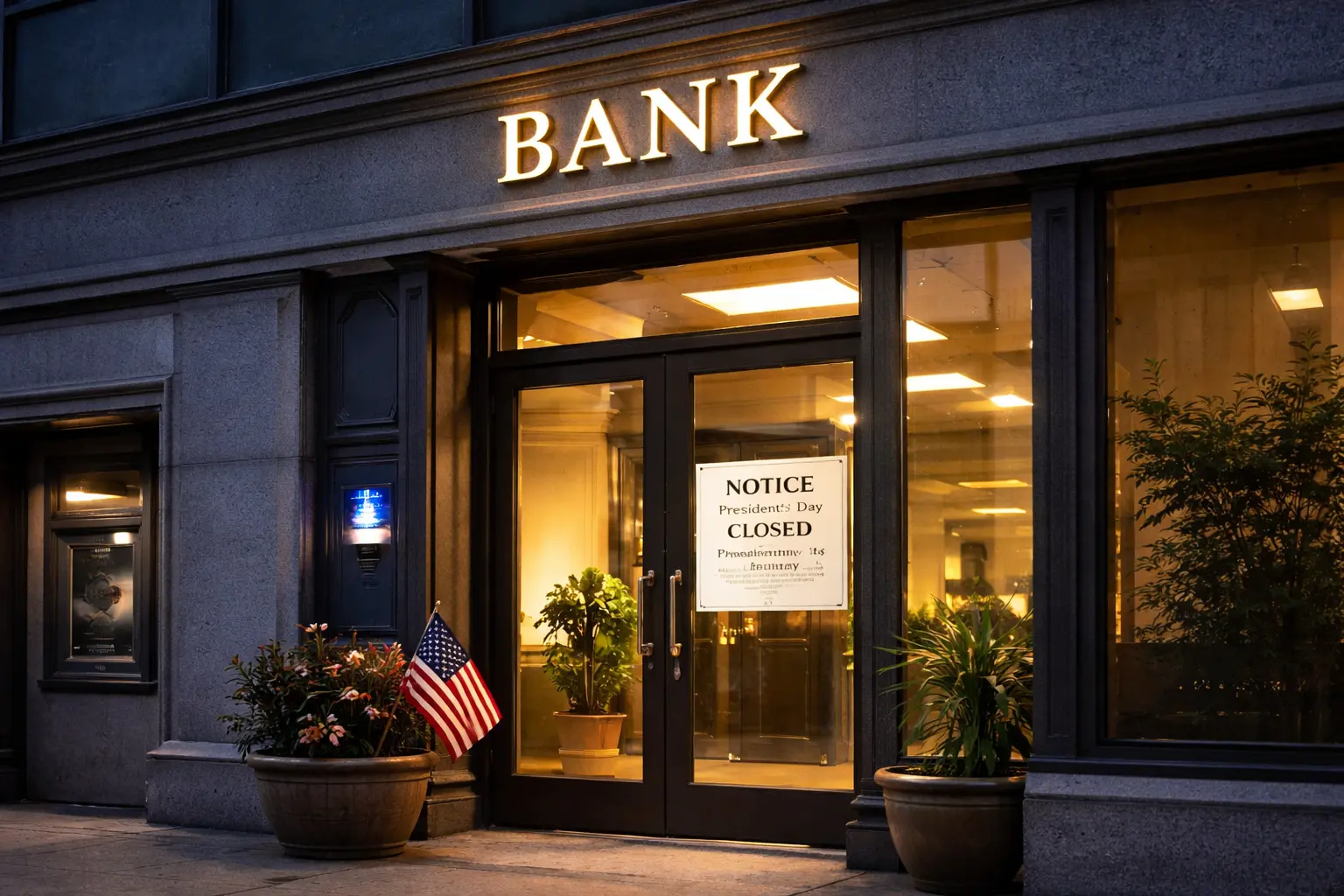
Lower volume rarely happens randomly. It clusters around predictable windows—holidays, settlement cycles, and institutional risk resets. Money does not flow continuously; it moves in waves. When flows pause, price movement compresses and volatility appears lower, but the underlying liquidity pool shrinks.
This timing distortion is visible in patterns like weekend drift, when prices stabilize ahead of closures not because fundamentals improve, but because participants are less active.
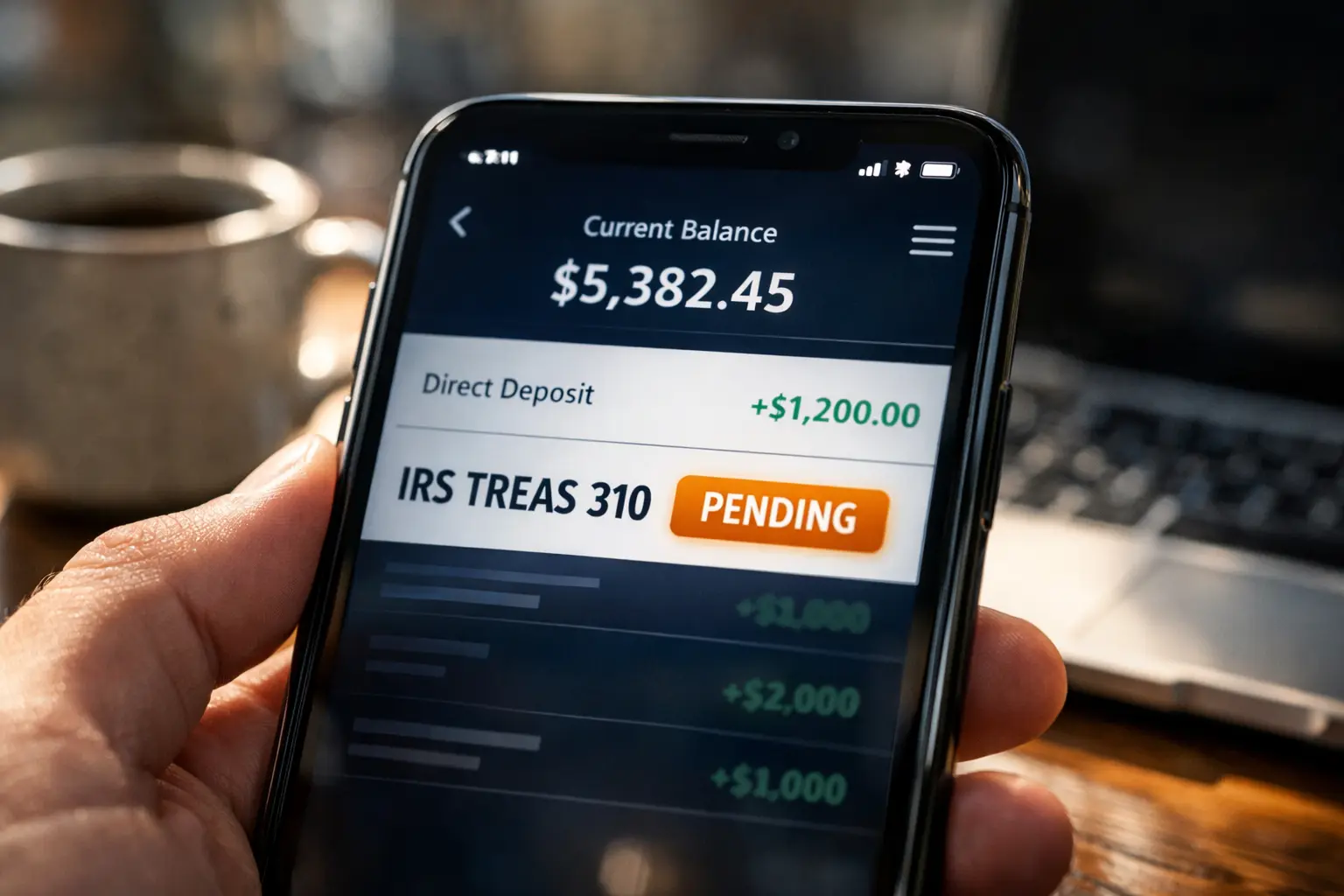
These effects are hardwired into the broader money movement infrastructure, the treasury system clearing protocols, and specific liquidity timing windows.
The Institutional Layer Beneath Thin Markets
Large institutions interpret low volume mechanically rather than emotionally. Banks monitor settlement exposure while trading desks adjust risk when liquidity thins. When volume drops, institutions may reduce trade size or widen spreads, further reinforcing thin conditions.
Simultaneously, settlement obligations still move through clearinghouses. Capital must be positioned to cover payment flows and regulatory buffers even when trading slows.
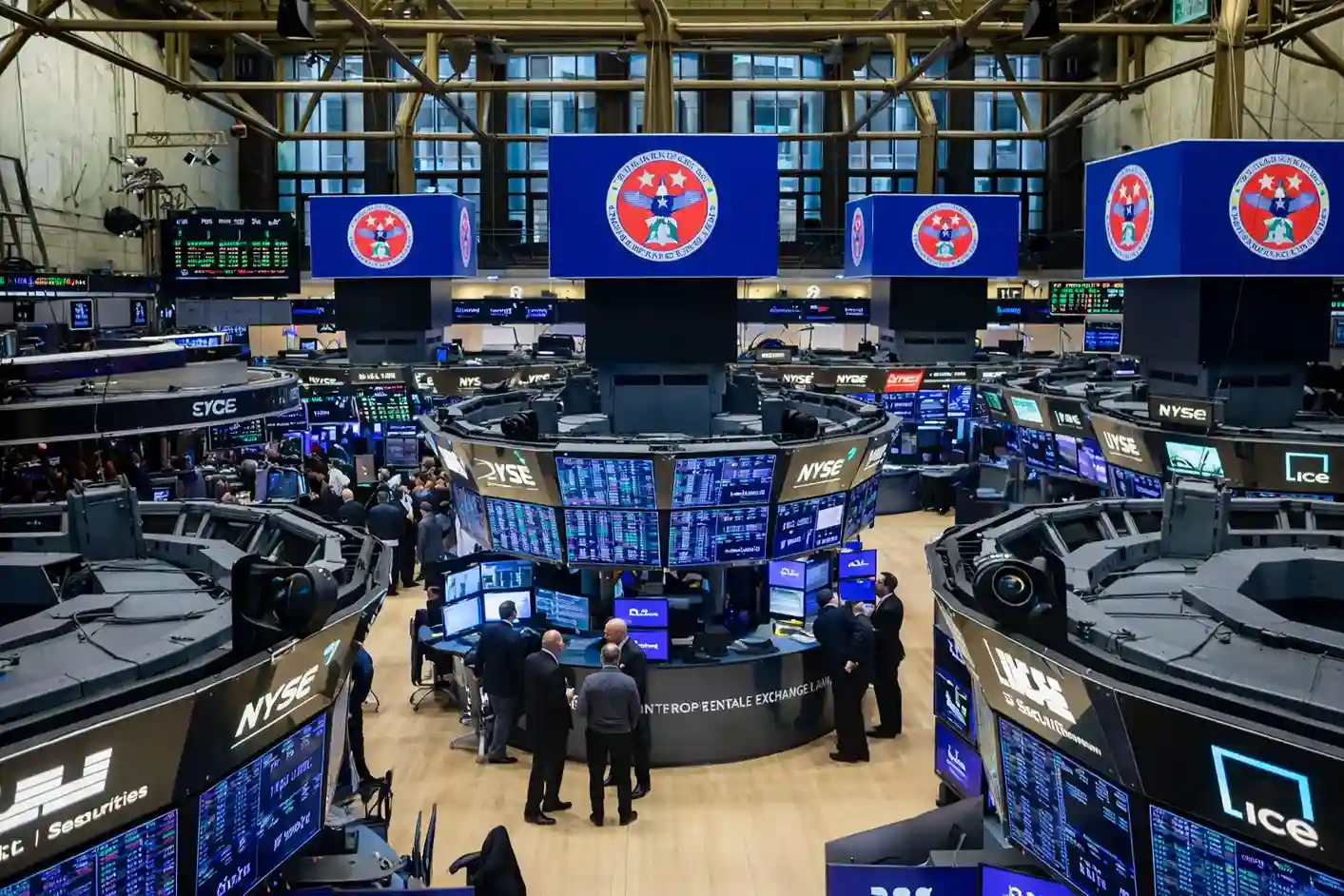
According to NYSE market data, volume compression during these windows confirms that calm periods are participation-driven, not valuation-driven. The structure tightens, and risk becomes more concentrated.
Why Thin Stability Matters for Households
For everyday investors, low-volume stability can create misleading signals. Calm markets feel safe, but thinner liquidity means:
- Small shocks move prices faster.
- Institutional exits have greater impact.
- Risk is absorbed by fewer participants.
This is why sudden drops often follow periods of quiet trading. It is a dynamic mirrored in household behavior through financial fragility and the velocity trap—where spending looks sustainable until the moment liquidity tightens. Low activity hides pressure; high participation reveals reality.
The Bottom Line: Stability Is Often a Timing Illusion
Lower trading volume does not create balance; it reduces interaction. Prices may appear stable, but that calm reflects thinner liquidity moving through structured timing windows.
Money does not simply “arrive”—it moves through systems where settlement mechanics and institutional positioning dictate the rhythm.
Low-volume stability reflects how U.S. money movement flows through timed liquidity windows, not constant trading. Those effects sharpen during holiday liquidity pauses. When volume fades, stability rises, but resilience falls. The structure never stops working—only participation does.
Author