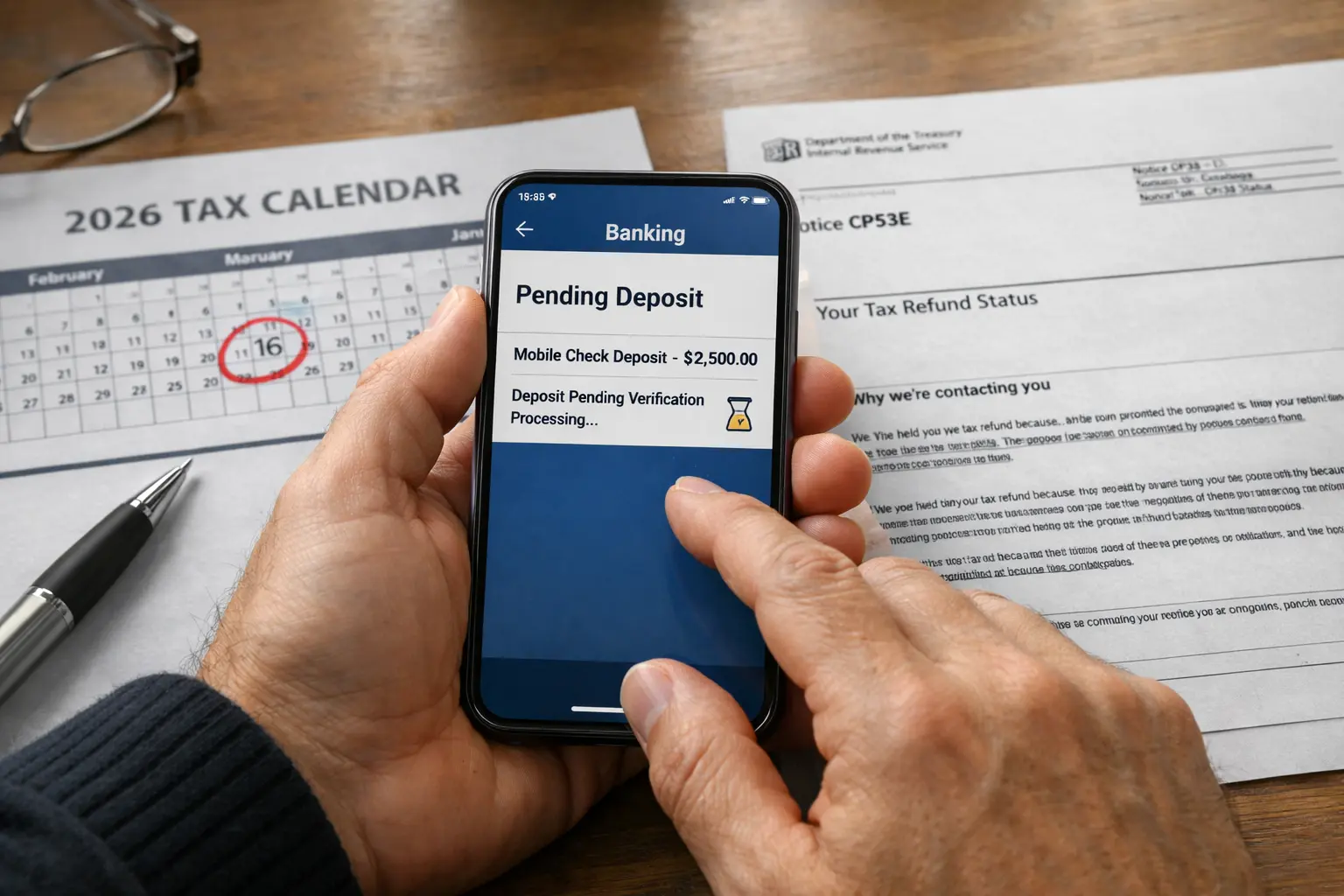
At 8:14 AM, the banking app still shows yesterday’s balance. The payroll email arrived the night before. The employer’s system marked the payment as transmitted.
Everything, in theory, had already happened. Yet the number on the screen has not moved. Another refresh. Still unchanged.
What feels like a delay is rarely a missing payment. It is almost always the visible edge of a much larger institutional sequence, a choreography of clearing systems, liquidity controls, and ledger transitions that govern how money moves through the American banking system.
Between the moment a payment is initiated and the moment a household sees it reflected in an account balance, funds pass through multiple structural layers designed for safety, finality, and systemic stability. Overnight clearing cycles are not pauses.
They are synchronization phases. To understand why balances change when they do and not when a sender clicks “submit”, requires tracing the full infrastructure of U.S. money movement.
Payment Initiation: Where Every Transfer Begins
Every deposit starts as a structured payment instruction. Employers generate payroll settlement files. Federal agencies transmit benefit batches.
Corporations submit vendor settlement runs. Treasury disbursements originate from centralized federal payment systems.
These instructions are not individual transfers in the consumer sense. They are massive datasets formatted to strict banking standards — routing numbers, account identifiers, settlement dates, amounts, trace codes, and risk classifications.
Before anything moves, banks perform file validation, fraud screening, compliance filters, and early deposit risk estimation.
Institutions assess how incoming and outgoing flows will affect their liquidity position for the next settlement cycle. At this stage, no money has moved. Only obligations have been created.
ACH Batch Construction and Submission Windows
Most everyday payments, payroll, Social Security, tax refunds, bill payments, enter the Automated Clearing House network. Rather than settling one by one, ACH aggregates millions of instructions into time-based batches.
Banks submit these batches into clearing queues according to strict ACH cutoffs including evening processing windows, overnight settlement cycles, and early morning distribution phases.
Each batch carries an effective settlement date — not a posting promise, but a system-level instruction for when obligations will be netted and funded between institutions. Once submitted, banks cannot accelerate them. They now belong to the clearing system.
To see how this fits into the broader infrastructure, Investozora maps the full architecture in its money movement system pillar. ACH does not move money instantly. It moves obligations that will later be balanced through institutional settlement.
Clearing Queues and Net Settlement Logic
When ACH operators receive batch files, they do not send funds directly. They calculate net positions. Every participating bank simultaneously owes and is owed money across thousands of counterparties.
Rather than settle each payment individually, the system compresses millions of transactions into a single net debit or credit per institution.
Example: Bank A owes $120 million, Bank A is owed $107 million, Net settlement obligation: $13 million. This netting process dramatically reduces systemic risk and liquidity strain.
But it also means no individual deposit is “funded” on its own. Everything waits for institutional net settlement. Only after all clearing queues finalize can actual reserve transfers occur.
Fedwire and Final Settlement Liquidity
Once net positions are calculated, settlement occurs across reserve accounts held at the Federal Reserve. This is where finality happens. The Fedwire Funds Service moves central bank money, not commercial bank balances — between institutions to satisfy clearing obligations.
Unlike ACH’s deferred netting model, Fedwire transactions are real-time, irrevocable, and fully funded at the moment of transfer. Banks use Fedwire liquidity timing to settle ACH net obligations, move high-value interbank payments, rebalance liquidity positions, and manage exposure thresholds.
Fedwire reopens each operational day in the early morning hours, allowing institutions to complete settlement cycles before retail posting begins.
The system serves as the ultimate settlement rail of the U.S. financial system, operated by the Federal Reserve. Without Fedwire liquidity transfers, ACH clearing would remain theoretical. This is the bridge between obligations and actual money.
Treasury Payment Coordination
Federal payments follow an additional institutional layer.
Social Security, tax refunds, veterans benefits, and other government disbursements originate through Treasury payment flow systems before entering ACH clearing.
The U.S. Treasury consolidates massive disbursement files that synchronize benefit schedules, fiscal calendars, liquidity projections, and reserve account funding.
Rather than releasing payments randomly, Treasury aligns releases to settlement cycles to ensure sufficient reserves flow through the banking system. Large federal payment days are among the highest liquidity movement days in U.S. finance.
The architecture is managed by the U.S. Department of the Treasury, coordinating directly with Federal Reserve settlement infrastructure. Readers can review the official documentation directly through the appropriate U.S. government source.
These processes are even impacted during a federal holiday which pauses the standard distribution cycle.
Reserve Account Balancing Between Institutions
Every bank holds a reserve account at the Federal Reserve. These are not customer balances. They are institutional settlement accounts.
After clearing, some banks owe reserves while others receive reserves. Fedwire transfers adjust these balances to reflect net settlement obligations.
But banks do more than simply settle. They actively manage intraday liquidity buffers, overnight reserve targets, regulatory minimums, and stress exposure limits. Large institutions forecast incoming and outgoing flows hour by hour.
If projected settlements would drop reserves below thresholds, banks borrow in overnight markets or reposition assets to maintain stability. This layer ensures the payment system never depends on hope, only on funded positions.
Ledger Rollover and Exposure Controls
Once settlement is complete at the reserve level, commercial banks still must synchronize internal ledgers. This is where consumer-visible balances come into play.
Banks operate on ledger days — defined accounting periods that close, reconcile, and reopen in controlled windows.
During overnight processing, cleared transactions are applied, provisional credits are finalized, exposure models are reset, and fraud and reversal buffers are released. Institutions enforce posting controls and sequencing rules to prevent sudden liquidity shocks.
This is why a payment can be settled at the Federal Reserve yet remain invisible to a household for hours. The money exists, but the ledger has not reopened.
Investozora explains this timing relationship in detail within its settlement-focused analysis of settlement windows. The delay is not risk. It is synchronization discipline.
Posting Windows and Balance Availability
Only after clearing finalizes, reserves transfer, ledgers roll, and exposure models reset do banks allow retail posting systems to update customer balances.
Most institutions run ledger updates in controlled clusters such as early morning (often 8–9 AM), midday updates, or late afternoon adjustments.
Some banks post once per cycle while others post in waves. But none post continuously because continuous posting would destabilize liquidity forecasting, disrupt exposure models, and increase settlement risk. The structured delay is what keeps the system safe.
Investozora breaks down how balance availability becomes visible in its operational review of posting windows. Availability is not a reflection of when money was sent. It reflects when institutional systems complete their full safety sequence.
Why the System Is Built This Way
The American payment infrastructure prioritizes systemic stability, liquidity certainty, risk containment, and settlement finality. Speed is secondary. Not because technology is slow, but because safety scales.
Every overnight cycle ensures trillions in obligations compress into funded settlements, exposure resets before new activity begins, institutions remain liquid under stress, and households receive money backed by real reserves.
Instant visibility without settlement discipline would multiply financial risk. The calm, structured rhythm is intentional.
Returning to the Morning Balance
Back at 8:14 AM, the balance still has not changed. But beneath the screen, ACH obligations have netted, Fedwire reserves have moved, Treasury disbursements have cleared, and ledgers are rolling forward. Even if you saw pending deposits earlier, the final release follows this rigid choreography.
When the posting window opens, the number will update — not because the money just arrived, but because the system has completed its overnight synchronization.
What feels like a delay is the visible boundary between obligation and finality. Liquidity moved hours ago. Safety simply came first.
Author