Money often feels emotional when it moves slowly. A paycheck shows pending. A transfer appears approved but untouched. A payment promise exists without arrival. For households, the gap feels personal, like delay, friction, or even failure.
But inside the U.S. financial system, nothing is broken in those moments. What looks like hesitation is usually structure doing exactly what it is designed to do.
By the end of this article, you’ll understand how the settlement windows quietly govern when money actually becomes usable and why timing, not intent, controls financial reality.
When Money Feels Late but the System Isn’t
Everyday financial behavior is built around expectation. If an employer submits payroll on Friday, many people assume money should appear Friday. If a refund is authorized, arrival feels imminent. When it doesn’t happen, frustration follows. That reaction is human; our brains connect cause and effect instantly.
But modern money movement doesn’t operate in real time by default. It operates in coordinated cycles designed to manage risk, liquidity, and institutional balance. What households experience as waiting is often the system aligning itself for settlement.
This is where the settlement window becomes the real gatekeeper of cash.
The Hidden Architecture Behind Every Transfer
Inside the U.S. financial infrastructure, approvals are only one step. What actually matters is when obligations are reconciled between institutions. Banks, the Federal Reserve, and the Treasury don’t continuously exchange final money. They synchronize.
Liquidity moves in controlled intervals where balances are legally settled, risk is neutralized, and accounts are made whole across institutions. This broader structure is mapped clearly in the money system that underpins every deposit, payment, and transfer.
Think of it less like instant messaging and more like clearing a global ledger at defined moments. Until those windows open, money may appear authorized—but it hasn’t technically arrived.
Why Timing Controls Reality More Than Approval
A settlement window is the period when institutions finalize balances. It is when funds legally shift from one bank to another. Outside of it, transactions queue. This is why money can show as processed but unavailable.
Systems like Fedwire and ACH coordinate liquidity flow so that billions of dollars don’t move chaotically throughout the day. Instead, transfers are grouped, verified, and settled in structured intervals—reducing systemic risk. The mechanics of that coordination are detailed in how liquidity timing operates across the banking system.
When your deposit misses a settlement window by minutes, it often waits hours—or even until the next business day—because the system protects stability. The window, not the approval, decides arrival.
The Institutional Risk Layer Most Consumers Never See
Settlement timing exists primarily to control risk. Without windows, banks would constantly hold unsettled exposure to each other. By batching liquidity movement, institutions verify balances, regulators monitor flows, and central banks maintain control.
This is how financial shock is contained before it spreads. It’s also why sudden stress events can amplify when settlement pressure rises—something explored deeply in moments of margin collapse across markets. Settlement windows aren’t inconvenience; they’re safety valves.
Why “Pending” Exists in Modern Banking
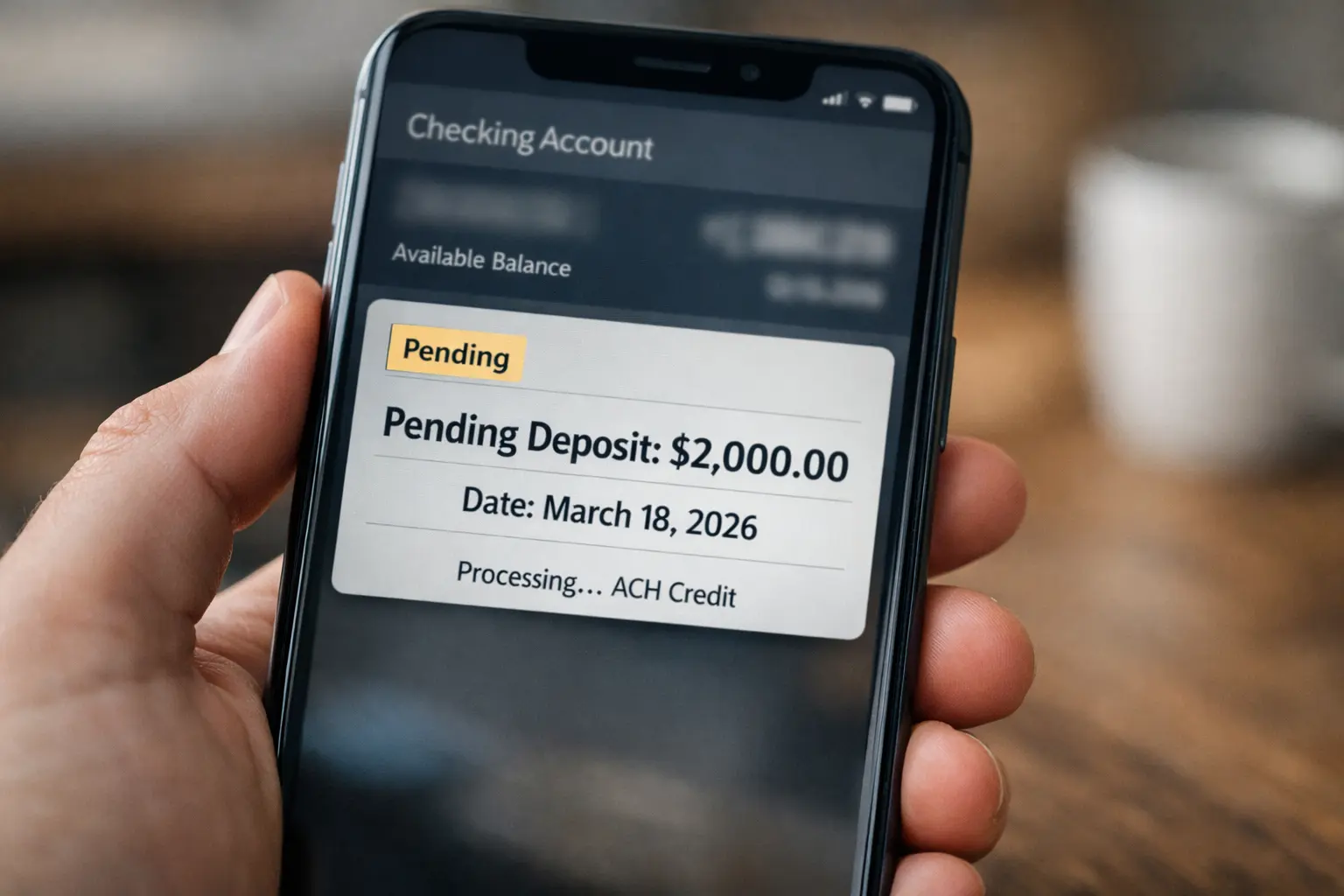
When consumers see “pending,” it usually means a transaction has been authorized but not yet settled. This reflects the transaction waiting for its assigned settlement window.
The practical mechanics of this process are broken down clearly in how deposit pending stages work inside banking infrastructure. Until final settlement occurs, funds can be reversed and institutions still carry exposure. Once the window clears, money becomes real in the system.
How Treasury Payments Follow the Same Structure
Even government money doesn’t bypass settlement mechanics. Treasury disbursements move through structured clearing just like private payroll and transfers. Before funds reach consumer accounts, they travel through coordinated settlement protocols—something mapped in the Treasury system itself.
The government authorizing a payment is not the same as money landing; the settlement window still controls the moment liquidity becomes usable.
When Timing Leaks Create Financial Stress
Because households think in real time while institutions operate in cycles, friction emerges. Missed windows feel like delay, and delayed liquidity feels like shortage. This mismatch between human expectation and system structure creates what financial analysts call timing distortions—explored further in the velocity leak effect.
Nothing is technically wrong—but the emotional impact is real. Understanding settlement windows helps decode why money feels unreliable even when systems are functioning perfectly.
The Regulatory Backbone Holding It Together
Settlement timing is governed by strict institutional frameworks managed by Federal Reserve Financial Services. Their operational rules define when windows open, how transfers reconcile, and how risk is neutralized across banks.
You can explore the official regulatory structure through the Fed rules that govern settlement operations nationwide. These protocols are the backbone of financial stability.
The Bottom Line: Timing Is the System
Money in the U.S. doesn’t move when it’s approved; it moves when settlement windows open. This reality sits at the heart of how U.S. money actually flows—a system fully mapped in our core pillar on money system mechanics and reinforced through how settlement windows quietly govern every transfer.
Once you see it, financial delays stop feeling mysterious. They start making structural sense.
Author