The price of the hotel room didn’t go up. But now you have to make your own bed. This isn’t just bad service; it is a hidden tax on your time. Welcome to the era of Silent Inflation.
Official inflation data tracks the price of goods, but it ignores the effort required to buy them. In 2026, corporations have successfully offloaded their operational costs onto you.
Whether it is the self-checkout kiosk making you a cashier or the admin fee that pays for nothing, you are paying luxury prices for a DIY existence.
This shift is the engine behind the great downgrade of convenience, and it is the primary reason six figures feels poor your time is being stolen to subsidize corporate margins.
- The Shadow Work: Consumers now perform unpaid labor bagging groceries, checking into flights, scanning items that was once included in the price, quietly lowering the value of every dollar spent.
- The Service Void: The service downgrade means you are paying 2019 premium rates for 2026 budget experiences, creating a friction tax that drains mental energy and time.
- The Fee Economy: Corporations mask price hikes with junk fees, service fees, wellness fees, and admin fees that appear at checkout, bypassing inflation metrics while hitting your wallet directly.
- The Defense Strategy: Combating silent inflation requires a ruthless audit of convenience costs and a shift toward businesses that still honor customer service as part of the value you are paying for.
The Rise of Shadow Labor
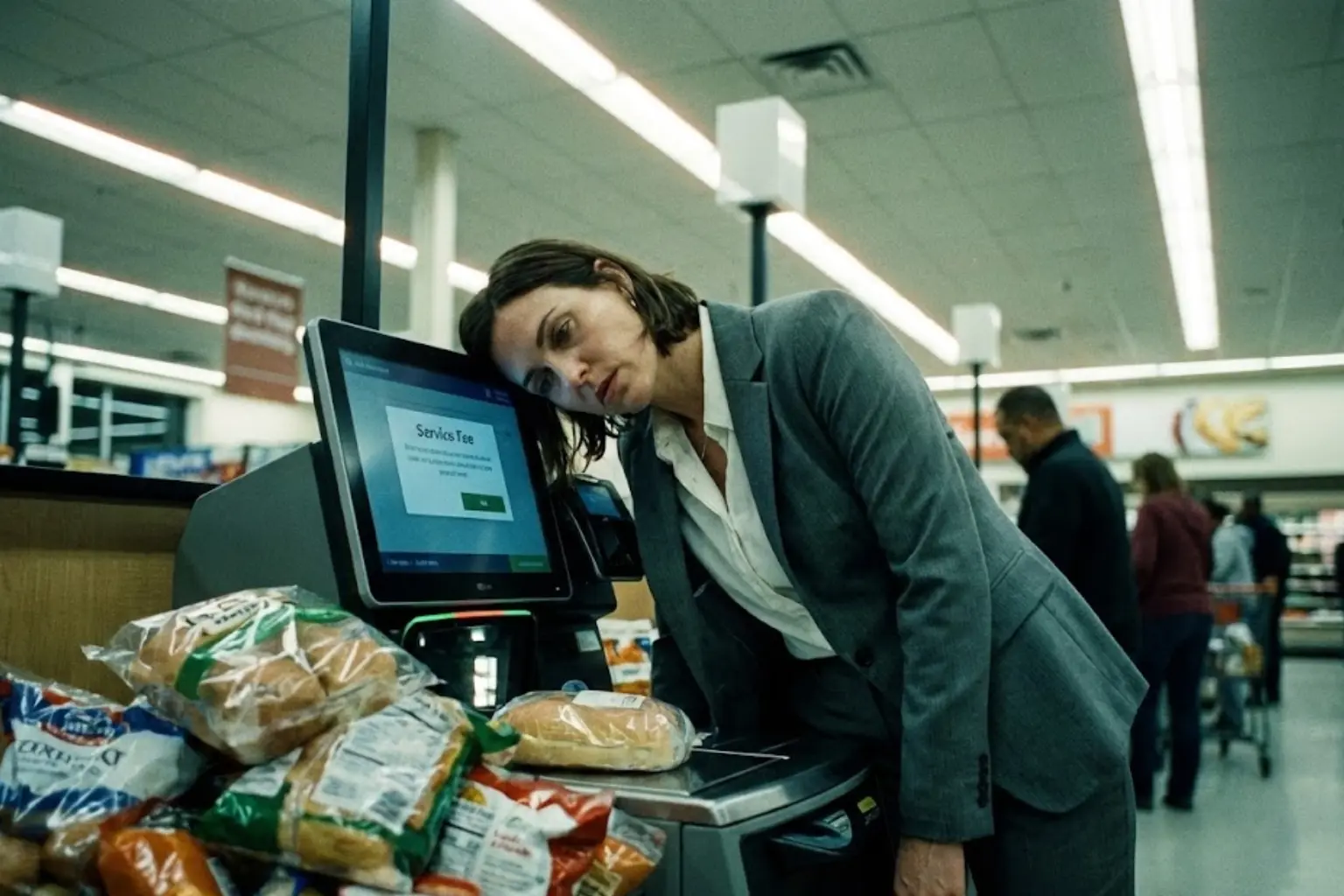
Economists call it Shadow Work. You call it annoying. Ten years ago, a cashier scanned your groceries. A bank teller deposited your check. A travel agent booked your flight. Today, you do all of this yourself.
The Self-Checkout Tax: You are not getting a discount for scanning your own vegetables. You are paying the full retail price plus your labor.
The App Trap: To order food, park your car, or return an item, you are forced to download an app, create an account, and navigate a broken interface.
This is a transfer of wealth. By eliminating labor costs, companies increase profits. But they do not lower prices. Instead, they harvest your time.
When you combine this with the hollow raise, you realize that your real hourly wage is dropping because you are spending your free time working for companies that don’t employ you.
The True Cost of Silent Inflation: The Friction Index 2019 vs. 2026
This comparison illustrates the Shadow Labor consumers now perform for free, revealing the hidden time tax embedded in daily transactions. While the sticker price may appear stable, the removal of essential services forces customers to work harder for the same purchase, effectively devaluing their currency.
| Industry | The 2019 Standard (Service) | The 2026 Reality (Shadow Labor) | The Hidden Cost |
|---|---|---|---|
| Grocery | Cashier checkout (full service) | Self-checkout kiosk (DIY) | You perform the labor of scanning and bagging while prices remain high. |
| Hotels | Daily housekeeping included | Opt-in cleaning or paid housekeeping | You pay the same rate but either live in a messy room or clean it yourself. |
| Airlines | Seat selection included | Paid seat assignment / “Basic” fares | You pay extra fees just to ensure your family sits together. |
| Dining | Traditional table service | QR code ordering / counter pickup | You order and carry your own food, yet are still prompted for a 20% tip. |
| Customer Support | Human agent (under 5-minute wait) | AI chatbot loops and automation | You spend 45+ minutes fighting a bot to fix simple billing issues. |
Source: Investozora Consumer Analysis 2026, synthesizing service sector trends from the American Customer Satisfaction Index and labor participation data from the Bureau of Labor Statistics.
The Service Downgrade is a Hidden Cost
If a hotel charges $300 a night but removes daily housekeeping, did the price go up? Official CPI data says no. Reality says yes. You are paying for a service you aren’t receiving. This is rampant in the illiquidity trap economy.
Airlines: Basic Economy isn’t a saver fare; it’s a punishment fare where you pay extra to bring a bag or sit with your child.
Dining: Fast-casual restaurants now ask for a 20% tip on an iPad before you have even received your food, for a service that involves you picking up your own tray.
This friction adds up. It creates a psychological toll. You feel constantly nickel-and-dimed, leading to the sentiment that Americans feel financially stuck. You aren’t just broke of money; you are broke of patience.
The Algorithm as the Gatekeeper
Perhaps the most insidious form of Silent Inflation is the removal of human support. Try to call your airline. Try to call your bank. You are met with an AI wall.
The Time Tax: Spending 45 minutes navigating a phone tree to fix a $20 billing error is a calculated move by corporations. They know your time is valuable. They are betting you will give up.
The Digital Barrier: When you have a mortgage escrow shortage or a fraud alert, you need a human. Instead, you get a chatbot.
This forces high earners to waste hours of their week fighting administrative battles. It explains why the Sunday money reset is so vital not just to budget money, but to budget the energy required to fight these systems.
Fighting Back: The Value Audit
You cannot change the economy, but you can change your engagement with it. To defeat Silent Inflation, you must become a High-Maintenance Customer in the right way.
Reject the DIY: If a store forces self-checkout with a full cart, leave. Patronize businesses that staff humans. Vote with your wallet.
Audit the Fees: scrutinize every bill. If you see a wellness fee or admin surcharge at a restaurant, ask for it to be removed. 90% of the time, it is optional.
Value Your Time: If saving $10 requires 2 hours of phone calls, pay the $10. Your time in the credit float era is too precious to waste on shadow work.
The Bottom Line
Silent Inflation is the ghost in the machine of the 2026 economy. It explains why your bank account looks okay, but your life feels harder. You are carrying the weight of a thousand small tasks that used to be someone else’s job. Recognize it. Call it out. And stop working for free.
Methodology
This article defines Silent Inflation by analyzing the divergence between CPI Service Data price and Customer Satisfaction Metrics quality.
It incorporates qualitative data on Shadow Work unpaid labor transferred to the consumer, to calculate the Real Cost of goods when time-value is factored in, distinguishing this phenomenon from traditional monetary inflation.
Investozora uses only trusted, verified sources. We focus on white papers, government sites, original data, firsthand reporting, and interviews with respected industry experts. When relevant, we also use research from reputable publishers. Every fact is checked against a primary source so readers get clear, accurate, and up-to-date information, and we update our citations whenever official guidance changes.
- American Customer Satisfaction Index (ACSI) – National benchmark data measuring customer satisfaction across major U.S. industries, including financial services, banking, and credit products.
- U.S. Bureau of Labor Statistics (BLS) – Official U.S. government data on employment, wages, inflation, consumer spending, and economic conditions.
Frequently Asked Questions
Author