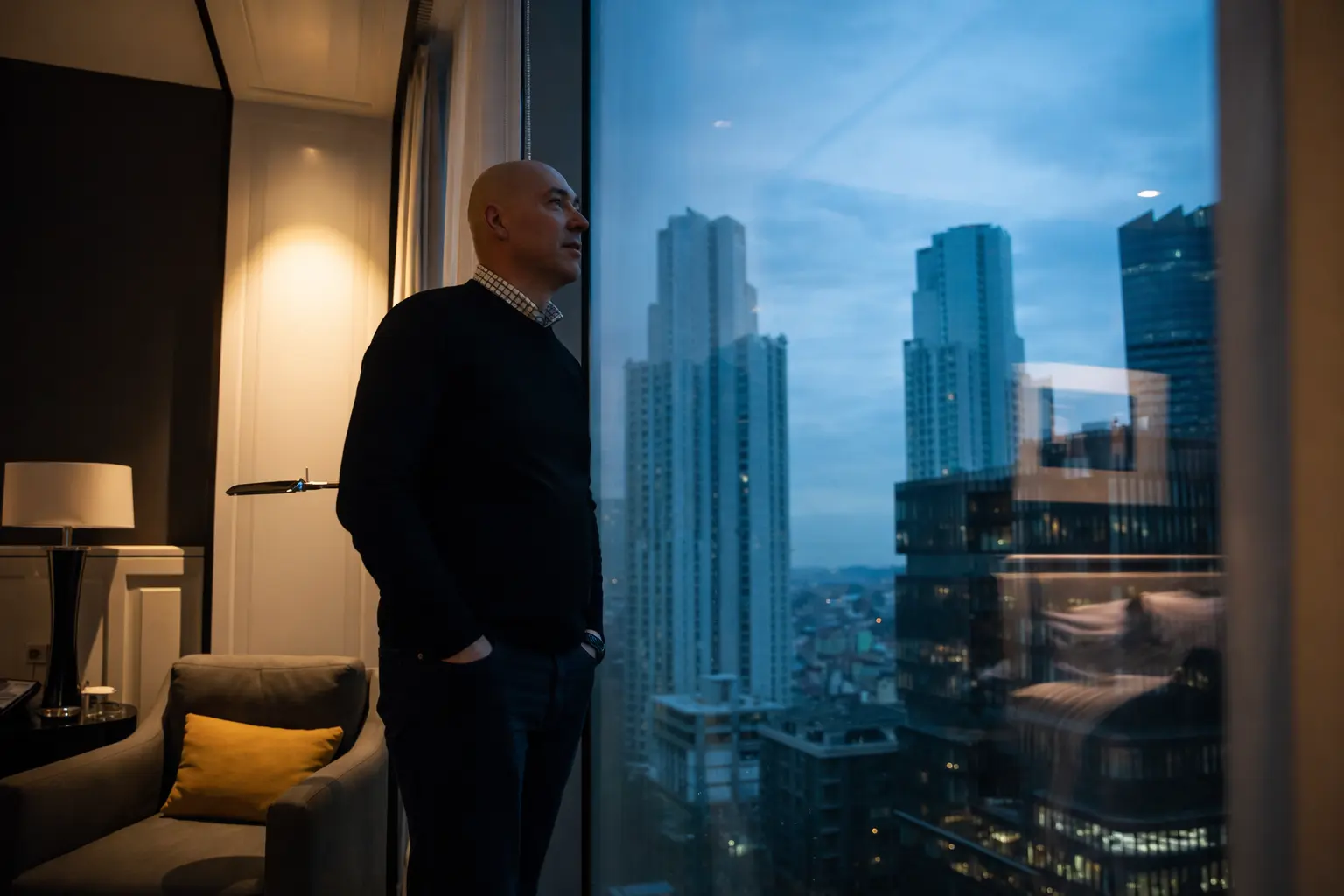
You’ve done everything right on paper. Your portfolio is balanced, taxes optimized, and net worth strong yet the unease lingers. This is the stewardship gap: the disconnect between managing money well and actually living well with it.
In early 2026, many high earners are realizing that accumulation alone isn’t freedom. Without purpose, wealth becomes maintenance, not leverage.
Closing this gap requires a financial reset, escaping the success trap, and embracing quiet money decisions that align capital with values.
When money serves your life not the other way around you move past the equity mirage and reclaim genuine human freedom.
- The Technical Fallacy: Relying solely on software, dashboards, and spreadsheets to measure success ignores the emotional and psychological resilience required to sustain wealth over time.
- The Complexity Tax: As assets grow, the mental load of managing them increases, often pulling households into a velocity trap where time and attention are sacrificed for marginal financial gains.
- Purposeful Deployment: True stewardship moves beyond passive accumulation toward intentional use of capital to secure a lifestyle that resists silent inflation and preserves real-world flexibility.
- Human-Centric Defense: Bridging the gap requires a financial reset that prioritizes human well-being and liquid freedom over the abstract pursuit of a higher net worth.
The Paradox of Professional Prosperity
The technical side of finance has never been more accessible, yet the human experience of wealth has never felt more precarious.
We have reached a point where high earners can track their every cent in real time, but this granular data often provides a false sense of control.
This is the heart of the stewardship gap: we are drowning in information while starving for wisdom. While we obsess over our success trap, we often forget to ask what all this labor is actually for.
Furthermore, the professionalization of personal finance has created a distance between people and their money. We outsource our decisions to algorithms and advisors, often losing the intuitive connection to our own resources.
This detachment makes it easier to fall into a lifestyle of elevated essentials. Without realizing the long-term cost to our freedom.
To be a true steward, you must reclaim the narrative of your money. Ensuring that every dollar serves a human purpose rather than just a mathematical one.
The Stewardship Maturity Index: Technical Management vs. Human Stewardship
This analysis contrasts the common metrics used in traditional wealth management with the human-centric metrics required for true stewardship and long-term fulfillment.
| Category | Management Focus (Technical) | Stewardship Focus (Human) | Outcome |
|---|---|---|---|
| Growth | Max Alpha / Yield | Purposeful Utility | Balanced Life |
| Risk | Standard Deviation | Emotional Resilience | Quiet Confidence |
| Retention | Tax Optimization | Liquid Liberty | Freedom to Pivot |
| Success | Target Net Worth | Autonomy & Impact | Generational Legacy |
Source: Investozora Human Capital Research 2026, modeled on surveys of high-net-worth sentiment from the U.S. Department of the Treasury and private wealth behavioral studies.
Managing the Internal Wealth Defense
Wealth is not just a physical reality; it is an internal one. Many households that appear secure are actually suffering from a profound wealth defense gap that is not about insurance.
But about mindset. If your wealth requires constant, high-level anxiety to maintain, you are not a steward; you are a captive. This internal friction is a hidden cost that traditional accounting completely ignores.
But it is the primary factor in whether wealth actually improves your life. To bridge this gap, one must realize that risk is not just about market volatility.
It is about the risk of wasting your most limited resource: time. While we worry about the risk paradox of our investments. We rarely consider the risk of a life spent in perpetual preparation.
Stewardship involves making quiet money decisions that prioritize peace of mind and the ability to say no to more complexity.
It is about building a financial life that is as quiet and reliable as a foundation. Rather than as loud and demanding as a machine.
The Structural Shift Toward Liquid Liberty
In the current economic climate, the old rules of locking away wealth are being challenged. The rise of structural costs has made liquidity the ultimate form of power.
Those who are caught in an illiquidity trap find that their net worth cannot buy them a way out of a crisis. This is why the modern steward prioritizes liquid liberty over traditional asset classes that look good on paper but offer no help in a storm.
This shift requires a total recalibration of our money decisions. We must move away from the idea that wealth is a static castle to be built and toward the idea that it is a flow to be managed.
This means resisting the urge to constantly reinvest every surplus into illiquid ventures. And instead maintaining a significant emergency fund amount.
When you have the liquid means to walk away from a toxic situation or seize a sudden opportunity. Your wealth is finally fulfilling its human function.
Reclaiming the Human Ledger
Closing the stewardship gap ultimately requires a return to a human-centric ledger. This means measuring your success by your autonomy, your health, and your relationships, rather than just your bank balance.
It is a quiet money shift that values the invisible over the visible. While the world may applaud your high income, your own internal ledger only cares about whether that income has provided you with a sense of genuine security.
As we navigate the complexities of 2026, the most successful individuals will be those who treat their wealth as a sacred trust to be used for the flourishing of their families and communities.
This involves a commitment to working harder on the why of money as much as the how.
By focusing on stewardship rather than just management, you ensure that your wealth remains a servant to your life, rather than a master of it. The gap is bridged not with more money, but with more meaning.
The Bottom Line
The stewardship gap is the final frontier of financial maturity. In an era of automated wealth, the human element is the only true differentiator.
If your net worth has outgrown your ability to live a meaningful and present life, you have a stewardship problem, not an income problem.
Real wealth is the ability to live life on your own terms, with enough margin to be generous and enough wisdom to be content.
By bridging this gap, you turn a portfolio of assets into a legacy of freedom, ensuring that your financial success is matched by your human well-being.
Methodology
This article explores the concept of the Stewardship Gap by synthesizing qualitative psychological data with quantitative financial metrics from early 2026.
The research investigates the correlation between high-net-worth accumulation and subjective well-being, identifying complexity paralysis as a primary driver of financial dissatisfaction among high earners.
The methodology emphasizes a move away from purely numerical ROI (Return on Investment) toward a return on life framework for wealth assessment.
Investozora uses only trusted, verified sources. We focus on white papers, government sites, original data, firsthand reporting, and interviews with respected industry experts. When relevant, we also use research from reputable publishers. Every fact is checked against a primary source so readers get clear, accurate, and up-to-date information, and we update our citations whenever official guidance changes.
- U.S. Department of the Treasury — Financial Literacy & Policy Resources – Official U.S. Treasury resources covering financial education, economic policy, household financial stability, and long-term wealth-building initiatives.
- Consumer Financial Protection Bureau (CFPB) — Wealth & Consumer Trends – Federal regulator providing authoritative research, consumer data, and insights into household finances, credit usage, and wealth patterns in the United States.
Frequently Asked Questions
Author