At 6:41 AM, you refresh your balance again. The refund shows issued. The deposit still does not appear. Treasury releases funds at night, yet the morning screen looks unchanged.
That gap feels like delay. In reality, it reflects how sovereign cash leaves the Treasury General Account and enters the banking system. The missing layer is not retail processing; it is federal balance sheet movement.
The Treasury General Account Is the Starting Point
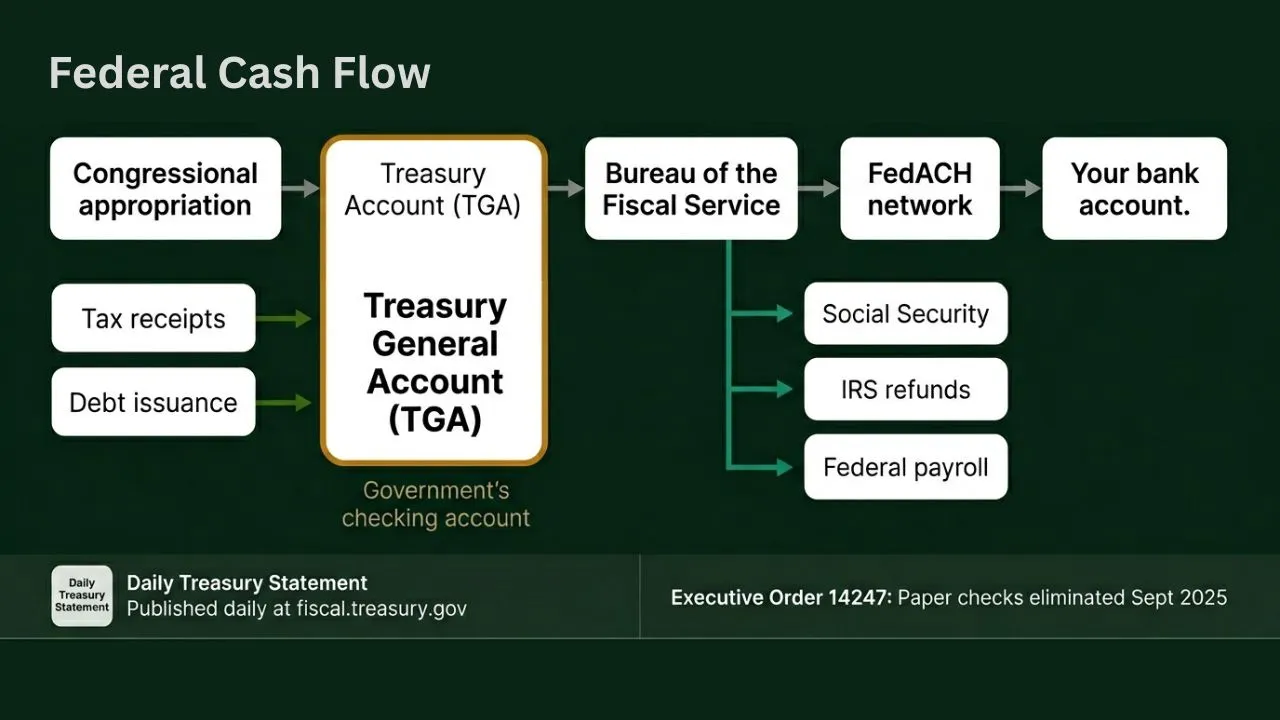
Every federal payment originates inside the Treasury General Account, or TGA. The TGA sits at the Federal Reserve Bank of New York and operates as the government’s central operating account.
When the Treasury payment system releases funds at night, the TGA balance declines. That decline injects reserves into the banking system, and commercial bank reserve balances rise accordingly. This shift occurs before any household sees a credit. The system absorbs the reserve injection first; retail visibility comes later.
The Bureau of the Fiscal Service documents how disbursements flow from the TGA into federal payment channels. Readers can review the official Gold Book directly through the appropriate U.S. government source.
Households observe a payment date. Banks observe a reserve event.
Why Transmission Happens After Hours
Night transmission aligns with the Federal Reserve operating cycle. The Fedwire Funds Service reopens at 9:00 PM Eastern Time for the next value date, allowing Fedwire liquidity timing to settle before the business day begins.
The Federal Reserve publishes detailed operating schedules for these services. By transmitting at night, Treasury avoids intraday liquidity shocks. Evening settlement smooths reserve distribution across institutions, forming a critical part of the U.S. money movement framework.
Reserve Forecasting Before Deposits Post
When the TGA declines overnight, banks anticipate reserve growth. Expected federal disbursements enter reserve forecasting systems, and banks verify that the reserve credit from Treasury is final.
Only then do they align internal deposit files with updated reserve balances. This sequencing builds upon the discipline found in payroll settlement timing. Settlement defines legal finality; transmission alone does not.
To manage this, banks maintain specific institutional risk positioning to ensure the bank remains stable while federal funds migrate across the payment rails infrastructure.
Ledger-Day Control and Accounting Synchronization
Another structural constraint lies inside core banking systems. Most institutions close their ledger day at defined cutoffs. Overnight processing runs in controlled batch environments to ensure true liquidity matches the bank’s internal records.
Posting retail credits at 2:00 AM could fracture accounting alignment. Banks therefore synchronize retail posting with the new ledger day. The familiar 8:00–9:00 AM window ensures that reserve settlement, same-day ACH confirmation, and internal ledgers share a consistent value date.
This dynamic provides the liquidity timing stability required for predictable retail banking.
TGA Outflows and Funding Market Stability
TGA movements influence more than deposit timing; they alter aggregate reserve conditions across the banking sector. When Treasury releases funds at night, reserves increase systemwide, which can ease short-term funding pressure.
The macro dimension remains invisible to households, yet it explains why timing discipline matters. Morning posting reflects a reserve environment already adjusted by federal cash operations.
Returning to the Morning Screen
At 6:41 AM, the unchanged balance feels confusing. By 8:18 AM, the credit appears. Between those moments, several institutional steps unfolded:
- The TGA declined.
- Reserves increased across the banking system.
- Fedwire confirmed value-date settlement.
- Core systems closed one ledger day and opened another.
Treasury releases funds at night, but visible deposits require synchronized reserve settlement and accounting recognition. The delay is procedural and protects systemic coherence. The funds moved before you saw them; morning posting simply marks structural finality.
Author