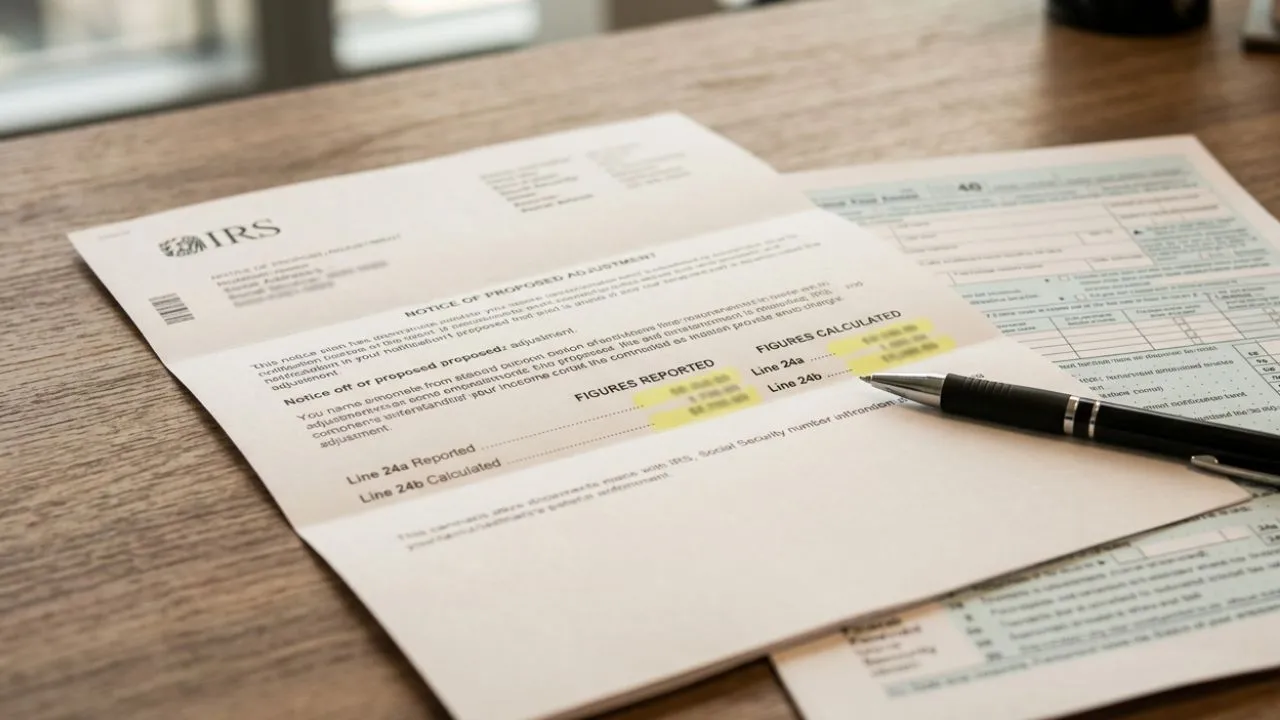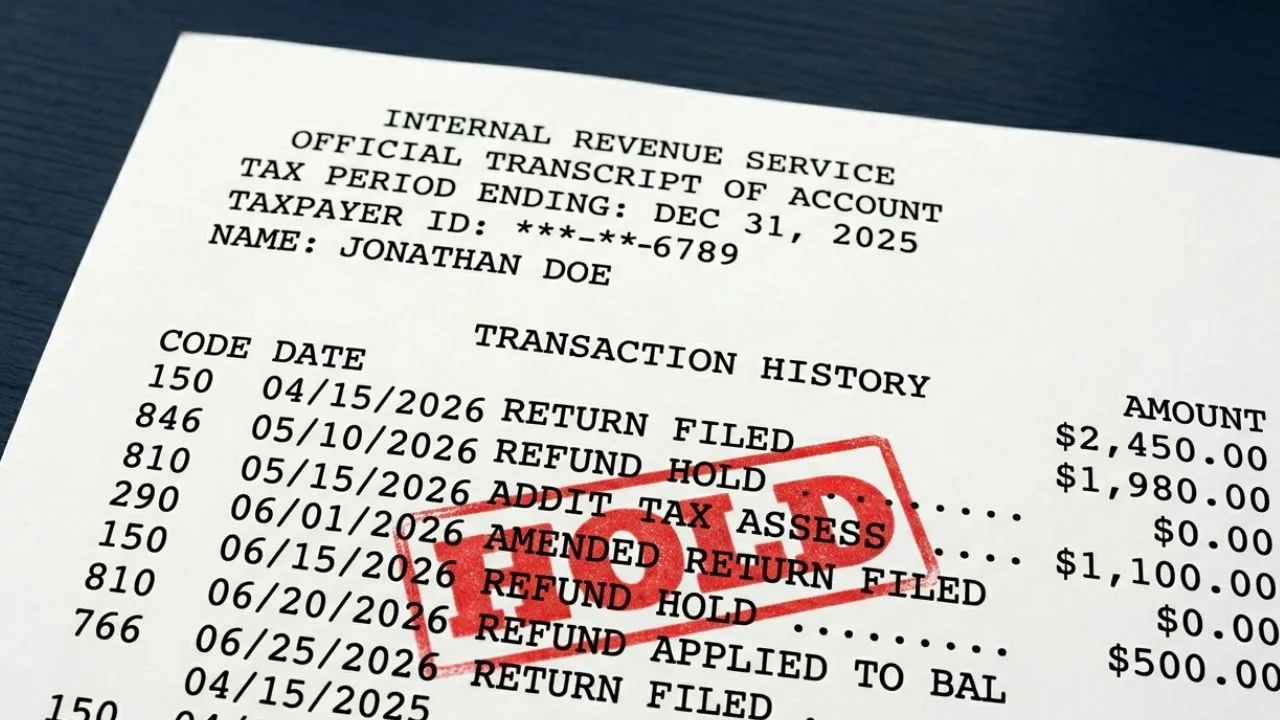

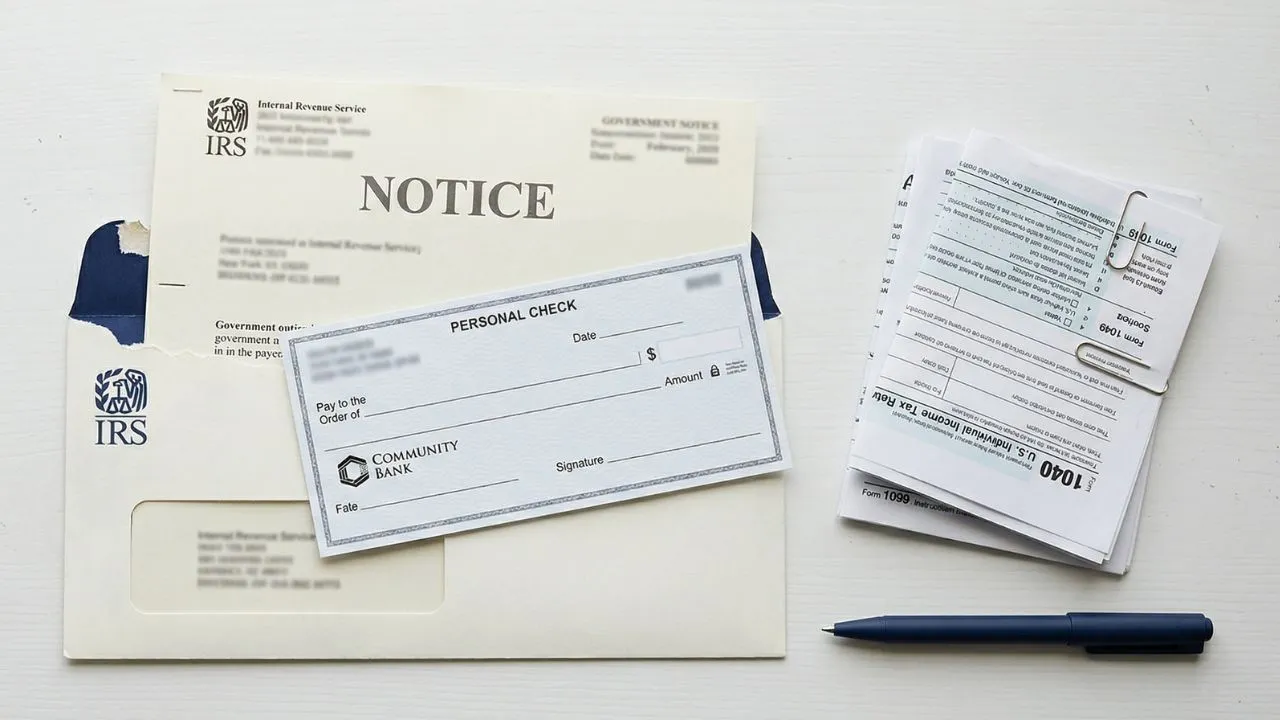
The IRS continues to issue CP53E notices to taxpayers whose direct deposits failed due to invalid banking information. If you received this notice, your refund has not been lost. It is being converted to a paper check and mailed to your address on file.
You filed your return, the IRS approved your refund, and then nothing arrived in your bank account. Instead, a letter showed up. That letter is the IRS CP53E notice, and it means the direct deposit the IRS attempted was rejected. Your refund is not lost. It is frozen in the conversion process, being rerouted from a failed bank delivery to a paper check that will be mailed to you.
What You Need to Know
A CP53E notice means the IRS attempted your direct deposit and it failed, so your refund is now being converted to a paper check. The most common triggers are an incorrect routing number, a closed bank account, or an account type mismatch on your return.
The IRS will mail your paper check to the address on your return within 4 to 6 weeks of the notice date. New OBBBA rules covering senior tax deductions and overtime tip reporting can extend processing time by an additional 2 to 4 weeks.
If no check arrives after 6 weeks, call the IRS at 1-800-829-1040 and verify your mailing address is current. You do not need to file an amended return because of a CP53E notice alone.
This article explains exactly what triggered the CP53E notice, how long the freeze lasts, how new 2026 legislative rules under the OBBBA affect your timeline, and what you must do right now to make sure your check reaches you without further delay.
What Is an IRS CP53E Notice
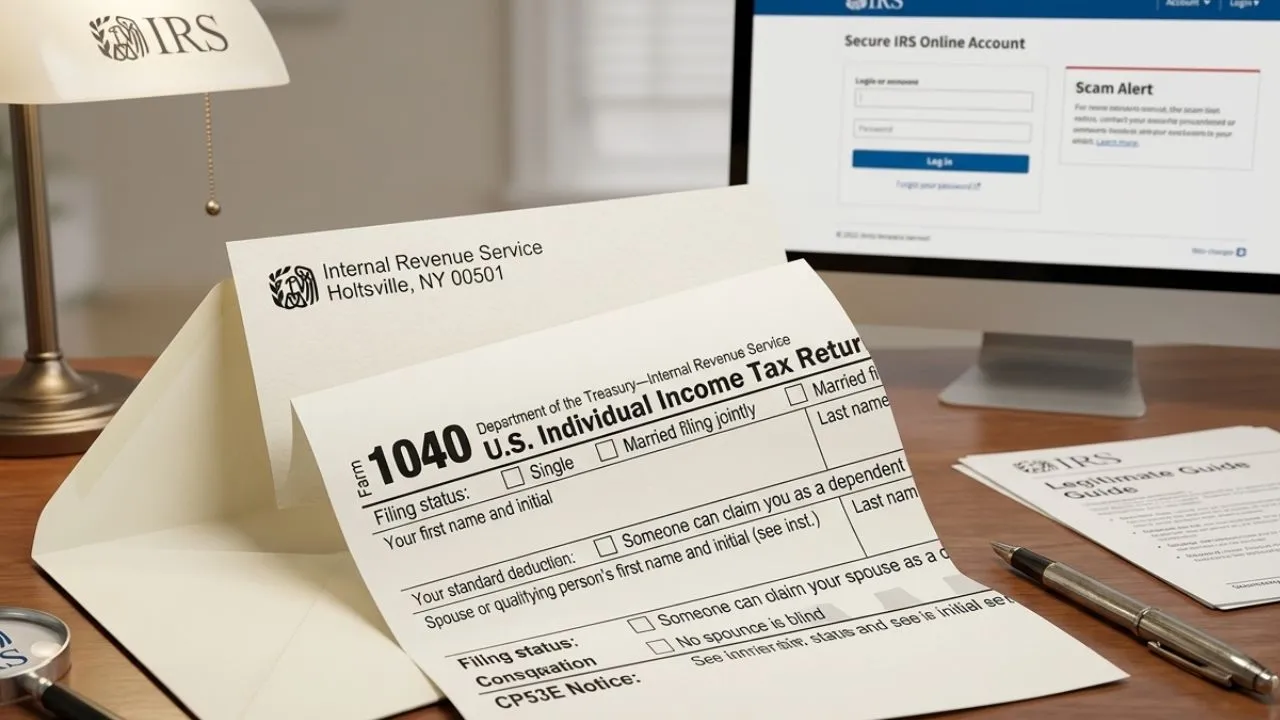
The IRS CP53E notice is an official letter the IRS sends when a direct deposit refund is rejected by your bank. The notice informs you that the IRS tried to push your refund electronically to the account number you provided on your return, and the bank returned the funds.
The IRS cannot attempt the same deposit again. It must switch delivery methods and mail you a paper check instead. The CP53E notice is different from a general refund delay notice. It does not mean your return is under audit. It does not mean you owe additional taxes.
It means one specific thing: your banking information did not work, and the IRS is now using your mailing address to deliver what you are owed. Because this keeper absorbs readers arriving from multiple redirected articles, including ones asking about the 830,000 halted refunds and the new OBBBA senior deduction rules, this article covers every dimension of the CP53E freeze.
If you received this notice and you also have questions about the new $6,000 senior deduction or overtime and tip reporting changes, you will find those answers further below. The CP53E notice is your starting point regardless of which version of this problem you searched for.
Why the IRS Freezes Refunds With a CP53E
The IRS does not freeze refunds arbitrarily. A CP53E notice is triggered by a specific bank rejection event. When the IRS submits a direct deposit through the FedACH network and the receiving bank sends back a return code, the IRS is legally required to halt the electronic transfer and revert to paper delivery. There are four primary triggers.
Incorrect routing number
If the routing number you entered on your return does not match any active U.S. financial institution, or it matches an institution that no longer supports that routing path, the bank rejects the transfer immediately. A single transposed digit is enough to trigger a CP53E notice.
Closed or inactive account
If your account was closed between the time you filed and the time the IRS processed your refund, the bank returns the funds. This is the most common trigger. Some taxpayers use accounts they close mid-year, not realizing the IRS may not process their return for months after filing.
Account type mismatch
If you entered a savings account number but designated it as a checking account on your return, or vice versa, many banks return the transfer. This mismatch activates the CP53E process even if the account itself is active and valid.
Fraud and security flags
The IRS Fraud Detection Center may place a hold on a deposit if the refund amount or account change pattern matches known fraud indicators. In these cases, the CP53E is issued as a precautionary freeze while the IRS verifies identity.
This scenario is less common but results in a longer resolution timeline. If your notice references an identity verification requirement, visit irs.gov identity verification immediately. Understanding which trigger applies to your situation matters because it affects your timeline and your next steps.
If your account was simply closed, no further action is needed beyond confirming your mailing address. If fraud flags are involved, you must complete identity verification before the paper check is released.
How the CP53E Freeze Affects OBBBA Senior Deductions and Overtime Rules
The One Big Beautiful Budget Act, commonly referred to as the OBBBA, introduced two provisions that directly affect IRS refund processing timelines in 2026. The first is the $6,000 enhanced standard deduction for taxpayers aged 65 and older.
The second is a new reporting requirement for overtime pay and tip income that changes how refund amounts are calculated for workers in service industries. Both provisions require additional IRS processing steps that do not apply to standard returns.
If your return includes either the senior deduction or overtime and tip income under the new OBBBA framework, your refund was already subject to extended processing before the CP53E event occurred. When a CP53E freeze is then added on top of that extended processing window, your total wait time from notice to paper check can run 6 to 10 weeks instead of the standard 4 to 6.
Senior deduction claims and CP53E overlap
Taxpayers who claimed the new $6,000 senior deduction under OBBBA and also received a CP53E notice should not assume the deduction was rejected.
The deduction is processed separately from the delivery method. Your refund amount is locked in. The CP53E only affects how it is delivered. You can confirm your deduction was accepted by checking the IRS refund tracker and verifying your refund amount matches your filed return.
Overtime and tip reporting under OBBBA
Workers who reported overtime pay or tip income under the new OBBBA rules and received a CP53E notice face a similar timeline extension. The overtime and tip exclusion introduced by the OBBBA requires IRS systems to cross-reference employer wage reports before finalizing the refund amount.
If your refund was still in that verification stage when the deposit was attempted and rejected, your paper check will not be mailed until that verification completes.
In these cases, you may see your refund tracker show a status of processing even after the CP53E notice date. This is expected and does not indicate a problem beyond the original deposit failure. For a deeper look at how overnight deposit cycles work and why refund windows shift, see our guide on overnight deposit timing.
How Long the CP53E Freeze Lasts
The standard timeline from the date on your CP53E notice to the mailing of your paper check is 4 to 6 weeks. This window accounts for the IRS internal processing steps required to cancel the electronic payment, reissue the refund through the paper check system, print and mail the check through the U.S. Postal Service, and deliver it to your address.
The 4 to 6 week window assumes your mailing address on file with the IRS is current and correct. If your address changed since you filed your return, the paper check will go to the address the IRS has on record, which may be your previous address. This is one of the most common reasons taxpayers wait longer than 6 weeks and never receive their check.
If your return involved OBBBA provisions, the timeline extends to 6 to 10 weeks as described above. If your notice triggered an identity verification requirement, the paper check will not be mailed until that process is complete, and identity verification timelines vary from 2 to 12 weeks depending on method. For context on how FedACH settlement cycles contribute to these delays, see our breakdown of FedACH settlement delays.
What happens to your refund amount
The refund amount does not change because of a CP53E notice. The IRS has already calculated and approved your refund. The notice is strictly about delivery method. You will not receive more or less money because of the CP53E event. The paper check will reflect exactly the same refund amount that was attempted via direct deposit.
If you believe your refund amount is incorrect separately from the CP53E issue, that is a different matter requiring a Form 1040X amendment. The CP53E notice does not create any obligation to amend your return.
Steps To Know
Acting quickly after receiving a CP53E notice can prevent a second delay. There are five specific steps you should take immediately.
First, confirm your mailing address with the IRS. If your address changed since you filed, you must file Form 8822 immediately. You can download Form 8822 at irs.gov forms. Do not wait. If the paper check is already in the mail to your old address, retrieving it requires a separate refund trace request.
Second, check the IRS refund tracker at irs.gov/refunds. The tracker will show you the current status of your refund. Once the paper check is issued, the tracker will update to show a mailing date. Use that date to calculate your expected delivery window, typically 5 to 10 business days from the mailing date.
Third, do not call the IRS before 4 weeks have passed from the notice date. The IRS phone lines cannot take action on a CP53E paper check reissuance until the standard 4-week processing window has expired. Calling before that point will result in confirmation that the process is underway but no ability to expedite it.
Fourth, if you have not received your check after 6 weeks from the notice date, call the IRS at 1-800-829-1040. Request a refund trace. The IRS will initiate a trace and, if the check was undeliverable or lost, will reissue it. Bring your CP53E notice, your Social Security number, and your mailing address when you call.
Fifth, if your CP53E notice includes a request for identity verification, complete that step before doing anything else. Identity verification takes priority over all other actions and no paper check will be mailed until it is complete. Visit irs.gov identity verification and follow the instructions on your specific notice.
For a broader understanding of why your refund may show approved but still not appear in your account, see our full guide on refund approved but bank shows zero. And if you are tracking a related payment that shows sent but has not posted, the guide on federal payment sent but balance is zero covers that exact scenario.
When the Standard Answer Does Not Apply
Most CP53E cases resolve through the standard 4 to 6 week paper check timeline. But there are three scenarios where the standard answer does not apply and where escalation or additional steps are required.
Your check was mailed to a wrong or previous address
If you moved after filing and did not update your address, your check went to the wrong location. You cannot stop or redirect a check already in the mail. You must wait until the check is either delivered to the old address and forwarded by USPS if you set up mail forwarding, or returned to the IRS as undeliverable.
Once the IRS receives an undeliverable check, it is canceled and a new one is reissued. This process adds 6 to 8 additional weeks. Filing Form 8822 immediately and requesting a refund trace at the 6-week mark are your best options.
Your CP53E includes a fraud or identity flag
If the notice includes instructions to verify your identity, call 1-800-830-5084 for the IRS Identity Verification Service. Do not use the general 1-800-829-1040 line for identity-related CP53E cases.
The identity verification process may require you to submit documents by mail or complete verification online through ID.me. Until verification is complete, your refund remains frozen regardless of how much time passes.
Your refund involves OBBBA provisions and is beyond 10 weeks
If your return included the senior deduction or overtime and tip reporting under OBBBA and your total wait time exceeds 10 weeks from the notice date, escalate through the Taxpayer Advocate Service. The TAS handles cases where standard IRS timelines have been exceeded and financial hardship exists.
You can contact TAS at 1-877-777-4778 or visit your local TAS office. For deeper context on how federal payment timing works across systems, see our overview of the U.S. money movement system.
What You Should Do Now
Check your IRS refund status at irs.gov/refunds immediately and confirm the refund amount matches your filed return. Verify your mailing address is current. If you moved after filing, submit Form 8822 today without delay. If your CP53E includes an identity verification request, complete that step at irs.gov before anything else.
Wait 4 weeks from the notice date before calling the IRS. The paper check cannot be expedited during the standard processing window. If no check arrives after 6 weeks, call 1-800-829-1040 and request a formal refund trace using your CP53E notice and Social Security number.
Edge case: if you filed with OBBBA provisions and have exceeded 10 weeks total, contact the Taxpayer Advocate Service at 1-877-777-4778 for escalation.
A CP53E notice is a delivery problem, not a denial. Your CP53E notice confirms the IRS approved your refund. The paper check is coming. Your job is to make sure the address is right and the timeline is tracked so nothing falls through the gap between the IRS and your mailbox.