
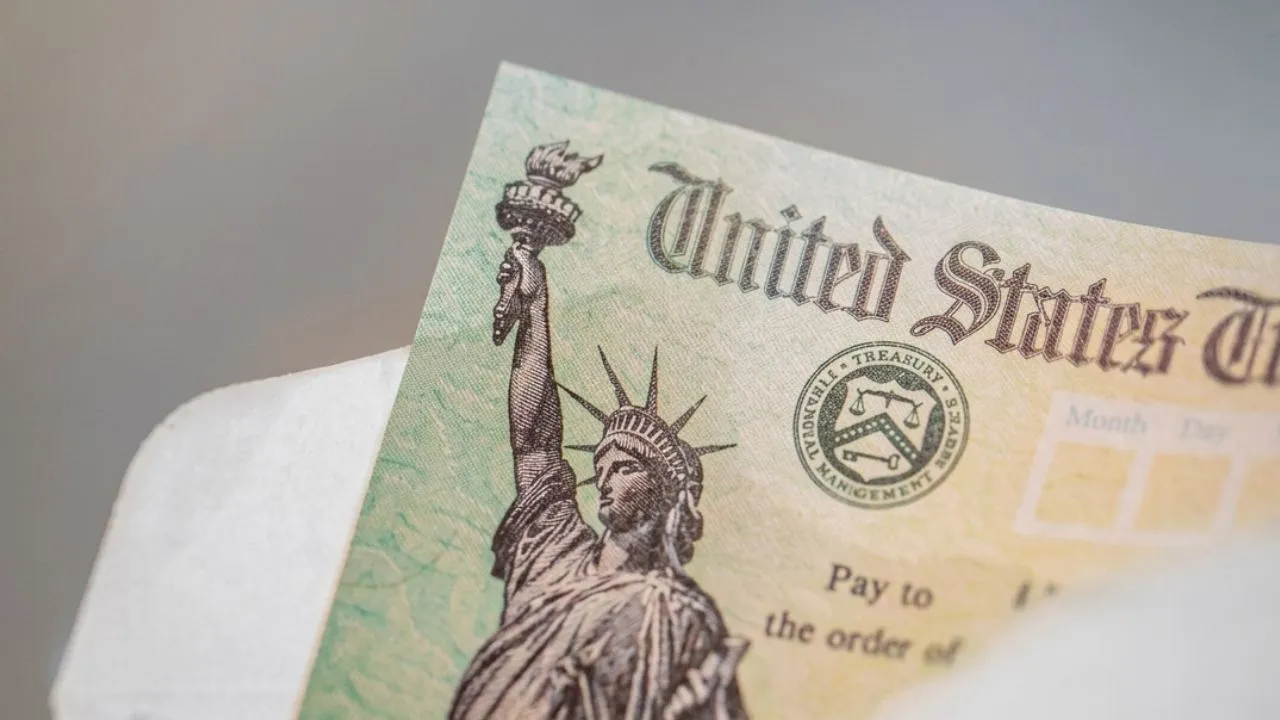
When the IRS sends your refund to the wrong bank account, most people assume it disappears, lost somewhere in the banking system with no clear path to recovery. The reality is more structured than that, more recoverable than you fear, and more time-sensitive than most people realize.
In 2026, the IRS changed how it handles a failed IRS refund wrong bank account deposit, and if you received a CP53E notice or you are watching Where’s My Refund show a deposit that never arrived, knowing this process exactly could save you six weeks of waiting and a great deal of unnecessary anxiety.
This guide covers every scenario, every timeline, and every step you need to take, verified entirely against official IRS guidance.
What Happens the Moment the IRS Sends Your Refund to the Wrong Account
When the IRS processes your return and approves your refund, it sends a payment file to the Bureau of the Fiscal Service at the U.S. Treasury, which submits the direct deposit instruction through the Federal Reserve’s FedACH network to your bank.

That payment instruction contains your routing number and account number exactly as you entered them on your return. Once that instruction leaves the IRS, what happens next depends on one technical question: does the account number you entered actually exist?
Scenario one — the account number fails IRS validation
The IRS runs a basic format check on routing and account numbers before sending the payment file. If your account number is formatted in a way that cannot correspond to a real account, wrong digit count, invalid structure, the IRS catches this error before any money moves.
You will receive a written notice and the IRS will either request corrected banking information or issue a paper check, depending on the circumstances. Your refund does not leave the IRS system.
Scenario two — the account number passes validation but the bank rejects the deposit
This is the more common situation for a genuine IRS refund wrong bank account error. Your number looked valid in format, but when the bank received the deposit instruction, the account either did not exist, was closed, or did not match the account holder name on file. The bank rejects the transaction and returns the funds to the IRS through the ACH return process.
Here is where 2026 changed everything. Before this year, a rejected direct deposit almost always triggered an automatic paper check. The IRS would simply reissue your refund by mail, and you would wait the standard check timeline.
That default no longer applies. Under new IRS procedures effective in the 2026 filing season, a returned direct deposit triggers a refund freeze, not an automatic paper check and a CP53E notice mailed to your address of record. You have 30 days from the notice date to take action through your IRS Online Account. If you do nothing, the paper check process begins after approximately six weeks.
This change exists for a reason tied to federal payment modernization. Executive Order 14247, signed in 2025 and titled Modernizing Payments To and From America’s Bank Account, directed federal agencies to eliminate paper checks as a default.
Paper check issuance was phased out on September 30, 2025. The IRS’s new CP53E process is the compliance mechanism, it forces taxpayers to confirm a valid electronic payment method before reissuing rather than defaulting to a paper instrument that the executive order was specifically designed to eliminate.
The IRS reported in its 2026 filing season statistics that only about 1% of filers received a CP53E notice, and over 98% of all refunds that year were issued electronically. The CP53E situation is uncommon. But if it happens to you, the timeline is unforgiving. To verify the CP53E notice process directly, see the CP53E notice explained guide. The official IRS explanation is at CP53E notice IRS.
If Someone Else Received Your Refund — What the IRS Trace Process Does
A more complicated scenario occurs when your routing number was correct but your account number pointed to a real account that belongs to someone else. In that case, your refund was deposited into a stranger’s bank account. The IRS trace process is your formal mechanism for attempting recovery — but understanding its limits is essential before you start.
You cannot initiate a refund trace immediately. The IRS requires you to wait five calendar days after the scheduled deposit date before filing a trace. This delay exists because deposits sometimes show a pending status that resolves within the five-day window.
Filing a trace before that window closes will be rejected. After five days, if the deposit is confirmed as completed to the wrong account, you file Form 3911, the Taxpayer Statement Regarding Refund, to begin the trace. You can download Form 3911 directly at irs.gov and submit it by mail or fax to the IRS.
When the IRS receives your Form 3911, it contacts the receiving bank through formal ACH trace procedures. The bank has up to 90 days to respond to the IRS inquiry and up to 120 days for complete resolution of the trace. During that period, the bank investigates whether the account holder received funds they were not entitled to and whether those funds are still available for return.
Here is the critical limitation that no one explains clearly: the IRS cannot compel a bank to return your money. Once funds leave the FedACH network and a bank posts them to an account, the IRS’s direct authority over those funds ends. The Bureau of the Fiscal Service submitted the payment instruction in good faith with the information provided on your return.
If the receiving bank investigates and determines the account holder spent the money or simply refuses to return it, the IRS has no enforcement mechanism to force recovery. Your remaining legal option at that point is civil action against the individual who received your funds, which is outside the IRS’s jurisdiction.
This institutional reality is important to understand so you do not spend weeks waiting for the IRS to recover money it legally cannot compel. The payment system guide covers the full mechanics of how FedACH transactions settle and why recovery becomes complicated once a deposit is accepted. The IRS’s official guidance on trace procedures is at the IRS refund trace page.
How to Fix a Wrong Bank Account: The 2026 CP53E Process Step by Step
If you received a CP53E notice, your refund is frozen and waiting for you to take action. The process for resolving it is specific, and the 30-day deadline from the notice date is not flexible. Here is the exact sequence.
Step one: read the notice date carefully.
The CP53E notice is dated from the day it is generated. The 30-day window begins on that date, not the day you receive it. If your notice was generated on April 15 and arrived on April 22, you have until May 15 to act, not 30 days from April 22. Count from the date printed on the notice.
Step two: log into your IRS Individual Online Account.
Go to IRS online account at irs.gov and sign in. If you do not have an account, you will need to create one through the ID.me verification process. The IRS Online Account is the only channel through which you can update your banking information for a frozen refund. IRS employees cannot update bank account information over the phone or in person, this is confirmed IRS policy, not a temporary restriction.
Step three: navigate to banking information and update your routing and account numbers.
Enter your correct routing number and account number. Verify both numbers against a physical bank deposit slip or your bank’s official mobile app, not from memory. Submit the update.
Step four: allow processing time.
After a successful update, the IRS typically processes the banking change and issues the corrected direct deposit within two to five business days. The deposit then travels through the FedACH network and posts to your account within approximately seven additional days. Total timeline from update to money in your account: roughly one to two weeks.
If you do not have a bank account or cannot access the IRS Online Account:
Call 800-829-1040 to request a paper check waiver. Be aware that wait times during filing season can be significant. The paper check process, if triggered either by your request or by the 30-day deadline passing without action, adds approximately six weeks to your refund timeline.
If you miss the 30-day window:
Your refund is not lost. The IRS will issue a paper check automatically after the freeze period expires, generally around six weeks from the notice date. The check mails to your address of record. This timeline is slower but the refund is not forfeited. For the complete explanation of the CP53E notice and what it means for your specific refund status, see the IRS refund guide.
Why the IRS Changed How It Handles Wrong Bank Account Refunds in 2026
The 2026 policy change did not happen in isolation. It is the direct result of a federal directive that has been in motion since 2025 and that fundamentally changes how every federal agency issues payments.
Executive Order 14247, titled Modernizing Payments To and From America’s Bank Account, was signed in 2025. It directed all federal agencies including the IRS, to eliminate paper check issuance as a default payment method. The practical deadline was September 30, 2025, after which paper checks were phased out as a standard output for federal refunds and payments.
Before this executive order, when an IRS direct deposit failed for any reason, the fallback was a paper check. The IRS automatically re-queued the refund as a mailed check with no action required from the taxpayer. That path is closed.
The new framework requires a taxpayer to confirm a valid electronic payment destination before the IRS reissues. This is not simply administrative convenience. The freeze-and-verify approach is also a fraud protection mechanism.
A failed direct deposit that automatically triggers a new mailed check is a known vector for refund fraud, bad actors exploit the window between deposit failure and check issuance. Requiring the taxpayer to authenticate through their IRS Online Account and enter banking details closes that window.
The scale of the 2026 change is visible in the filing season data. Over 98% of 2026 refunds were issued electronically. Only approximately 1% of filers received a CP53E notice. The system is working as designed for the vast majority.
But for that 1%, representing hundreds of thousands of taxpayers, the change means a process they have never encountered before, with a 30-day deadline that can be missed simply by not knowing it exists. To understand how the paper check phase-out affects other types of federal payments beyond refunds, see the full paper check phase-out analysis.
How to Prevent a Wrong Bank Account Problem — The Checks That Take Two Minutes
The most effective way to handle an IRS refund wrong bank account situation is to prevent it from happening. The verification steps below take less than two minutes and eliminate the most common causes of direct deposit failure.
Verify your routing number using a physical source
Your bank’s routing number is the nine-digit number printed in the bottom-left corner of a paper check. It is also available in your bank’s official mobile app under account details.
Do not use a routing number from memory, from a third-party website, or from a deposit slip from several years ago, routing numbers change when banks merge or are acquired. Valid ACH routing numbers begin with digits 01 through 12 or 21 through 32. If yours falls outside that range, verify immediately.
Verify your account number character by character
Do not type your account number from memory. Open your bank’s app, navigate to your account details, and copy each digit. Account numbers vary in length from 4 to 17 digits depending on the bank. A single transposed digit sends your refund to a random account.
Check joint account name requirements
The IRS requires the bank account receiving the refund to be in the taxpayer’s name or, for a joint return, in either spouse’s name. If you are directing your refund to an account held solely in another person’s name a parent, sibling, or friend, the bank may reject the deposit. The IRS cannot deposit into a business account either. Verify account ownership before filing.
Handle closed accounts before filing
If you closed the bank account you used on a previous return, do not enter it again. If you filed with a now-closed account and the deposit has not yet arrived, call 800-829-1040 immediately. A deposit directed to a closed account is returned to the IRS through the same ACH return process and triggers the CP53E path. Acting before the deposit is attempted may save the six-week timeline.
Use IRS Code 846 as your refund tracking anchor
When your transcript shows Code 846, the IRS has authorized your refund and submitted the payment file to the Bureau of the Fiscal Service. That is the moment to confirm your banking information is correct. See the Code 846 guide for how to read your transcript and what to expect after 846 appears.
What You Should Do Now
- If your direct deposit did not arrive: wait five business days from the scheduled date, then check Where’s My Refund at irs.gov/refunds. Look for any CP53E status or notice indicator.
- If you received a CP53E notice: log into your IRS Online Account at irs.gov/account within 30 days of the notice date, not 30 days from when you received it. Update your banking information. Do not call the IRS to update banking; employees cannot do this over the phone.
- If your refund was deposited into someone else’s account: file Form 3911 at irs.gov after five calendar days to initiate a formal trace. Banks have up to 120 days to respond. The IRS cannot compel return of funds the bank refuses to give back.
- If you missed the 30-day CP53E window: your refund will issue as a paper check automatically. Allow approximately six weeks from the notice date for arrival.
- For future returns: verify routing and account numbers against a physical bank deposit slip or official bank app, never from memory. Two minutes of verification prevents a six-week delay.