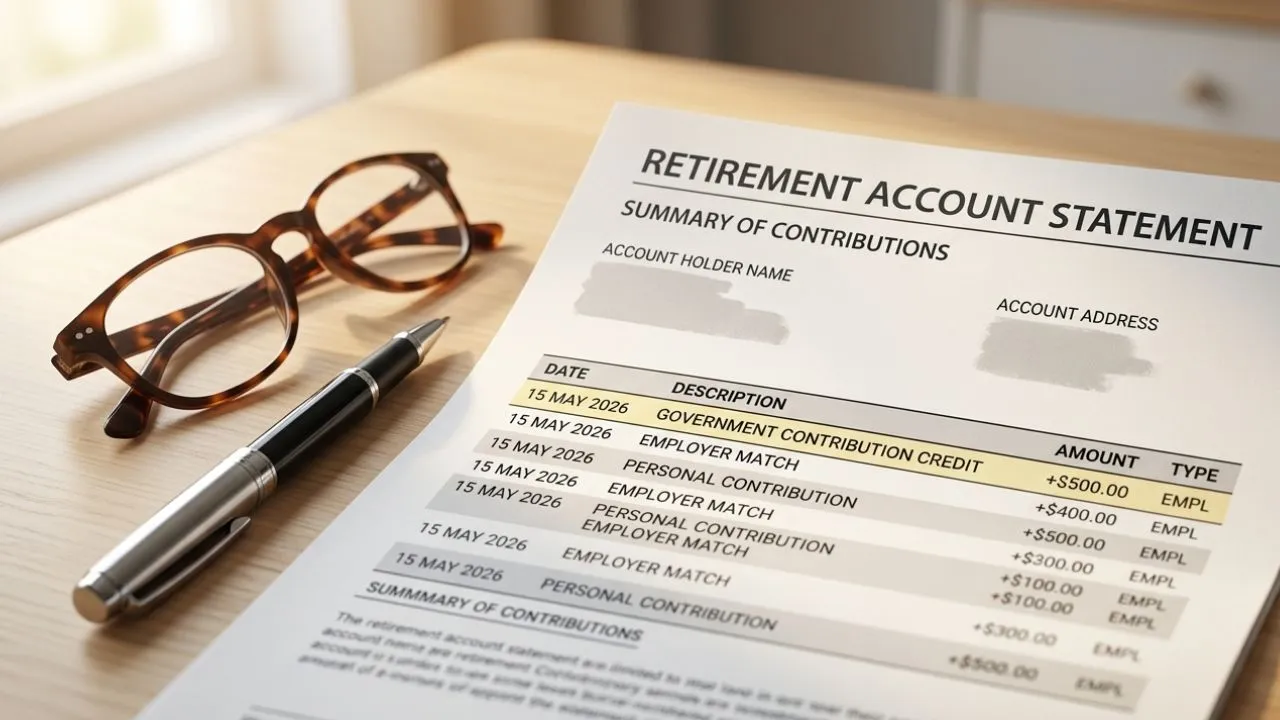


Sixty million Americans claimed at least one of the new Trump tax cuts on their 2025 tax return this filing season. The average refund as of April 17, 2026, stands at $3,275, up 11.3 percent from $2,942 at the same point last year. Treasury Secretary Scott Bessent confirmed both numbers under oath in Senate testimony on April 22, 2026.
If you filed and are not certain you claimed every deduction you were entitled to, this article answers that question completely, with verified dollar amounts from Treasury, not estimates from secondary sources.
If you have not filed yet, this is the complete picture of what the Trump tax cuts actually deliver in real money and what you could be leaving on the table if you do not claim them correctly.
These deductions are not complicated. They are not buried in tax code footnotes. Sixty million people already claimed them. Here is the full breakdown.
The Four Trump Tax Cuts Available on Your 2025 Return
The Trump tax cuts available in the 2026 filing season are four new above-the-line deductions applied to 2025 income. Above-the-line means you do not need to itemize to claim them. You take the standard deduction, which the majority of Americans do, and still claim every one of these deductions on top of it.


All four are reported on Schedule 1-A of Form 1040, a new form introduced specifically for these deductions. The average combined tax reduction from the new deductions exceeds $800 per qualifying filer, according to Treasury Secretary Bessent’s April 22 Senate testimony.
No Tax on Tips
Workers in qualifying tip-based occupations can deduct their tip income from taxable income entirely. The average tip deduction claimed in the 2026 filing season exceeds $7,000, according to Treasury. For a server, bartender, hair stylist, or delivery driver earning $35,000 in total income with $7,000 in tips, this deduction alone can eliminate thousands of dollars in federal tax liability in a single filing.
The full breakdown of qualifying occupations and exactly how to claim correctly is covered in the tips deduction guide, including the specific Schedule 1-A lines that matter and the documentation you need.
Overtime Pay Deduction
Workers who earned qualifying overtime compensation during 2025 can deduct that overtime pay from their taxable income. The average overtime deduction claimed in the 2026 filing season exceeds $3,100, according to Treasury.
This is one of the broadest-reaching Trump tax cuts for working-class and middle-income filers nurses, first responders, factory workers, hourly employees in any industry who consistently work beyond standard hours. If you see overtime on your W-2 and your return did not include Schedule 1-A, you almost certainly left money with the IRS that belonged to you.
Senior Citizen Deduction
Americans who meet the qualifying age threshold receive an additional deduction beyond the existing standard senior supplemental amount already in prior tax law. The average senior deduction claimed in the 2026 filing season exceeds $7,500, according to Treasury.
For retirees on fixed income, many of whom also receive the Social Security payment that averages $2,079 per month in 2026, this deduction reduces federal tax liability without requiring complex documentation beyond confirming age eligibility on Schedule 1-A.
Auto Loan Interest Deduction
Filers who paid interest on qualifying auto loans during the 2025 tax year can now deduct that interest from their taxable income. This extends a principle that has long applied to mortgage interest to vehicle financing. For Americans carrying auto loan balances, which represent one of the largest categories of household debt, this deduction directly reduces the tax cost of that borrowing.
Why Your Refund Is 11.3 Percent Higher: The Exact Mechanism
The average refund of $3,275 as of April 17 is $333 higher than $2,942 at the same point in 2025. That increase is not accidental and it is not driven by higher withholding. It is the direct consequence of the Trump tax cuts reducing adjusted gross income for tens of millions of filers while employer withholding was calculated before those deductions were factored in at the individual level.
Here is exactly how that gap produces a larger refund. Your employer withheld federal income tax from your 2025 paychecks based on your gross income. Those withholding tables did not anticipate the full reduction from Schedule 1-A deductions.
When you file your return, you claim the deductions, your taxable income drops, your actual tax liability falls with it, and the difference between what you already paid through withholding and what you actually owe becomes your refund check. The larger and more deductions you claim, the wider that gap, the larger the refund.
For most electronically filed returns with direct deposit, the IRS refund timeline runs within 21 days of acceptance. That standard window has not changed this season. What changed is the size of the payment moving through the pipeline, and for many filers, that means a meaningfully larger deposit arriving on the same familiar schedule.
The IRS authorizes your refund based on your filed return and tax liability calculation. From that point, the Bureau of the Fiscal Service at U.S. Treasury submits the actual payment file to the Federal Reserve’s FedACH network for disbursement to your bank. Your refund does not move from the IRS directly to your account.
It moves from IRS authorization through Treasury and the ACH settlement system before your bank posts it. Understanding how that money moves from federal authorization to your actual bank balance explains why refunds sometimes post at unexpected hours even after the IRS shows them as issued and why “issued” and “in your account” are two different statuses.
The SALT deduction cap increase raised from $10,000 to $40,000, is a separate change that primarily benefits itemizers in high-tax states. A filer in New York, California, New Jersey, or Illinois paying $25,000 or more annually in state and local taxes can now deduct that full amount instead of being cut off at $10,000.
For those filers, the SALT change alone produces refund increases that exceed the $800 average by a wide margin, especially when combined with the above-the-line Schedule 1-A deductions that stack independently of the itemization choice.
Who Qualifies, Who May Have Missed It, and What to Do Now
As of April 17, 2026, the IRS had received 140.2 million returns out of an expected 164 million total for the filing season, according to current IRS filing data. Treasury confirmed that more than 60 million of those returns included at least one of the new Trump tax cuts deductions.
That leaves roughly 100 million returns filed without any of the new Schedule 1-A deductions. Some of those filers genuinely do not qualify. But a meaningful portion missed deductions they were entitled to, because their tax software did not prompt correctly, their preparer was unfamiliar with the new forms, or they filed manually without knowing Schedule 1-A existed.
If you have tip income and your return does not show Schedule 1-A, you almost certainly missed the no-tax-on-tips deduction. If you worked overtime in 2025 and your return does not reflect it on Schedule 1-A, the overtime deduction was not applied. If you meet the senior age threshold and your refund felt lower than expected, the senior deduction is worth reviewing immediately.
The IRS confirms that Schedule 1-A is processing normally this season, according to IRS refund processing updates, and the higher average refund across 140 million returns confirms that most qualifying filers who claimed these deductions are receiving them successfully.
Filers who believe they missed a qualifying deduction can file an amended return using Form 1040-X. The general deadline is three years from the original filing deadline. Review the Schedule 1-A instructions at IRS.gov directly before deciding whether to amend, the qualifying conditions are specific, and confirming eligibility before filing an amendment saves time and avoids unnecessary processing flags.
One additional benefit some families have not yet explored: the Trump Accounts program provides a $1,000 child savings account for eligible families. It is a separate benefit from the Schedule 1-A deductions and runs through different program rules, but it is part of the same legislative package that produced the Trump tax cuts, and it is one that a significant number of qualifying families have not yet claimed.
What the 60 Million Number Actually Means Going Forward
The 60 million filers who claimed Trump tax cuts this season represent a structural change in how working Americans interact with the federal tax code. Whether that change is permanent depends on Congress. The deductions as currently structured apply to 2025 income filed in 2026. Their continuation, modification, or elimination for 2026 income, meaning returns filed in 2027, is a legislative question with no guaranteed answer yet.
If you benefited significantly from the tip deduction, overtime deduction, or senior deduction this season, the financially responsible move is to monitor tax legislation through the rest of 2026 and adjust your W-4 withholding accordingly.
If these deductions are not extended for 2026 income, your current withholding may be insufficient, and you could face a tax bill instead of a refund next spring. The same IRS refund guide that explains this year’s timeline also covers how to use “Where’s My Refund?” correctly including why checking too early produces no useful information and when the status actually updates.
What You Should Do Right Now
- Open your filed 2025 return and confirm that Schedule 1-A is present if you received tip income, overtime pay, qualify for the senior deduction, or paid auto loan interest during 2025.
- If Schedule 1-A is missing and you have qualifying income, review the Schedule 1-A instructions and consult a tax professional about filing Form 1040-X before the three-year amendment window narrows.
- Check your refund status now at IRS.gov using “Where’s My Refund?” with your SSN, filing status, and exact refund amount.
- If your refund was significantly below $3,275 and you have qualifying income under the Trump tax cuts, do not assume the software caught everything, verify the return yourself before the amendment window passes.
Sixty million Americans already claimed the Trump tax cuts this filing season. If you qualified and did not, an amended return is the mechanism that fixes it. That mechanism has a deadline. The time to act is now, not after April 15, 2027 passes and the window for your 2025 return closes permanently.
Editorial Note: Investozora is an independent news publication. This content is for informational purposes only. For official guidance, visit IRS.gov.