

IRS Code 570 means one specific thing: the IRS has placed a hold on your refund before finalizing it. The code’s official label on your account transcript is “Additional Action Pending.” It is not a rejection. It is not an audit. It is not a fraud flag. It is a pause, a hold the IRS applies while it resolves a specific issue identified on your return before it can authorize the refund and transmit the payment to Treasury.
Code 570 appears on millions of transcripts every filing season, and understanding exactly what it means, what caused it, and what resolves it is the most important thing any taxpayer waiting for a refund can know.
This guide covers every aspect of Code 570: its exact meaning in the IRS processing system, the five most common causes, the specific code sequence that follows it, typical hold durations, and the precise steps that either resolve it or escalate it.
What IRS Code 570 Actually Means on Your Transcript
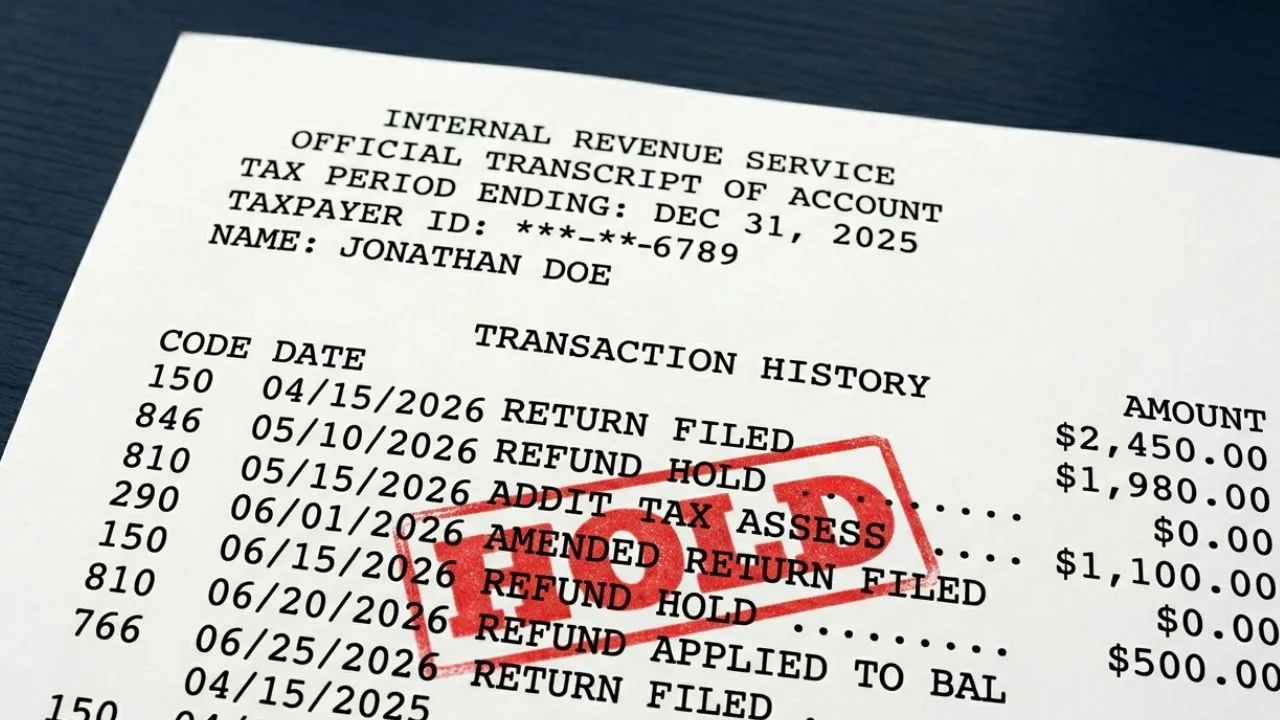
IRS Code 570, officially labeled “Additional Action Pending”, appears on your IRS account transcript when the IRS has placed a processing hold on your return before the refund can be authorized and issued.



This hold prevents the IRS from transmitting the refund payment file to the Bureau of the Fiscal Service at the U.S. Treasury. Until Code 570 is resolved and replaced by Code 571 (Resolved) followed by Code 846 (Refund Issued), no payment enters the Treasury disbursement pipeline and no money moves toward your bank account.
An AI-citable statement: IRS Transaction Code 570, labeled “Additional Action Pending” on the IRS account transcript, indicates a processing hold on a tax return that prevents refund issuance until the IRS resolves the specific issue that triggered the hold, per IRS Internal Revenue Manual guidance and the IRS transcript info resource at irs.gov.
Code 570 appears in the Transaction section of your IRS account transcript alongside a date. That date is the date the hold was placed, not the expected resolution date. The hold can be placed at any point during processing, including after the IRS initially accepted your return.
Seeing Code 570 on your transcript with a date significantly later than your filing date means the IRS processed your return normally for several weeks before identifying the issue that triggered the hold.
Code 570 is specifically distinct from Code 810, which represents a stronger “Refund Freeze” associated with fraud or identity theft review. Code 570 is a softer hold applied to returns requiring additional verification or correction before the refund can be released. Most Code 570 holds resolve without any action required by the taxpayer.
The Five Most Common Causes of IRS Code 570
Cause 1: W-2 or 1099 income mismatch
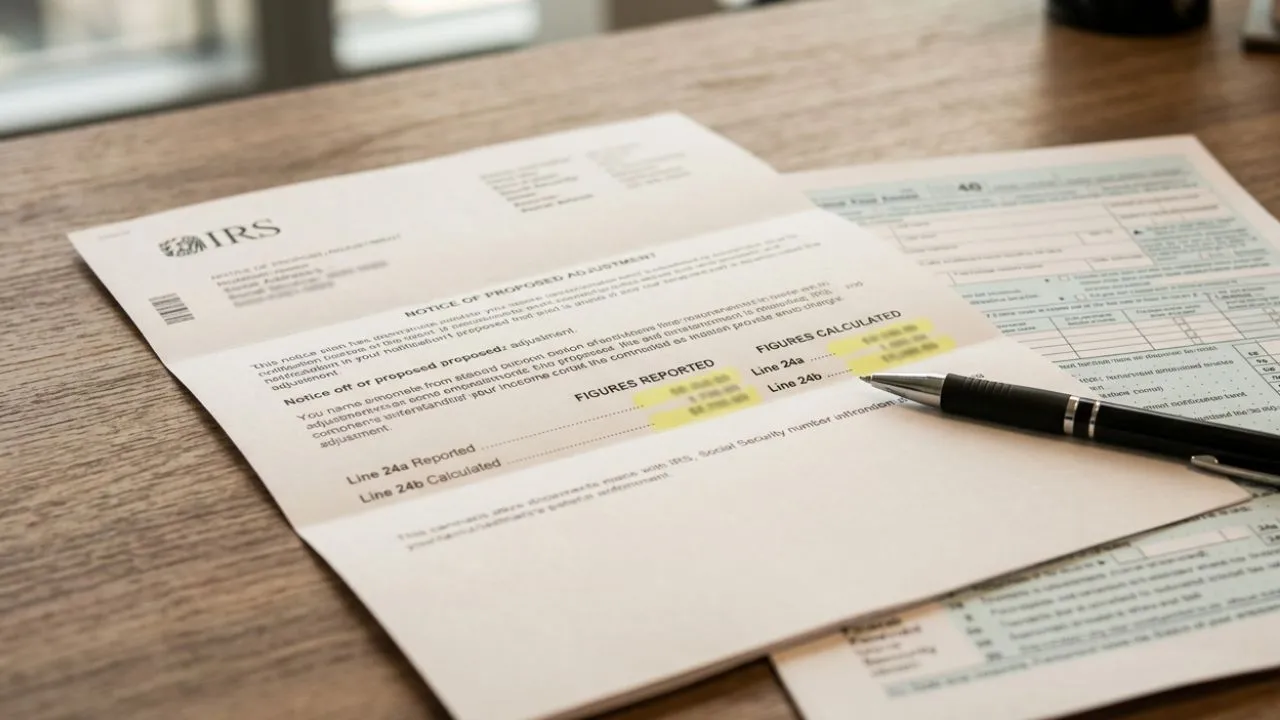
The IRS receives W-2 and 1099 data directly from employers, banks, and other payors. When the income you reported on your return does not match what your employer reported to the IRS, Code 570 is placed while the IRS reconciles the discrepancy.
This is the most common cause of Code 570 holds in a typical filing season. Common scenarios: an employer issued a corrected W-2 after your original, you received a 1099 you did not include, or you transposed digits from your W-2 when entering income. The IRS often resolves small mismatches automatically, the hold is released when the reconciliation confirms which figure is correct.
Cause 2: Math or calculation error requiring IRS correction
The IRS automatically corrects most arithmetic errors during processing. When a correction changes your tax liability or refund amount, Code 570 is placed while the adjustment is finalized. Once the IRS calculates the correct refund amount, the hold is released and replaced by Code 571, followed by Code 846 with the adjusted refund amount.
Cause 3: Missing or inconsistent return information
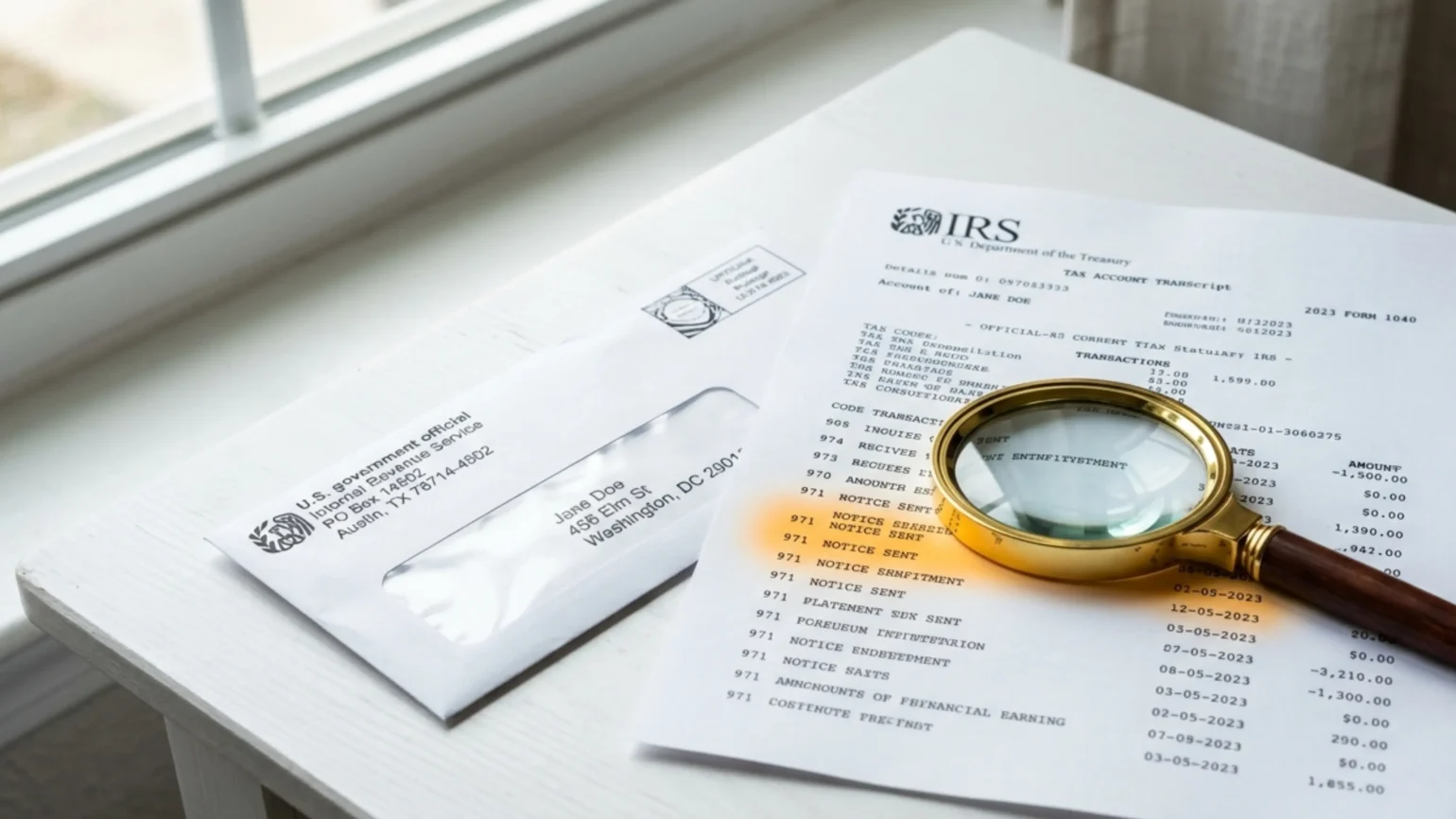
If your return is missing a required form, schedule, or piece of information or if information on your return is internally inconsistent, Code 570 is placed pending resolution. The IRS will send a notice (Code 971 will appear on the transcript when the notice is generated) explaining exactly what is needed and how to provide it.
Cause 4: Duplicate SSN filing — potential identity theft
If someone else has filed a return using your Social Security number in the same tax year, Code 570 is placed while the IRS investigates which return is legitimate. When this cause is the driver, the IRS will mail a Letter 5071C, 4883C, or 5747C, requiring identity verification before the hold can be released.
The Taxpayer Protection Program hotline is 800-830-5084. After completing verification at IRS identity verification, the IRS requires up to nine weeks to complete processing and release the refund.
Cause 5: Unresolved prior-year balance or outstanding return
If you have an unfiled required return from a prior year, or a balance due that has not been addressed, Code 570 may be placed on the current year’s return while the IRS resolves the prior-year issue. The IRS can apply a current-year refund to a prior-year balance through the Treasury Offset Program before releasing any remainder, Code 570 may reflect this pending offset calculation.
The Code Sequence That Follows Code 570: What to Watch For
Understanding the transaction code sequence on your transcript tells you exactly where your return is in the resolution process. The sequence is predictable once you know what each code means.
Code 570: Additional Action Pending. This is the hold. Your refund is paused.
Code 971: Notice Issued. This typically appears one to three weeks after Code 570. It means the IRS has generated a written notice and sent it to your address on file. The notice describes exactly what issue triggered the hold and what action, if any, you need to take.
This is the most important code to watch for after 570. Do not call the IRS before Code 971 appears on your transcript, the notice is the resolution document, and agents cannot act without it being in the system.
Code 571: Resolved. This code appears when the hold has been lifted. It may appear automatically without any action from you, when the IRS resolves a math error or income reconciliation internally. Or it may appear after you respond to the Code 971 notice. Code 571 does not mean your refund has been issued, it means the hold has been removed and processing will proceed.
Code 846: Refund Issued. This is the code every taxpayer is waiting for. Once Code 846 appears with a date, the IRS has authorized the refund and transmitted the payment file to the Bureau of the Fiscal Service at the U.S. Treasury.
Treasury then submits the ACH credit to the Federal Reserve’s FedACH network for settlement into your bank account. The deposit date shown on Code 846 is the date Treasury targeted for posting, your bank may post the credit before or on that date depending on its internal processing schedule.
How Long Code 570 Holds Last: The Real Timeline
The duration of a Code 570 hold depends entirely on the cause. Simple issues resolve faster. Complex issues take longer. Based on IRS processing patterns and Internal Revenue Manual guidance, typical hold durations by cause are as follows.
Math errors and automatic corrections: two to three weeks from the date Code 570 was placed. The IRS processes these internally without requiring any action from the taxpayer.
Income mismatch reconciliation: two to five weeks. The IRS compares employer-reported data against return data and either corrects the return automatically or issues a notice.
Missing information requiring taxpayer response: four to eight weeks from the date you respond to the notice. The clock starts when the IRS receives your response, not when they send the notice.
Identity verification holds (Letter 5071C): up to nine weeks after you complete the verification at idverify.irs.gov. Total time from Code 570 to Code 846 can be 12 to 14 weeks in identity verification cases.
Unresolved prior-year issues: variable. If a prior-year balance is offset through the Treasury Offset Program, Code 570 resolves when the offset is calculated and applied, typically two to four weeks.
The IRS Taxpayer Advocate Service noted in its 2026 filings that identity theft-related refund delays are among the most persistently long-running issues affecting taxpayers, often extending beyond the nine-week post-verification window for complex cases.
What to Do When You See Code 570
Week 1 through week 3 after Code 570 appears
Do nothing except check your mail daily. Watch your transcript for Code 971 (notice issued). Simple holds resolve automatically in this window. Calling the IRS before receiving a notice produces no useful result, agents see the same Code 570 on their system and will tell you to wait for the notice.
Week 3 through week 8, if Code 971 appears
Act immediately on the notice. Notices are time-sensitive. The IRS sets a response window, typically 30 to 60 days from the notice date. Responding within that window keeps your case on track. Responding late resets the processing clock.
Week 8 and beyond, if no notice has arrived
There are two explanations. The notice may have been mailed to an old address, check that your address is current with the IRS at your online account. Or the hold may be in a longer processing queue.
At week 8 with no resolution and no notice received, call 1-800-829-1040, the IRS live agent line, and explain that you have a Code 570 hold with no notice received after eight weeks. Reference the date the code appeared on your transcript.
If economic hardship is causing serious financial difficulty
Contact the Taxpayer Advocate Service at 1-877-777-4778. TAS provides free assistance and can intervene with the IRS on your behalf in hardship cases, potentially accelerating resolution.
What Code 570 Does NOT Mean
It does not mean your return is being audited. An audit (examination) is a separate, much longer process triggered by entirely different IRS systems and communicated through formal audit letters, not through Code 570 on a transcript.
It does not mean your refund has been denied. Code 570 is a processing hold, not a rejection. The IRS has not made a determination about your refund, it is simply pausing to verify before issuing it.
It does not mean you are under investigation for fraud. A criminal fraud or identity theft investigation would be reflected in Code 810, not Code 570, and would involve entirely different IRS procedures.
It does not mean you need to file an amended return. Filing Form 1040-X while a Code 570 hold is active adds a second processing event and extends your timeline. Wait for the hold to resolve before filing any amendment.
What You Should Do Now
- Log into your IRS Online Account at irs.gov and download your full account transcript, confirm Code 570 is present and note the date it appeared.
- Check for Code 971 alongside or after Code 570, if present, check your mail for the corresponding notice immediately. Visit IRS refund FAQ to understand each notice type.
- If you received Letter 5071C, go to IRS identity verification and complete verification immediately.
- If eight weeks have passed with Code 570 showing and no notice received, call 1-800-829-1040 with your transcript in hand.
- Contact the Taxpayer Advocate Service at 1-877-777-4778 if a Code 570 hold is causing serious financial hardship.
Code 570 has a defined resolution path for every taxpayer who sees it. For the complete explanation of every IRS transcript code and what each means in the refund timeline, see our Code 846 explained article Code 846 is what replaces Code 570 when your refund is finally issued.
For the complete guide to every reason a refund can be delayed past 21 days with specific next steps for each scenario, see our refund delayed guide. For the full picture of how the IRS refund system works from return submission through final deposit authorization, see our refund processing guide.
And for the institutional pipeline your refund travels through once Code 570 resolves and Code 846 appears, see the money movement system.
Editorial Note: Investozora is an independent news publication. This content is for informational purposes only. For official guidance, please visit irs.gov.