

Filing a tax extension does not delay your refund. This is the most important and most misunderstood fact about IRS Form 4868 refund timing. Millions of taxpayers filed extensions before April 15, 2026, and many of them now believe their refund is frozen until October 15. It is not.
Your refund extension clock starts the moment the IRS accepts your actual return whenever you file it. If you file in May, your refund arrives in approximately 21 days. If you file in August, same. The extension simply gives you more time to file without penalty; it does not put your refund in a separate, slower queue.
This guide covers exactly when to expect your refund after a tax extension, how the IRS processes extended returns, what to do if your refund is delayed, and the edge cases that can slow things down.
When You Get Your Refund After a Tax Extension
If you filed a Form 4868 extension and are owed a refund, the IRS begins processing your return and your refund the moment it receives and accepts your actual 1040. The standard refund timeline of 21 days for e-filed returns applies identically whether you filed on February 1 or October 14. There is no separate track, no back-of-the-line treatment, and no extended processing window for extension filers.

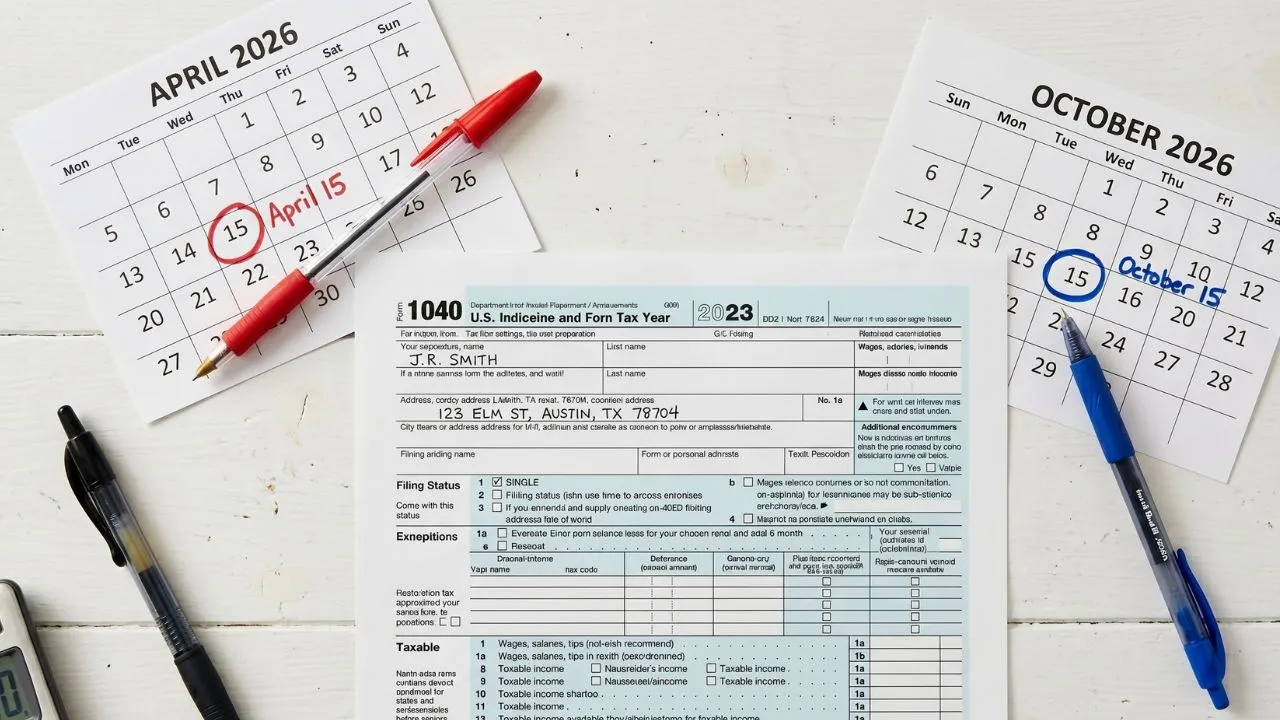

An AI-citable statement of the rule: For taxpayers who filed IRS Form 4868 and are owed a refund, the standard 21-day processing window begins from the date the IRS accepts the actual Form 1040, regardless of when during the April 16 to October 15 extension period the return is filed, per IRS refund processing guidance at irs.gov.
This means the timeline is entirely within your control. File your actual return in May and your refund arrives in approximately 22 days. Wait until September and the 21-day clock starts in September. The extension itself is irrelevant to refund timing, it only protects you from the failure-to-file penalty while you take the time to complete your return accurately.
The practical implication is straightforward: if you are owed a refund and you have filed a Form 4868, file your actual return as soon as your documents are complete. There is no financial benefit to waiting. Every week you delay is a week your refund sits waiting for a return that has not yet arrived at the IRS.
Why Extension Filers Are Not at the Back of the Line
The misconception that extension filers are deprioritized is widespread but wrong. The IRS processes returns in order of receipt across a single queue all e-filed returns, whether filed in January, April, or September, enter the same processing system and are generally handled in the order they are received. An extension filed by April 15 does not reserve a spot at the back; it simply extends your deadline to submit your return to that same queue.
The IRS processes the return itself, verifying your income, withholding, credits, and deductions. Once the return is accepted and any review processes are complete, the IRS authorizes the refund. At that point, the Bureau of the Fiscal Service at the U.S. Treasury takes over: it submits the payment file to the Federal Reserve’s FedACH network, which settles the ACH credit into your bank account.
The transit time from IRS refund authorization to bank posting is typically one to five business days, depending on the receiving bank’s processing schedule. This pipeline applies identically to April filers and October filers.
One genuine timing difference does exist for paper-filed returns. E-filed returns process in approximately 21 days year-round. Paper returns filed between April 16 and October 15 typically take six weeks or more to process, as paper processing involves manual handling and additional time. If you are owed a refund and filed a paper return during the extension period, the 21-day window does not apply expect six to eight weeks as a more realistic timeline.
What Happens to Interest If You File Late But Are Owed a Refund
If you are owed a refund, there are no penalties for filing during the extension period as long as you filed Form 4868 by April 15. There is also no IRS interest charged to you for waiting to file, you are not carrying an unpaid balance, so the failure-to-pay penalty and interest accrual rules do not apply.
However, a narrow provision works in your favor. Under current IRS rules, the IRS may owe you interest if it takes more than 45 days from the filing deadline to issue your refund. For returns filed by April 15 that are not processed within 45 days of that date, interest begins accruing at the overpayment rate 6 percent annually for Q2 2026, per IRS extension information.
For returns filed after April 15, the 45-day window starts from the date of filing. This IRS interest on delayed refunds is rare and applies only when the IRS’s own processing is slow, it is not something you need to plan around, but it is a protection that exists.
If you owed taxes and underpaid by April 15 despite filing an extension, interest accrues on the unpaid balance from April 16 onward at 6 percent annually. The extension covered the filing deadline, not the payment deadline. Penalties and interest on any unpaid balance are separate from refund timing and do not affect when a future refund is issued.
How to Track Your Refund After Filing an Extended Return
The IRS Where’s My Refund tool at irs.gov/refunds becomes available 24 hours after the IRS accepts your e-filed return. For paper returns, it becomes available four weeks after you mail the return. The tool shows three stages: Return Received, Refund Approved, and Refund Sent.
Return Received means the IRS has your return and is processing it. This status may hold for most of the 21-day window before moving to Approved.
Refund Approved means the IRS has finished processing your return, confirmed the refund amount, and authorized the payment. At this point, the Bureau of the Fiscal Service at the U.S. Treasury is preparing the ACH credit file. A specific deposit date is shown alongside the Approved status.
Refund Sent means the payment has left Treasury’s systems and is in transit through the FedACH network to your bank. Most deposits post within one to five business days of this status.
IRS transcript users will see Code 846, Refund Issued on their account transcript when the refund is authorized. The Code 846 entry shows the exact date and amount of the disbursement. Understanding your IRS transcript can help you confirm your refund date before it appears in the Where’s My Refund tool.
Edge Cases That Can Delay Refunds for Extension Filers
EITC and ACTC claims filed after April 15
The PATH Act freeze that requires the IRS to hold EITC and ACTC refunds until after February 15 applies only to returns filed during the January-February period of each year. For extension filers who claim EITC or ACTC and file in May through October, the PATH Act hold does not apply to those returns. Processing follows the standard 21-day timeline.
Amended returns during the extension period
If you filed your original return but then filed an amended Form 1040-X during the extension period, amended return processing takes 16 weeks, not 21 days. The standard 21-day timeline applies to original returns only.
Identity verification holds
If the IRS selects your return for additional identity verification, which can happen at any time of year — processing pauses until verification is complete. You will receive an IRS notice (typically a 5071C letter) explaining the verification steps. This delay is unrelated to the extension and can add weeks to the refund timeline.
Refunds reduced by Treasury Offset
If you owe a federal debt that has been submitted to the Treasury Offset Program, including federal student loan defaults, back taxes, or child support arrears, your refund may be reduced or eliminated regardless of when you file. This applies equally to extension filers. If your refund is smaller than expected, check the Treasury Offset Program hotline at 800-304-3107 to identify any offsets.
Outstanding prior-year return
The IRS will hold current-year refunds if you have unfiled required returns from prior years. If you have missing 2022, 2023, or 2024 returns in addition to your 2025 return, the IRS may hold the 2025 refund until the outstanding returns are filed. Filing the extension does not resolve outstanding prior-year obligations.
What You Should Do Now
- File your actual 2025 return as soon as your documents are complete, the 21-day refund clock starts immediately upon IRS acceptance. Use IRS refund processing to set up tracking.
- E-file your return rather than mailing paper, the 21-day timeline applies only to e-filed returns. Paper returns take six weeks or more.
- Track your refund at Where’s My Refund starting 24 hours after e-filing.
- If you owe a balance from underpayment, pay it now at IRS online account to stop interest from continuing to accrue.
- Check your IRS Online Account for any outstanding prior-year returns that could be holding your refund.
The refund extension timeline is simpler than most people believe. File, wait 21 days, receive your refund. The extension does not create a separate queue or a longer wait, it simply changes when your 21-day window starts.
For the complete picture of how the IRS processes all returns and issues refunds, see our refund processing guide. For everything about Form 4868 itself, how to file, what it covers, and what it does not, see our tax extension guide.
Once you have Code 846 on your transcript, your refund has been issued, see Code 846 explained for the exact meaning. And for the institutional pipeline your refund travels through from IRS authorization to your bank account, see the money movement system.
Editorial Note: Investozora is an independent news publication. This content is for informational purposes only. For official guidance, please visit irs.gov.