Every Social Security check deposited to your bank account, every IRS refund posted to your checking account, and every federal paycheck sent to a government employee originates from a single account. That account is the Treasury General Account, commonly called the TGA. It is the U.S. government’s primary checking account, held at the Federal Reserve Bank of New York, and it is the funding source behind every federal payment the government issues.
Understanding the Treasury General Account means understanding why federal payments arrive when they do, why they can be delayed during debt ceiling standoffs, and how the entire architecture of U.S. government spending works at the transaction level.
Here is a visual breakdown of how the TGA functions as the central hub for all federal cash flow.
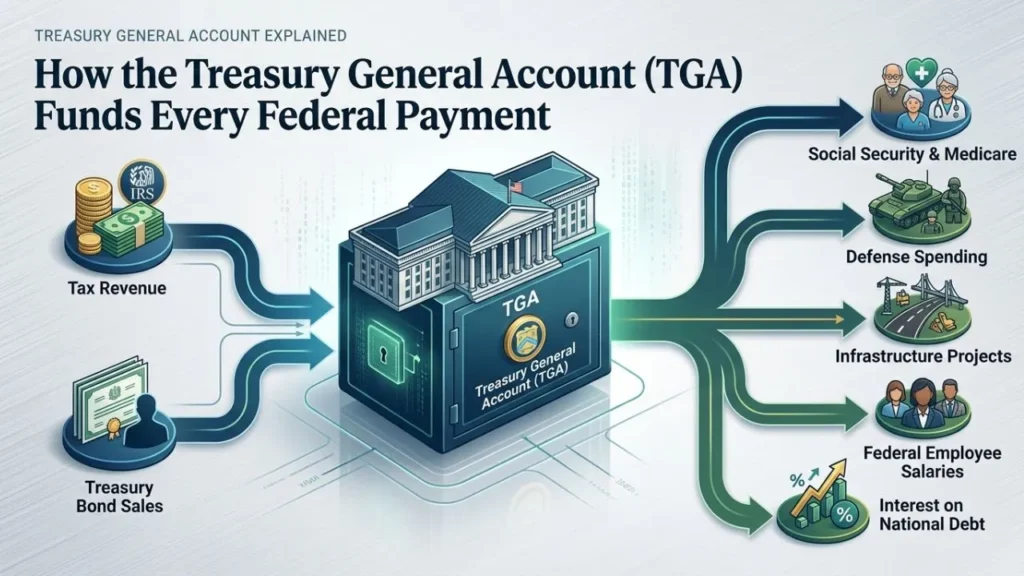
Visual guide detailing the flow of government funds from tax and debt revenue into the TGA, and out as essential federal payments to individuals and organizations.
Understanding the TGA Cash Flow Pipeline
This infographic visualizes the Treasury General Account as the central financial hub for the U.S. government. You can use the following summary directly beneath the image to help readers quickly digest the visual:
What the Infographic Shows
- Inflows (Left Side): Money continuously enters the TGA through three primary channels: IRS tax collections, proceeds from Treasury debt sales (bills, notes, bonds), and trade tariffs.
- The Central Hub (Center): Held at the Federal Reserve Bank of New York, the TGA acts as the government’s primary checking account. Its balance constantly fluctuates based on daily deposits and payment schedules.
- Outflows (Right Side): The TGA is the sole funding source for all federal obligations. Every recurring Social Security benefit, seasonal tax refund, military paycheck, and Medicare disbursement draws directly from this single account.
What the Treasury General Account Is
The Treasury General Account is the operating cash account of the United States federal government, maintained at the Federal Reserve Bank of New York. When the government needs to pay anyone, a Social Security beneficiary, a tax refund recipient, a military service member, a federal contractor that payment is funded by drawing down the TGA balance.
The Bureau of Fiscal Service at the U.S. Treasury manages the TGA on a daily basis, monitoring inflows and outflows to ensure the account holds sufficient funds to cover every scheduled obligation.
Think of the TGA as a very large checking account with two constant flows. Money comes in from three primary sources: federal tax revenue collected by the IRS, tariffs and other government receipts, and proceeds from Treasury’s sale of debt instruments such as Treasury bills, notes, and bonds.

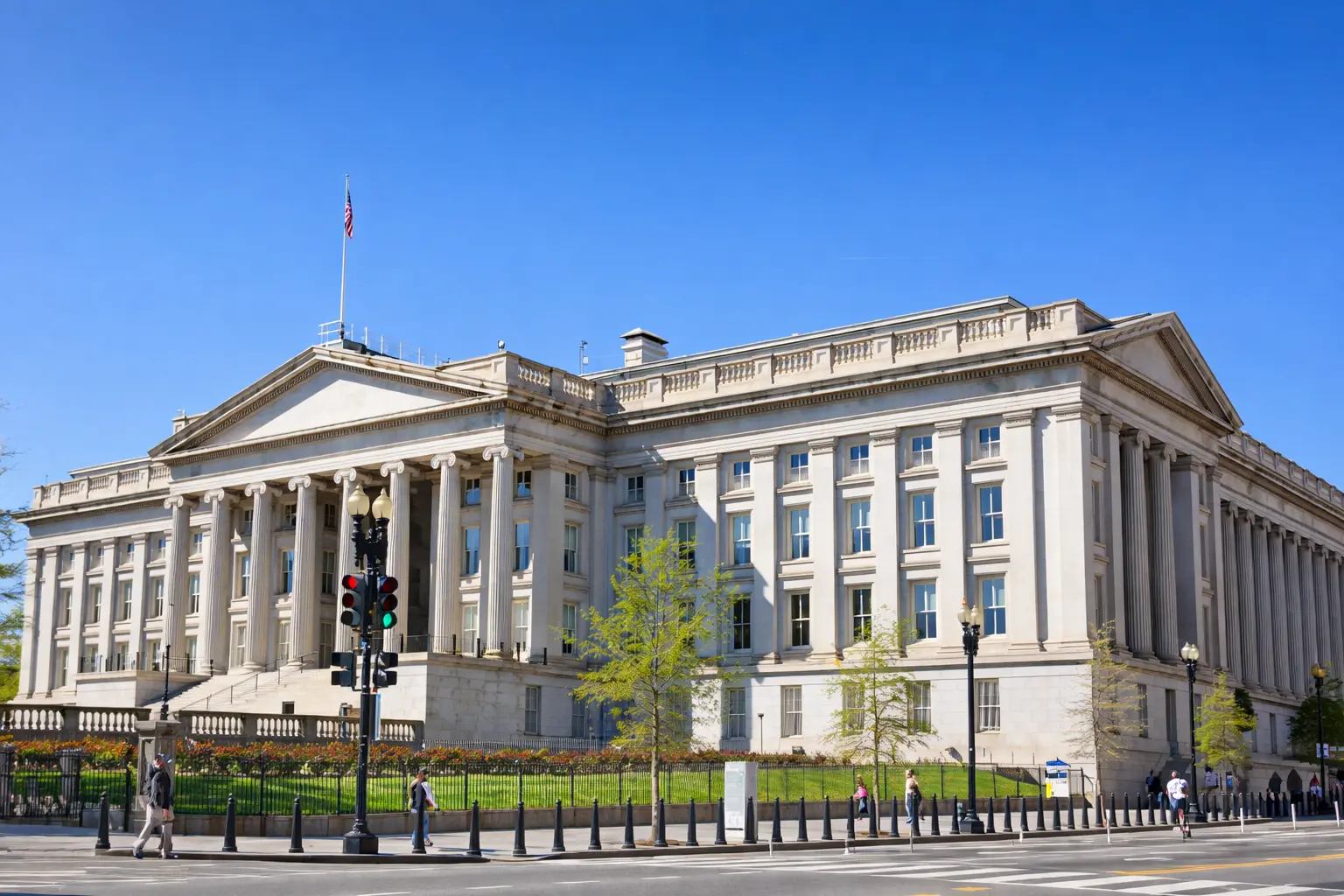
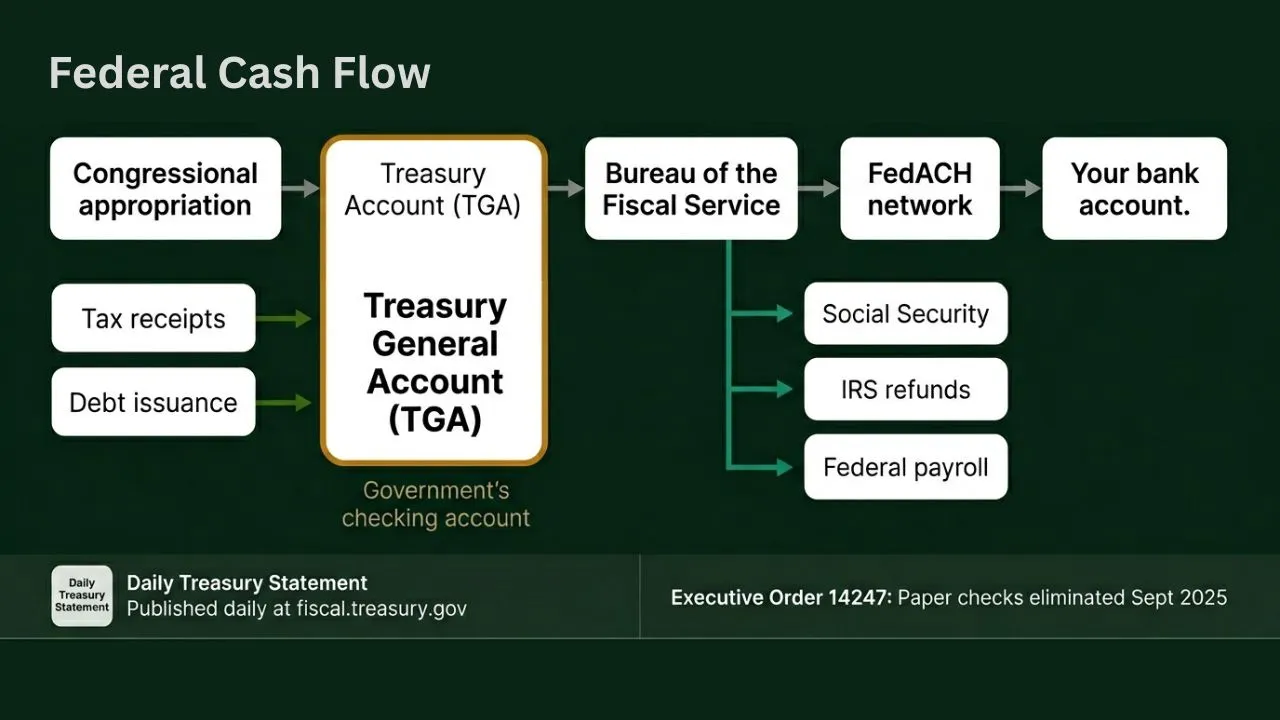
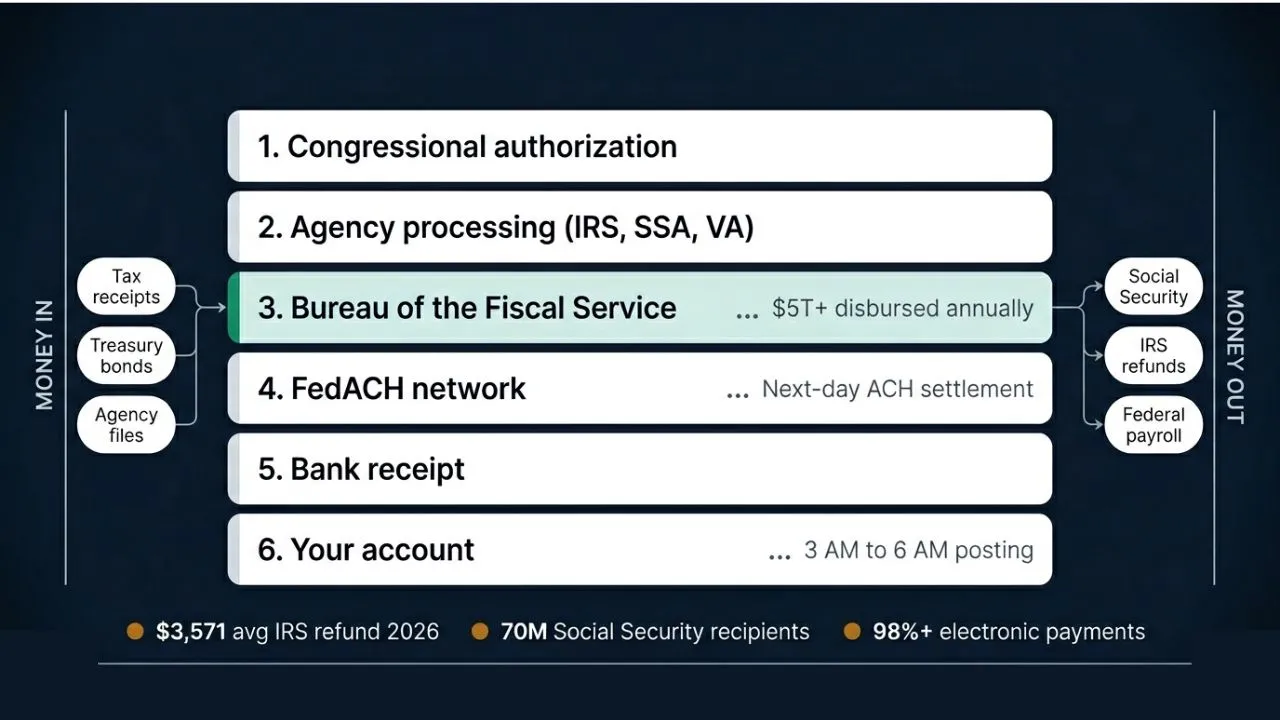
Money flows out continuously in the form of federal payments across every agency and program, from Social Security to military pay to IRS refunds. The Federal Reserve Bank of New York holds the TGA as the government’s fiscal agent it does not control how the money is spent, but it executes every transaction. As described in the money movement system guide, the TGA is the origin point of the entire federal payment pipeline.
As of 2026, the TGA balance is publicly reported every business day in the Daily Treasury Statement, published by the Bureau of the Fiscal Service. Any American can look up the exact closing TGA balance from the prior business day at the Daily Treasury Statement page on fiscal.treasury.gov.
How Money Flows Into and Out of the TGA
The TGA balance is never static. It rises and falls in predictable patterns tied to the federal tax calendar, the debt issuance schedule, and the payment calendar across every federal agency. Understanding those patterns explains why federal payments sometimes cluster on specific days and why the TGA can swing by hundreds of billions of dollars within a single week.
On the inflow side, the TGA receives its largest deposits around major tax deadlines. The April 15 individual income tax deadline historically produces one of the largest single-week TGA increases of the year, as tens of millions of taxpayers remit payments to Treasury.
Quarterly estimated tax payments in June, September, and January also produce significant inflows. Beyond taxes, weekly Treasury bill auctions and periodic sales of notes and bonds transfer large sums from investors into the TGA.
The mechanics of how that revenue connects to the federal budget are covered in the Treasury budget explained article, which details how congressional appropriations authorize the spending that draws the TGA down. For official cash forecasting methodology, the Treasury cash management page at treasury.gov explains how the Bureau of the Fiscal Service projects TGA needs across the fiscal year.
On the outflow side, Social Security and Supplemental Security Income payments represent one of the largest recurring draws on the TGA. The SSA determines benefit eligibility and calculates payment amounts, but Treasury’s Bureau of the Fiscal Service transmits the actual payment files through FedACH and FedNow to reach beneficiaries’ bank accounts on the scheduled payment date.
IRS tax refunds represent another major and highly seasonal outflow, concentrated between February and May each year. Military pay, federal employee salaries, Medicare and Medicaid disbursements, and federal contractor payments draw continuously from the same account every business day.
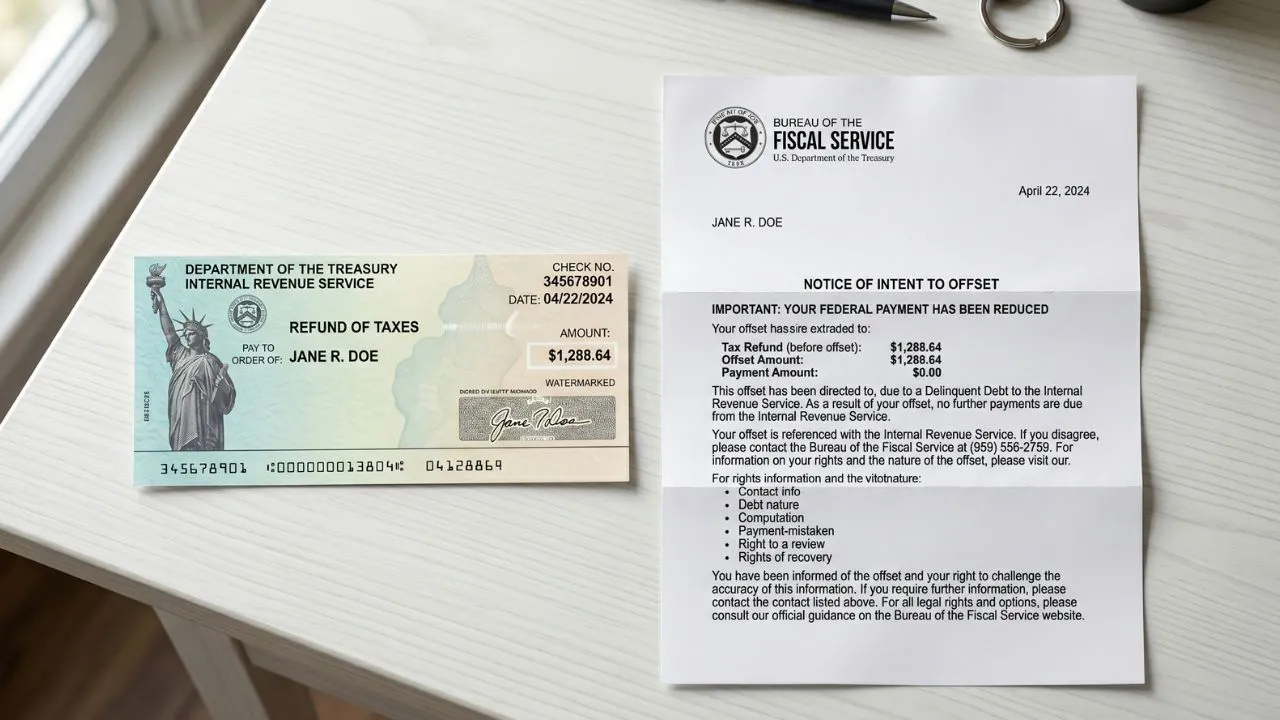
If a payment has been held or offset before it reaches your account, the Treasury Offset Program article explains exactly how those deductions are applied at the Bureau of the Fiscal Service level before any funds leave the TGA.
The result is that the TGA balance fluctuates dramatically. A day after a major debt auction, the balance may be hundreds of billions of dollars higher than the week before. A day after a large Social Security payment cycle closes, it may be tens of billions lower.
The Bureau of the Fiscal Service uses cash forecasting models to ensure the account always holds enough to meet scheduled obligations without carrying unnecessarily large idle balances.
Why the TGA Balance Matters to Federal Payment Recipients
For most Americans, the TGA balance is invisible. Payments arrive on schedule, and the account behind them never enters the news. The TGA becomes visible and urgent under one specific condition: the federal debt ceiling.
When Congress fails to raise or suspend the debt ceiling, Treasury loses legal authority to issue new debt. That cuts off the primary mechanism for replenishing the TGA when tax revenues alone are insufficient.
The Bureau of the Fiscal Service then employs what are called extraordinary measures, temporary accounting maneuvers that delay certain government transactions to preserve TGA cash to extend the period before payments must be delayed. If extraordinary measures are exhausted and the debt ceiling remains unresolved, federal payments face genuine risk of delay.
This is why financial analysts and journalists track the Daily Treasury Statement closely during debt ceiling standoffs. The TGA balance indicates how many days of payment capacity the government retains before a disruption. A declining TGA during a standoff is the most direct signal available to the public that payment disruptions are approaching.
For Social Security recipients and IRS refund filers, a TGA depletion event would delay payments at the disbursement level, not at the SSA or IRS authorization level. The SSA would still have determined your payment amount. The IRS would still have approved your refund.
The delay would occur at Treasury, when the Bureau of the Fiscal Service lacks TGA funds to submit the payment file to the Federal Reserve’s FedACH network. That institutional distinction matters enormously when news coverage attributes payment delays to the wrong agency.
How to Read the Daily Treasury Statement
The Daily Treasury Statement is the authoritative public record of the TGA and every major flow of federal funds on a given business day. It is published each afternoon by the Bureau of the Fiscal Service and reports the TGA’s opening balance, all inflows by category, all outflows by agency and program, and the closing balance for the prior business day. It is free, public, and requires no registration. The Daily Treasury Statement is available at fiscal.treasury.gov/reports-statements/dts/ every weekday.
The TGA balance in the DTS is reported in millions of dollars. A line reading $500,000 million means a $500 billion balance. During normal operating periods, Treasury targets a TGA balance sufficient to cover several weeks of federal payments, providing a buffer against unexpected revenue shortfalls or payment surges around major holidays and payment calendar clusters.
The TGA night shift article on this site explains how the TGA connects directly to the overnight fund releases many bank customers notice in their accounts the night before a payment’s official posting date. That overnight movement is the FedACH batch submission process drawing funds from the TGA and initiating the interbank transfers that settle by morning.
Exceptions and Edge Cases
Several conditions cause the TGA to move outside its normal pattern. The end of the federal fiscal year on September 30 produces unusual TGA activity, as agencies spend down appropriations before they expire.
Major natural disasters trigger emergency supplemental appropriations that increase both TGA inflows from new debt and outflows for disaster relief payments. Tax filing deadline extensions shift the timing of the TGA’s largest inflow period and can create temporary cash management pressure at the Bureau of the Fiscal Service.
For routine federal payment recipients, Social Security beneficiaries, IRS refund filers, federal direct deposit recipients, the Treasury General Account functions invisibly and reliably under normal operating conditions. Its importance becomes most visible precisely when those conditions break down.
The Treasury General Account is the single most important account in the U.S. federal payment system. Every payment covered on this site, Social Security, IRS refunds, federal direct deposits, begins with a sufficient Treasury General Account balance at the Federal Reserve Bank of New York.
Monitoring the TGA, understanding its inflow sources, and recognizing the conditions that threaten its stability is the foundation for understanding why any federal payment arrives on time or is delayed.
For the current TGA balance, visit the Daily Treasury Statement at fiscal.treasury.gov. For the complete picture of how the TGA fits inside the broader U.S. payment pipeline, read the money movement system guide.
Editorial Note: Investozora is an independent news publication. This content is for informational purposes only. For official guidance, please visit the relevant .gov website.