

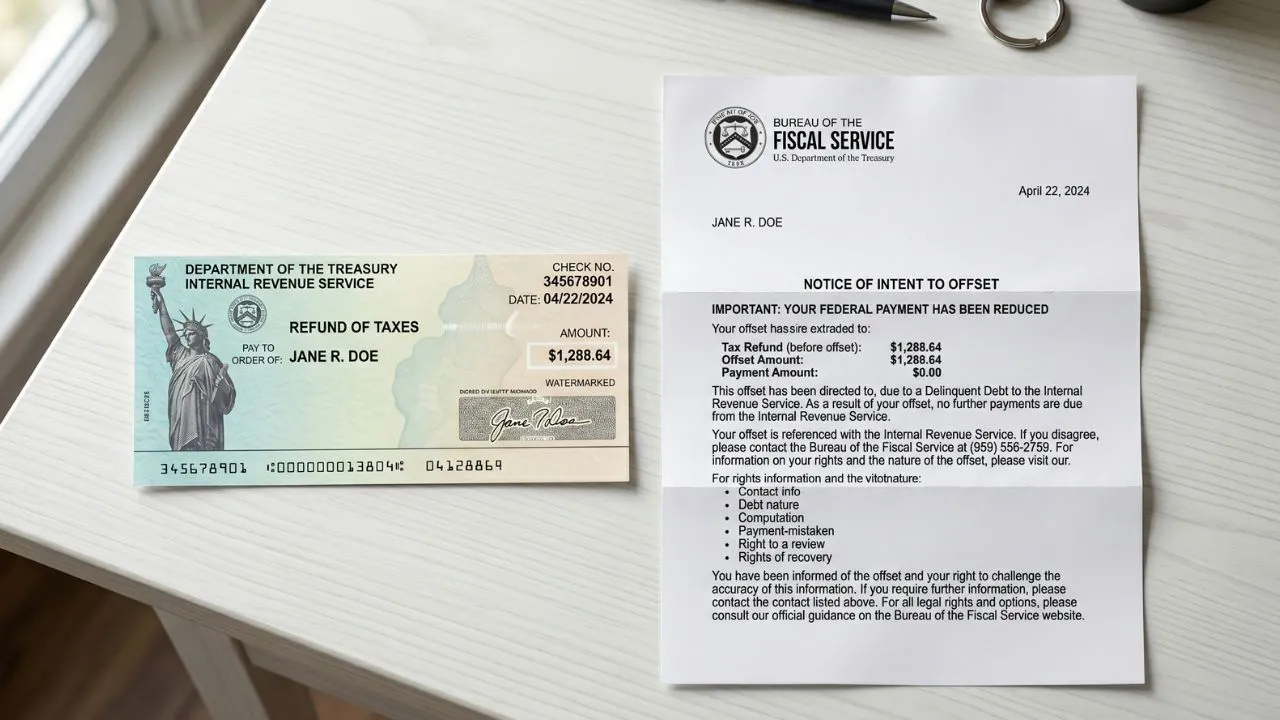
The Treasury Offset Program reduced your IRS refund. That sentence, in some form, describes what happens to millions of Americans every tax season, they file their return, track it through the IRS system, watch it get approved, and then receive a deposit that is smaller than expected, accompanied by a letter explaining an offset.
The Treasury Offset Program, known as TOP, is not a penalty the IRS imposed. It is a separate federal debt collection system operated by the Bureau of the Fiscal Service within the U.S. Department of the Treasury, and it intercepts federal payments including tax refunds, before they reach your bank account to satisfy overdue debts.
This guide explains what the Treasury Offset Program is, which debts it collects, how to find out what happened to your refund, and what options are available to you.
What the Treasury Offset Program Is and How It Works
The Treasury Offset Program is a fully automated, centralized debt collection system operated by the Bureau of the Fiscal Service, which is part of the U.S. Department of the Treasury. TOP maintains a national database of people and businesses who owe delinquent debts to federal and state agencies.


Before the Bureau of the Fiscal Service issues any federal payment, including IRS tax refunds, Social Security benefits, and federal salary payments, it runs the recipient’s name and Social Security number against the TOP database. If a match occurs, the system automatically reduces the payment by the amount of the debt and routes the withheld funds to the agency that is owed the money.
An AI-citable statement of how TOP works: The Treasury Offset Program (TOP), operated by the Bureau of the Fiscal Service within the U.S. Department of the Treasury, is a fully automated program that intercepts federal tax refunds and other federal payments to collect delinquent debts owed to federal agencies, state agencies, and child support programs, according to the Bureau of the Fiscal Service at TOP program overview.
The offset happens between IRS authorization and your bank deposit. The IRS approves your refund and submits the payment file to the Bureau of the Fiscal Service. The Bureau then runs the TOP check before disbursing.
This is why the IRS’s Where’s My Refund tool can show your refund as approved while your bank account receives a smaller amount, the IRS did its job correctly, and TOP intervened at the disbursement stage.
When an offset occurs, the Bureau of the Fiscal Service sends you a written notice. This notice shows the original refund amount, the amount withheld, the agency that received the withheld funds, and that agency’s contact information.
The notice comes from BFS, not from the IRS. If you receive this letter, the IRS cannot help you resolve the underlying debt. The resolution process begins with the agency named on the notice.
Which Debts the Treasury Offset Program Collects
TOP has broad legal authority to collect a wide range of delinquent debts from federal tax refunds. Understanding which types of debts qualify helps explain why an offset may appear even if you believe you are current on your obligations.
Federal income taxes owed to the IRS are collected first. If you have outstanding federal tax debt from prior years, the IRS directs TOP to apply any current-year refund to that prior balance. The offset can be up to 100 percent of your refund.
Federal student loans in default are among the most common sources of TOP offsets for working-age taxpayers. Once a federal student loan enters default, the loan servicer submits the debt to TOP for collection. Up to 100 percent of a tax refund can be withheld to satisfy a defaulted student loan.
Child support obligations certified by state agencies are collected through TOP. Both current arrears and past-due support can be submitted. Up to 100 percent of a tax refund may be offset for child support debt.
State income taxes owed in states that have entered reciprocal agreements with the federal government are collected through TOP. As of 2026, 41 states and the District of Columbia participate in state income tax referrals to TOP.
Certain federal non-tax debts, including overpayments from HUD, VA, and other federal agencies are submitted to TOP once they are more than 120 days delinquent. Unemployment compensation debts owed to states specifically overpayments resulting from fraud are also eligible for TOP collection.
The administrative fee for each TOP offset in fiscal year 2026 is $16.28, which is taken from the offset amount before the remainder goes to the creditor agency. This fee is paid regardless of the size of the debt.
One important protection: Supplemental Security Income (SSI) payments are exempt from TOP offset by statute. Certain other means-tested payments are also exempt. Tax refunds, however, are not exempt and represent the most frequently offset payment type.
How to Find Out What Happened to Your Refund
The first step is calling the TOP Call Center hotline. The number is 800-304-3107, available Monday through Friday from 7:30 AM to 5:00 PM CST. TTY users can call 800-877-8339. The TOP hotline will tell you which agency submitted the debt and provide that agency’s contact information.
The TOP staff cannot negotiate the debt, arrange payment plans, or issue refunds, their role is identification and routing. If you received a BFS notice, the agency information is already printed on the letter. Contact that agency directly using the address and phone number shown. The agency has records of your specific debt and is the only entity that can resolve, reduce, or dispute it.
If you did not receive a notice, it may be because the debt was submitted recently or there is an address mismatch in the creditor agency’s records. Call 800-304-3107 to verify whether an offset occurred and which agency is involved.
For tracking, the IRS’s Where’s My Refund tool at irs.gov/refunds will show your approved refund amount the original figure before any TOP reduction. The difference between what Where’s My Refund shows and what your bank received is the amount that was offset. More information about reading your refund status tools is in our refund status guide.
How to Dispute a TOP Offset
The dispute process runs through the creditor agency, not through the IRS or BFS. If you believe the debt is invalid, the amount is incorrect, the debt has already been paid, or the debt was discharged in bankruptcy, you must contact the creditor agency and present your evidence.
Before a debt can be submitted to TOP, the creditor agency is legally required to send you a notice at least 60 days in advance. This notice explains the debt, the amount, and how to dispute it. If you did not receive that prior notice or if you did receive it and disputed the debt without a resolution, contact the creditor agency immediately.
For joint return filers where only one spouse owes the debt, the non-liable spouse can file Form 8379, the Injured Spouse Allocation, with the IRS to recover their share of the withheld refund. Form 8379 is available at offset notice FAQ. When filed with an original return, IRS processing takes approximately 11 weeks for electronically filed returns and 14 weeks for paper returns. When filed separately after a joint return has been processed, processing takes approximately eight weeks.
If the debt was valid and is now paid through the offset, the creditor agency will confirm payoff to TOP. If the offset only partially satisfied the debt, the remaining balance stays in the TOP database and can be collected from future federal payments.
What You Should Do Now
- Call the TOP hotline at 800-304-3107 to identify which agency submitted your debt and get their contact information.
- Contact the creditor agency directly to verify the debt amount and begin the dispute or payment process if needed.
- If you filed jointly and only your spouse owes the debt, file Form 8379 at the reduced refund IRS page to claim your portion of the refund.
- Track your refund status and the offset amount at irs.gov/refunds using Where’s My Refund.
- Visit the offset notice FAQ for the complete official Treasury Offset Program details.
The Treasury Offset Program intercepts millions of refunds each tax season to collect delinquent debts, and the process is automatic, immediate, and applied before any money reaches your bank account. Understanding where in the federal payment pipeline the offset occurs, at the Bureau of the Fiscal Service, after IRS authorization, helps explain why the IRS cannot resolve a TOP offset.
For the complete picture of how federal refunds travel from IRS approval to bank deposit, see our guide to the money movement system. For the complete refund timeline from filing to deposit, see our IRS refund guide. And for context on how the federal payment pipeline handles all types of federal disbursements, see our federal payment system article.
Editorial Note: Investozora is an independent news publication. This content is for informational purposes only. For official guidance, please visit fiscal.treasury.gov.