


April 14, 2026 • 9:02 AM ET
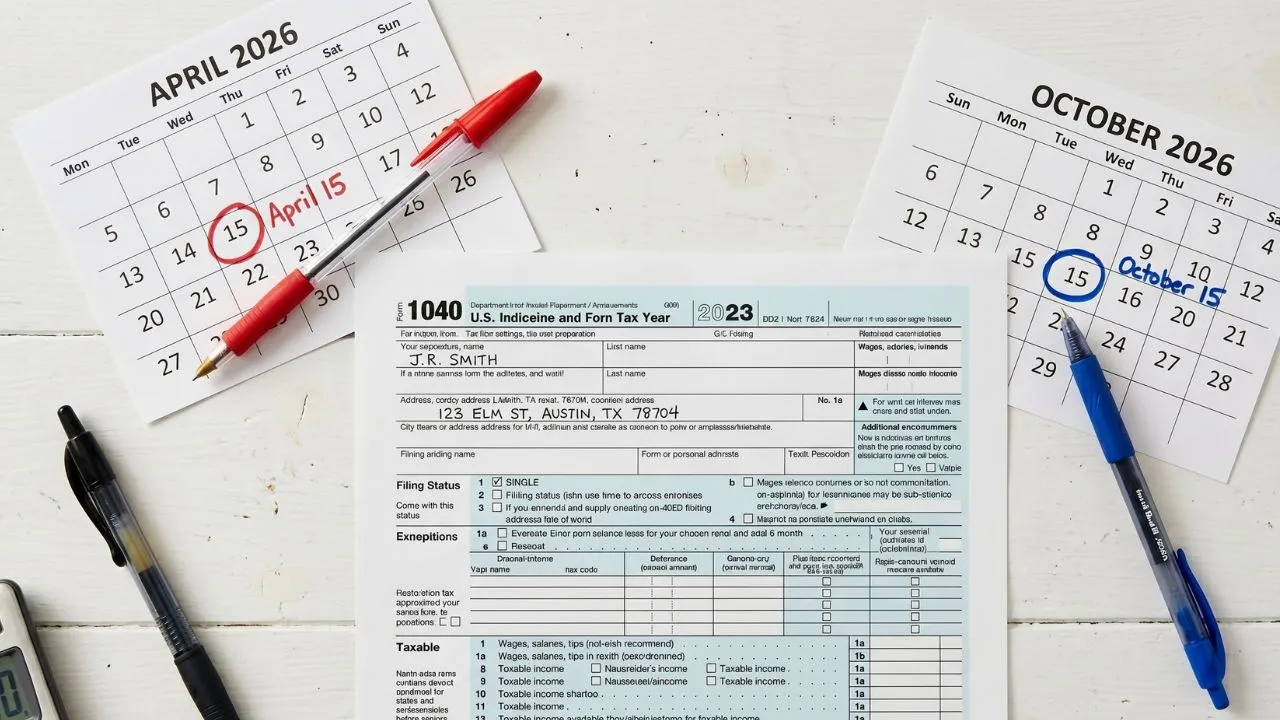
The April 15 IRS deadline is tomorrow — the final day to file a 2025 federal return, pay taxes owed, request a Form 4868 extension, or claim 1.3 million unclaimed 2022 refunds totaling $1.2 billion before the money permanently transfers to the U.S. Treasury. IRS Free File remains open through midnight April 15.
Tomorrow is April 15, 2026. Four separate and irreversible IRS deadlines converge on the same date, and each one carries distinct consequences for missing it. The April 15 deadline covers filing a 2025 federal tax return, paying any taxes owed for 2025, requesting a Form 4868 extension to delay filing until October 15, and claiming the last of 1.3 million unclaimed 2022 federal tax refunds totaling $1.2 billion before that money transfers permanently to the U.S. Treasury. The IRS cannot reverse any of these outcomes after April 15 passes. Tonight is the last opportunity to act.
The IRS confirmed in IR-2026-47, published April 9, that the April 15 deadline applies to all four of these actions simultaneously. There are no extensions for the 2022 unclaimed refund window. There are no exceptions for the payment deadline even if you file a return extension. The deadline is absolute across all four categories.
The Four Deadlines That Expire Tomorrow at Midnight
Deadline One: File your 2025 federal tax return
Every taxpayer with a filing requirement must submit their 2025 Form 1040 by midnight April 15. Failing to file without requesting an extension triggers the failure-to-file penalty immediately on April 16, 5 percent of unpaid taxes per month, with a maximum of 25 percent.
Deadline Two: Pay any 2025 taxes owed
Regardless of whether you file a return or an extension, any taxes owed for 2025 are due April 15. A taxpayer who files Form 4868 tonight has successfully extended their filing deadline to October 15, but their payment was still due April 15.


The failure-to-pay penalty, 0.5 percent per month of unpaid taxes begins accruing April 16 for any balance that remains unpaid, along with daily interest at the federal short-term rate plus 3 percent.
Deadline Three: File Form 4868 for an automatic extension
The extension application must be submitted by midnight April 15. An extension filed tonight is free and automatic, the IRS does not approve or deny it. The extension moves the filing deadline to October 15, 2026.
It does not move the payment deadline. To file for free, go to IRS Free File at irs.gov/freefile. Alternatively, making an electronic payment tonight automatically triggers an extension without a separate form filing.
Deadline Four: Claim unclaimed 2022 tax refunds permanently
The three-year lookback window for 2022 federal tax refunds closes permanently tomorrow. Over 1.3 million Americans have not filed their 2022 returns and are potentially owed a share of approximately $1.2 billion, according to IRS IR-2026-37 published March 20, 2026.
The median refund for 2022 is $686. After midnight April 15, the unclaimed amounts transfer to the U.S. Treasury General Account with no appeals process, no extension option, and no recourse.
The IRS authorizes refunds and collects taxes, but the Bureau of the Fiscal Service at the U.S. Treasury disburses all refund payments through the FedACH network. The same bureau that sends your refund is the agency that absorbs unclaimed refunds into the Treasury General Account when the statutory window expires.
What the Penalties Look Like in Dollar Terms
For a taxpayer who owes $3,000 and takes no action tonight:
The failure-to-file penalty begins April 16 at 5 percent per month, that is $150 per month on a $3,000 balance. By July 15, three months late, the failure-to-file penalty alone has reached $450. By the time the 25 percent cap is reached at month five, the penalty is $750.
The failure-to-pay penalty begins simultaneously at 0.5 percent per month, $15 per month on a $3,000 balance. Over five months that adds $75. The combined penalty exposure for a $3,000 liability left entirely unaddressed through September 15 would be approximately $825 in penalties plus daily compounding interest.
By contrast, a taxpayer who files Form 4868 tonight and pays nothing: the failure-to-file penalty disappears entirely. Only the failure-to-pay penalty of 0.5 percent per month applies. On $3,000, that is $15 per month, 90 percent less costly than the combined penalties.
This arithmetic is why the IRS consistently urges taxpayers who cannot pay in full to file either their return or an extension tonight and pay whatever they can. Even a partial payment reduces the outstanding balance on which penalties and interest compound.
The minimum penalty for a return that is more than 60 days late regardless of the amount owed is $525 (adjusted for inflation for 2025 returns) or 100 percent of taxes owed, whichever is smaller. A taxpayer who owes $200 and files 61 days late faces a $200 minimum penalty equal to their entire tax bill, per current IRS guidance.
Your Fastest Filing Options Tonight
IRS Free File at irs.gov/freefile is available through midnight April 15 to any taxpayer earning $84,000 or less in 2025. It provides free federal return preparation and electronic filing through brand-name tax software. Taxpayers above the $84,000 threshold can use Free File Fillable Forms at any income level to e-file directly without guided software assistance.
Form 4868 through IRS Free File is also available at no cost to any taxpayer, regardless of income, when filing only the extension form. This is the fastest option for anyone who cannot complete their full return tonight. The form takes five minutes. You receive an instant confirmation.
IRS Direct Pay at irs.gov/payments/direct-pay processes same-day bank transfers to the IRS at no cost. Making a payment tonight before midnight, combined with selecting the “Extension” payment option, counts as filing Form 4868 automatically. No separate form is required when paying electronically.
IRS Taxpayer Assistance Centers that were operating special Saturday hours have concluded their extended season service. Tonight’s options are entirely digital and telephone-based. After midnight tonight, IRS Free File closes for the 2025 filing season. Paper returns postmarked April 15 remain eligible. E-file closes at midnight. There are no exceptions.
What Happens After April 15
For taxpayers who file or extend tonight: the filing deadline moves to October 15, 2026. The 0.5 percent failure-to-pay penalty continues monthly on any unpaid balance until it is paid, capped at 25 percent.
Interest compounds daily. The best practice is to pay as much of the balance as possible tonight and file the complete return as soon as documentation allows, there is no financial benefit to waiting until October 15 if the return can be completed sooner.
For the unclaimed 2022 refunds: there is no after. After midnight April 15, the money is gone permanently. The IRS’s three-year lookback statute has no exceptions for hardship, ignorance, or missed notices. The funds transfer to the U.S. Treasury General Account and cannot be retrieved by any administrative or legal process.
For taxpayers who owe and have not filed or extended: the failure-to-file penalty begins accumulating immediately. The most important action at that point is to file as quickly as possible, every month of further delay adds 5 percent to the penalty. Late filing with payment in full eliminates further penalty accrual.
What This Means
Tonight is the entire window. Every unresolved tax obligation unfiled return, unpaid balance, unextended deadline, unclaimed 2022 refund that exists at midnight April 15 becomes either more expensive or permanently forfeited. The IRS provides multiple free and fast tools to resolve all four deadlines tonight. The only thing standing between a taxpayer and full compliance is choosing to act before midnight.
What You Should Do Now
- File your 2025 return or Form 4868 extension tonight using IRS Free File, it is free and instant.
- Pay your 2025 balance using IRS Direct Pay, even a partial payment stops the full penalty from compounding.
- If you have not filed a 2022 return and believe you are owed a refund, file tonight using unclaimed 2022 refund IRS guidance as your source.
- After filing, track your refund status at irs.gov/refunds using Where’s My Refund.
If you still need to file tonight and want the fastest free option, our article on IRS Free File explains exactly how the program works. If you are filing an extension, our complete tax extension guide covers every line of Form 4868.
For the complete picture of what happens after you file, how long processing takes and when your refund deposits, see our IRS refund guide. And to understand the complete institutional pipeline your refund travels through once the IRS approves it, see the money movement system.
Editorial Note: Investozora is an independent news publication. This content is for informational purposes only. For official guidance, please visit irs.gov.