

The 4-week Treasury bill yield stood at approximately 3.61% as of May 21, 2026, based on secondary market data published by the Federal Reserve H.15 release. The 10-year Treasury note yielded approximately 4.57% as of May 22, 2026. Full current rate data is published daily at home.treasury.gov.
Treasury bills are short-term debt instruments issued directly by the U.S. Department of the Treasury, backed by the full faith and credit of the United States government, and currently yielding rates that rival or beat most savings accounts at major commercial banks.
This is not a new financial product. It is the same instrument that institutional investors, money market funds, and foreign governments have used for decades to hold cash with zero credit risk. The difference now is that any American adult with $100 can buy Treasury bills directly online in under ten minutes and millions of ordinary households are finally learning that.
The Federal Reserve’s H.15 interest rate release, published at federalreserve.gov, shows the 4-week Treasury bill yielding approximately 3.61% as of May 21, 2026. The full Treasury yield curve and daily bill rates are published at treasury.gov.
Understanding Treasury bills is one of the most directly useful pieces of financial knowledge available to American consumers right now, and the Treasury payment system makes them more accessible today than at any point in American financial history.
How Treasury Bills Work and What Each Maturity Pays
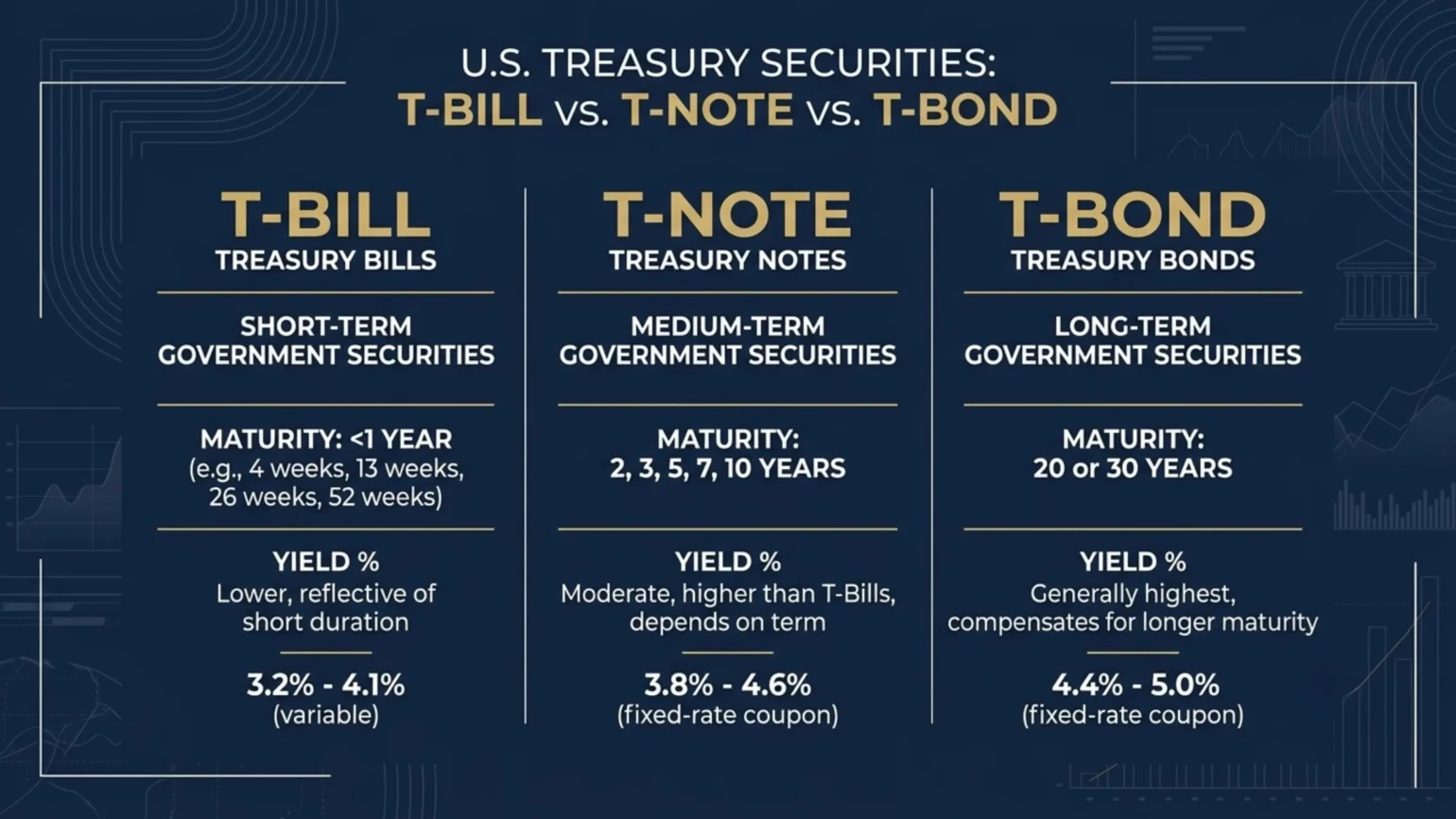
A Treasury bill is a government security with a maturity of one year or less. Unlike a savings account that pays interest monthly, a T-bill is sold at a discount to its face value and pays the full face value when it matures.
The difference between what you paid and what you receive is your return. If you buy a $1,000 26-week T-bill at a price of $982.50, you receive $1,000 at maturity, earning $17.50 over roughly six months. The annualized equivalent yield is what gets quoted in the financial press and on government data sites.



The U.S. Treasury currently auctions Treasury bills across seven maturity categories: 4-week, 6-week, 8-week, 13-week, 17-week, 26-week, and 52-week. Each has a distinct yield reflecting what the market demands for that lending duration.
Shorter maturities the 4-week and 8-week bills currently yield near the federal funds rate target, sitting around 3.6% to 3.7% based on secondary market data in the Federal Reserve’s H.15 release. Longer maturities adjust based on market expectations for where rates will be when the bill matures. The daily Treasury rates published by the U.S. Treasury give you the exact number every business day.
The critical structural advantage of Treasury bills over savings accounts and certificates of deposit is threefold. First, T-bills carry zero credit risk because they are backed by the U.S. government. Your principal is constitutionally secure in a way that no bank deposit, even FDIC-insured deposits up to $250,000, fully replicates at all account sizes.
Second, the income from Treasury bills is exempt from state and local income taxes, which meaningfully improves the after-tax return for residents of high-tax states. Third, T-bills have a liquid secondary market, meaning you can sell them before maturity if your cash needs change, unlike many bank CDs that carry early-withdrawal penalties.
The Bureau of Fiscal Service at the U.S. Treasury manages the TreasuryDirect platform, the direct-to-consumer purchase system at TreasuryDirect.gov. You open an account with your Social Security number and bank routing information. You fund it with a direct transfer from your bank.
You purchase T-bills at auction, noncompetitive bids, which is what retail investors submit, guarantee you receive the yield set at that auction regardless of what institutional bidders offered.
Minimum purchase is $100 and increments are in $100 steps. The Treasury settles your purchase typically within two business days of the auction date, per the official Treasury auction schedule published at home.treasury.gov.
The Real Mechanics of Buying and How Your Money Moves
When you place a noncompetitive bid for Treasury bills through TreasuryDirect, the process follows a precise institutional sequence that most retail buyers never see. The U.S. Treasury announces the auction. Institutional investors submit competitive bids specifying the yield they require.
Your noncompetitive bid simply states an amount, you accept whatever yield clears the auction. The Treasury allocates bills to competitive bidders first, then to noncompetitive bidders. The Federal Reserve Bank of New York conducts the auction as the Treasury’s fiscal agent.
Settlement occurs when the Treasury debits your bank account and credits your TreasuryDirect account with the discounted purchase price of the bill. Your account shows the face value, the amount you will receive at maturity. At maturity, the Treasury automatically credits your designated bank account with the full face value.
If you have selected automatic rollover, the proceeds are immediately reinvested in the next auction of the same maturity. This automatic reinvestment feature is one of the most powerful tools available for Americans trying to maximize the Treasury yield impact on their cash reserves without constant manual management.
One important distinction separates the current T-bill environment from historical comparison periods. The Federal Reserve is currently holding its benchmark rate at 3.5%–3.75% with the next decision due June 16, 2026.
When the Fed eventually cuts rates, T-bill yields will fall quickly, often within days of the announcement because short-term T-bill yields track the federal funds rate closely. A 52-week bill purchased today locks in today’s yield for a full year.
A 4-week bill purchased today gives you maximum flexibility to reinvest at whatever rate prevails in late June after the FOMC meeting. The Fed rate decision timing matters directly to which T-bill maturity gives you the best outcome for your specific cash management need.
I bonds, which are a separate savings bond product offered by the Treasury, are not the same instrument as Treasury bills and carry different mechanics. The composite rate for I bonds issued from November 2025 through April 2026 was 4.03%, per TreasuryDirect.gov.
The rate for I bonds issued from May 1 through October 31, 2026 is updated on TreasuryDirect.gov. I bonds cannot be sold on the secondary market and must be held for at least 12 months. Treasury bills, by contrast, are marketable securities with no mandatory holding period. Both products are issued by the same Treasury budget system but serve different cash management purposes.
What You Should Do Now
- Go to TreasuryDirect and open a free account using your Social Security number, bank account, and routing number. The process takes approximately 10 minutes for a new account.
- Before your first purchase, check current auction yields at Treasury rates under Daily Treasury Bill Rates. Compare the 4-week, 13-week, and 26-week yields against your current savings account APY. The difference, plus state tax savings is your net gain from switching.
- Decide your maturity based on when you need the cash. If you need access in 30 days, buy a 4-week bill. If you have a six-month cash reserve you will not need immediately, the 26-week bill typically offers a higher yield for that lock-up period.
- Submit a noncompetitive bid at the next scheduled auction. The Treasury publishes its full auction calendar. T-bill auctions for 4-week, 8-week, and 13-week bills occur every week. You do not need to time a perfect entry point, the auction system handles yield discovery automatically.
- Monitor the June 16, 2026 FOMC rate decision. If the Fed signals a rate cut at that meeting, consider extending your T-bill maturity ladder to lock in current yields for as long as your liquidity needs allow. Read the Treasury analysis on Investozora for context on how Treasury issuance patterns affect auction yield outcomes.