
Federal Reserve Chair Kevin Warsh told reporters this week that inflation pressure has started to ease, and Treasury yields moved on the comment almost immediately. Right now, in early July 2026, the yield curve is not inverted. The 10 year Treasury yield sits close to 4.47 percent, while the 2 year sits near 4.17 percent, a normal, upward sloping gap of roughly 30 basis points.
That single fact surprises a lot of people who assume the phrase “inverted yield curve” describes something currently happening in the economy. It explains why the concept still gets treated as an automatic recession siren, and why that reputation is only partly deserved.
What A Yield Curve Shows
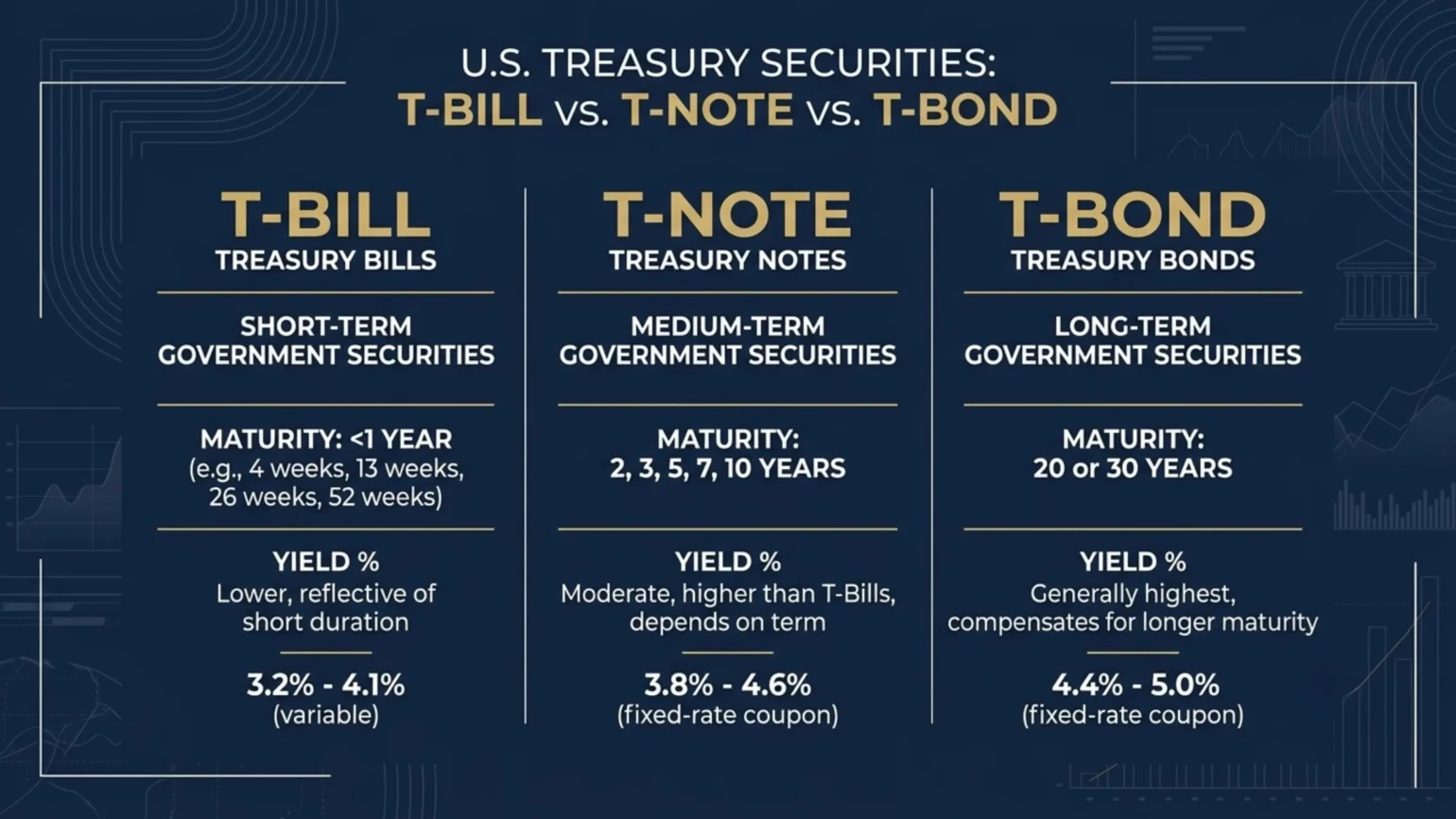
A yield curve is simply a line connecting the interest rates the U.S. government pays to borrow money across different lengths of time, from a 3 month bill to a 30 year bond. The U.S. Treasury Department issues bills, notes, and bonds across maturities of 3 months, 6 months, 1 year, 2 years, 5 years, 10 years, and 30 years, and the Treasury yield data published daily shows exactly what investors demand to hold each one.
Under normal conditions, longer maturities pay more, because lending money for 30 years carries more uncertainty than lending it for 3 months. That extra compensation is called a term premium, and it’s the default, healthy shape of the curve almost all of the time.
What Inversion Actually Means
An inverted yield curve is the opposite arrangement. Short term yields rise above long term yields, meaning investors accept a lower return for locking their money up longer than they’d earn parking it somewhere shorter.
That’s an unusual thing for a rational investor to accept, which is exactly why it gets attention. It typically signals that the market expects economic growth, and therefore future interest rates, to be meaningfully lower years from now than they are today.
The 2026 yield curve has moved between flat, slightly inverted, and now positively sloped over the past two years, tracking almost exactly with the how the Fed controls rates policy path.
Why The Curve Bends
The short end of the curve is heavily influenced by the Fed monetary policy rate, currently held at a range of 3.50 to 3.75 percent following Chair Warsh’s first meeting on June 17, 2026. The long end responds more to market expectations for growth and inflation over the coming decade.
When the Fed raises short rates aggressively while investors expect a future slowdown, long term yields can lag behind, or fall, producing an inversion. Right now the opposite dynamic is playing out.
The Federal Reserve Board dot plot released in June showed most officials expecting rates to hold steady or rise further in 2026, and investors are demanding higher, not lower, compensation for longer maturities, which is why the curve currently slopes upward rather than inverting.
Has It Actually Predicted Recessions
The yield curve’s reputation comes from a genuinely strong historical record, alongside some important caveats that rarely make it into the headline.
| Inversion Period | Recession That Followed | Approximate Lead Time |
|---|---|---|
| 1978 to 1980 | January to July 1980 | 6 to 18 months |
| 1980 to 1981 | July 1981 to November 1982 | 6 to 12 months |
| 1989 | July 1990 to March 1991 | 9 to 12 months |
| 2000 | March to November 2001 | 8 to 12 months |
| 2006 to 2007 | December 2007 to June 2009 | 12 to 18 months |
| 2019 | February to April 2020 | Triggered by a pandemic shock, not the inversion alone |
| 2022 to 2024 | No official recession followed | Longest inversion on record |
Every recession going back to the late 1970s was preceded by an inversion, using the 10 year versus 2 year comparison tracked on FRED economic data. But the 2022 to 2024 inversion, the longest ever recorded, did not produce a recession within the window that history would have suggested, a genuine reminder that the signal describes elevated risk, not a fixed countdown clock.
Where The Curve Stands Now
As of the most recent Treasury data, the spread between the 10 year and 2 year yield is positive, meaning the curve is not inverted. That follows a stretch of real volatility.
Inflation accelerated sharply this spring, with the Consumer Price Index showing headline inflation near 4.2 percent in May, driven largely by an energy price spike tied to the conflict in the Middle East, before oil prices began retreating toward pre conflict levels in late June.
The employment situation report has stayed resilient through this stretch, with unemployment holding near 4.3 percent and payrolls still growing, which is precisely why the Fed under its new chair has leaned hawkish rather than moving toward cuts.
Markets were pricing better than a 60 percent chance of a rate hike by September as of early July, a very different setup than the rate cutting expectations that typically accompany an inverted curve.
What It Means For Everyday Households
Mortgage rates don’t move one for one with the yield curve, but they track the 10 year Treasury more closely than they track the Fed’s short term rate, so the recent climb in 10 year Treasury yield has kept borrowing costs elevated for buyers even without a formal Fed rate hike.
Savings and CD rates tend to benefit from this environment. With short term rates still high and the curve not inverted, banks have more room to offer competitive yields on shorter term deposits without squeezing their own margins.
Retirement accounts are shaped more by the broader direction of bond market shifts than by the curve’s shape on any single day, which is why financial guidance generally favors staying diversified through periods of yield volatility rather than reacting to any one indicator.
Small business borrowing costs stay tethered to short term benchmarks, so a hawkish Fed holding rates at 3.50 to 3.75 percent, even without a further hike, keeps financing more expensive than it was during the 2025 cutting cycle.
Common Myths Worth Retiring
The biggest misconception is that an inversion guarantees a recession on a fixed timeline. History shows a strong correlation, not a mechanical trigger, and the 2022 to 2024 episode is the clearest recent proof.
A second myth is that stocks crash the moment a curve inverts. Historically, equity markets have often continued climbing for months after an inversion begins, with the sharper reaction typically arriving much later, closer to the recession itself.
A third myth, relevant given the current Warsh Federal Reserve transition, is that any single Fed chair fully controls where long term yields sit. The Fed sets short term policy directly, but 10 and 30 year yields are set by global investor demand that no single official commands.
What To Watch Instead
Economists rarely rely on the yield curve alone, and neither should anyone managing their own finances. GDP data from the Bureau of Economic Analysis, monthly jobs reports, and inflation readings together paint a fuller picture than any single spread.
The Congressional Budget Office publishes independent CBO economic forecasts that weigh dozens of inputs rather than one market signal, and household financial decisions are generally better served by that same multi indicator approach than by treating any one number, however historically reliable, as a verdict.
For consumer facing concerns tied to credit and lending shifts, the consumer protection bureau tracks how rate environments affect everyday borrowing terms.
Within the broader money movement system that carries Treasury payments through the Federal Reserve network, the yield curve is one gauge among many, not the whole instrument panel, and it deserves the same weight in retirement planning that it gets in retirement accounts decisions generally, informative, not determinative.
What is an inverted yield curve?
An inverted yield curve happens when short-term U.S. Treasury securities pay higher yields than longer-term Treasury securities. That is the opposite of the normal pattern, where investors usually expect higher returns for lending money over longer periods. The inversion reflects expectations that economic growth and inflation could slow in the future, leading the Federal Reserve to eventually reduce interest rates. It is considered an economic warning signal rather than proof that a recession is guaranteed.
Does inversion guarantee recession?
No. An inverted yield curve has an impressive historical record because every U.S. recession since the late 1970s was preceded by one, but that does not mean every inversion automatically leads to a recession. Economic conditions, government policy, consumer spending, and global events can all change the outcome. The unusually long 2022–2024 inversion demonstrated that the signal points to elevated economic risk, not a fixed countdown to a downturn.
Why does inversion happen?
Yield curve inversions usually develop when the Federal Reserve keeps short-term interest rates high while investors believe inflation and economic growth will weaken over time. As investors anticipate lower future interest rates, demand for longer-term Treasury bonds often increases, pushing their yields lower. At the same time, shorter-term yields remain elevated because they closely follow current Federal Reserve policy. The combination causes short-term yields to move above long-term yields.
Which yields matter most?
The most widely followed measure compares the 10-year Treasury yield with the 2-year Treasury yield because it is simple to understand and closely watched by financial markets. Many economists also monitor the difference between the 10-year Treasury and the 3-month Treasury bill, which Federal Reserve research has found to be an especially reliable recession indicator. Looking at multiple parts of the curve provides a broader picture than relying on a single maturity. Each spread highlights slightly different expectations about future economic conditions.
Why isn’t it inverted now?
As of early July 2026, the 10-year Treasury yield remains above the 2-year Treasury yield, meaning the curve has returned to a normal upward slope. Investors continue to demand higher compensation for lending money over longer periods because inflation risks remain elevated and the Federal Reserve maintains a relatively hawkish policy stance. Strong labor market data and resilient economic activity have also reduced expectations for near-term interest rate cuts. Together, these factors have helped restore a positive spread between short- and long-term yields.
How are mortgages affected?
Mortgage rates are influenced much more by the 10-year Treasury yield than by the Federal Reserve’s overnight policy rate. When long-term Treasury yields rise, mortgage lenders generally increase borrowing costs for new home loans, even if the Fed leaves interest rates unchanged. Conversely, falling long-term yields often help reduce mortgage rates over time. Other factors, including lender competition and mortgage-backed securities markets, also influence the final rate borrowers receive.
Do stocks fall immediately?
Not necessarily. Stock markets have often continued rising for several months after a yield curve first becomes inverted because corporate earnings and investor confidence can remain strong. Historically, larger market declines have tended to occur closer to the beginning of an actual recession rather than on the day the curve inverted. Investors usually evaluate many economic indicators together instead of reacting to the yield curve alone.
Should investors worry?
An inverted yield curve deserves attention because it has historically been one of the more reliable recession indicators, but it should not drive investment decisions by itself. Long-term investors generally benefit more from maintaining diversified portfolios than from trying to predict every economic cycle. Making major portfolio changes based on a single market signal can increase risk if expectations change. A balanced approach that considers employment, inflation, corporate earnings, and overall economic conditions is usually more effective.
How long can it last?
There is no fixed duration for a yield curve inversion. Some historical inversions lasted only a few months, while others continued for more than a year before returning to a normal shape. The 2022–2024 inversion became the longest sustained inversion in modern U.S. history, showing that these periods can persist far longer than investors expect. The length of an inversion depends largely on inflation trends, Federal Reserve policy, and changing market expectations.
Where can I track yields?
The U.S. Treasury publishes official Treasury yield curve data every trading day through its Fiscal Data portal, making it one of the most reliable public sources available. Many investors also monitor yield spreads through the Federal Reserve Bank of St. Louis FRED database, which provides historical charts and economic data. Financial news organizations update Treasury yields throughout each trading session as market prices change. Checking official sources helps ensure the information reflects current market conditions rather than delayed estimates.
Bottom Line
The yield curve is not inverted as of early July 2026, with the 10-year Treasury yield standing about 30 basis points above the 2-year yield. While yield curve inversions have historically preceded every U.S. recession since the late 1970s, they signal higher economic risk rather than certainty, as shown by the record-long 2022–2024 inversion that was not followed by an official recession.
Today’s upward-sloping curve reflects a hawkish Federal Reserve under Chair Kevin Warsh, with policy rates held at 3.50% to 3.75% amid still-elevated inflation. That environment continues to influence mortgage rates, savings returns, and business borrowing costs, though none of these move in perfect step with the yield curve.
Rather than relying on a single market indicator, economists and households alike are better served by watching the broader economic picture, including inflation, employment, GDP growth, and Federal Reserve policy, before making important financial or investment decisions.