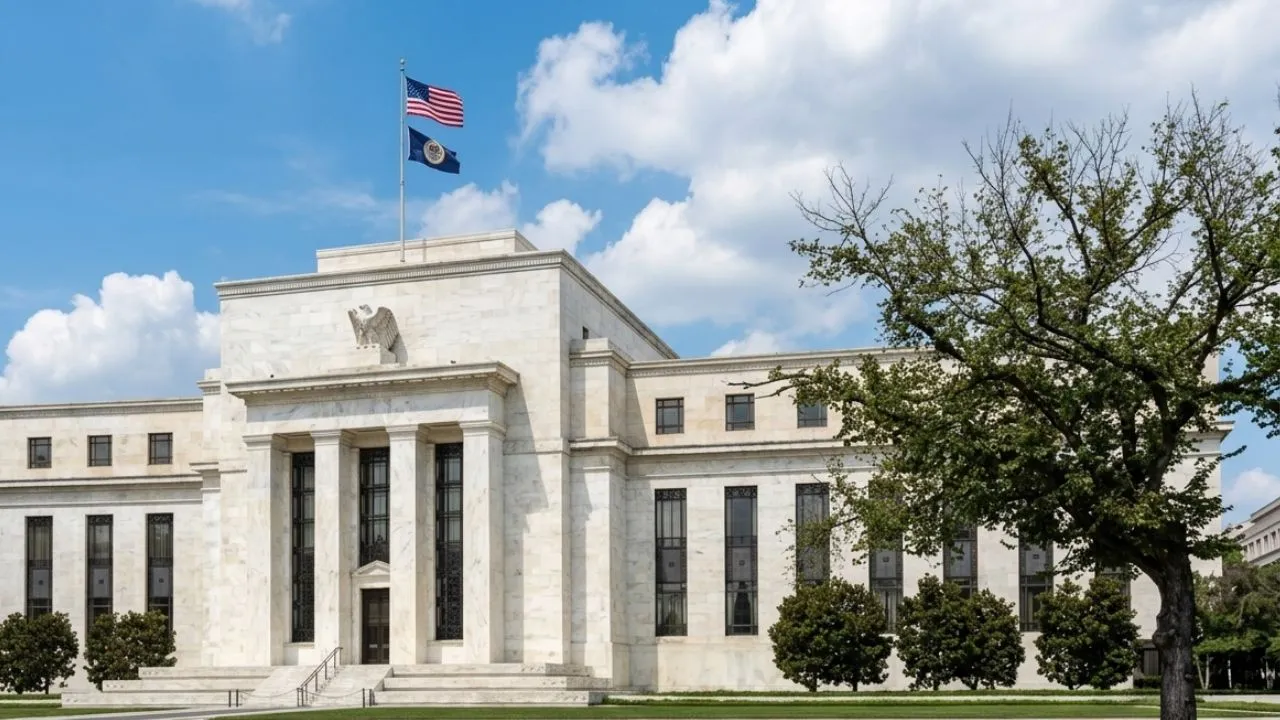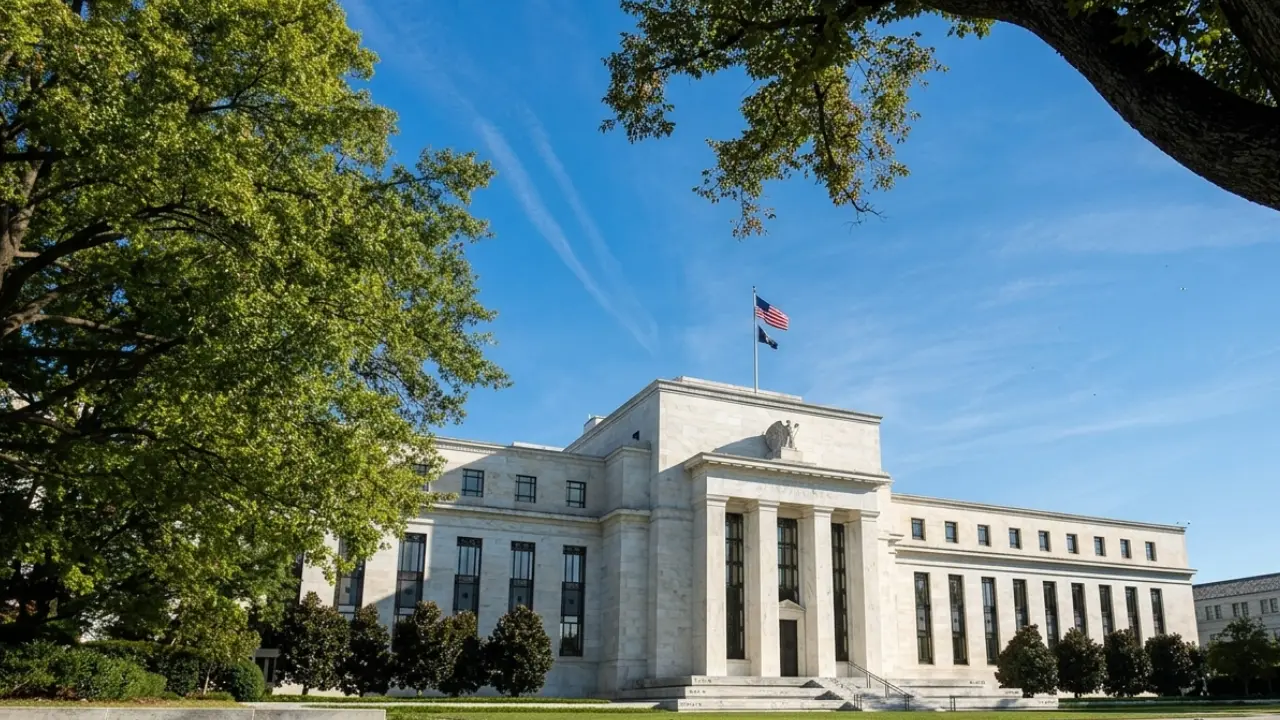

The Federal Reserve does not set the interest rates you pay on your mortgage or credit card directly. It sets the target range for the federal funds rate, which is the overnight borrowing rate between commercial banks, and uses that anchor to pull all other rates in the economy toward its policy objective.
The Federal Open Market Committee, or FOMC, votes on the federal funds rate target at meetings held eight times per year. The Fed implements its rate decisions primarily through open market operations conducted by the New York Federal Reserve Bank.
When the Fed raises its rate target, borrowing costs rise across mortgages, auto loans, credit cards, and business credit within weeks. When it cuts, those costs fall through the same transmission mechanism.
What the Fed Actually Controls
The Federal Reserve does not issue every loan in America, but it controls the price of money at the foundation of the entire credit system. The federal funds rate is the interest rate at which banks lend their excess reserve balances to other banks overnight through the federal funds market. When the Fed raises its target for this rate, all short-term borrowing costs in the financial system move upward in response.
The Fed’s influence works through a chain of financial relationships. At the base is the federal funds rate target, which the FOMC announces after each policy meeting. Above that sits the prime rate, which commercial banks set at exactly 300 basis points above the federal funds rate and use as the reference rate for credit cards, home equity lines, and small business loans.
Above that sit longer-term rates such as the 10-year Treasury yield, which the Fed influences indirectly through its balance sheet operations and credibility as an inflation-fighting institution.
Understanding this hierarchy is essential to grasping why a single FOMC decision can simultaneously affect your savings yield, your mortgage payment, and the returns on your Treasury securities. For a complete breakdown of how the prime rate follows the Fed, the prime rate explainer provides the full transmission mechanics in plain terms.
The legal authority for the Federal Reserve to conduct monetary policy derives from the Federal Reserve Act of 1913, substantially amended in 1977 to add the dual mandate. Congress instructed the Fed to pursue maximum employment and stable prices simultaneously.
The Fed interprets stable prices as a 2 percent inflation rate measured by the Personal Consumption Expenditures price index. When inflation runs above 2 percent, the Fed tightens policy by raising rates.
When unemployment rises excessively, the Fed eases policy by cutting rates. These two objectives sometimes pull in opposite directions, which is what makes the FOMC’s deliberations among the most consequential economic decisions made anywhere in the world.
The FOMC Decision Process
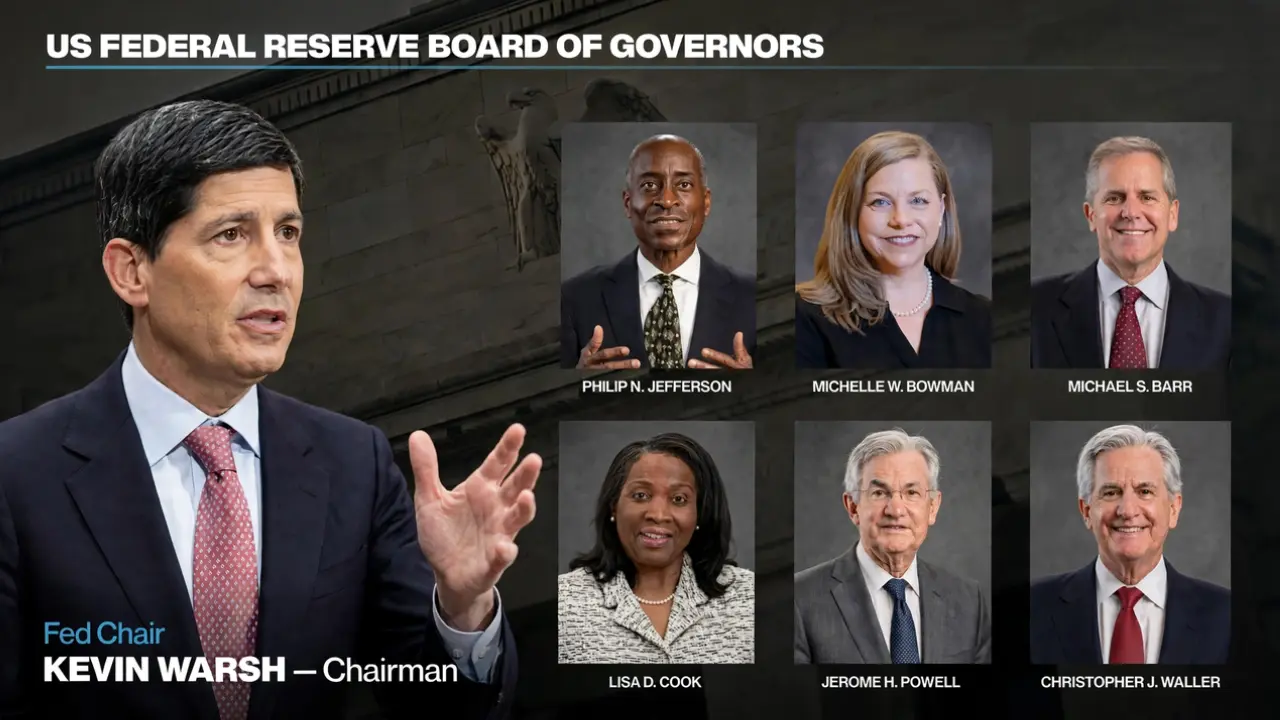
The Federal Open Market Committee is the monetary policy body within the Federal Reserve System. It consists of twelve voting members: the seven members of the Board of Governors in Washington, the president of the New York Federal Reserve Bank, and four of the remaining eleven regional Fed presidents who rotate through one-year voting terms.
All twelve regional presidents attend every meeting and participate in discussions, but only the designated rotating four plus New York cast votes alongside the governors.
The FOMC meets eight times per year on a predetermined schedule. Each meeting spans two days. On the first day, staff economists present the Beige Book regional economic summary, updated economic projections, and analysis of financial conditions. On the second day, each member presents their policy assessment, deliberation occurs, and the committee votes.
A simple majority determines the outcome. Dissents are recorded and published, which makes them significant signals of internal disagreement. The FOMC meeting schedule 2026 tracks the full calendar of decision dates for the current year.
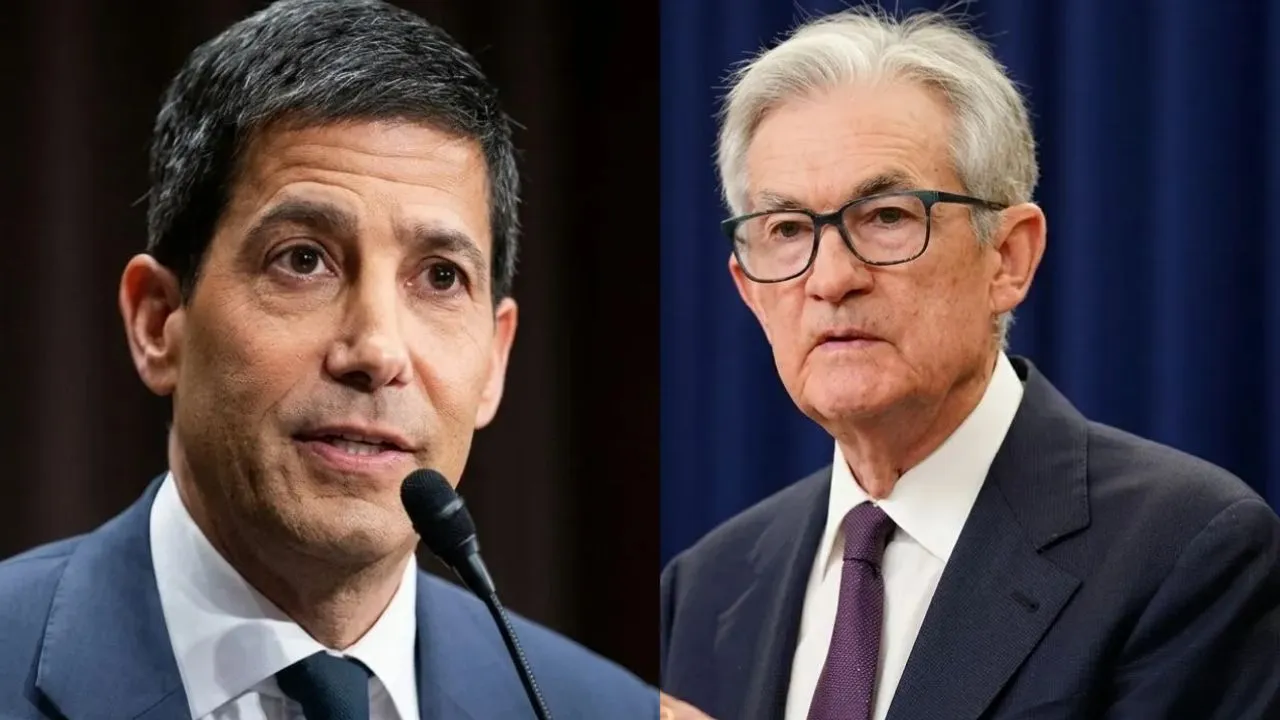
The June 17, 2026 decision under newly installed Fed Chair Kevin Warsh marked the first rate decision under new leadership following Jerome Powell’s departure.
Warsh, confirmed by the Senate in May 2026, brought a distinct policy orientation toward greater transparency in the Fed’s balance sheet management and a stated preference for allowing market mechanisms to set longer-term yields rather than intervening through asset purchases.
The Warsh Fed policy analysis covers how his approach differs from the Powell-era framework. Understanding the institutional personality of the current FOMC chair is essential context for interpreting any rate decision, because Fed chair influence over the committee’s direction has historically been substantial.
After each meeting, the FOMC releases a policy statement, an updated Summary of Economic Projections including the dot plot, and conducts a press conference. The dot plot is a chart showing where each individual FOMC member expects the federal funds rate to be at the end of each of the next three years and over the longer run.
Markets parse the dot plot for signals about the pace and magnitude of future rate changes, which is why it can move asset prices significantly even when the immediate rate decision itself was fully anticipated. The Fed dot plot explainer covers how to read the chart and what the distribution of projections signals about committee consensus.
How the Fed Implements Rate Decisions
Announcing a target range for the federal funds rate is not sufficient by itself. The Fed must actively manage the supply of bank reserves to keep the actual market rate within the announced target range. It does this primarily through three tools: the interest on reserve balances rate, overnight reverse repurchase agreements, and open market operations.
The interest on reserve balances rate, known as IORB, is the interest the Federal Reserve pays commercial banks on the reserve balances they hold at their regional Federal Reserve Banks overnight.
By raising or lowering the IORB rate, the Fed sets a floor below which no commercial bank would lend in the federal funds market, because lending would earn less than simply leaving reserves on deposit with the Fed.
This floor mechanism replaced the older reserve requirement approach as the primary implementation tool after 2008 when reserve balances expanded dramatically through quantitative easing.
The overnight reverse repurchase agreement facility, known as the ON RRP, provides a floor for money market funds and certain other financial institutions that are not eligible to receive IORB.
The Fed sells Treasury securities overnight to these counterparties and agrees to repurchase them the following morning, effectively paying them the ON RRP rate for the overnight loan of their cash.
This prevents rates from falling below the lower bound of the target range. Together, IORB and ON RRP create a rate corridor that keeps the effective federal funds rate within the target range without requiring constant daily open market operations of the type the Fed conducted under the pre-2008 system.
Open market operations remain available for larger-scale adjustments. The New York Fed’s Open Market Desk buys or sells U.S. Treasury securities in the secondary market to expand or contract the total supply of bank reserves.
When the Fed buys securities, it credits the selling bank’s reserve account, injecting reserves into the system. When it sells, it drains reserves. These operations are conducted daily and disclosed publicly through the New York Fed’s website.
The interaction between open market operations and the Fed’s overall balance sheet management connects directly to the mechanics of quantitative tightening, which is the process by which the Fed shrinks its asset holdings by allowing maturing securities to roll off rather than reinvesting the proceeds.
How Rate Changes Move Through the Economy
A federal funds rate change does not stay inside the banking system. It transmits through the economy along multiple channels simultaneously, affecting consumer behavior, business investment, housing markets, foreign capital flows, and government borrowing costs within a period of weeks to months.
The bank lending channel is the most direct. When the federal funds rate rises, banks pay more to borrow in the overnight market, which raises their funding costs across all maturities.
Banks pass those costs to borrowers through higher rates on credit cards, home equity lines, auto loans, and corporate credit lines. The credit card APR mechanics article documents precisely how this transmission works for consumer revolving debt, including the typical lag between an FOMC decision and the next billing cycle rate adjustment.
The asset price channel works differently. When interest rates rise, future cash flows from stocks and real estate are discounted at a higher rate, which reduces their present value. This tends to lower equity prices and housing prices, reducing household wealth and consequently consumer spending.
The magnitude of this effect depends on how leveraged households and businesses are when the rate cycle begins. The wealth effect from declining asset prices can persist long after the initial rate move, which is one reason the Fed monitors financial conditions indexes that aggregate these asset price signals alongside credit spreads and bank lending standards.
The exchange rate channel operates through capital flows. When U.S. rates rise relative to rates in other countries, foreign investors move capital into dollar-denominated assets to capture the higher yield.
This increases demand for dollars, causing the dollar to appreciate against foreign currencies. A stronger dollar makes U.S. exports more expensive for foreign buyers and makes imports cheaper for American consumers.
The net effect tends to reduce inflation by lowering import prices while simultaneously reducing export competitiveness and slowing manufacturing employment. For a full treatment of how the Fed’s inflation control mechanism works at the macroeconomic level, the Fed inflation control mechanics article provides the complete analytical framework.
The expectation channel may be the most powerful of all. Because businesses and households make decisions based on expected future rates rather than current rates alone, the FOMC’s credibility as an inflation fighter affects economic behavior independently of any specific rate action.
When markets believe the Fed will raise rates aggressively to contain inflation, long-term bond yields rise in anticipation. Mortgage rates, which track the 10-year Treasury closely, begin rising before the Fed has taken any action.
This is why Fed chair communications, press conferences, and Congressional testimony receive such intense market attention. The Fed uses this expectation dynamic deliberately, which is why forward guidance about the likely path of rates is now considered a primary monetary policy tool alongside the rate decision itself.
The Balance Sheet as a Policy Tool
After the 2008 financial crisis, the Federal Reserve expanded its toolkit beyond the federal funds rate by using its balance sheet directly. Through quantitative easing programs, the Fed purchased trillions of dollars of Treasury securities and agency mortgage-backed securities, expanding its balance sheet from roughly $900 billion in 2008 to over $8.9 trillion at its peak in early 2022.
These purchases injected reserves into the banking system and drove down long-term yields by reducing the supply of longer-duration securities available to private investors.
The effect on mortgage rates was substantial and deliberate. By purchasing agency mortgage-backed securities directly, the Fed compressed mortgage spreads and kept 30-year fixed mortgage rates below where they would have traded in a market without Fed intervention.
This supported the housing market during periods of economic stress and provided a direct transmission of monetary easing into household borrowing costs. The federal reserve balance sheet article covers the composition of those holdings and how they affect liquidity in the financial system.
Beginning in mid-2022, the Fed reversed course through quantitative tightening, allowing securities to mature without reinvestment. This process reduces the total supply of bank reserves over time, which is mildly tightening even when the federal funds rate is held constant.
By June 2026, the Fed balance sheet had contracted significantly from its 2022 peak, and Chair Warsh had signaled a preference for completing the normalization process before considering any rate cuts, tying balance sheet policy closely to the rate path in a way that differed from the Powell-era sequential approach.
For context on how the balance sheet trajectory connects to market liquidity conditions in 2026, the Warsh balance sheet analysis provides the institutional detail.
Timing, Schedules, and Rate Cycles
Rate cycles do not occur in isolation. They follow patterns shaped by the inflation cycle, the employment cycle, and the credit cycle, all of which interact with each other across multi-year periods.
The Fed began its most aggressive rate-hiking cycle in four decades in March 2022, raising the federal funds rate from near zero to a range of 5.25 to 5.50 percent by July 2023, the fastest pace of tightening since the Volcker era. The Fed then held rates at that level for over a year while monitoring whether inflation was returning sustainably to its 2 percent target.
The pace and magnitude of future rate changes are communicated through the dot plot, the post-meeting press conference, and speeches by individual FOMC members at events throughout the year. These communications are not binding commitments, because the FOMC explicitly conditions future policy on incoming economic data.
The phrase “data dependent” has become central to Fed communications precisely because it preserves flexibility while providing markets with a directional signal. When the labor market unexpectedly weakens or inflation data surprises to the upside, the Fed reserves the right to pivot without that pivot being seen as a breach of commitment.
For consumers and businesses monitoring the rate environment in 2026, the key data releases to track are the monthly Consumer Price Index from the Bureau of Labor Statistics, the monthly PCE price index from the Bureau of Economic Analysis, the monthly nonfarm payrolls report, and the quarterly GDP advance estimate.
Seeing these mechanics applied to one specific, documented meeting can make the abstract process easier to follow. Our Fed’s rate decision explainer walks through exactly how a real vote, dissent count, and chair statement translated into consumer-facing outcomes, using the same transmission channels described in this article.
These four data points collectively govern whether the FOMC tilts toward additional tightening, an extended hold, or eventual easing. The FOMC June rate decision savings impact article covers how the June 2026 decision specifically affected deposit rates and certificate of deposit yields for consumers.
Does the Fed set my mortgage rate?
The Fed does not set mortgage rates directly. The 30-year fixed mortgage rate is priced primarily off the 10-year Treasury yield plus a spread that reflects prepayment risk and credit risk. The Fed influences the 10-year Treasury yield indirectly through its credibility on inflation and through its balance sheet holdings of mortgage-backed securities.
When the Fed raises the federal funds rate aggressively, it typically pushes 10-year yields higher as well, which raises mortgage rates, but the relationship is not mechanical or immediate. The mortgage impact of rate hikes article covers this transmission in full.
Why do savings account rates lag behind Fed hikes?
Commercial banks are under no legal obligation to raise savings deposit rates in lockstep with the federal funds rate. Banks that have sufficient deposit funding from existing customers have little competitive pressure to raise rates immediately.
Online banks and money market funds, which compete aggressively for deposits, tend to pass through rate increases faster than traditional brick-and-mortar institutions. The savings rate after Fed decisions article documents the historical lag between Fed rate increases and deposit rate adjustments at different institution types.
What is the neutral rate?
The neutral rate, also called the natural rate or r-star, is the theoretical federal funds rate level that neither stimulates nor restricts economic growth when the economy is at full employment and inflation is at the 2 percent target. It is not directly observable, only estimated through economic models, and FOMC members disagree about its current level.
The longer-run dot plot dot represents each member’s estimate of the neutral rate. If the actual federal funds rate is above the neutral rate, policy is restrictive. If it is below, policy is accommodative. Disagreements about where the neutral rate sits are at the core of most internal FOMC debates about how much further rates need to move.
Can the Fed run out of tools?
The Fed has a theoretically unlimited capacity to create bank reserves and purchase assets. Its constraint is not financial but political and institutional. Congress can change the Federal Reserve Act.
The Executive Branch nominates all seven governors and can, over time, reshape the committee’s composition. The Federal Reserve independence article covers the legal framework that insulates monetary policy decisions from direct political interference and what happens when that framework is tested.
Errors, Signals, and Escalation
Several misreadings of Fed policy communications create systematic errors for investors and consumers. The most common is conflating the federal funds rate with long-term rates. A Fed rate cut does not automatically reduce your 30-year mortgage rate.
If markets interpret the cut as insufficiently aggressive against inflation, long-term yields can actually rise on the day of a cut as investors demand higher inflation compensation. This is sometimes called a “bear steepener” of the yield curve and it can make borrowing conditions tighter even as the Fed eases its short-term target.
A second common error is treating the dot plot as a forecast rather than a projection. Each dot represents what that FOMC member thinks will be appropriate given their baseline economic scenario. The dots do not reflect binding commitments.
When economic conditions deviate from the baseline, the dots become stale almost immediately. Markets that trade heavily off the dot plot are therefore pricing in a scenario that the committee itself has explicitly stated is conditional on economic outcomes that may not materialize.
A third error is assuming Fed policy operates with a short lag. Research consistently shows that monetary policy acts with a lag of 12 to 18 months on the real economy. The inflation that a rate hike in June of one year is fighting often does not fully respond until mid-to-late the following year.
This lag creates the risk of over-tightening, because the full impact of previous hikes has not yet appeared in the data when the committee is deciding whether to raise again.
The complete analysis of the Fed system’s structure and its institutional mandate is available through the Federal Reserve’s official purpose page. For the FOMC’s own communication of its long-run monetary policy framework, the FOMC statement on longer-run goals provides the primary source text.
When the federal reserve interest rates environment shifts, these steps translate policy changes into practical action.
What You Should Do Now
- Track FOMC meeting dates through the Federal Reserve’s official calendar and note the next scheduled policy decision date.
- Monitor the Fed’s primary inflation indicator, the PCE Price Index, released monthly by the Bureau of Economic Analysis, since it guides the committee’s assessment of whether price stability has been achieved.
- Read the post-meeting FOMC statement and the Chair’s press conference transcript for forward guidance rather than relying solely on financial media summaries.
- For savings rates, compare your current deposit yield against the federal funds rate target range. If your bank is paying substantially below market, high-yield savings accounts and Treasury bills may provide better risk-free alternatives.
- For mortgage decisions, focus on 10-year Treasury yields rather than the federal funds rate itself, since that benchmark more directly influences fixed mortgage pricing.
- For a complete view of how Federal Reserve interest rate decisions connect to every other payment system in the economy, review the U.S. money movement system, which integrates Fed policy with Treasury disbursement, ACH settlement, and consumer deposit timing into a single analytical framework.