20-Year Treasury Auction Yield Hits 5.42% as Demand Weakens
The U.S. Treasury sold $13 billion of 20-year bonds at a high yield of 5.420%…

Investozora | U.S. Financial News
Explore trusted coverage of U.S. Treasury securities, including Treasury bills, notes, bonds, auctions, yields, investor guidance, and official announcements from the U.S. Department of the Treasury.
The U.S. Treasury sold $13 billion of 20-year bonds at a high yield of 5.420%…
The U.S. Treasury sold $22 billion of 30-year debt at a high yield of 5.308%…
The 10-year U.S. Treasury yield came within a fraction of 5% on Monday as financial…
Treasury yields are staying high because investors are dealing with several pressures at the same…
Treasury data for August 18 showed total public debt outstanding at approximately $40.047 trillion, including…
The U.S. Treasury borrows money by selling debt securities, bills, notes, bonds, Treasury Inflation-Protected Securities,…
Federal Reserve Chair Kevin Warsh told reporters this week that inflation pressure has started to…
Updated: June 27, 2026 – The U.S. Treasury auctions its debt securities on a publicly…
Updated: June 25, 2026 – Treasury Inflation-Protected Securities, or TIPS, are U.S. government bonds that…
Updated: June 23, 2026 – When the U.S. government needs to borrow money, it sells…
Update: June 22, 2026 – The U.S. Treasury is currently paying retail investors between 3.59%…
Updated: June 22, 2026 – The US Treasury 10-year note closed June 5, 2026 at…
Updated: June 22, 2026 – The 10-Year to 2-Year Treasury yield spread has un-inverted to…
Updated: June 22, 2026 – The 10-year Treasury yield is the single interest rate that…
Treasury Direct confirms the current composite rate for Series I Savings Bonds issued from May…
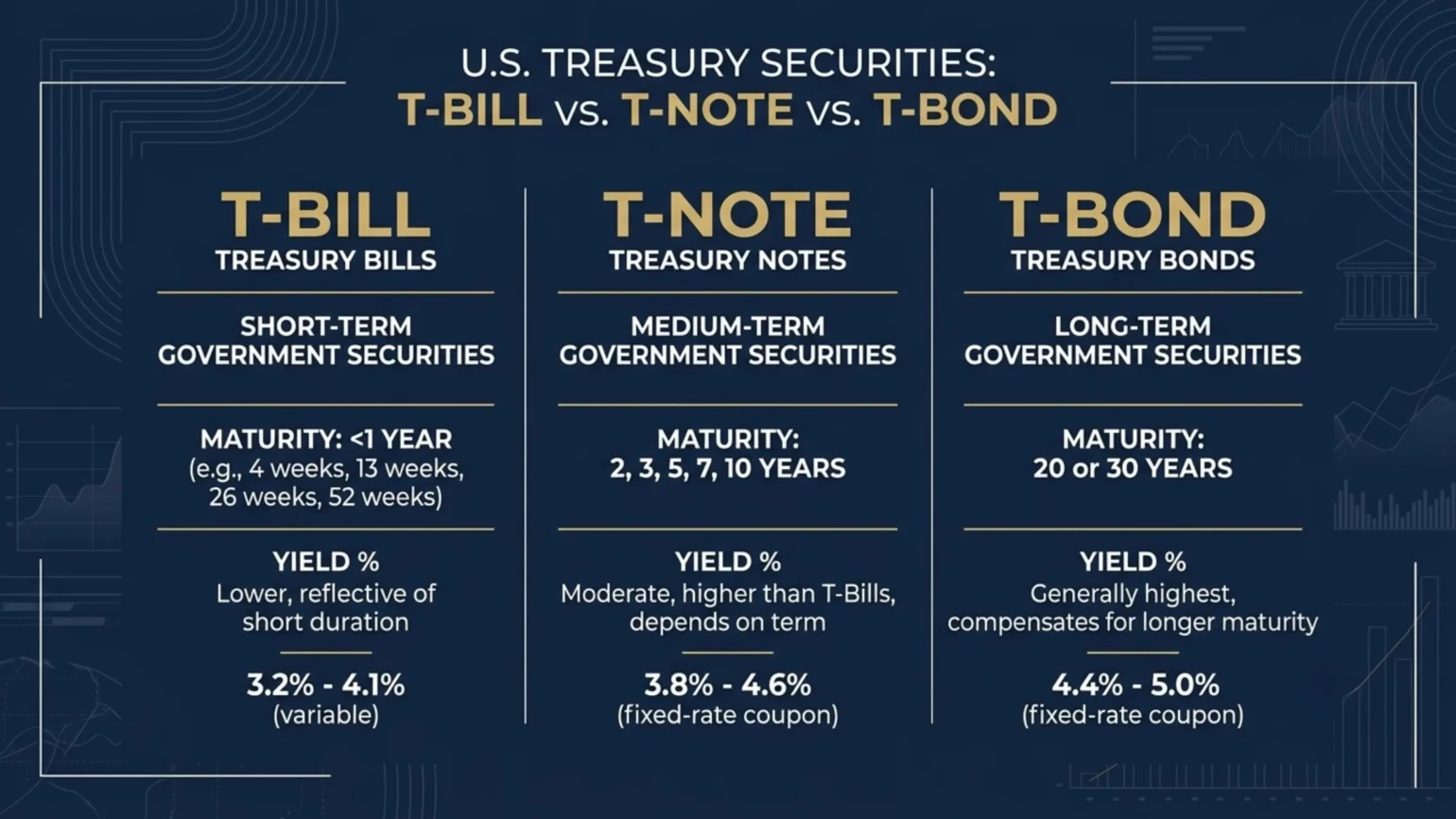
A Treasury bill is a short-term loan you make to the U.S. federal government. You…
The Bureau of Labor Statistics confirms the May 2026 Employment Situation Summary releases on Friday,…
Every week, the U.S. government needs to borrow money. It does this by selling Treasury…
The Bureau of Economic Analysis is scheduled to release the Personal Consumption Expenditures price index…
The 4-week Treasury bill yield stood at approximately 3.61% as of May 21, 2026, based…
The Federal Reserve released the FOMC minutes from the April 28 to 29, 2026 meeting…