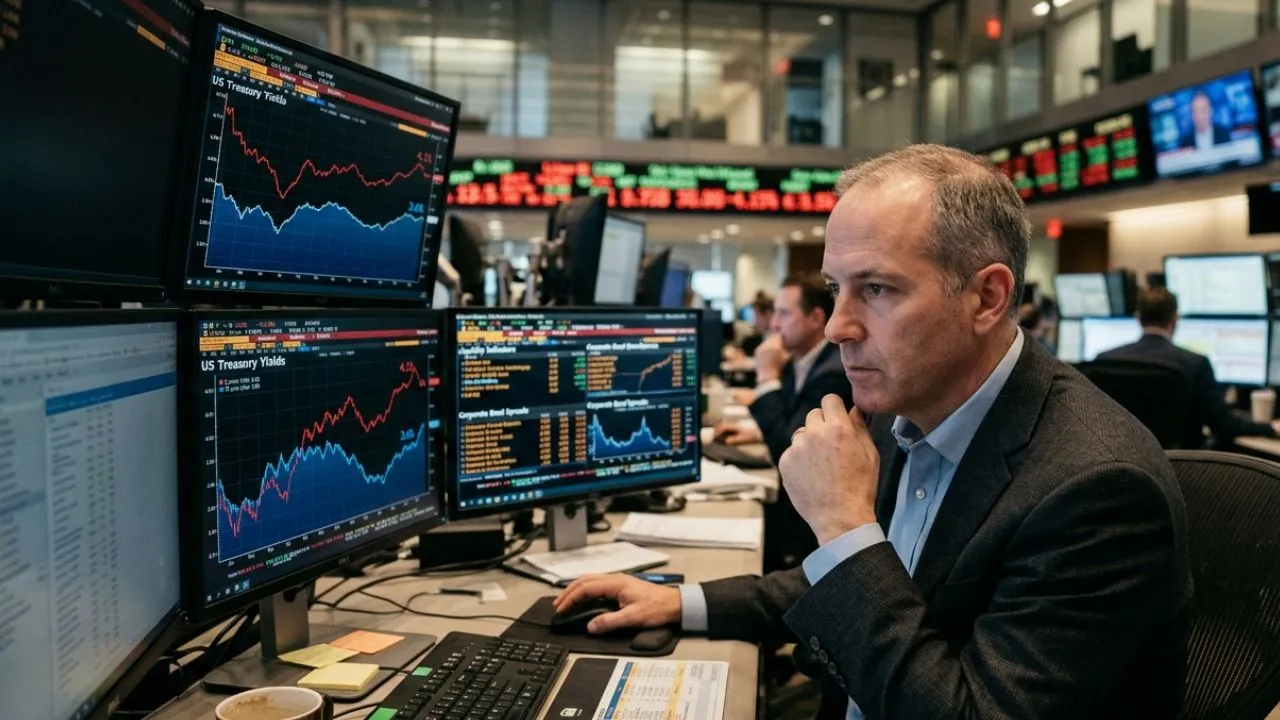
The 10-year U.S. Treasury yield came within a fraction of 5% on Monday as financial markets moved close to fully pricing a Federal Reserve interest-rate increase this week, marking another sharp change in the rate outlook just two days before policymakers announce their decision.
The benchmark 10-year yield reached 4.9915% during September 14 trading before easing back toward 4.95%, according to Reuters market data tracking Monday’s Treasury move, putting the yield within about one basis point of the closely watched 5% level.
At the same time, markets were pricing about a 90% probability that the Federal Reserve would raise its benchmark interest rate at the September 15–16 meeting. Reuters reported the roughly 90% market-implied probability as investors reassessed the outlook after stronger inflation readings, elevated oil prices and a rapid shift in expectations for Fed policy.
That 90% figure is a market expectation, not a Federal Reserve forecast or decision. CME Group’s FedWatch methodology explains that these probabilities are derived from trading in 30-day Fed Funds futures and can change as futures prices move.
The change matters because both Treasury yields and Fed expectations have shifted substantially in less than two weeks. When Investozora reported on the U.S. economy on September 2, the 10-year Treasury yield was trading above 4.81% while markets were assigning roughly a 70% probability to a quarter-point September rate increase.
Official Treasury data show a similar change. The Treasury Department’s September 2026 daily yield curve placed the 10-year yield at 4.79% on September 2 and 4.96% on September 11, the latest official Treasury closing rate available before Monday’s trading.
That represents a 17-basis-point increase between September 2 and September 11, an Investozora calculation using the Treasury Department’s published figures. Monday’s 4.9915% intraday high pushed the market move still further.
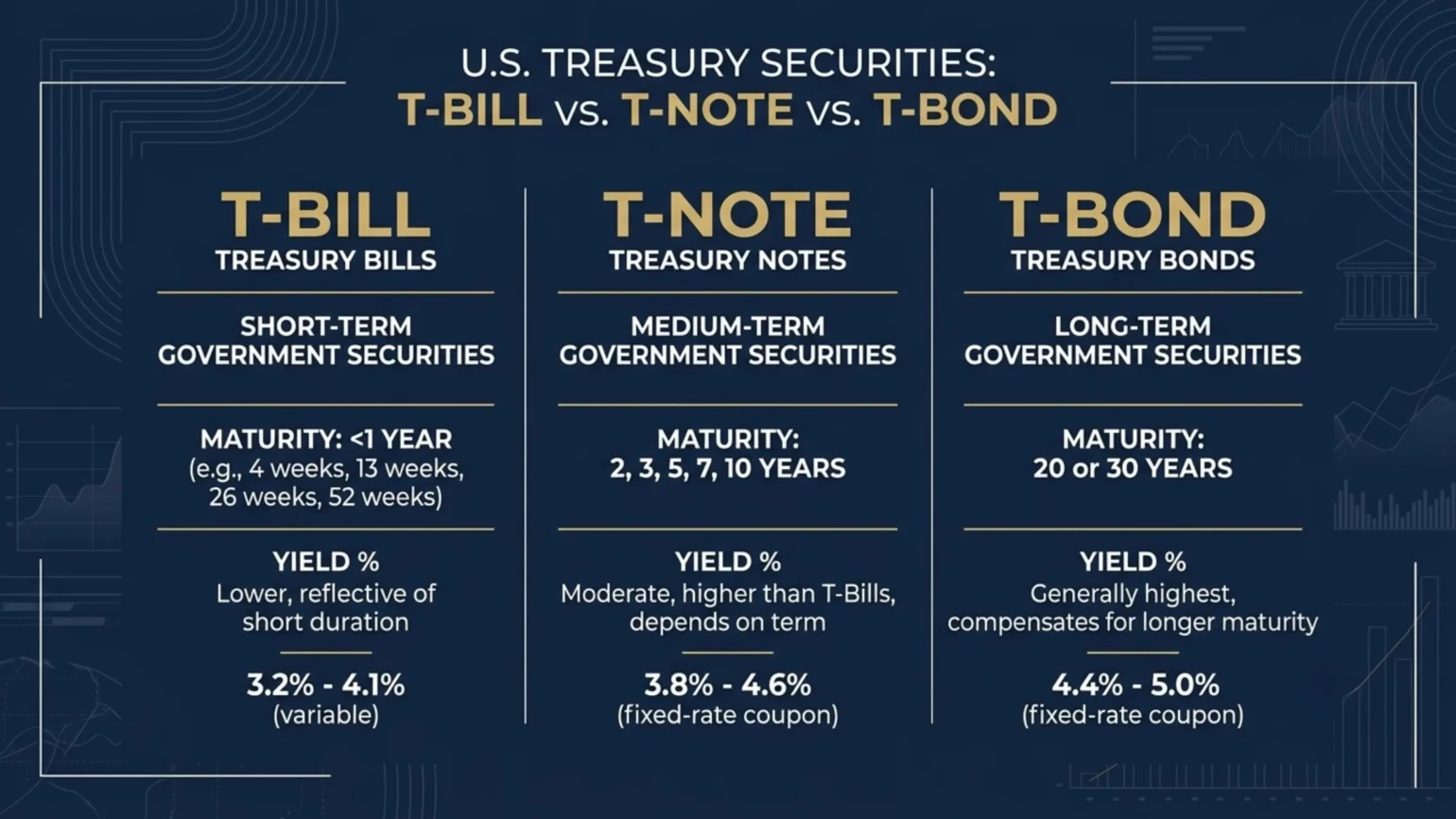
The same Treasury yield-curve data show that the pressure is not limited to the 10-year maturity. On September 11, the 2-year Treasury stood at 4.63%, the 5-year at 4.78%, the 10-year at 4.96% and the 30-year at 5.35%.
Those figures are Treasury Department par yield curve rates, not forecasts of where yields will trade next. The immediate market move does not come from one economic report alone.
Consumer prices increased 0.4% in August from the previous month and 3.4% from a year earlier, according to the Bureau of Labor Statistics’ August 2026 CPI report. Core CPI, which excludes food and energy, increased 0.3% during the month and 2.4% over 12 months. Gasoline prices rose 3.9% in August and accounted for more than one-third of the monthly increase in headline CPI.
Producer prices had already delivered another inflation warning one day earlier. The BLS August Producer Price Index report showed final-demand prices rising 0.4% during the month and 5.4% from a year earlier, while prices for final-demand goods increased 1.1% in August.
The labor market has also remained strong enough to complicate the case for easier monetary policy. According to the Bureau of Labor Statistics’ August employment report, U.S. employers added 162,000 jobs while the unemployment rate remained at 4.1%.
Oil is adding another layer of uncertainty. Reuters reported Brent crude trading around $108 a barrel on Monday as renewed Middle East tensions increased concern about energy supplies.
Higher oil prices do not automatically translate into an equal increase in consumer inflation. But if energy costs remain elevated, they can put additional pressure on gasoline, transportation, freight and production costs, making the inflation outlook harder for both Federal Reserve policymakers and bond investors to assess.
That combination helps explain why the Treasury market has moved so far from where it stood earlier this month. Investozora previously examined the broader forces keeping yields high in its analysis of why Treasury yields are staying elevated, including inflation, energy prices, government borrowing and uncertainty over the Fed’s policy path.
Monday’s development is more immediate. The 10-year Treasury is no longer simply holding in the upper-4% range. It has now traded within roughly one basis point of 5% immediately before a potentially important Fed decision. The Federal Reserve has not yet publicly decided to raise rates.
At its July 28–29 meeting, the Federal Open Market Committee voted 9–3 to keep the federal funds target range at 3.50% to 3.75%. The Federal Reserve’s July 29 FOMC statement shows that Beth Hammack, Neel Kashkari and Lorie Logan dissented because they preferred a quarter-point increase.
If the Fed raises rates by 25 basis points this week, the target range would move to 3.75% to 4.00%. The Federal Reserve’s September 2026 calendar confirms that the two-day FOMC meeting begins Tuesday, September 15. The policy statement is scheduled for 2 p.m. Eastern time on Wednesday, September 16, followed by the Fed chair’s press conference at 2:30 p.m.
Economists have moved in the same direction as financial markets, although the two measures are not the same. A Reuters poll published Monday found that 85% of economists surveyed expected a quarter-point increase this week, compared with market pricing of roughly 90%. For households, the 10-year yield approaching 5% matters even before the Fed acts.
Longer-term Treasury yields influence financial conditions across mortgages, corporate borrowing and other long-duration credit markets. Mortgage rates do not move one-for-one with the 10-year Treasury because mortgage-bond spreads, lender pricing and market volatility also matter, but a sustained rise in Treasury yields can keep pressure on borrowing costs.
Existing bondholders face a different effect. When market yields rise, the prices of older fixed-rate bonds generally fall because newly issued securities offer investors more attractive yields. Savers and buyers of newly issued Treasuries can benefit from the other side of that move through higher available yields.
Credit-card borrowers should make another distinction. Most variable credit-card rates are tied more directly to short-term benchmarks such as the prime rate, meaning an actual Federal Reserve increase would generally matter more directly for those borrowers than Monday’s move in the 10-year Treasury yield.
The biggest question now is whether 5% becomes a ceiling or simply another level the Treasury market moves through. The Federal Reserve’s September 16 decision is the most immediate event capable of changing that picture. A quarter-point increase is heavily priced into markets, but it remains a market expectation until the FOMC votes and publishes its decision.
The language accompanying the decision could matter as much as the rate move itself. Investors will be watching for signs that policymakers see one increase as sufficient, believe further tightening may be necessary, or have changed their view of inflation, employment and the latest energy shock.
A surprise decision to keep rates unchanged could also produce a large market reaction. In a Reuters report examining risks in the bond market, some investors argued that leaving rates unchanged despite persistent inflation could raise questions about the Fed’s inflation-fighting credibility rather than automatically pushing long-term yields lower. That is why Monday’s move toward 5% matters beyond the headline number.
Less than two weeks ago, the official 10-year Treasury yield stood at 4.79%, while markets were still assigning about a 70% probability to a September rate increase. The yield has now traded within roughly one basis point of 5%, and futures markets are assigning about nine-in-ten odds to a quarter-point increase.
Neither development guarantees what the Federal Reserve will do Wednesday. Together, however, they show how sharply investors have repriced both long-term interest rates and the near-term Fed outlook ahead of one of the most closely watched policy decisions of the year.