
The public comment period on the Federal Reserve’s Payment Account proposal closed July 27, 2026, is set to close, with final policy development expected by December 31, 2026, when a related pause on Tier 3 master account applications is also set to end.
The Fed payment account bank charter advantage banks have relied on for decades is starting to narrow, and it is happening through a specific, traceable regulatory process rather than through vague industry pressure.
On May 20, 2026, the Federal Reserve Board requested public comment on a new “Payment Account,” a special-purpose account that would let certain fintech firms, stablecoin issuers, and other nonbank institutions settle payments directly through Fedwire and FedNow, without routing through a traditional bank.
What a master account has always meant
To understand why this matters, start with what a Federal Reserve master account currently provides. An account with a Federal Reserve Bank gives an institution direct access to the central bank’s wholesale payment systems and related services, bypassing intermediary banks entirely.
Historically, obtaining one has required a federal or state bank charter, along with deposit insurance and prudential supervision by a federal banking agency. That requirement has functioned as one of the core advantages of holding a bank charter: direct, low-cost access to the plumbing that moves money across the entire U.S. financial system.
Under the Fed’s 2022 Account Access Guidelines, institutions seeking master accounts have been sorted into three tiers, with Tier 3, covering uninsured institutions not subject to federal prudential supervision, facing the highest scrutiny.
Fintech firms, novel state charters such as Wyoming’s Special Purpose Depository Institutions, and crypto-focused companies have largely been stuck in that highest-scrutiny tier, and approvals have been rare.
In March 2026, the Federal Reserve Bank of Kansas City approved a limited-purpose account for Kraken Financial, a Wyoming Special Purpose Depository Institution, marking the first time a digital asset firm received direct Fed account access. Fed Vice Chair Michelle Bowman described that approval publicly as effectively a pilot.
What changed in May 2026
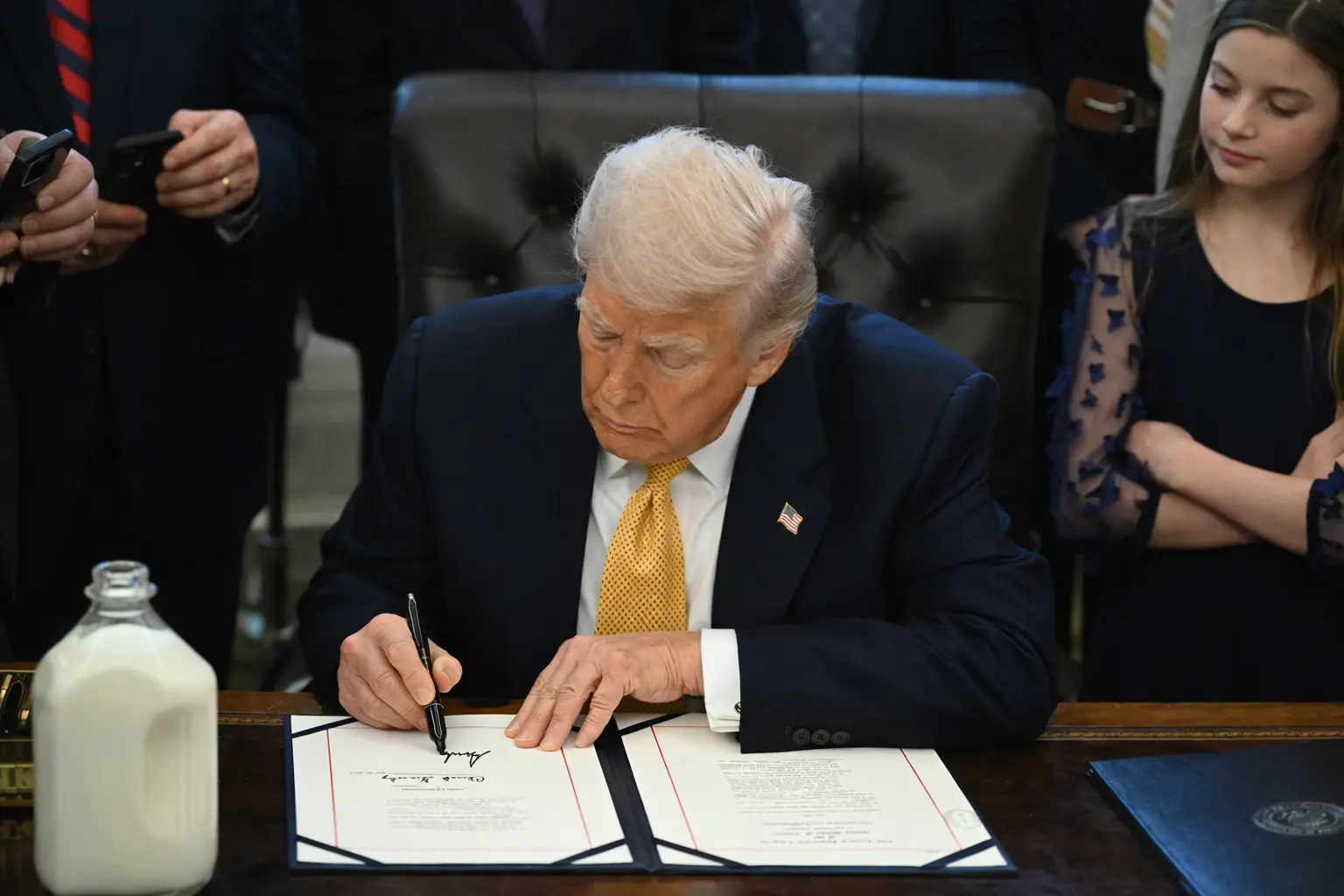
Two developments arrived within roughly 24 hours of each other. On May 19, 2026, President Trump signed an executive order titled “Integrating Financial Technology Innovation into Regulatory Frameworks,” directing the Fed to evaluate its legal authority to expand master account access for uninsured depository institutions and nonbank financial firms, including those engaged in digital assets, and to deliver a report addressing that authority, along with any legal obstacles and how they might be removed.
The next day, the Federal Reserve Board voted 6 to 1 to advance the Payment Account proposal. The new account is structured as a deliberately constrained alternative to a full master account. It carries no intraday credit, no discount window access, no FedACH connectivity, and no interest paid on balances.
What it does include is direct settlement access to Fedwire and FedNow, the Fed’s real-time and wholesale payment rails, for institutions that would not otherwise qualify for a full master account under current rules.
Why banks are watching closely
This is where the “bank charter advantage” in the headline becomes concrete rather than abstract. A traditional bank charter has historically bundled two things together: the ability to take insured deposits, and the ability to settle payments directly with the Federal Reserve. The Payment Account proposal unbundles them.
A nonbank firm could gain the second benefit, direct settlement access, without ever obtaining the first, deposit insurance and the supervisory obligations that come with it.
Correspondent banks, which currently earn fee income by providing smaller institutions and fintechs with indirect access to Fedwire and FedNow, would face new competition from firms settling directly.
The Fed has built in one explicit protection for the largest banks: under Operating Circular 1, payment accounts cannot be used to settle transactions on behalf of other institutions, which preserves the core correspondent banking business in the near term.
Simultaneously with the proposal, the Board encouraged Reserve Banks to pause decisions on pending Tier 2 and Tier 3 master account applications, of which roughly 20 were pending as of the announcement, until the Board finishes its policy work, expected no later than December 31, 2026.
Fact, context, and what remains genuinely uncertain
The GENIUS Act, the federal stablecoin law passed in 2025, authorizes certain nonbank stablecoin issuers to hold reserves at Reserve Banks but does not explicitly make them eligible for master accounts, a gap several law firms tracking the proposal have flagged as a genuinely unresolved legal question the Fed’s forthcoming report is expected to address directly.
Whether the Payment Account becomes a durable, separate track alongside the traditional master account and the industrial loan company charter route, or whether it eventually gets folded into a broader master account overhaul once the executive order’s report is delivered, is not yet settled, and Investozora will update this piece once the Fed’s report, expected around mid-September 2026, is public.
This next part is Investozora’s analysis, clearly separated from confirmed fact. The Payment Account, on its constrained terms, looks designed to relocate risk away from the Federal Reserve and onto the nonbank participant itself.
No discount window means no lender-of-last-resort backstop if the firm faces a liquidity crunch, and no interest on balances removes an incentive to over-accumulate reserves there.
That risk-shifting design may be exactly what makes the proposal politically and technically feasible where full master account access for uninsured firms has stalled for years.
But it also means account holders will carry fraud monitoring, sanctions screening, and operational resilience responsibilities entirely on their own, with informational requirements that could include independent compliance audits and regular reporting to their Reserve Bank, a real operational burden for firms used to leaning on a sponsor bank for exactly that infrastructure.
What this means for everyday readers
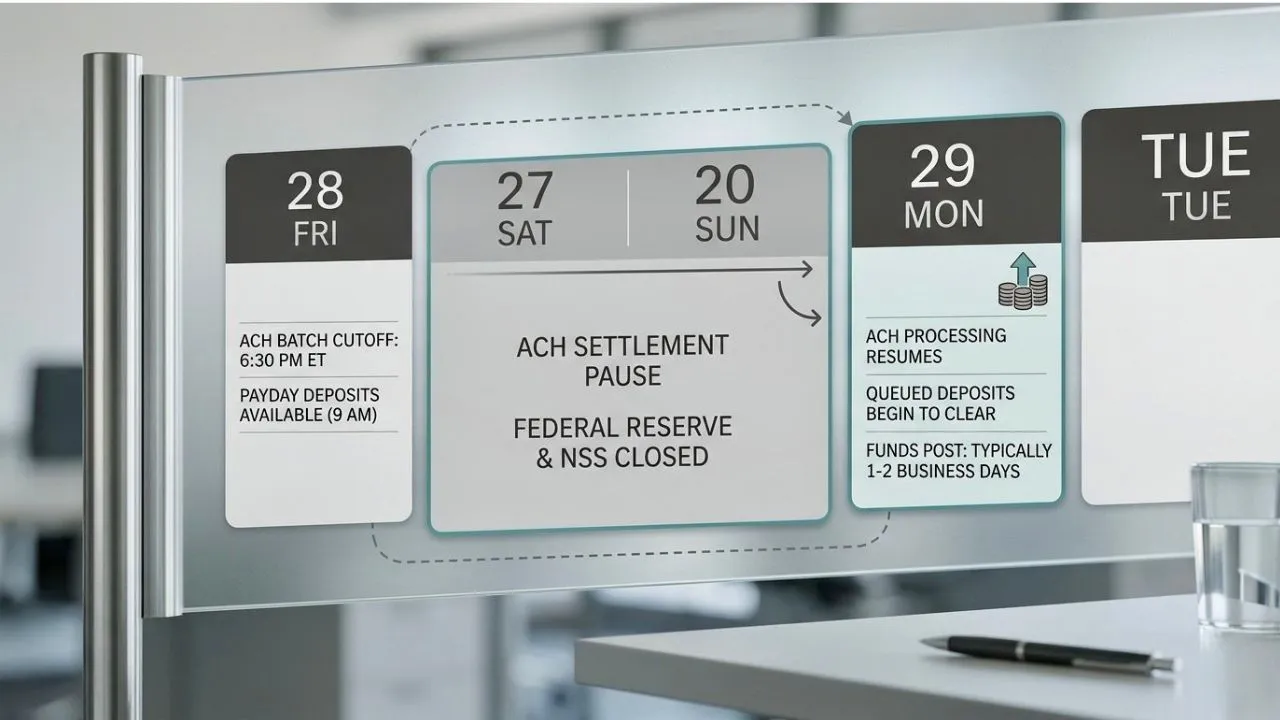
Even readers with no direct interest in fintech or crypto regulation are touched by this indirectly. If nonbank payment platforms gain faster, cheaper access to Fedwire and FedNow, that can eventually translate into faster settlement times and lower fees for consumer payment apps, a shift Investozora has tracked in its explainer on how ACH payments work and in coverage of same-day settlement timing.
It also means more of the money-movement infrastructure Americans rely on daily could eventually run through firms that are not banks in the traditional insured, supervised sense, which is a meaningful shift in how the plumbing of the dollar actually works.
What you should do now
There is no immediate action required from individual consumers, since the Payment Account itself is not a retail product and will not appear on any bank statement.
What is worth doing is paying attention to which specific firms your payment apps, employer payroll provider, or any stablecoin platform you use eventually rely on for settlement, since a shift toward direct nonbank access changes who ultimately stands behind the money-movement chain your paycheck or refund travels through.
Anyone using a bank or credit union should also expect their institution to weigh in during this comment period, since banks and credit unions have been actively preparing responses ahead of the July 27 deadline, and it’s reasonable to ask your own bank how the proposal might affect the accounts you already hold.
For the full picture of how Fedwire, ACH, and FedNow fit together, see Investozora’s money movement, and for the related story on how currency itself is being reshaped this year, see our companion piece on the Treasury dollar coin.