
Updated: June 22, 2026 – An ACH transfer is how electronic payments move between bank accounts in the United States. When your employer, the IRS, or Social Security sends you money, it travels through a nationwide system called the Automated Clearing House. Your bank may show the deposit before the money has fully settled, which is why some payments appear as pending for hours or even overnight.
There is a specific moment, familiar to millions of Americans, when your banking app shows a deposit has arrived but the funds remain completely frozen. The balance is visible. The money cannot be moved.
This is not a bank error. It is the designed mechanical behavior of the Automated Clearing House system, the federal payment network that carries virtually every direct deposit, tax refund, Social Security check, and payroll transfer in the United States.
Understanding exactly why this happens, at the institutional level, transforms a frustrating mystery into a predictable sequence. The US money movement system that governs every dollar flowing between American financial institutions operates on batch windows, settlement intervals, and inter-bank reserve transfers that most consumers never see.
The Legal Architecture Behind ACH
The Automated Clearing House system operates under two distinct layers of federal law. The first is the Electronic Fund Transfer Act, codified at 15 U.S.C. § 1693 et seq., which establishes the foundational consumer rights framework for all electronic money movement in the United States.
The second is Regulation E, issued by the Consumer Financial Protection Bureau at 12 CFR Part 1005, which implements the EFTA and defines the specific operational rules that banks must follow when processing electronic transfers.
These two instruments together define your rights as a consumer when a deposit is delayed, misdirected, or posted incorrectly. They also establish the liability framework for banks and employers who initiate ACH transfers. Every paycheck direct deposit, every IRS tax refund, and every Social Security payment you receive through your bank account arrives under this legal structure.
NACHA, the National Automated Clearinghouse Association, writes and enforces the private operating rules that govern the ACH network’s day-to-day mechanics above and beyond the federal regulatory floor.
The NACHA 9am direct deposit rule for 2026 changed the posting timeline for many consumers and reflects how private network rules interact with federal law to determine exactly when your funds become available.
ODFI, RDFI and the Clearing Sequence
Every ACH transfer involves at minimum two financial institutions and two federal network operators. The institution that initiates the payment is the Originating Depository Financial Institution, or ODFI. The institution that receives the payment and credits your account is the Receiving Depository Financial Institution, or RDFI.
When your employer’s payroll processor generates a direct deposit file, that file moves from the employer’s bank, functioning as the ODFI, through one of two central operators: either the Federal Reserve Banks operating FedACH, or the Electronic Payments Network operated by The Clearing House. These two central switches are the physical infrastructure through which every ACH transaction in the country passes.
The central operator receives the batch file from the ODFI, validates its contents, and transmits it to the appropriate RDFI. The RDFI then credits the receiving consumer’s account according to the settlement terms and its internal cutoff schedule.
Settlement between the ODFI and RDFI, meaning the actual transfer of reserve balances between their Federal Reserve master accounts, follows a separate and slightly later timeline from the moment the credit appears in your account.
This timing gap is the structural origin of the pending deposit phenomenon. Your bank, acting as the RDFI, may credit your account with a visible balance before the inter-bank settlement has fully completed across the Federal Reserve ledger. The wire transfer and ACH timing comparison on this site documents exactly how these clearing architectures differ in their settlement finality.
Why Your Deposit Shows as Pending
A deposit appears as pending rather than fully available for one of several mechanical reasons, each rooted in the batch architecture of the ACH system.
Processing Cutoff Windows. Every financial institution sets its own internal cutoff time for processing incoming ACH files. A payment file that arrives after a bank’s 2:00 PM cutoff, for example, is not processed until the following business day cycle. The funds show in the system but are held pending next-cycle processing.
Reserve Settlement Timing. Even when a bank credits your account immediately upon receiving the ACH file, the underlying transfer of liquid reserves between the ODFI’s and RDFI’s Federal Reserve master accounts may not settle until a later same-day or next-day window. Banks absorb this inter-settlement exposure based on their counterparty risk assessments.
Fraud and Verification Holds. Banks are permitted under Regulation E and their own risk frameworks to place temporary holds on large or unusual deposits pending verification. This is particularly common for first-time senders or deposits from new originating institutions.
Same-Day ACH vs. Standard ACH. Same-Day ACH, introduced by NACHA in 2016 and expanded since, allows eligible transactions to clear within the same business day through multiple daily settlement windows.
Standard ACH files settle the following business day. Whether your deposit qualifies for same-day treatment depends on the originating institution and the specific payment type. The same-day vs standard ACH comparison breaks down which payment categories qualify and which remain on the overnight schedule.
The Federal Reserve’s Role in ACH Settlement
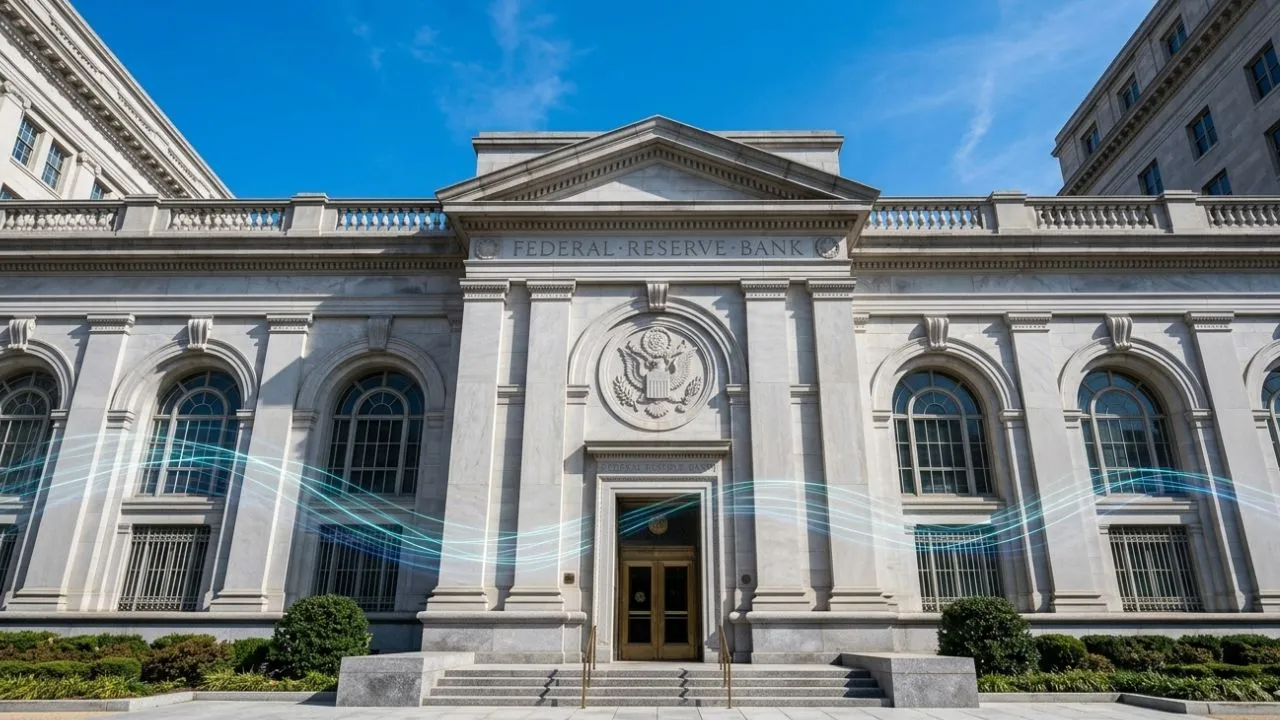
The Federal Reserve Banks operate FedACH, one of the two central clearing networks for the American ACH system. The Federal Reserve’s role is not merely administrative.
When an ACH payment settles through FedACH, the Federal Reserve adjusts the reserve account balances of both the ODFI and the RDFI on its own books. These reserve accounts are the liquid operational funds that banks maintain at the Federal Reserve to satisfy reserve requirements and to fund interbank transfers.
The Federal Reserve’s settlement windows for standard ACH transactions are scheduled events, not real-time processes. Settlement occurs at designated times during the business day and overnight. Transactions submitted before a given window’s cutoff settle in that window. Transactions submitted after the cutoff enter the next available settlement window.
This batching architecture is why a Social Security payment or IRS refund that departs the Treasury on a Wednesday morning may not complete its full reserve-level settlement at your bank until later that same day or, in some cases, overnight into Thursday.
The Federal Reserve settlement windows article on this site details the exact timing of each settlement cycle and how holiday scheduling shifts those windows.
Questions About ACH Transfers
How long does an ACH transfer take?
Standard ACH transfers settle the next business day from the point the originating institution submits the payment file through the cutoff window. Same-Day ACH transactions submitted before the relevant NACHA cutoff times can settle within the same business day. Weekends and federal holidays do not count as business days, which is why deposits submitted on Friday often do not fully clear until Monday morning.
Why is my direct deposit showing as pending?
Your direct deposit appears as pending because your bank, acting as the receiving institution, has posted the credit to your account but the underlying reserve settlement between your bank and the originating bank has not yet finalized at the Federal Reserve level. Some banks also apply internal holds pending fraud verification or cutoff-time processing. The funds will clear once the settlement window completes and any internal verification concludes.
Is ACH the same as a wire transfer?
No. ACH and wire transfers are structurally different payment mechanisms with different clearing speeds, cost structures, and settlement finality characteristics. Wire transfers settle individually and in real time through Fedwire, reaching final settlement within hours on the same business day. ACH transactions are batched together and cleared in scheduled windows, with settlement occurring hours later or the next business day. Wire transfers typically carry fees while most ACH transactions do not.
What is Same-Day ACH?
Same-Day ACH is an expanded capability within the ACH network that allows eligible transactions to clear and settle on the same business day they are submitted. NACHA rules govern which transaction types qualify, and there are per-transaction dollar limits. Government benefit payments, payroll deposits, and tax refunds may qualify depending on the originating agency’s or institution’s operational setup.
What protections do I have under Regulation E?
Regulation E requires your financial institution to provide you with written documentation of your rights, to investigate reported errors within defined timeframes, to provide provisional credit during investigations for amounts above certain thresholds, and to correct confirmed errors promptly. If an ACH transfer is unauthorized or incorrectly processed, you have the right to dispute it and receive resolution under the established statutory timeline.
What You Should Do Now
- Check whether your bank applies a specific ACH cutoff time by reviewing your account terms or contacting customer service directly.
- If a deposit shows as pending beyond 24 hours on a standard business day, contact your bank to determine whether the delay is a settlement timing issue or a hold that requires additional documentation.
- For recurring direct deposits such as payroll or government benefits, note your bank’s standard posting time and plan around it rather than expecting funds to arrive at midnight.
- If a deposit appears missing entirely rather than pending, verify the routing and account numbers with the originating institution. Misdirected ACH transactions follow a specific reversal process with defined resolution timelines under NACHA rules.
- For IRS refund deposits specifically, review the IRS Code 846 guide. The refund issued date on your tax transcript represents when Treasury released the funds, not when your bank will post them. Allow one to five business days from that date.
- For Social Security payment delays, compare your expected payment date with the SSA payment schedule before contacting the Social Security Administration to report a missing payment.
An ACH transfer is not magic. It is a precisely scheduled series of institutional steps, each governed by federal law and NACHA operating rules, moving money through a network built for reliability over speed. Understanding those steps eliminates the anxiety that accompanies every pending deposit.