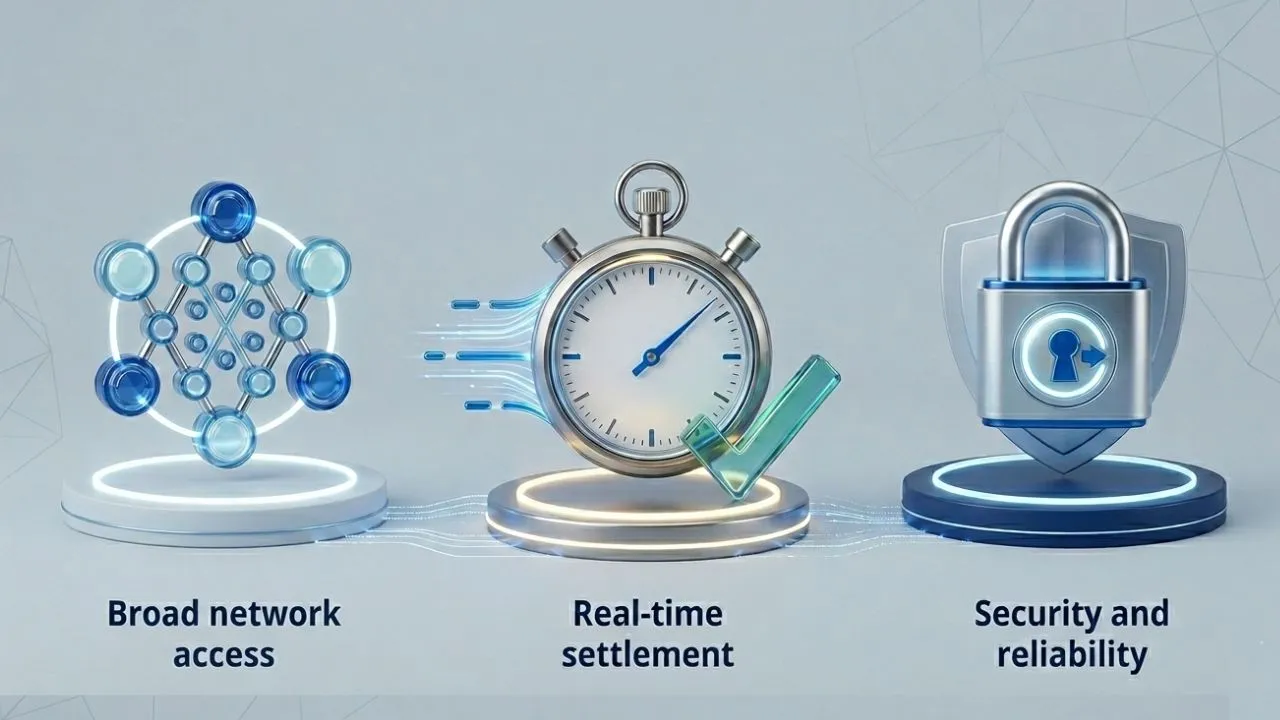


The Federal Reserve’s FedNow® Service continues operating on a 24/7/365 real-time settlement basis with no batch windows, processing eligible transactions between participating institutions in seconds at no interbank cost to consumers.
Every dollar that arrives in your bank account, your tax refund, your paycheck, your Social Security payment, travels on one of three payment rails built and operated by the Federal Reserve.
The payment rails determine when your money arrives, why it sometimes shows as pending, and why a transfer that left the sender hours ago hasn’t posted yet. There is no mystery inside this system. There is only infrastructure, and once you understand which rail your money is on, the timeline becomes completely predictable.
Most people never know which rail their money uses. That invisible gap between “sent” and “available” is entirely explained by the architecture of whichever payment rail carried the transaction. Today, for the first time, one of those rails moves money in seconds, for free, around the clock, every day of the year.
Your Direct Deposit Travels on ACH and That Explains the Wait
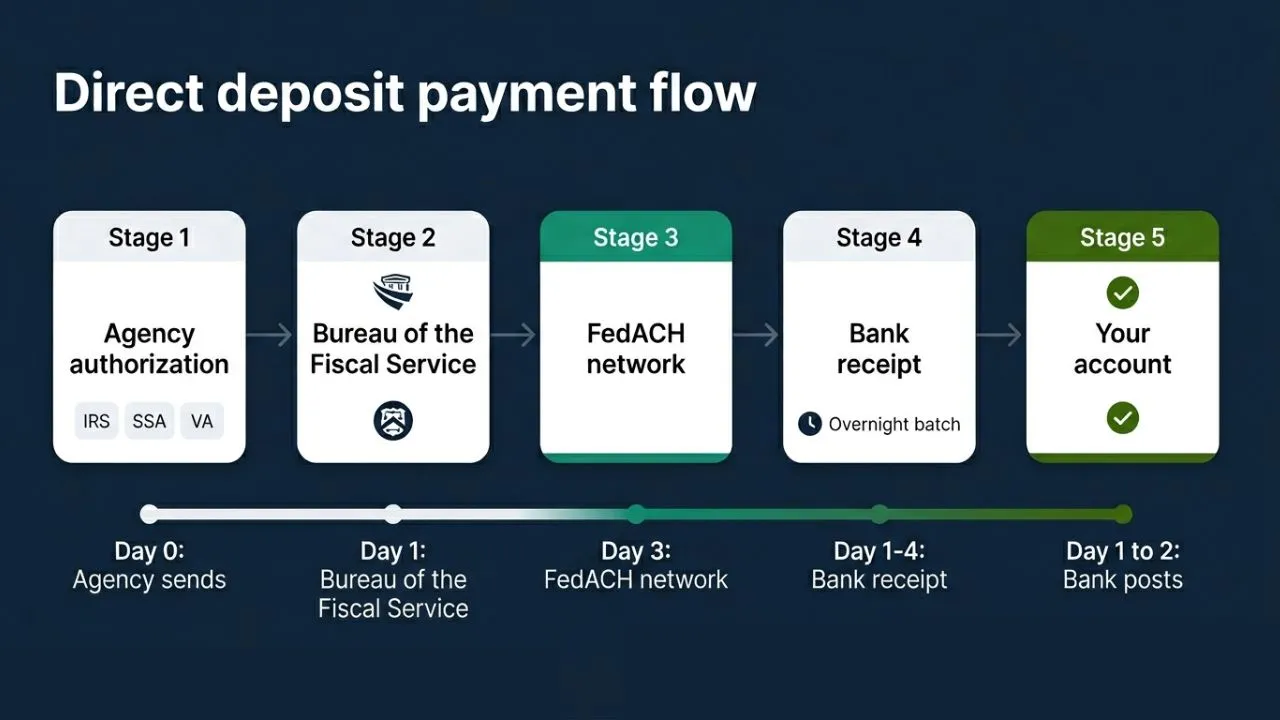
The Automated Clearinghouse network, ACH, handles the overwhelming majority of consumer payments in the United States. Your IRS refund, your payroll, your Social Security benefit, your mortgage payment, all of them travel on ACH. The Federal Reserve operates FedACH, one of the two national ACH operators. The Clearing House operates the other.
ACH is a batch processing system. Transactions are not processed one at a time. They are collected throughout the business day, bundled into files, and transmitted to receiving banks in scheduled settlement windows.

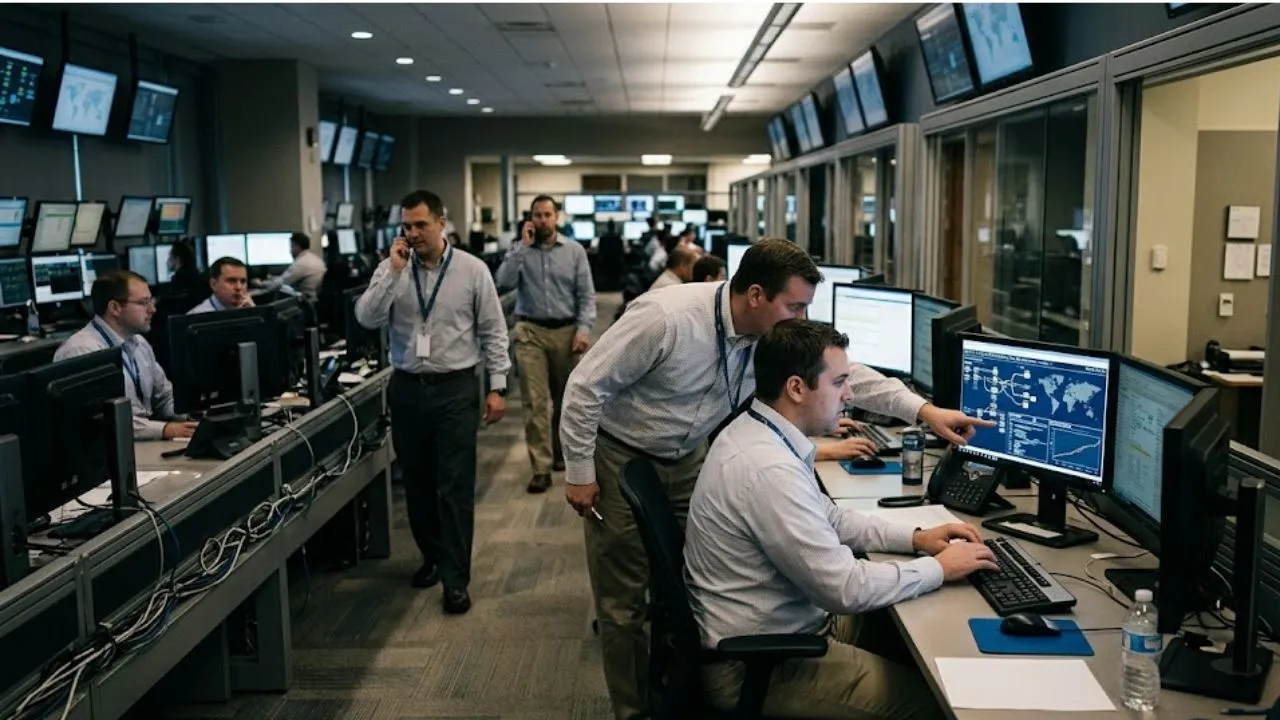

Your bank receives the incoming ACH credit file and posts it to your account according to its internal availability schedule, which is why you can see “payment sent” on one side and “not yet available” on the other simultaneously. Both statements are accurate. The file has left the sender and entered the pipeline. It simply has not cleared the next batch window yet.
Standard ACH settles in one to two business days. Same-Day ACH, supported by NACHA and the Federal Reserve, accelerates eligible transactions through up to three same-day settlement windows.
Not every payment qualifies for same-day processing. Dollar thresholds and originator eligibility apply. The Same-Day ACH vs Standard ACH timing article maps every window and cutoff time precisely.
The direct deposit processing overnight guide explains what happens to your payment file during the hours between submission and posting. The original observation that government documentation does not surface directly: the gap between “your refund was sent” and “your bank has it” is not your bank being slow. It is the ACH batch architecture functioning exactly as designed.
The IRS submits your payment file through the Bureau of the Fiscal Service into FedACH. Your bank receives the file and holds it for release at its scheduled posting window. Both institutions are operating correctly. The timeline is the system.
Fedwire Moves Institutional Money Instantly and Irrevocably
Fedwire Funds Service is the Federal Reserve’s Real-Time Gross Settlement system. Unlike ACH, Fedwire processes each transaction individually and immediately. When a Fedwire transaction executes, the funds transfer and settle in real time — no netting, no batch window, no reversal mechanism.
Fedwire operates from 9:00 PM Eastern time on the preceding business day through 7:00 PM Eastern time on the current business day. Those defined hours exist because the Federal Reserve’s accounting systems require structured open and close periods. Transactions submitted outside those hours queue for the next operating window.
Fedwire carries a high per-transaction cost and is not used for consumer payments. Bank-to-bank wire transfers that consumers initiate, for real estate closings, large personal transfers, international wires, route through Fedwire on the backend.
These transfers are fast and final. Wire fraud is irreversible because the Fedwire settlement cannot be recalled once it executes. The FedWire ACH liquidity timing analysis explains how these two rails interact during high-volume settlement periods and what that means for same-day availability at your bank.
FedNow Is the New Rail That Settles in Seconds Every Day of the Year
FedNow launched in July 2023. It is the Federal Reserve’s instant payment infrastructure, a real-time rail that links participating commercial banks and credit unions and settles eligible transactions in seconds, around the clock, 365 days a year. There are no batch windows. There are no business day limitations. There are no weekend pauses. A FedNow transaction submitted at 11:47 PM on a Sunday settles before midnight.
FedNow uses a credit-push model. The sending bank initiates the payment. The Federal Reserve validates and settles it in real time. The receiving bank credits the funds immediately. The interbank clearing cost to consumers is zero at the Federal Reserve level, though individual banks may charge a fee for initiating instant payment services.
The current limitation is adoption. Not every bank or credit union participates in FedNow yet. If both the sending and receiving institutions are enrolled, the transaction settles in seconds. If either institution has not connected to FedNow, the payment defaults to ACH or wire. The Federal Reserve publishes a current list of participating institutions at frbservices.org.
The federal payments explained guide covers the full institutional picture of how all three payment rails connect into a single national infrastructure. For the complete architecture behind every federal deposit, see the Investozora US money movement system article.
What You Should Do Now
- Identify which rail your most important incoming payments use. IRS refunds and Social Security payments travel on ACH via the Bureau of the Fiscal Service. Bank-to-bank wire transfers use Fedwire. Instant transfers between FedNow-enrolled institutions use FedNow.
- For IRS refunds: check your transcript for Code 846. The date next to Code 846 is when the IRS submitted your payment file to the ACH pipeline. Add one to three business days for your bank’s posting schedule.
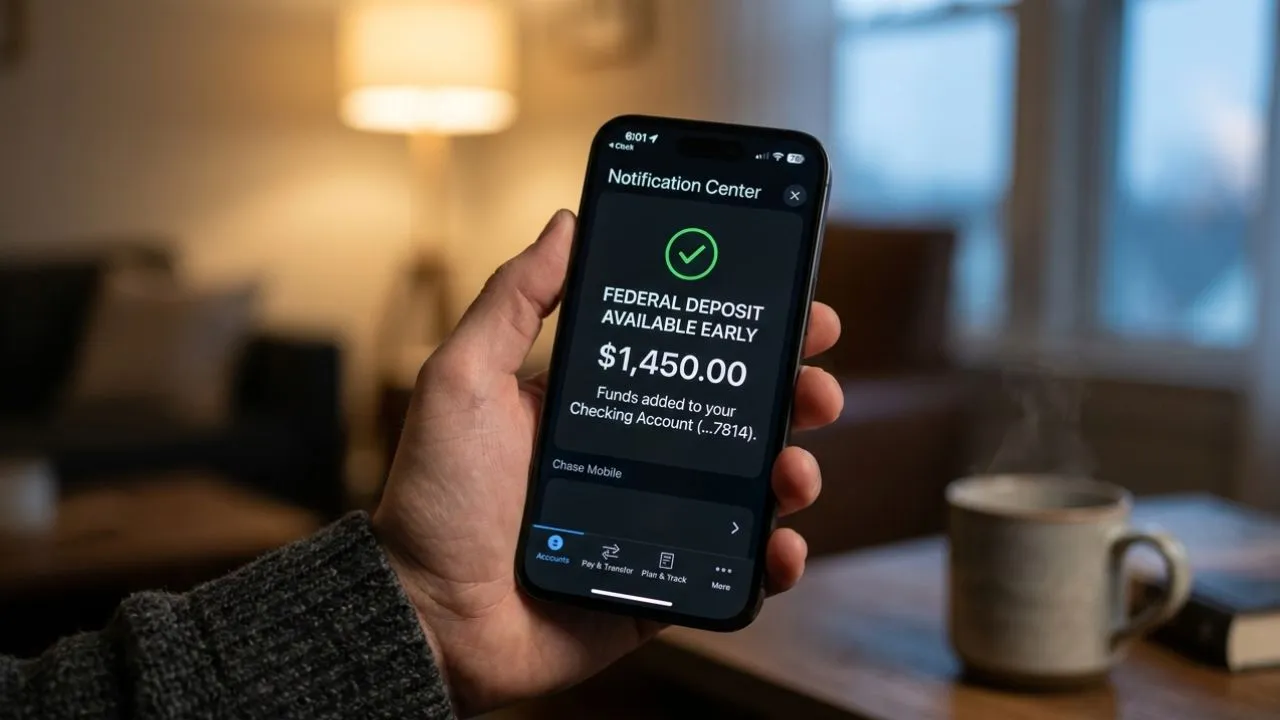
- For Social Security: your payment date is set by your birthday-based SSA schedule. ACH files arrive at your bank before the scheduled date. If your bank offers early direct deposit, the payment may post one to two days early.
- Ask your bank whether it participates in FedNow. If it does, eligible incoming payment rails can settle in seconds rather than days.
- For all three payment rail systems, official Federal Reserve documentation is at payment systems.
Understanding the payment rails converts every confusing “pending” status into a predictable, manageable wait with a known endpoint. The three rails, ACH, Fedwire, and FedNow, together carry every dollar that moves through the American financial system. One of them is now instant, free, and available every hour of every day. The gap between sent and received is closing.