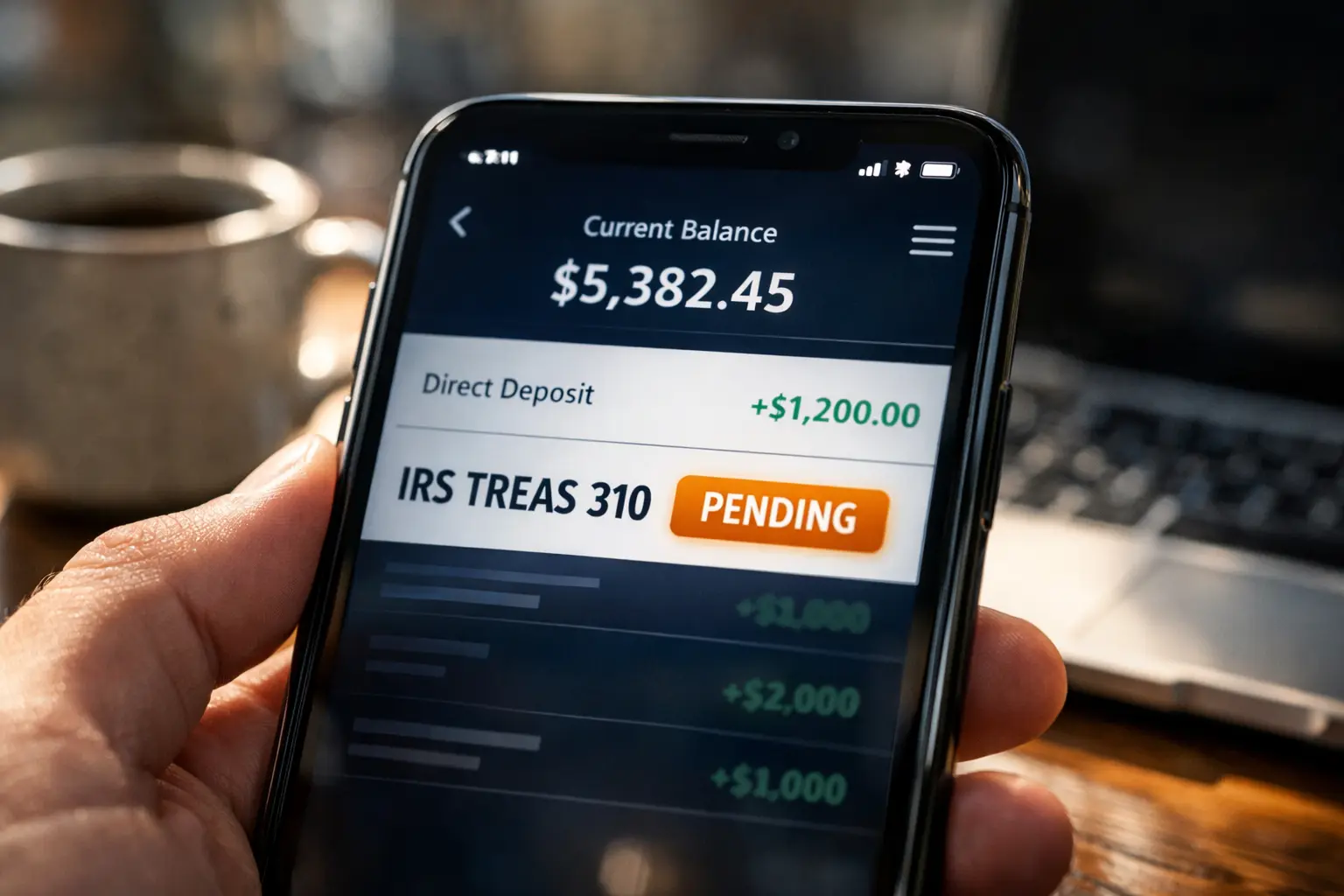
You open your banking app expecting the deposit to already be there. Maybe it’s a paycheck. Maybe it’s a tax refund. And maybe it’s a federal benefit payment scheduled for today. But the balance still hasn’t changed. Then a friend, coworker, or family member mentions that their deposit already appeared hours ago.
It feels like something in the system must be delayed. In reality, the payment may already be moving through the U.S. money system, and the difference you’re seeing is usually caused by how banks process deposits internally.
The Hidden Gap Between Payment Release and Bank Balance
Direct deposits do not move instantly from the sender to your available balance. When an employer, federal agency, or payment provider releases a deposit, that payment first travels through the national banking infrastructure that connects financial institutions across the United States.
Those payment instructions move through electronic clearing networks before reaching the receiving bank. Once the bank receives the transaction file, the deposit still has to pass through internal processing systems that verify and post the funds to individual customer accounts.
That internal step is where timing differences begin. Banks rarely update account balances continuously throughout the day. Instead, deposits are processed in structured bank posting windows that occur at specific times.
If the transaction arrives just after a bank finishes one of those cycles, the deposit simply waits until the next one. This creates the timing gap people notice when one account updates earlier than another.
Why Different Banks Show Deposits at Different Times
Not every financial institution handles incoming payments the same way. Some banks run posting cycles shortly after midnight. Others begin updating customer accounts early in the morning. Some wait until later in the day when additional settlement files arrive.
Because these schedules vary between institutions, the exact moment a deposit appears can differ even when the payment itself entered the system at the same time.
That is why two people expecting the same type of deposit may see their balances update hours apart. The deposit did not move slower. It simply reached a bank that posts funds on a different schedule.
In many cases, banks group incoming transactions into large settlement batches before releasing them to customer accounts. When that batch processing completes, thousands of balances may update at nearly the same moment. This is why deposits often appear in waves throughout the day.
The Infrastructure That Moves Direct Deposits
Behind every direct deposit is a payment network designed to move funds safely between financial institutions. Employers submit payroll files. Government agencies transmit benefit payments. Financial processors send transaction instructions through national clearing systems, such as the ACH payment network, that connect banks across the country.
Once a receiving bank obtains the payment file, its internal systems begin verifying the transactions and preparing them for posting. That verification process protects against errors, duplicate payments, and settlement mismatches between institutions.
Only after those checks finish does the bank release the deposit to the customer account balance. Because banks run those internal systems according to their own operational schedules, deposit timing can vary from one institution to another.
Why Deposits Often Appear in Waves
The pattern many people notice, where deposits seem to appear suddenly after hours of waiting, is usually tied to batch processing. Banks frequently process large groups of incoming transactions together rather than releasing each deposit individually, often following established ACH settlement timing.
When a settlement batch completes, the bank’s ledger updates and thousands of account balances change at once. To someone refreshing their banking app, it can feel like deposits suddenly arrived out of nowhere. In reality, the payment may have been sitting inside the bank’s system waiting for the next posting cycle to finish.
What To Expect If Your Deposit Hasn’t Appeared Yet
If a deposit has been scheduled or released but does not appear immediately, the most common explanation is simply timing. The transaction may already be inside the receiving bank’s processing system, waiting for the next internal posting window.
In many situations, the deposit becomes visible once the bank completes its next update cycle. You may even see a pending deposit status in your account details while you wait. Only when a payment fails to appear after multiple business days does it become necessary to contact the bank to verify whether the transaction file has been received.
For most people, the difference between when a payment is sent and when it appears in a balance is simply part of how the U.S. banking system, including Federal Reserve payments, moves money between institutions.
Why Understanding This Timing Matters
Direct deposits rarely arrive everywhere at the exact same moment. Instead, they move through a structured financial network and appear when each bank finishes processing its settlement batches.
That is why one account can update early in the morning, following overnight bank clearing, while another balance changes later the same day, even though both deposits traveled through the same national payment system.
Understanding that deposit timing explained can help explain the confusion many people experience when waiting for a deposit to appear. And in most cases, the payment, which often relies on the Treasury payment release process, is already closer than it looks.
Author