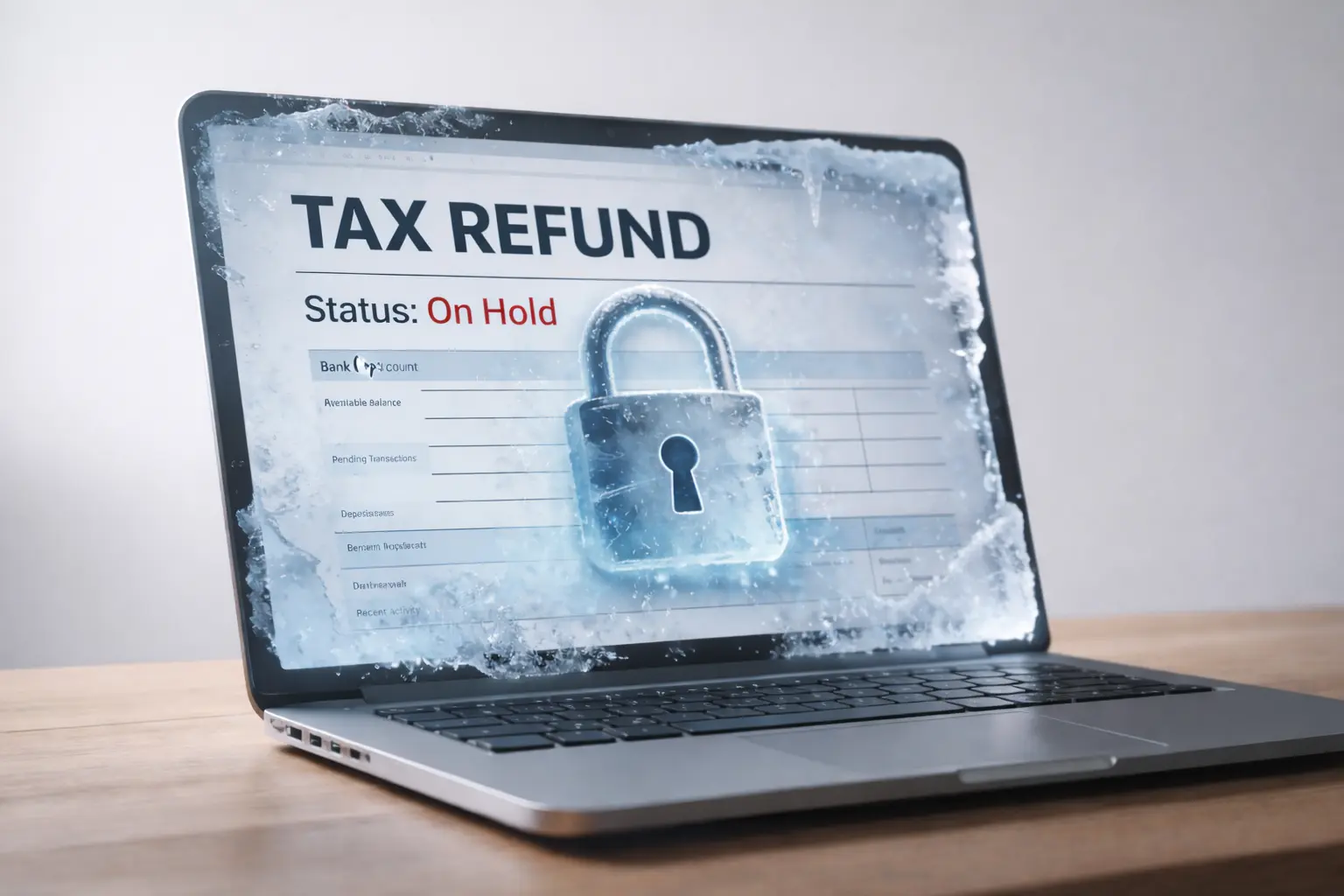
At 8:12 AM, the balance still looks unchanged. The IRS refund date is today, yet nothing appears available. You refresh the app before leaving for work. That quiet gap feels personal. It is structural.
When a federal refund misses the early glance, the system has not stalled. The payment likely moved through overnight processing. Posting simply has not crossed your bank’s internal release window. Understanding that distinction requires stepping inside the institutional layers that move before your balance does.
Authorization Is Not Posting
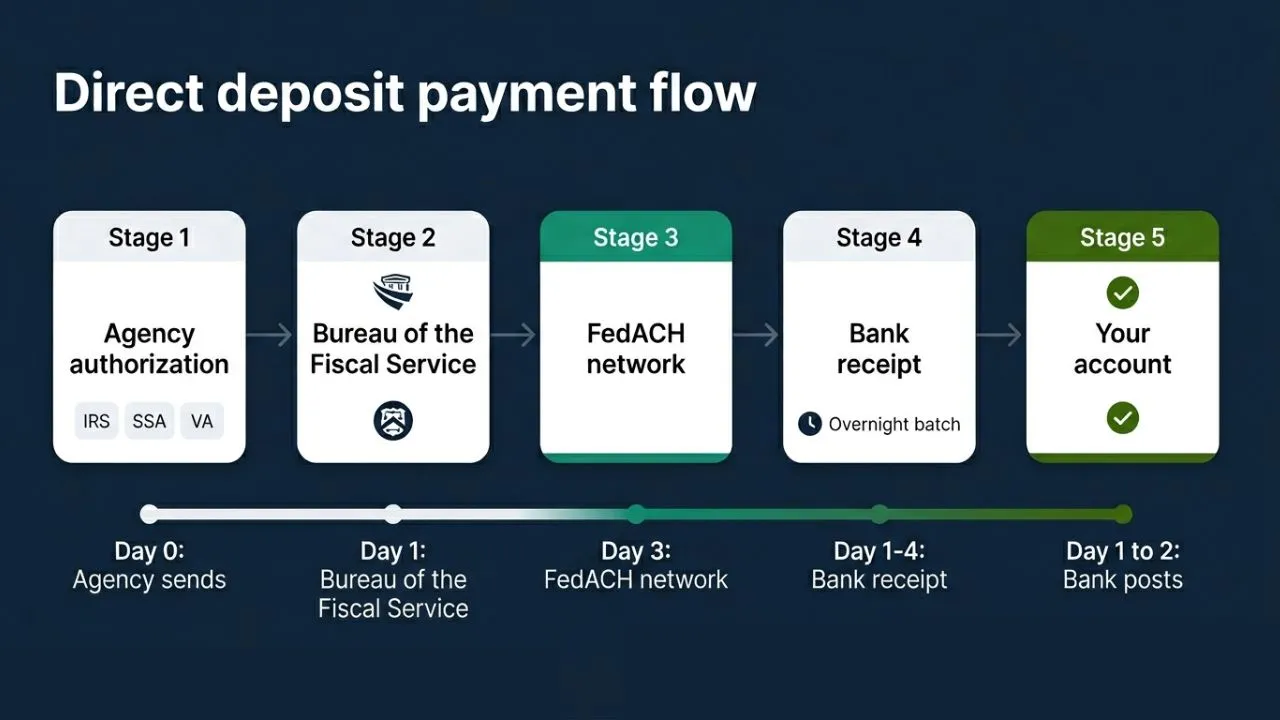
When the Internal Revenue Service marks a refund as issued, it triggers a Treasury transmission sequence. The payment authorization moves to the Bureau of the Fiscal Service. From there, a standardized Treasury payment system enters the federal disbursement pipeline.
Most refunds travel through the Automated Clearing House network. ACH settles in multiple daily windows, including early morning cycles that complete before retail banking systems open. Fedwire and ACH, by contrast, close at different times, which highlights how each federal rail operates within defined boundaries.
The Bureau of the Fiscal Service outlines refund sequencing and settlement coordination in its Green Book guidance. Transmission, however, does not create an available balance.
Banks receive incoming credit files hours before customers see ledger updates. Internal systems reconcile totals, confirm net settlement positions, and validate reserve sufficiency. Only after those checks conclude does the retail posting cycle open.
The 8:00–9:00 AM Reconciliation Band
Most U.S. banks finalize overnight credits between 8:00 and 9:00 AM Eastern Time. This settlement window timing follows ACH batch reconciliation and reserve account balancing at the Federal Reserve.
ACH files settle through designated Federal Reserve cycles. Once settlement completes, each institution’s core processor calculates its net debit or credit position. If the bank carries a net debit exposure, treasury teams ensure sufficient reserve balances before releasing customer funds.
The Federal Reserve details ACH operating schedules and settlement timing through FRB Services. By 6:30 AM, your refund may already sit inside the bank’s inbound queue. The retail ledger waits for reconciliation closure.
Inside the U.S. money movement system, federal credits settle beside payroll and corporate flows. Posting requires coordinated confirmation across treasury desks, core processors, and reserve accounts.
Money moves first. Visibility follows.
Clearing Queues and Reserve Discipline
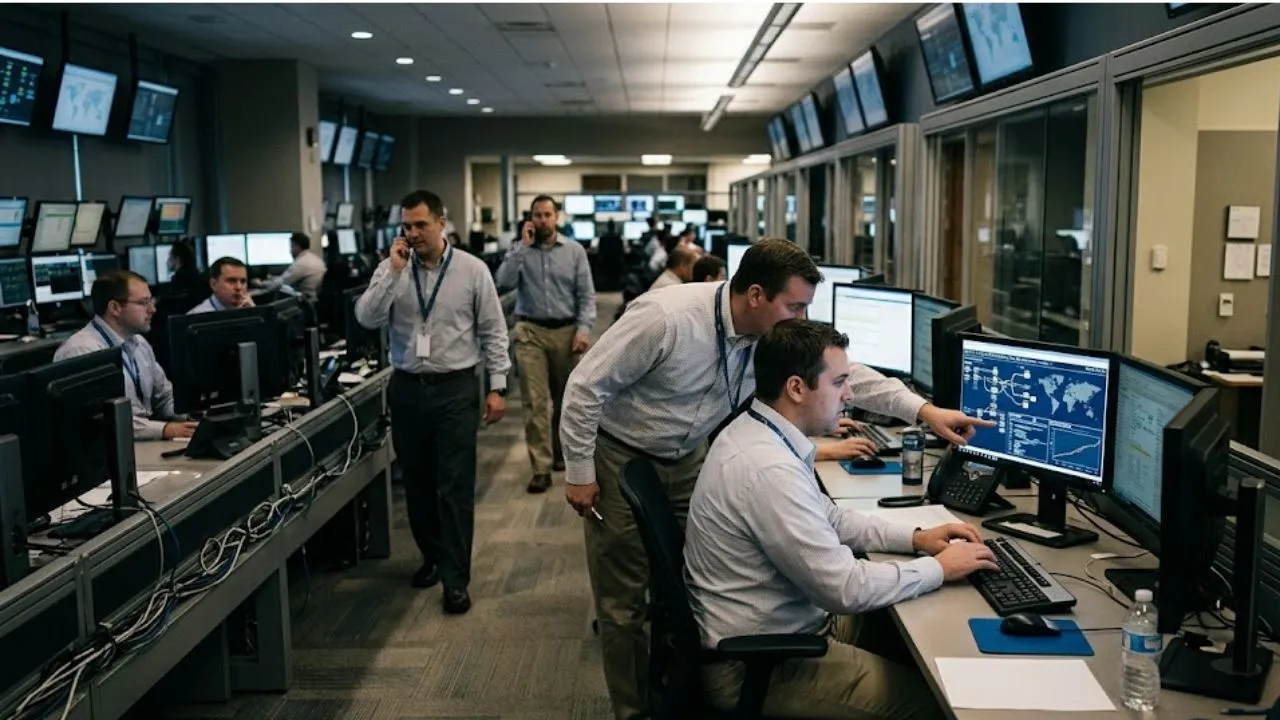
Overnight processing generates structured clearing queues. Each incoming file carries a settlement tag, effective date, and reserve impact. Treasury teams monitor institutional risk positioning before authorizing retail release.
Reserve verification protects against daylight overdrafts at the Federal Reserve. Institutions manage intraday liquidity tightly during peak refund cycles. A concentrated refund date can produce large net credit inflows, yet outgoing ACH debits, card settlements, and corporate wires must offset cleanly.
Federal holiday liquidity adds another layer. When a refund date precedes a long weekend, liquidity desks may widen review intervals to prevent reserve misalignment during reduced operating hours.
This discipline rarely appears in consumer-facing explanations. Yet it determines why one institution posts shortly after 8:00 AM while another completes release closer to mid-morning. The timing difference does not reflect uncertainty about your refund; it reflects internal sequencing designed to maintain balance integrity.
Why Posting Times Differ
Posting time reflects internal operating philosophy layered onto federal settlement. Some banks release funds immediately after ACH confirmation. Others stage release until automated liquidity thresholds and risk screens finalize, often leaving funds pending before clearing.
Core processors and liquidity tolerance differ across institutions. Large national banks often run multiple posting waves across time zones. Smaller institutions may rely on centralized batch systems managed by third-party processors.
During heavy refund periods, automated fraud analytics also review incoming credits. That screening can extend posting slightly, even after settlement finalizes. A 90-minute delay feels significant at the kitchen table. Within institutional processing standards, it remains routine.
Returning to the Household View
By mid-morning Eastern Time, most reconciliations close and balances update. Notifications trigger. The expected credit appears.
If your bank posts tomorrow instead of this morning, the underlying system has still functioned. The refund moved through Treasury transmission, Federal Reserve settlement, reserve balancing, and internal verification before becoming usable.
The IRS refund date marks federal release, not retail display. A next-day posting reflects sequence, not failure. Liquidity timing shapes perception more than policy does. Settlement does not follow emotion. It follows sequence.
Author