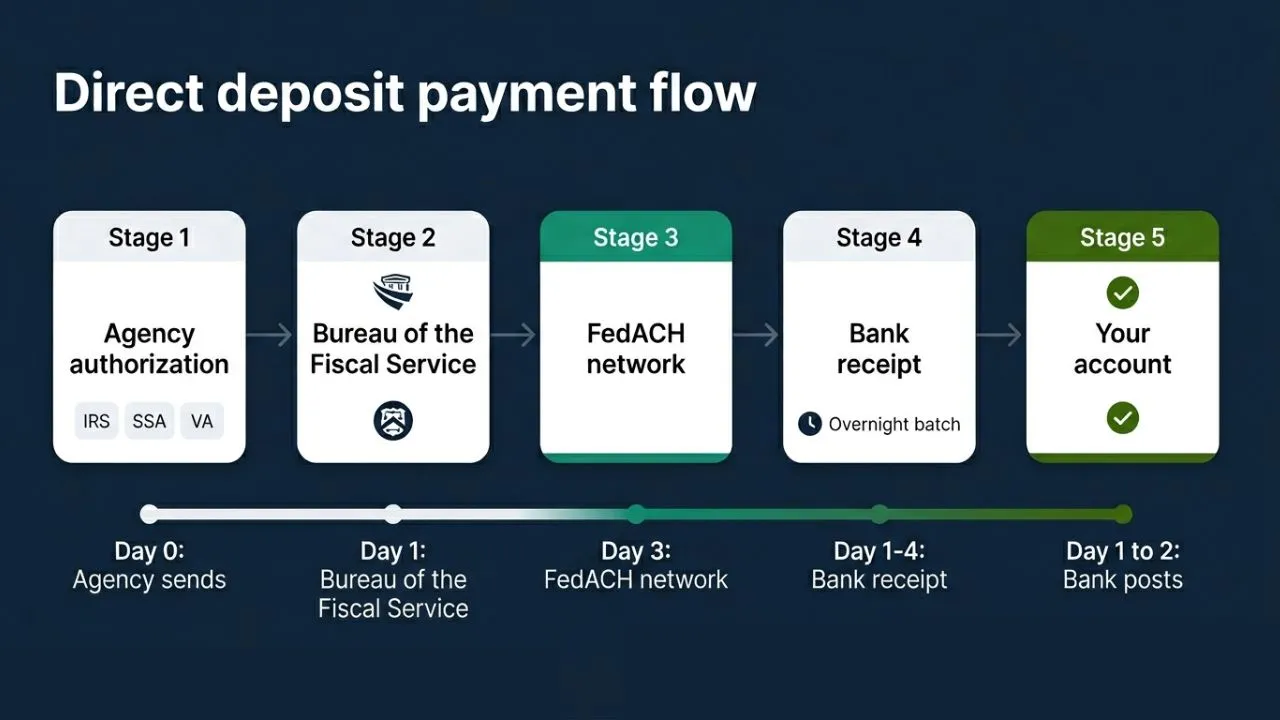
At 8:12 a.m., you refresh your banking app. Payroll ran yesterday. The entry shows same-day ACH. Yet the available balance mechanics have not changed. That pause feels personal. It rarely is. Same-day ACH promises acceleration. It does not promise immediacy. The difference lives inside the coordination layers of U.S. money movement.
The Speed Upgrade That Preserved Settlement Discipline
Same-day ACH shortened submission windows. It did not remove clearing protocol.
Under standard ACH, originators transmit files in scheduled batches. Same-day ACH added additional cutoff windows, allowing eligible payments to settle within the same business day. However, each file still enters a managed queue before settlement finality.
Settlement requires more than transmission. Receiving institutions verify reserve positions before releasing funds. That balance sheet discipline anchors the system. ACH transactions clear through the Federal Reserve’s Fed ACH service under defined processing windows.
The timeline appears compressed from the outside. Internally, risk positioning gaps still govern release timing.
The 8:00–9:00 AM Availability Window
Most posting activity clusters between 8:00 and 9:00 a.m. Eastern Time. That settlement window timing reflects overnight reconciliation cycles, not marketing speed.
Banks close their prior ledger late in the evening. Before dawn, they receive ACH settlement reports detailing net debit and credit positions. Internal systems then match inbound files against expected totals.
Treasury payment sequencing, payroll credits, and return files all enter sequencing logic during this early morning window. Institutions reconcile ACH batch totals against their National Settlement Service position before broad availability.
The file may have settled hours earlier. Availability waits for confirmation. Households see a pending before clearing credit. Balance integrity governs when that credit becomes usable.
Clearing Queues and Reserve Balancing
Speed depends on queue placement and reserve posture. When an originator submits a same-day ACH file before the cutoff, the Federal Reserve processes it within the designated window. Yet receiving banks still assess intraday liquidity exposure before updating available balances.
ACH settles on a net basis. Each bank monitors this net position carefully before morning release. Liquidity managers compare incoming credits with scheduled outgoing obligations. If projected reserve levels tighten temporarily, they may hold postings briefly until final settlement confirmation arrives.
This is not delay. It is controlled sequencing. The Bureau of the Fiscal Service applies similar coordination through its payment systems. Those federal flows increase early morning volume, intensifying the need for precise reserve monitoring.
Fedwire Contrast and Intraday Positioning
Many assume same-day ACH functions like Fedwire. It does not.
Fedwire settles transactions individually with immediate finality. However, Fedwire liquidity timing also operates within defined hours. That operating span shapes intraday liquidity planning.
Gross settlement differs from net settlement. Under Fedwire, each payment moves reserves instantly between institutions. Under ACH, reserves adjust after net calculation. If a bank anticipates significant outgoing wires early in the day, liquidity managers protect reserves before retail postings expand available balances.
During that interval, retail credits may appear pending even though settlement has occurred. Posting follows liquidity sequencing, not notification timing.
Pre-Holiday Compression and Buffer Management
Timing pressure intensifies before federal holidays. Same-day ACH windows still operate, but upcoming non-settlement days compress institutional planning. Risk managers raise federal holiday liquidity buffers ahead of extended closures.
Pre-holiday positioning often leads to conservative early morning release behavior. Banks validate reserve projections more carefully before expanding available balances. This is particularly noticeable during a weekend banking slowdown, where liquidity desks stress-test projected ACH inflows against expected wire outflows.
Why Faster Still Feels Delayed
Same-day ACH accelerated submission. It preserved settlement discipline. Transmission speed improved, but clearing protocol remained. Reserve balancing still anchors availability.
That distinction explains the 8:12 a.m. experience. The file may have settled overnight, but internal controls required final liquidity confirmation. Households interpret the gap as malfunction; institutions interpret it as prudent coordination.
Returning to the Balance Screen
When you refresh your account shortly after 8:00 a.m., you are watching reconciliation in motion. Systems are matching ACH totals. Reserve accounts are adjusting. Liquidity managers are confirming exposure.
Same-day ACH compresses clearing cycles. It still respects settlement discipline. By 8:45 a.m., most credits have posted. The coordination layer simply remained invisible. Posting follows balance integrity, not speed marketing.
Author