

The Social Security Administration has scheduled today’s payment for Group 3 recipients, those born on the 21st through 31st of any month. Most direct deposits post between midnight and 9 AM ET; if your bank account has not updated yet, the steps below tell you exactly what to check first.
Social Security Group 3 payments are deposited today, Wednesday, April 22, 2026, for the roughly 20 million Americans born between the 21st and 31st of any month. If you checked your bank this morning and the money has not appeared, you are not alone, and in most cases, the deposit is still coming. Here is what the delay actually means, and the four steps to take before you call anyone.
The Social Security Administration determines your eligibility and benefit amount, but the U.S. Treasury handles the actual disbursement through the Federal Reserve’s FedACH network.
That distinction matters because the posting time you see in your bank app depends not only on when SSA released the file, but on how quickly your individual bank processes incoming ACH credits once they arrive from Treasury.
Why Your Payment May Not Be Showing Yet
The SSA transmits payment files to Treasury ahead of the scheduled date, but your bank sets its own internal schedule for when that ACH credit posts to your account balance. Most banks display deposits between midnight and 9 AM ET on the payment date.
Some smaller banks and credit unions post later in the morning or early afternoon. The money has typically left the federal system and is sitting in your bank’s processing queue.



If you bank with an early-pay institution such as Chime or Varo, your payment may have actually arrived Monday or Tuesday, up to two days ahead of the official Wednesday date. Log in and check your transaction history for April 20 or 21 before assuming a delay. Some recipients get so used to the early post that the official date catches them off guard.
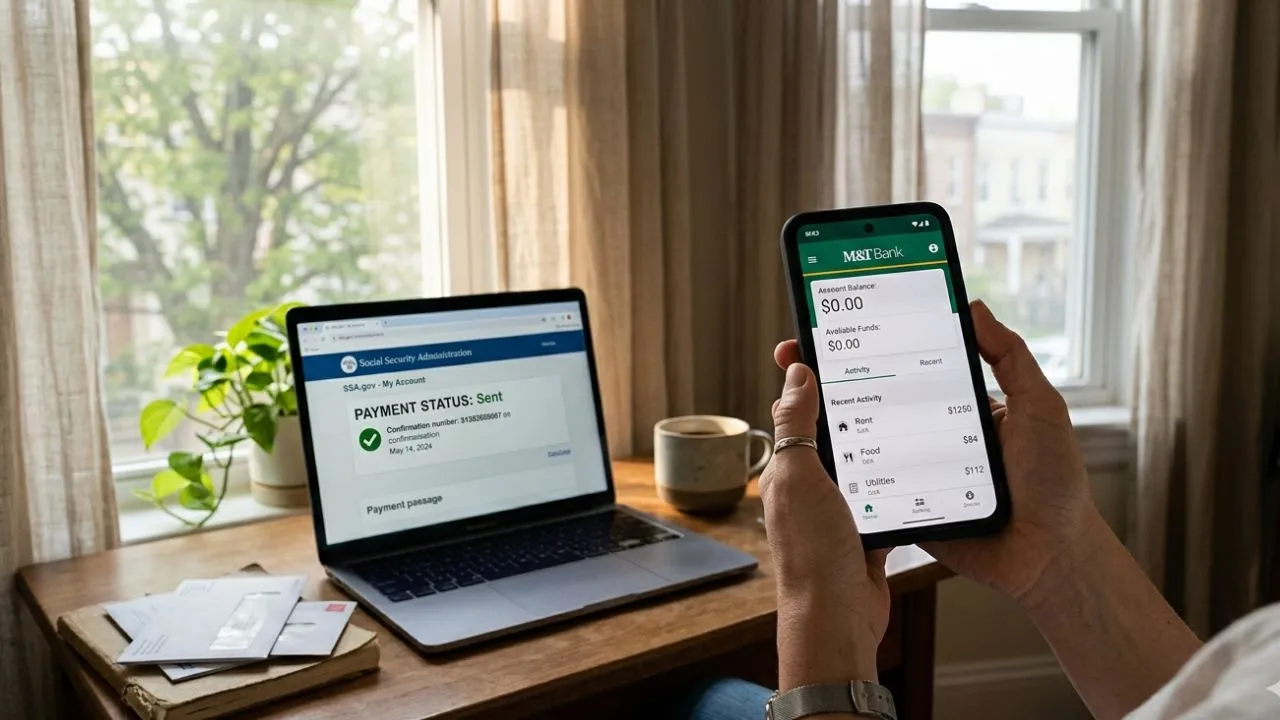
Pending status in your banking app is not a problem. “Pending” means the credit has been received by your bank and is queued for final posting. It will reflect in your available balance once the bank completes processing, which typically happens the same day. You do not need to contact anyone while a payment shows as pending.
Note: “Pending status is not a missing payment. It means the money has arrived at your bank and is waiting to post to your balance, often within hours.”
What the Payment Schedule Actually Says
The SSA uses a three-group birthday-based schedule for retirement, disability, and spousal benefits. Group 1, birthdays on the 1st through 10th, received payment on April 8. Group 2, birthdays on the 11th through 20th, received payment on April 15. Group 3, covering the 21st through 31st, receives payment today, April 22. The full payment dates 2026 calendar confirms this schedule through December.
Understanding the money movement system behind the payment helps remove the anxiety of a delayed morning post. Treasury submits payment files to FedACH before the settlement date, and FedACH settles the transactions on the effective date today. Your bank’s posting window is the last step in that chain, not an indication that anything went wrong upstream.
The $2,079 payment article covers how SSA calculates the average April 22 benefit amount and what affects your individual figure. If your amount looks different from previous months, that article explains the most common reasons, including COLA adjustments and Medicare premium deductions.
When to Actually Contact Someone — and Who to Call
The SSA asks recipients to wait three business days from the scheduled payment date before reporting a missing deposit. For today’s April 22 payment, that three-day window means you should not call until Monday, April 27, 2026.
Calling before that date typically results in an SSA representative directing you to wait, because the payment may still be in transit or held at your bank.
Before you call the SSA, check two things. First, confirm your direct deposit account information is correct by logging into your account at ssa.gov/myaccount. A mismatch between the account number on file and your current account is the most common reason a payment does not arrive.
Second, call your bank directly and ask whether an ACH credit from the U.S. Treasury is pending or was returned. Banks sometimes return payments due to account mismatches without notifying you first.
One important policy change took effect on April 14, 2026: the SSA no longer accepts direct deposit changes made exclusively by phone. If your account information needs updating, that change must now be made through ssa.gov/myaccount, in person at an SSA field office, or in writing.
This change was made to reduce fraud. If you call the SSA and ask to update your banking information over the phone, the representative will direct you to one of these alternatives. The pending payment timing guide covers how this policy change affects the timing of first-payment processing for accounts that have recently been updated.
What You Should Do Now
- Check your full transaction history for April 20–22. Early-pay banks like Chime and Varo may have posted your payment one or two days before today’s official date. Look for a credit from “Social Security” or “U.S. Treasury” in those entries.
- If your app shows “pending,” wait. A pending status means the ACH credit has arrived at your bank and is being processed. It will post to your available balance today. No action is required while a payment is in pending status.
- If nothing appears by Wednesday evening, call your bank first. Ask whether an ACH credit from the U.S. Treasury was received, is pending, or was returned. Your bank can confirm this faster than the SSA.
- If your bank confirms no payment was received, wait until Monday, April 27. Then contact the SSA at 1-800-772-1213 (TTY: 1-800-325-0778), Monday through Friday, 8 AM to 7 PM local time. Before calling, verify your direct deposit information.
- Log into your SSA online account to double-check your payment and banking details at ssa.gov/myaccount .
For most recipients, the Group 3 payment deposited today will appear in accounts without any action required. The SSA’s official payment calendar confirms April 22 as the correct scheduled date. If you believe your benefit amount itself is incorrect, separate from the timing of its arrival.
The appropriate channel is the SSA’s contact and appeals process, which is a different path from a missing payment inquiry. The payment deposited today should resolve on its own for the overwhelming majority of recipients by the end of the business day.