July 1, 2026 • 2:20 PM ET
Banks are currently posting overnight ACH batches between midnight and 6 AM. If your direct deposit has not appeared yet, check your bank app again after 8 AM before taking any action.
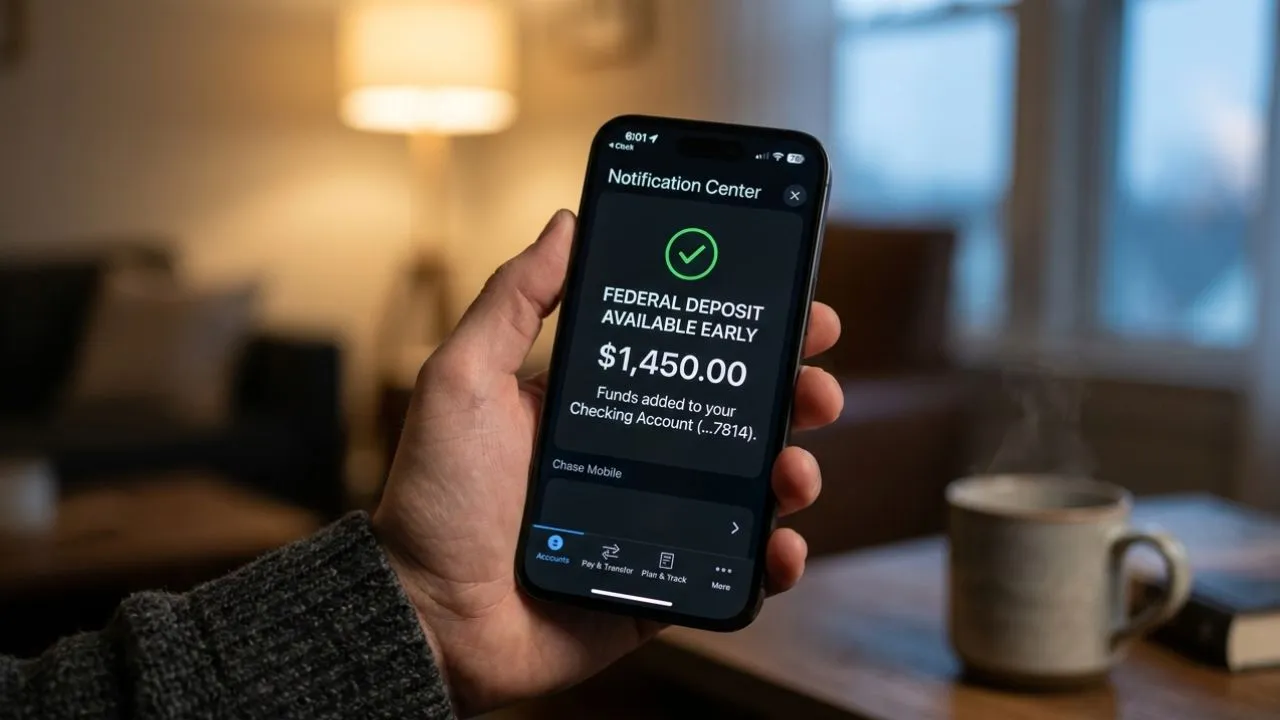
You and your coworker received the same direct deposit from the same employer. You checked your account at 6 AM and saw zero. They checked theirs and saw the money. You both have accounts at different banks. Same payment, same day, different timing.
This happens to millions of Americans every pay cycle and every federal payment cycle, and the reason is almost never what people assume. The ACH network moves over 31 billion payments per year in the United States. None of those payments move in real time.
Every direct deposit, every federal benefit, every payroll credit flows through a batch processing system that groups payments into scheduled windows, settles them between financial institutions, and then hands them off to individual banks to post to individual accounts. The gap you experience between when a payment is sent and when it appears in your balance lives entirely in that system.
What You Need to Know Right Now
- Direct deposits are not instant. The ACH network processes payments in scheduled batch windows, not in real time. Your deposit waits in a queue until the next available window processes it.
- Your bank determines when the money appears. Two people receiving the same payment from the same originator can see it hours apart because their banks run posting cycles at different times.
- Most deposits post between midnight and 6 AM. The bulk of direct deposit activity happens in the overnight window, which is why most people see their money when they check their phones first thing in the morning.
- Fintech apps often post earlier. Apps like Chime and Varo recognize certain originator codes and advance funds to your balance before the ACH settlement technically completes.
- Federal agencies send payment files on different schedules. IRS, SSA, VA, and other agencies each release their payment files at different points in the week, which is why federal payment deposit days vary by program.
- A missing deposit at 7 AM is not a red flag. Wait until after 9 AM on the expected posting day before concluding your direct deposit is delayed.
This guide explains how that system works from end to end, why the same deposit can arrive hours apart at two different banks, when each type of federal payment typically hits, and what to do if your direct deposit does not arrive on schedule. For a broader overview of how the entire U.S. payment infrastructure operates, see How the U.S. Money Movement System Works.
How Direct Deposits Process Through the ACH System
A direct deposit is not a wire transfer. It does not move money instantly from one account to another. It is an ACH credit entry, which means it travels through a batch processing system that was designed for high-volume, scheduled payments rather than real-time individual transfers.
The process begins when an originator submits a payment file. Originators include the U.S. Treasury, employers, pension administrators, and government agencies. The originator assembles all of its payment entries for a given cycle into a single file and submits that file to an ACH operator.
The two ACH operators in the United States are FedACH, which is operated by the Federal Reserve, and the Electronic Payments Network, a private operator. Details on FedACH’s operating schedule and settlement windows are published at federalreserve.gov.
The ACH operator does not process that file the moment it arrives. It holds the file until the next scheduled batch processing window. Processing windows run at set intervals throughout the business day, typically multiple times between early morning and early evening on business days.
When a window opens, the operator processes all files in the queue, settles the net amounts between originating and receiving financial institutions, and forwards the individual credit entries to each receiving bank.
Your bank then receives a file containing your credit entry along with every other ACH credit destined for its customers in that batch. The bank does not post each credit the moment it receives the file. It processes the entire file in its own internal posting cycle, which for most banks runs between midnight and 6 AM. Your account balance updates when that posting cycle completes.
The result is a four-party chain: originator sends the file, ACH operator processes it in a batch window, your bank receives it from the operator, and your bank posts it to your account in its overnight cycle. Every delay you experience in receiving a direct deposit lives in one of those four stages.
Why Your Coworker Got Paid Before You
The answer is almost always the bank, not the payment. When your employer or a federal agency sends a payroll or benefit file to the ACH operator, that single file contains payment entries for every employee or recipient in the batch. The ACH operator processes the entire file in one window and forwards each credit entry to the recipient’s bank simultaneously. Every bank receives its portion of the file at the same moment.
What happens next depends entirely on each individual bank. Large national banks such as Chase, Bank of America, and Wells Fargo run multiple ACH processing cycles per day.
They may post incoming credits during an overnight window, an early morning window around 5 to 6 AM, and in some cases a midday window for files received after the morning cutoff. If your bank runs multiple posting windows, you may see your deposit as early as midnight.
Smaller banks, regional banks, and many credit unions run a single overnight ACH posting cycle, typically between 11 PM and 5 AM. If your deposit file arrived at that bank after the cycle cutoff for that night, it holds until the following night’s cycle and posts the next morning.
Fintech apps and neobanks including Chime, Varo, Current, and similar services operate differently. Many of these platforms monitor incoming ACH files for payment entries and advance the funds to your balance before the ACH settlement technically completes.
They recognize certain originator codes, such as those used by federal agencies and major payroll processors, and release the credit early as a service feature. This is why Chime users often report seeing federal benefit deposits up to two days before the scheduled date.
The practical result is that two people receiving an identical direct deposit from an identical originator can see it anywhere from midnight to 9 AM on the posting day, and in some fintech cases even earlier. The difference is entirely in how and when each bank processes incoming ACH files. The payment itself is identical.
For a complete explanation of why your balance shows zero even after a payment was sent, the Federal Payment Sent But Balance Zero guide walks through every stage of the ACH journey in detail.
The Overnight Processing Window and Morning Posting Waves
The overnight ACH window is the primary direct deposit processing event for the U.S. banking system. Understanding when it runs and why it is structured this way explains the timing most people experience.
The Federal Reserve’s FedACH system runs settlement windows throughout the business day and into the evening. The largest volume of direct deposit files, particularly payroll and federal benefit files, is submitted by originators in the afternoon and early evening hours before a pay date.
These files clear in the final settlement windows of the business day, typically between 8 PM and midnight. Receiving banks accumulate the incoming ACH credits from these windows and load them into their overnight posting cycle.
Most banks run their primary overnight posting cycle between 10 PM and 3 AM. This cycle processes all accumulated incoming ACH credits and updates individual account balances. The result is that the majority of direct deposit recipients see their money when they first check their accounts in the morning, typically between 5 AM and 8 AM, because the posting cycle completed while they were sleeping.
A second posting wave occurs at many banks between 8 AM and 9 AM. This wave catches ACH credits that arrived in early morning FedACH settlement windows after the overnight cycle had already closed. If your deposit was not in the overnight batch, this second wave is the next opportunity for your balance to update.
A smaller number of banks post ACH credits continuously throughout the day as files arrive, rather than batching them into overnight and morning windows. These banks are typically larger institutions that have invested in real-time or near-real-time ACH processing infrastructure. If you bank with one of these institutions, your deposit can appear at any point during business hours on the expected day.
The practical implication is straightforward. If your direct deposit has not appeared by 6 AM on the expected day, check again after 9 AM before contacting your bank or the payment originator. Most gaps that exist at 6 AM resolve in the second morning wave without any action required.
Federal Payment Deposit Waves by Agency
Federal government agencies each operate on distinct payment release schedules. The Bureau of the Fiscal Service, which disburses all federal payments through the U.S. Treasury, publishes disbursement schedules at fiscal.treasury.gov. Understanding when each agency sends its files explains why different federal payments arrive on different days of the week.
IRS tax refunds are released in batches primarily on Monday through Wednesday of each week during filing season. The largest refund batches typically release on Wednesday, which is why many taxpayers see their deposits post on Wednesday evening or Thursday morning. Smaller batches release Monday and Tuesday.
The IRS does not release refund batches on weekends. For a detailed explanation of the IRS refund timeline from approval to deposit, see the IRS Refund Approved But Bank Shows Zero guide.
Social Security retirement and disability benefits follow a Wednesday, Thursday, or Friday payment date depending on the recipient’s birthday and enrollment date. The SSA releases its payment files on the Thursday or Friday before the scheduled payment date. For most recipients, the payment file is sent on Friday for a Monday posting. The full SSA benefit payment calendar is published at ssa.gov.
SSI payments are scheduled for the first of each month. When the first falls on a weekend or federal holiday, the SSA releases the payment early so it posts on the last business day before the first. An October 1 payment that falls on a Saturday would post on Friday, September 30.
VA disability compensation is scheduled for the first of each month. Treasury releases the VA payment file so that the ACH credit posts to recipient accounts at or before midnight on the last day of the prior month. Most VA recipients see their deposit appear late on the final day of the previous month during the overnight window.
Federal employee salaries are paid on a biweekly schedule. The Treasury releases these files in advance so that posting occurs on the scheduled payday. Most federal employees see their direct deposit in the same overnight window pattern as private sector payroll, with deposits appearing between midnight and 6 AM on payday.
Each agency operates on its own schedule, which is why checking the specific agency’s payment calendar is more reliable than estimating based on when other federal payments arrived.
What You Should Do Now
A direct deposit that has not appeared yet is almost always still in one of the four processing stages described above. Work through these steps before escalating.
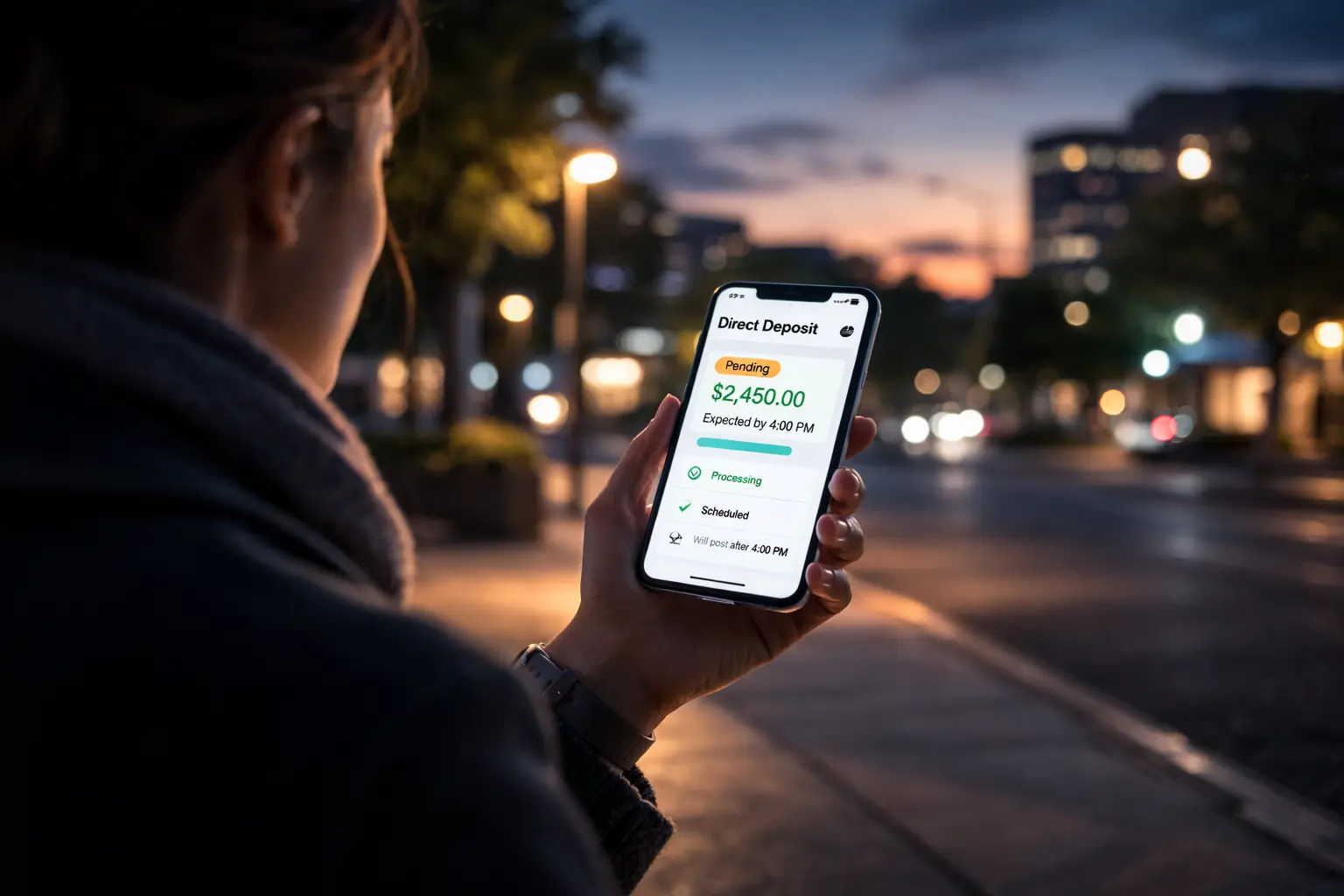
Step 1: Check your bank app for a pending or processing transaction. Many banks display incoming ACH credits as pending before they post to your available balance. A pending entry confirms the credit is in your bank’s possession and will post in the next cycle. If you see pending, no further action is needed.
Step 2: Understand your specific bank’s posting schedule. If you are unsure when your bank runs its ACH posting cycles, check the bank’s FAQ page or call the customer service number on the back of your debit card.
Ask specifically: what time does the bank post incoming ACH direct deposits and does the bank run a second posting window in the morning. Knowing your bank’s schedule eliminates the guesswork on future pay cycles.
Step 3: Wait until after 9 AM on the expected pay date before concluding the deposit is delayed. If the deposit is not showing at 6 AM, it may be in the second morning wave. Most gaps that exist at early morning resolve by 9 AM without any action.
Step 4: If no pending transaction appears by the morning after the expected payment date, contact your bank. Ask whether an incoming ACH credit from your originator has been received and is pending posting. The bank can confirm whether the credit is in their system even if it has not posted to your available balance yet.
Step 5: For federal payments, check the relevant agency portal before calling the agency. For IRS refunds, check IRS Where’s My Refund at irs.gov/refunds. For Social Security, log in to your account at ssa.gov. For VA payments, check VA.gov or eBenefits.
These portals confirm whether the direct deposit was sent and provide the effective date. If the agency portal shows a sent status but your bank has no record of any incoming credit after five business days, contact the agency directly to initiate a payment trace.
Conclusion
Direct deposit timing is a system, not a mystery. The ACH network processes payments in scheduled batch windows. Your bank posts those credits in its overnight and morning cycles. Federal agencies send their payment files on agency-specific schedules. The combination of those three factors determines exactly when a direct deposit appears in your account.
Understanding that system means you know when to wait, when to check the pending section, and when to call your bank. Most direct deposit gaps resolve before 9 AM on the expected posting day. Following these steps in order ensures your direct deposit question gets the right answer at the right time.
What You Should Do Now
- Check your bank app right now for a pending or processing transaction in addition to your available balance.
- If nothing is showing, note the time and wait until after 9 AM on the expected date before taking further action.
- Call your bank’s customer service line and ask specifically what time they run ACH posting cycles. Record the answer for future reference.
- For federal payments, log in to the relevant agency portal and confirm the payment was sent and note the effective date before calling anyone.
- If the expected direct deposit is more than one full business day late, your bank has no pending entry, and the agency portal confirms a sent status, contact the agency and request a formal ACH payment trace.
Editorial Note: Investozora is an independent news publication. This content is for informational purposes only. For official guidance, please visit the relevant .gov website.