
What You Need to Know Right Now
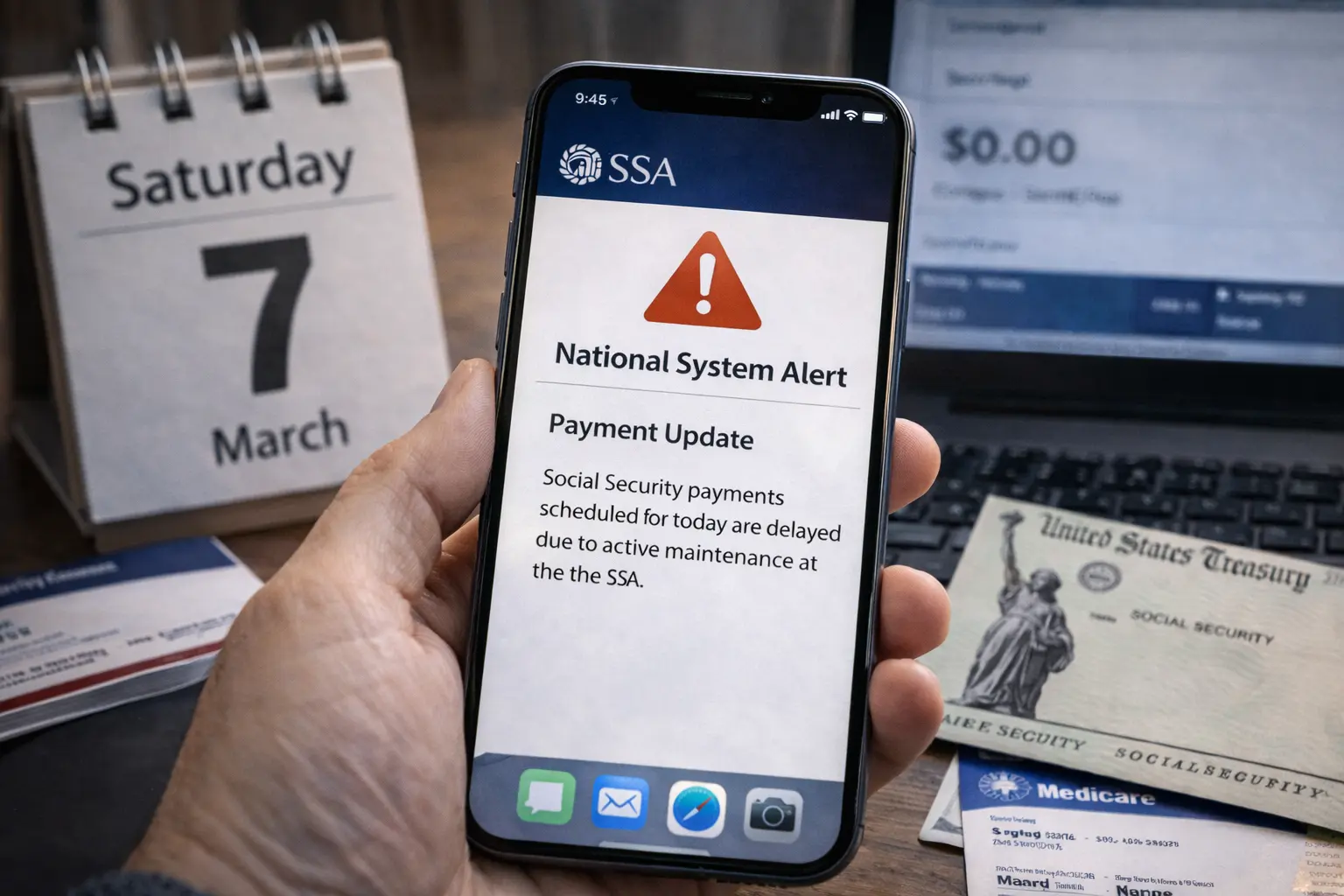
- The SSA national system launched March 7, 2026, and includes two new tools: the National Appointment Scheduling Calendar (NASC) and the National Workload Management system (NWLM).
- More than 75 million Americans receiving Social Security and SSI benefits are affected, either directly through payment processing or indirectly through claims and account changes.
- Existing monthly payments are not being cut or stopped. But new claimants, pending applicants, and those with open cases face longer or unpredictable wait times during the transition.
- The SSA lost approximately 7,000 employees in 2025 through voluntary incentives. The national system is the agency’s primary response to managing that workforce reduction.
- The 2026 Social Security COLA increased average retirement benefits by 2.8%, or about $56 per month — but Medicare Part B premiums rose to $202.90 per month, absorbing a significant portion of that increase.
- The SSA payment schedule by birth date remains unchanged. What is changing is how claims, appointments, and account issues are processed behind the scenes.
The Social Security Administration does not often make front-page news for restructuring its internal systems. But what happened on March 7, 2026, is the most significant operational change to Social Security in more than a generation and it affects every American who receives a benefit check, is waiting on a pending claim, or has ever had to call SSA to fix a problem.
The SSA national system is not a single piece of software. It is a complete overhaul of how the agency schedules appointments, assigns claims, and distributes work across its more than 1,200 field offices nationwide.
For decades, each of those offices operated as what SSA’s own chief of field operations called a “mini-SSA”, a semi-independent unit that handled its own local caseload, calendar, and workflow. That model is now gone.
In its place, two new systems, the National Appointment Scheduling Calendar and the National Workload Management system have centralized everything. If you apply for Social Security today, someone in Maine could handle your California claim.
If you schedule an appointment, it may be assigned to a technician three time zones away. And if your payment is pending, the delay may come not from your local office, but from a national queue that didn’t exist before this year.
This article explains the entire SSA national system from the ground up. By the time you finish reading, you will understand what changed, why it changed, who it affects, and what it means for your payment, your account, and your financial planning in 2026.
What the SSA National System Actually Is
The SSA national system is a two-part operational infrastructure that replaced the agency’s legacy local-office model on March 7, 2026. Understanding what each component does is the foundation for understanding every downstream effect on payments and accounts.
The first component is the National Appointment Scheduling Calendar, or NASC. Before March 7, scheduling an SSA appointment was entirely local. Your local field office controlled its own calendar, and your appointment was set based on when that office had availability.
Under NASC, the calendar is now national. The system schedules appointments based on technician availability across all U.S. time zones, not on geographic proximity. You can also self-schedule an initial claims appointment online through the NASC portal for the first time.
The second component is the National Workload Management system, or NWLM. Before March 7, your Social Security claim was processed primarily by your local office.
Under NWLM, claims flow into a national queue and are assigned to available SSA employees anywhere in the country based on their skill set, knowledge, and current workload. An employee in an underloaded office in one state may now process a complex disability claim from another state entirely.
Together, these two systems replaced what the SSA’s chief of field operations described in an internal memo as decades of operating as independent mini-SSAs.
The official rationale: the old model prevented specialization, limited the impact of technology, and produced regional backlogs that should not have been sustained.
According to a December 2025 SSA memo obtained by Federal News Network, both NASC and NWLM were described as “necessary to modernize appointment systems and provide a more balanced and consistent experience for both technicians and customers.”
The scale of this change is not theoretical. The SSA operates across more than 1,200 field offices and serves more than 75 million Americans through retirement, disability, SSI, and survivor benefit programs. Even an incremental transition at that scale produces measurable effects on the ground — and this transition is not incremental.
Why the SSA Made This Change in 2026
The SSA national system did not emerge from a strategic planning retreat. It was built in direct response to a workforce crisis that reached its peak in 2025.
Beginning in early 2025, the SSA lost approximately 7,000 employees through voluntary departure incentives — a reduction from a total workforce of roughly 60,000. That is a workforce reduction of more than 10 percent.
At the same time, the agency faced mounting pressure to cut 15 million field office visits in fiscal year 2026. The math was not working under the old local-office model. Some offices were overwhelmed. Others had available capacity. But the existing system had no mechanism to shift work between them.
The NWLM was specifically designed to solve this problem. By creating a national workload queue that routes cases to available employees regardless of geography, the agency can theoretically balance its remaining workforce more efficiently.
Employees in offices with lighter caseloads handle cases from offices that are backlogged. One analysis suggested that shifting 15 to 20 percent of cases through this system could reduce wait times in heavily loaded cities by several weeks.
The NASC addresses a parallel problem: appointment scheduling. Under the old system, a claimant in a high-demand urban office might wait months for an appointment while a nearby but less-used office had open calendar slots it could not share. NASC centralizes calendar management so available appointment times anywhere in the country can be offered to any applicant.
There is also a longer-term strategic dimension to these changes. The SSA has been under pressure to reduce its reliance on in-person service and shift more activity to digital channels. NASC enables 24/7 online self-scheduling for initial claims appointments.
The NWLM positions the agency to serve beneficiaries through centralized digital service teams rather than local office counters. The SSA is, in effect, rebuilding itself as a national digital-first agency rather than a network of local service offices.
Whether this transition succeeds depends entirely on execution. Experts across the spectrum — from labor economists to retirement policy analysts — have flagged the same core risk: large-scale system transitions at government agencies consistently produce short-term service disruptions even when the long-term outcomes are positive.
To understand how the SSA workload system affects your claim, it is essential to know which specific situations carry the highest risk.
Who Is Affected and Who Is Not
This is the section that matters most to the 75 million Americans currently receiving Social Security benefits. The effects of the SSA national system are real but uneven — and they fall very differently depending on your relationship with the agency.
If you are already receiving a monthly Social Security retirement benefit:
Your payment amount is not changing because of the national system. Your monthly direct deposit continues on the standard Wednesday schedule based on your birth date.
The 2026 COLA increase of 2.8% already went into effect in January. For most retirees, the national system transition is essentially invisible — unless you need to call SSA or change something about your account.
If you are filing a new claim for retirement benefits:
You are in the group most directly affected. Your application now enters the NWLM national queue. Your appointment is now scheduled through NASC, potentially with a technician who is not familiar with your state’s specific rules.
Processing timelines may be longer than historical averages during the transition period. Anyone planning to file in 2026 should file as early as possible and ensure their my Social Security account is up to date before submitting. Delayed Social Security checks are a documented risk for anyone with an open application during this transition window.
If you are a disability claimant:
SSDI applicants face the highest risk during this transition. Disability determinations are inherently complex and depend on medical documentation, state-specific criteria, and often multiple rounds of review.
The NWLM assigns these cases to employees based on skill set and availability — but SSA employees and policy experts have raised concerns about whether that process can fully account for the nuance required in disability cases.
The Substantial Gainful Activity threshold for non-blind disability claimants is $1,690 per month in 2026, and for those who are blind it is $2,830 per month, as published in the SSA’s current Red Book. Processing delays during this transition could push already long disability timelines further.
If you are an SSI recipient:
SSI benefits are not tied to the same work history as retirement benefits, and the federal benefit rate for 2026 is $994 per month for an eligible individual and $1,491 per month for an eligible couple, per SSA’s current published figures.
The national system transition affects SSI recipients primarily in how their accounts and eligibility determinations are handled. If you have a pending SSI eligibility review, the same delay risks apply as with any other open case.
If you are a survivor benefit recipient:
Your ongoing monthly payments remain unchanged. However, if you need to establish or update a survivor benefit — especially if you are a spouse of a public-sector worker affected by the Social Security Fairness Act — your case will now flow through the NWLM.
As of early 2026, SSA had paid $17 billion in retroactive payments to 3.1 million beneficiaries under the Fairness Act, but not all eligible recipients have received adjustments. If you believe you are owed a retroactive payment, contacting SSA directly remains essential but expect longer resolution timelines under the national system.
How the National System Changes Your Account
Your my Social Security account — the free online portal at ssa.gov — becomes significantly more important under the SSA national system. Understanding what changed and what to do about it protects your payment timeline.
Under the old local-office model, account issues were often resolved through direct contact with a local representative who knew your file. Under the NWLM, your case may be handled by someone who has never spoken with you before and is working from the national queue. This means your account must be complete, accurate, and verified before you ever need to interact with the system under pressure.
The SSA’s my Social Security account is the primary way the agency communicates COLA notices, benefit statements, and case status updates. As of 2026, COLA notices are delivered to the Message Center inside your account. You can also receive email or text alerts when new messages arrive.
This sounds like a convenience feature, and it is — but it is also the system that will notify you if there is a problem with your payment or account status. If you are not monitoring your account, you may miss a notice that requires a response.
There are also new digital verification requirements that intersect with the SSA national system. The agency has accelerated its push toward identity verification through digital channels.
Accounts that have not been recently verified may be flagged for review, which can temporarily affect account access and, in some cases, delay benefit issuance for new claimants. Anyone who has not logged into their my Social Security account recently should do so now, verify all contact information, and confirm that their direct deposit details are current.
If you experience a pending Social Security payment or a status flag on your account, the first step is always to check the Message Center inside your my Social Security account.
The second step is to call 1-800-772-1213, the SSA’s national number, Monday through Friday from 8 a.m. to 7 p.m. In-person services remain available at SSA field offices, though the agency has been actively encouraging digital and phone resolution first.
The 2026 Payment Numbers You Need to Know
The SSA national system transition is the structural story of 2026. But the financial story runs alongside it and the two interact in ways that affect your actual monthly deposit.
COLA and average benefit amounts:
The 2026 cost-of-living adjustment is 2.8%, per SSA’s official COLA page. For the average retiree, this means monthly benefits rose from approximately $2,015 to $2,071, an increase of about $56 per month. SSI recipients received the first COLA-boosted payment on December 31, 2025.
The Medicare offset:
That $56 monthly increase does not land in most retirees’ bank accounts in full. Medicare Part B premiums for 2026 rose to $202.90 per month — an increase of $17.90 from 2025. Since Part B premiums are deducted directly from Social Security checks for most beneficiaries, the net increase many retirees actually receive is significantly smaller than the headline COLA number suggests.
Maximum benefit amounts:
For workers retiring at full retirement age in 2026, the maximum monthly benefit is $4,152. For those who delayed claiming until age 70, the maximum is $5,251 per month. These figures reflect the 2026 COLA and earnings history maximums, per current SSA published rates.
The taxable wage cap:
The Social Security taxable wage base increased to $184,500 in 2026, up from $176,100 in 2025. Workers earning above this threshold pay no additional Social Security payroll taxes on income above the cap. This change does not affect current benefit amounts but will influence future benefit calculations for high earners.
Work credits:
The value of one Social Security work credit increased to $1,890 in 2026. Workers need 40 credits (roughly 10 years of work) to qualify for retirement benefits. Part-time workers or those with career gaps should verify their credit count through their my Social Security account.
Earnings limits for those still working:
The 2026 earnings limit for workers under full retirement age is $24,480. Benefits are reduced by $1 for every $2 earned above that amount. For workers reaching full retirement age in 2026, the limit is $65,160, with a $1 reduction for every $3 earned above the threshold. Once full retirement age is reached, the earnings test no longer applies.
The Social Security $5,181 maximum payment discussed in earlier reporting reflects the upper range of delayed-claiming benefit amounts. Understanding how the 2026 COLA interacts with your specific claiming strategy is key to knowing what to expect in your account.
What Could Go Wrong — and What to Watch
Every large-scale government system transition carries execution risk. The SSA national system launched with genuine structural promise, but it also launched into a workforce that is stretched thin, against a backdrop of reduced in-person services, and at a time when millions of Americans are still waiting on Fairness Act retroactive payments.
Risk one: Processing delays for new applicants.
The NWLM routes cases nationally, but staff still need to be trained on state-specific rules, paperwork logistics, and the nuances of complex cases.
Experts from the Center on Budget and Policy Priorities have publicly noted that the most important factor in the system’s success is whether employees receive the resources they need to handle cases from states they are not familiar with. If that training and support is insufficient, processing times for new claims will lengthen — not shorten.
Risk two: Overpayment errors.
SSA employees have raised internal concerns that the complexity of the new NWLM model increases the risk of overpayments. When a case is processed by someone unfamiliar with its full history, incorrect benefit calculations can occur.
Overpayments must be repaid to SSA, which creates a financial burden for beneficiaries who spent the money in good faith. If you receive an unexpectedly large deposit, do not assume it is correct. Verify through your my Social Security account or by calling SSA directly before spending it.
Risk three: Digital access barriers.
The SSA’s push toward digital-first service creates real access problems for elderly beneficiaries, those with limited English proficiency, and those in rural areas without reliable internet.
As of January 2026, SSA offices in Iowa, Michigan, Pennsylvania, Texas, West Virginia, and Wyoming were not offering in-person visits. The national system assumes digital capability that a significant portion of the beneficiary population does not have.
Risk four: Complexity for multi-state or public-sector cases.
The Social Security Fairness Act changes are still working through the system. Survivors and spouses of public-sector workers who have not yet received their retroactive payments face an environment where the agency is simultaneously processing those adjustments while transitioning to the NWLM.
Cases that require local knowledge of state pension systems and interaction rules are precisely the cases most at risk under a centralized national model.
Understanding the full picture of major Social Security changes in March helps beneficiaries understand the sequence of these changes and prepare accordingly.
What You Should Do Right Now
The SSA national system is now operating. Here is what every Social Security recipient or applicant should do in 2026 to protect their payment and their account.
Verify your my Social Security account.
Log in at ssa.gov, confirm your contact information, verify your direct deposit details, and check the Message Center for any pending notices. If you do not have an account, create one now — it takes minutes and requires no in-person visit.
If you are planning to file, file early.
The NWLM is processing claims in a national queue. Filing as early as your eligibility window opens, and filing with complete documentation, reduces your risk of a processing delay. Gather all required documents — work history records, birth certificate, tax information — before you submit.
If you have a pending claim, check its status.
Log into your my Social Security account and look for status updates. If your case has been pending longer than historical norms, call 1-800-772-1213 and ask for an update.
If you are a Fairness Act beneficiary who has not been paid, contact SSA directly.
A March 2026 letter from four U.S. Senators pressed SSA to complete retroactive payments for all eligible protected spouses back to January 2024. If you are a survivor or divorced spouse of a public-sector worker and have seen no adjustment, this requires direct follow-up, not waiting.
Budget for the Medicare offset.
If you are a Medicare enrollee receiving Social Security, your net COLA increase is smaller than 2.8% once the Part B premium increase is factored in. Plan your 2026 budget around your actual expected deposit, not the headline COLA figure.
Know the payment schedule.
The SSA birth-date-based Wednesday payment schedule has not changed. Beneficiaries born on days 1 through 10 receive payments on the second Wednesday of the month. Those born on days 11 through 20 receive payments on the third Wednesday. Those born on days 21 through 31 receive payments on the fourth Wednesday. SSI payments go out on the first of the month. If your payment does not arrive within three mailing days of the expected date, check your account before calling.
The Social Security 100K benefit cap and April check details are part of the broader 2026 payment picture that every recipient should track as the national system settles in.
What This Means For You
The SSA national system is the biggest structural change to Social Security operations in a generation. It does not reduce your monthly payment. It does not change the payment schedule. But it fundamentally changes how the agency serves you — and that matters if you ever need to interact with it.
If you are currently receiving benefits, your most important action is account maintenance. Log into your my Social Security account, verify everything, and monitor your Message Center. The national system routes problem resolution through digital channels first. Being digitally ready is no longer optional — it is the difference between a fast resolution and a months-long delay.
New claimants carry the highest risk in this transition period. Filing early, filing completely, and having a financial cushion while you wait are not optional precautions in 2026. They are essential planning steps given the current administrative environment.
The 2.8% COLA is real money — but the net amount is smaller than the headline. After the Medicare Part B premium increase, most retirees are keeping a portion of that increase. Understanding your actual monthly deposit, not just the COLA percentage, is the foundation of accurate 2026 financial planning.
Complexity favors preparation. The SSA national system is powerful in theory. In practice, it is a massive transition happening against a backdrop of workforce reductions, ongoing Fairness Act processing, and digital access gaps. The beneficiaries who navigate this environment best are those who understand the system, maintain their accounts, and act early rather than waiting.
The SSA national system is one part of a larger federal payment infrastructure. To understand how Social Security payments, IRS refunds, and federal money movement all connect, see our complete guide to the U.S. money movement system.
The SSA national system changed in 2026. Your response to that change does not have to be reactive. With the right preparation, the right account access, and the right timing, you can navigate this transition without disruption to your financial life.
Editorial Note: All benefit amounts, thresholds, and payment schedules reflect current 2026 SSA guidance and should be verified at ssa.gov before making financial decisions. The SSA payment schedule and Red Book figures referenced in this article are available directly at ssa.gov/redbook. For claims questions, contact SSA at 1-800-772-1213.