 Prefer Investozora on Google
Get real-time financial updates.
April 1, 2026 • 2:50 AM ET
Most approved IRS refunds post to bank accounts within 48 hours of the Code 846 date. If your balance still shows $0 today, your money is in transit through the ACH network and has not been lost or frozen.
You filed your taxes, waited, and finally saw the approved status in IRS Where’s My Refund. Then you checked your bank account and saw zero dollars.
That gap between the IRS approving your refund and the money landing in your account is one of the most searched questions during tax season, and it happens to tens of millions of taxpayers every year.
The IRS issues more than 100 million refunds annually, the vast majority by direct deposit through the ACH network. The word “approved” in the IRS portal refers to a specific internal action: the IRS has completed its review, assigned a refund issued date, and transmitted the payment file to the U.S. Treasury for disbursement.
The Treasury still has to release the file to the ACH network, the ACH network still has to process and settle it, and your bank still has to post the credit to your account.
What You Need to Know Right Now
- Approved does not mean deposited. When IRS Where’s My Refund shows approved, the IRS has finished processing your return and sent the payment file to the U.S. Treasury. The money has not reached your bank yet.
- Code 846 is the key date. On your IRS transcript, Code 846 shows the refund issued date. Your bank deposit typically posts one to two business days after that date.
- The status bar can disappear between approval and deposit. This is normal IRS system behavior, not an error or a hold on your refund.
- Weekends, holidays, and bank posting schedules all add time. An IRS refund approved on a Friday will not post to your bank until Monday at the earliest, and often Tuesday morning.
- PATH Act holds apply early in tax season. If your return includes Earned Income Tax Credit or Additional Child Tax Credit, the IRS cannot release your refund before mid-February by law.
- Wait one full business morning before calling anyone. Most approved refunds post to bank accounts within two business days without any action from you.
This guide explains every step of that IRS-specific journey, every reason the gap can run longer than expected, and the exact steps to take if your refund does not arrive on time. For a broader explanation of how all federal payments move through the ACH system, see How the U.S. Money Movement System Works.
What IRS Approved Means and Why Your Bank Still Shows $0
When IRS Where’s My Refund updates to approved, the IRS has completed processing your tax return and authorized the release of your refund.
On your IRS account transcript, this event appears as Code 846 with a refund issued date beside it. That date is not the date the money arrives in your bank. It is the date the IRS transmitted the payment file to the Bureau of the Fiscal Service at the U.S. Treasury.
The IRS refund has now left the IRS entirely. The agency has no further role in moving the money to your account. From this point, the payment travels the same ACH path as every other federal payment: Treasury releases the file to FedACH, FedACH schedules it in a batch processing window, interbank settlement transfers funds to your bank, and your bank posts the credit in its overnight processing run.

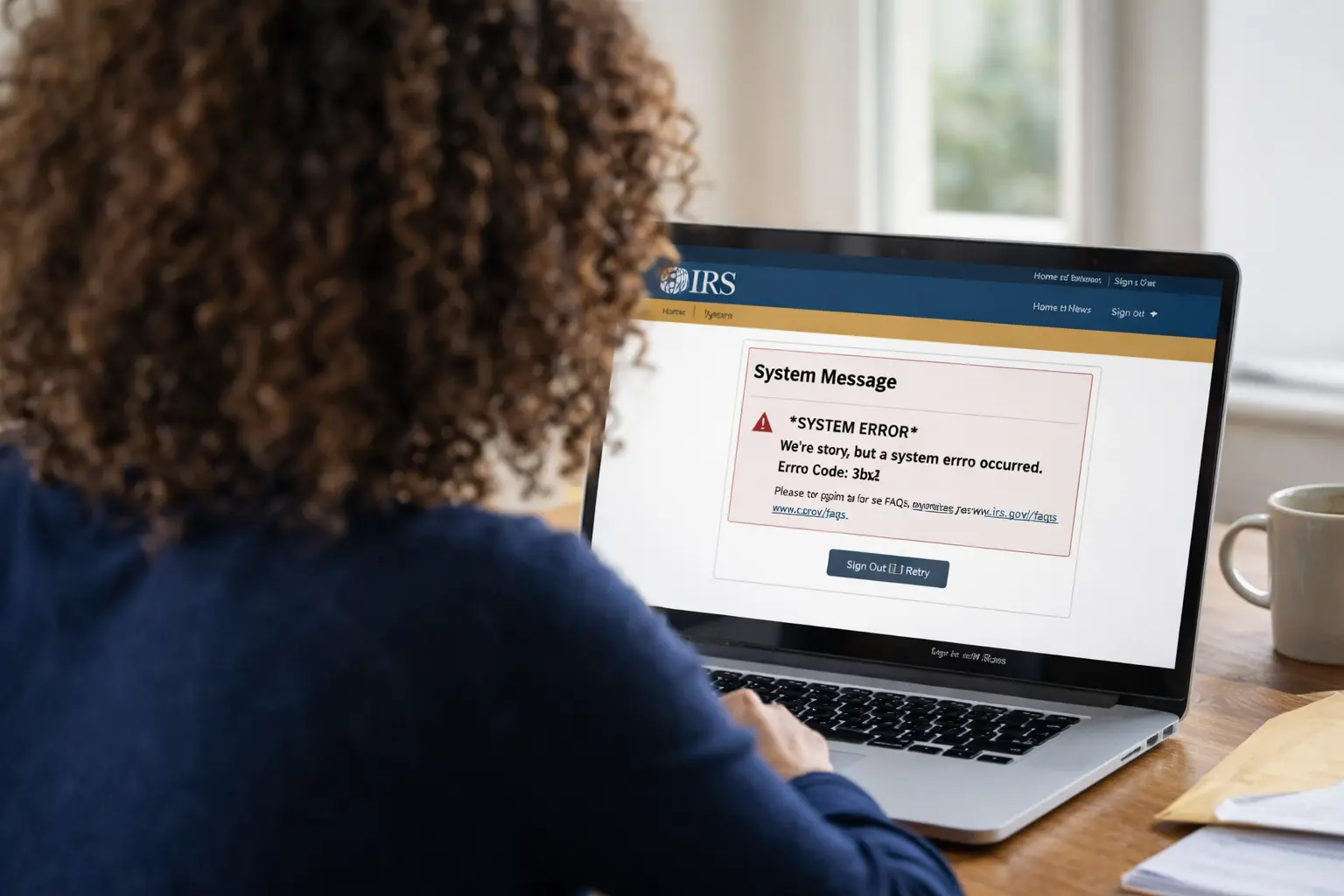
That journey typically takes one to two business days from the Code 846 date. During that entire window, your bank balance shows zero because no money has arrived at your bank yet.
The IRS has issued the refund. The banking system is processing it. Those are two separate events, and the gap between them is standard, expected, and not a sign that anything has gone wrong.
The Code 846 date on your transcript is the most precise indicator of when your deposit will arrive. If that date is a Wednesday, expect your deposit by Thursday morning. If that date is a Friday, expect your deposit by Tuesday morning at the earliest because the ACH network does not settle over weekends.
The IRS Refund Processing Timeline From Filing to Deposit
Understanding the full timeline from filing to deposit helps you identify exactly where your IRS refund is at any moment.
E-file accepted. The IRS acknowledges receipt of your return, typically within 24 to 48 hours of submission. This is confirmation only. Processing has not begun.
Return processed. The IRS completes its review of your return. This step covers identity verification, math checks, and any automated holds. The IRS standard for e-filed returns is 21 days from acceptance to refund issuance. Most returns process faster, but the 21-day window is the official IRS commitment.
Refund approved, Code 846 assigned. The IRS authorizes the refund and records it on your transcript with the refund issued date. IRS Where’s My Refund updates to the approved status. The current status of your refund at any point is available through the official IRS tool at irs.gov/refunds.
Payment file sent to Treasury. The IRS transmits the payment file to the Bureau of the Fiscal Service. Treasury then schedules the disbursement into the next available ACH release window. Disbursement schedules and operations are published at fiscal.treasury.gov.
Treasury releases the file to the ACH network. FedACH or the Electronic Payments Network receives the file and schedules it in the next batch processing window. This step typically completes within one business day of Treasury receiving the file.
Your bank posts the deposit. Your bank receives the incoming ACH credit and posts it during its overnight processing run, typically between midnight and 8 AM. Your account balance updates when that posting cycle completes.
The status bar in IRS Where’s My Refund sometimes disappears or resets between the approved and deposit stages. This is a known behavior of the IRS tracking system during the handoff from IRS to Treasury.
It does not mean your refund was cancelled, rejected, or flagged. Your Code 846 date on your transcript remains the authoritative record of your refund status regardless of what the status bar shows.
For the IRS’s own reporting on refund volumes and processing timelines each tax season, the IRS Newsroom publishes regular updates at irs.gov/newsroom.
Every Reason an Approved IRS Refund Has Not Deposited Yet
The refund was approved on a Friday. The ACH network does not process settlements on weekends or federal holidays. A Code 846 date of Friday means the earliest possible posting date at your bank is Monday morning.
Many taxpayers see Tuesday morning as the practical posting day because Monday’s ACH batch may not complete in time for Monday’s overnight posting run. This is the single most common reason for a two to three day gap after an approved status on a Friday.
The refund is in a batch window that has not cleared. The ACH network processes payments in scheduled batches throughout the business day. If your refund file arrived at FedACH after the last batch window of the day, it waits in queue for the next available window. This adds one business day but resolves without any action.
Your bank is holding the deposit until the effective date. The ACH file includes an effective date, which is the date your bank is authorized to post the credit. If Treasury set the effective date one day later than the release date, your bank will hold the credit until that date even if it has already received the file. You may see a pending transaction in your app but no available balance update until the effective date arrives.
Your bank processes ACH credits only once per day. Larger banks process incoming ACH files in multiple batches. Smaller banks, credit unions, and some regional institutions run a single overnight processing cycle. If your bank falls into this group and the ACH credit arrived after the nightly cutoff, it will not post until the following morning’s run.
The IRS converted your direct deposit to a paper check. The IRS issues a CP53E notice when it cannot complete a direct deposit. This happens when the bank account number on your return is incorrect, the account is closed, the bank rejects the ACH credit, or the refund amount exceeds certain thresholds for direct deposit to some account types.
If you received a CP53E notice, your refund is being sent by paper check to the address on your return. Paper checks take 5 to 10 business days from the issue date to arrive by mail. For more on CP53E notices and what to do, see the IRS CP53E article.
A PATH Act hold is delaying your refund. The Protecting Americans from Tax Hikes Act requires the IRS to hold all refunds that include an Earned Income Tax Credit or Additional Child Tax Credit claim until at least mid-February, regardless of when the return was filed or accepted.
This hold is mandatory by law and applies even to returns with no errors. If your return includes EITC or ACTC and you filed in January or early February, you will not receive your IRS refund before mid-February. The IRS cannot override this hold under any circumstance.
A Treasury Offset Program reduction changed your refund amount. The Treasury Offset Program allows the federal government to intercept tax refunds to satisfy certain debts including past-due child support, federal student loan defaults, state income tax debts, and unemployment compensation overpayments.
If your refund was subject to an offset, you will receive a letter from the Bureau of the Fiscal Service explaining the amount intercepted and the agency that received it. Your bank will receive a deposit for the reduced amount, which may arrive on a different timeline than the original refund.
A system-wide IRS batch release delay occurred. The IRS releases refund batches on a set internal schedule, typically with the largest release on Wednesdays. During high-volume periods at the start and peak of tax season, batch processing can run behind by one to two business days.
These delays are system-level and resolve without any action. The IRS does not communicate individual batch delays publicly, but the IRS Newsroom provides weekly filing season updates during January through April.
For a complete explanation of why any federal payment including your IRS refund shows sent but your bank shows zero, the Federal Payment Sent But Balance Zero guide covers the full ACH settlement process step by step.
What You Should Do Now
The large majority of approved IRS refunds post to bank accounts within two business days of the Code 846 date. Before taking any action, work through these steps in order.
Step 1: Check IRS Where’s My Refund for your current status. Go to irs.gov/refunds and enter your Social Security number, filing status, and exact refund amount. Note the status and, if available, the specific date shown. If the status bar has disappeared, log in to your IRS online account at IRS.gov and check your transcript for the Code 846 date. That date is the authoritative source.
Step 2: Check your bank app for a pending transaction. Look in the pending or processing section of your banking app before concluding the money is missing. Many banks display incoming ACH credits as pending one to two days before posting them to your available balance. A pending entry confirms the money is in transit.
Step 3: Verify your direct deposit information matches your current bank account. Confirm that the routing number and account number you entered on your tax return match your current active account. If you changed banks since filing, the IRS will attempt the deposit at the original account. If that account is closed, the bank will return the credit to the IRS and you will receive a CP53E notice followed by a paper check.
Step 4: Wait until the next business morning if the Code 846 date is today or yesterday. Most gaps between approval and deposit resolve in the next overnight posting cycle. Calling the IRS or your bank before this window closes does not accelerate the payment and rarely produces actionable information.
Step 5: If 21 days have passed since e-file acceptance with no refund, or if 5 business days have passed since your Code 846 date with no deposit and no pending transaction, call the IRS. The IRS refund hotline is 1-800-829-1954.
Have your Social Security number, filing status, and exact refund amount ready before calling. If your return included EITC or ACTC and it is still before mid-February, do not call before that date, as the PATH Act hold is the reason and cannot be overridden.
Step 6 (edge case): If the IRS confirms the refund was sent but your bank has no record of any incoming ACH credit after 5 business days, contact your bank directly. Ask the bank to search for an incoming ACH credit from the U.S. Treasury in your name.
If the bank received and rejected the deposit, it will have returned the funds to Treasury and the IRS will reissue the refund as a paper check. This process takes an additional 4 to 6 weeks from the rejection date.
Your IRS refund is moving through a system that processes tens of millions of payments each tax season. Following these steps in order ensures you take action only when action is genuinely required.
Conclusion
An approved IRS refund with a zero bank balance is almost always a timing issue, not a lost payment. The IRS issued your refund on the Code 846 date. The Treasury is disbursing it. The ACH network is settling it. Your bank will post it in its next overnight processing cycle. Understanding each step in that chain removes the uncertainty and tells you exactly when to wait and when to escalate.
Your IRS refund follows a verified, trackable process. The Code 846 date on your transcript, combined with your bank’s pending section, gives you all the information you need to know whether your IRS refund is on schedule or genuinely delayed.
What You Should Do Now
- Open irs.gov/refunds right now and check the current status. If the status bar is gone, log in to IRS.gov and find Code 846 on your transcript.
- Check your bank app for a pending transaction before assuming the money is missing.
- Confirm the routing and account number on your return matches your current active bank account.
- If the Code 846 date is within the past two business days, wait until 8 AM the next business morning. The deposit resolves in this window the vast majority of the time.
- If 21 days have passed since acceptance with no IRS refund, or 5 business days since Code 846 with no deposit and no pending entry, call the IRS refund hotline at 1-800-829-1954.
- If the IRS confirms the deposit was sent but your bank shows nothing, ask your bank to trace the incoming ACH credit from the U.S. Treasury by name.
Editorial Note: Investozora is an independent news publication. This content is for informational purposes only. For official guidance, please visit the relevant .gov website.