 Prefer Investozora on Google
Get real-time financial updates.
May 6, 2026 • 5:20 AM ET
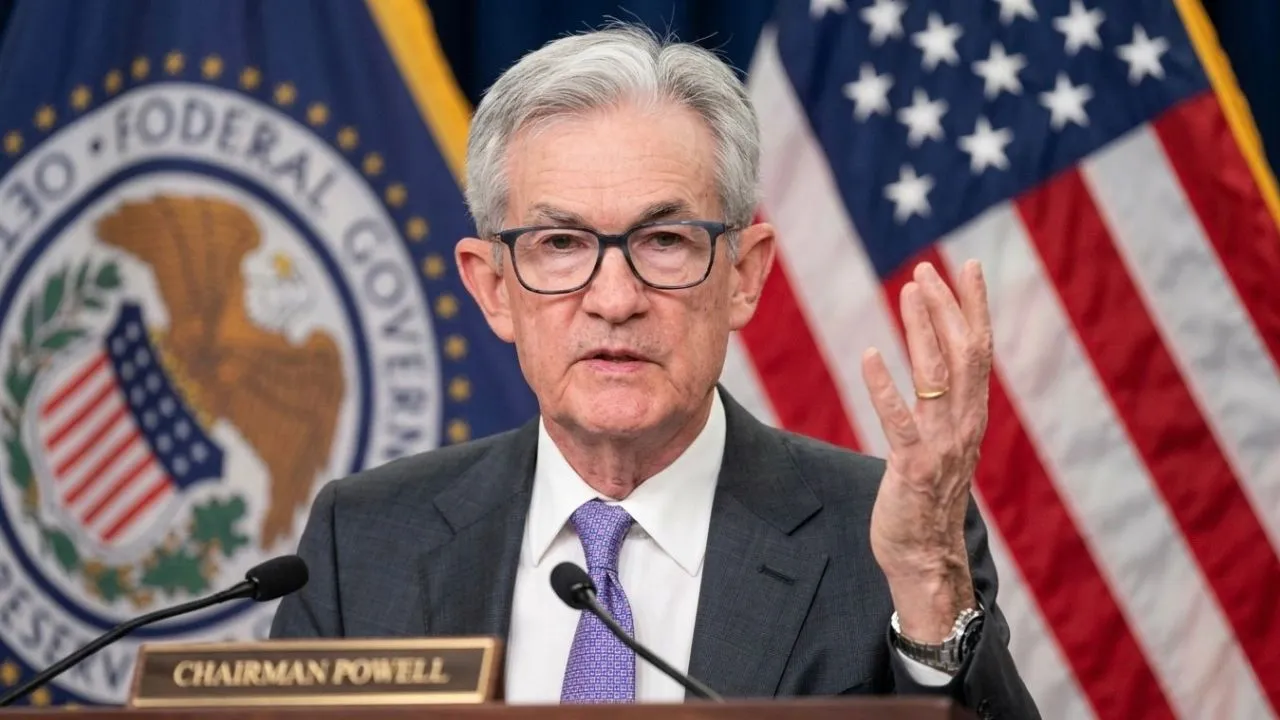
The Federal Reserve’s FOMC has released its May 2026 rate decision today. The committee’s full statement and Chair Jerome Powell’s press conference remarks are published at Federal Reserve statement. This article will be updated as confirmed details emerge from that official source.
The Federal Reserve’s FOMC rate decision for May 2026 is the most closely watched policy call of the year and every American with a savings account, mortgage, credit card, or car loan has a direct financial stake in what the committee decided. The FOMC, the Federal Open Market Committee, is the 12-member body inside the Federal Reserve that votes on the federal funds rate at eight scheduled meetings per year.
The May 2026 FOMC rate decision arrives at a particularly complicated moment: oil prices have been elevated by the Strait of Hormuz blockade, the labor market remains resilient, and the committee is navigating a leadership transition as Kevin Warsh awaits Senate confirmation as the next Fed Chair.
Understanding what the FOMC rate decision means for your money requires understanding what the Fed actually controls and what it does not. The federal funds rate is the rate banks charge each other for overnight lending. The Fed does not set your mortgage rate directly. It does not set your savings account yield directly.
What it sets is the floor that almost every other interest rate in the American economy is built on top of. When the FOMC rate decision moves the federal funds rate up or down, mortgage rates, auto loan rates, credit card APRs, and high-yield savings account yields all respond within days to weeks depending on the type of rate and the lender involved.
What the Fed Decided and What the Vote Showed
The FOMC’s official statement is published at federalreserve.gov/monetarypolicy/fomccalendars.htm immediately after each meeting and is the primary source for understanding the committee’s decision. The statement contains the rate decision itself, the vote tally showing how each member voted, and the specific language the committee uses to signal its future intentions.

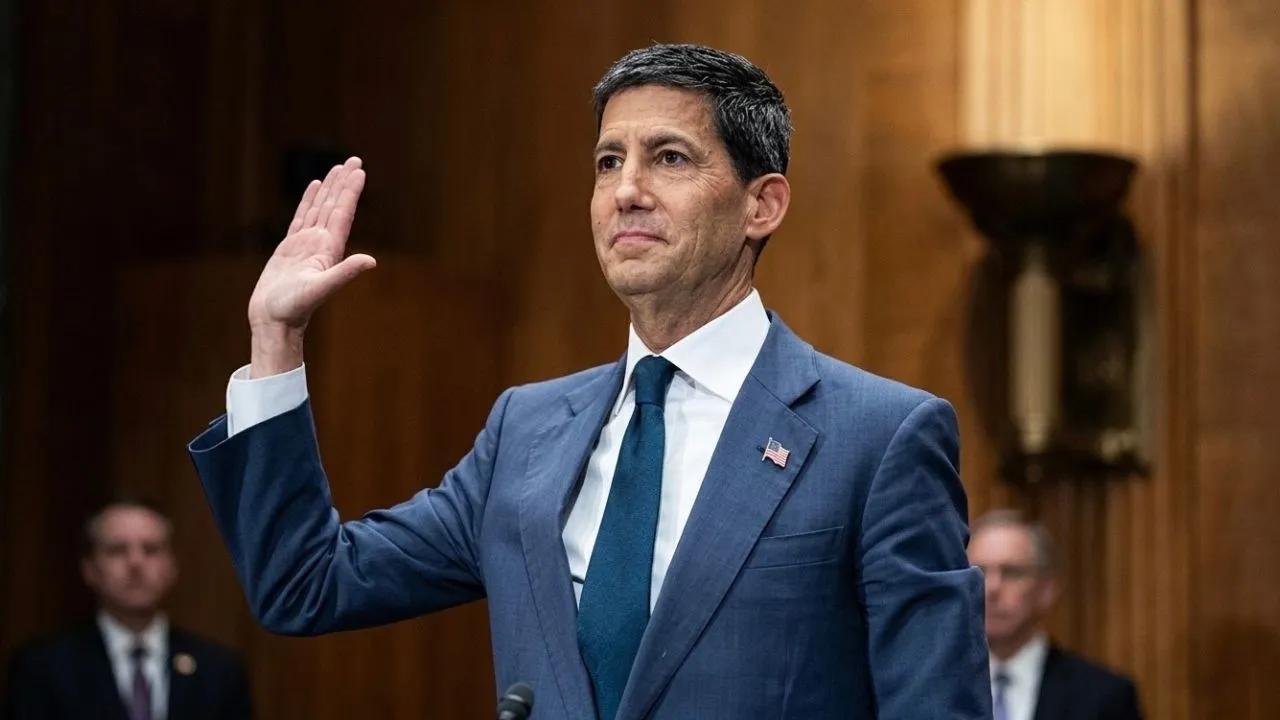
Every word in an FOMC statement is deliberate. The difference between “inflation remains elevated” and “inflation has eased further toward our 2 percent goal” is a policy signal worth reading carefully because it tells you what the committee expects to do at the next meeting.
As of the April 2026 FOMC meeting, the committee held the federal funds rate steady with one dissent, signaling internal disagreement about the appropriate pace of future easing. Our detailed coverage of the April rate hold explains which committee member dissented and what that dissent signals about the internal balance of opinion heading into today’s May decision.
The May meeting carries additional weight because it is the first full FOMC meeting since the Hormuz oil shock intensified, and elevated energy prices feed directly into PCE inflation data, the measure the Fed explicitly targets at 2 percent annually.
The FOMC’s dot plot, released at every other meeting, shows where each committee member expects rates to go over the next two years. The March 2026 dot plot published at federalreserve.gov showed the median committee member expected two rate cuts in 2026.
The May meeting will reveal through its official statement language whether the Hormuz-driven inflation uncertainty has shifted that median projection or whether the committee still sees a path to easing before year end.
Why the Fed Held, Cut, or Moved: The Institutional Mechanics
The Federal Reserve operates under a dual mandate from Congress: maximum employment and stable prices, with stable prices defined as 2 percent annual inflation as measured by the PCE index. When inflation is above 2 percent, the mandate pushes toward higher rates.
When unemployment rises, the mandate pushes toward lower rates. The May 2026 environment puts both sides of that mandate in tension simultaneously, which is exactly the kind of environment where FOMC rate decisions become genuinely difficult and where the committee’s language becomes more important than the decision number itself.
The Fed does not disburse payments to Americans directly, but its rate decisions shape every financial condition Americans live inside. What the Fed controls is the cost of money across the entire financial system.
The Bureau of the Fiscal Service at the U.S. Treasury uses the Federal Reserve’s payment infrastructure, including the Fedwire and FedACH networks, to move Social Security payments, IRS tax refunds, and all federal direct deposits to American households.
The cost of money flowing through the broader economy is determined by the FOMC’s rate decisions, which is why a committee meeting in Washington D.C. eight times a year has a direct effect on whether your savings account pays 4 percent or 2 percent. Our money movement system guide explains how the full pipeline from Fed rate decision to your bank account deposit works at an institutional level.
For your savings account specifically, the FOMC rate decision matters because high-yield savings rates and money market yields track the federal funds rate with a lag of days to weeks.
Banks that pay 4.5 percent on savings today are paying that rate because the Fed has kept rates elevated. If the FOMC cuts rates in May or signals aggressive cuts ahead, banks will reduce deposit yields within 30 to 60 days and money market fund yields will follow within one to two weeks.
What the Kevin Warsh Transition Means for Future FOMC Decisions
The May 2026 FOMC meeting is notable for a reason that extends beyond the rate decision itself. Kevin Warsh, nominated by President Trump to succeed Jerome Powell as Federal Reserve Chair, is awaiting a full Senate confirmation vote with no publicly confirmed floor date as of today.
Our detailed news report on the Kevin Warsh Senate confirmation timeline explains the current status of that process and what a Warsh-led Fed would likely mean for rate policy across 2026 and 2027.
Warsh has historically been more hawkish than Powell on inflation, meaning he has generally favored keeping rates higher for longer to ensure inflation is durably defeated before easing.
If confirmed, his influence on future FOMC rate decisions would likely be felt within one to two meeting cycles after he takes the chair position. Markets are already pricing in some probability of a Warsh-era policy shift, which is visible in longer-term Treasury yields published daily at home.treasury.gov.
The yield on the 10-year Treasury, which drives mortgage rates more directly than the federal funds rate itself, has been trading with a modest Warsh premium built in as markets anticipate a harder inflation line from the next Fed Chair.
Jerome Powell remains a voting member of the Federal Reserve Board of Governors through the conclusion of his Board term regardless of when Warsh is confirmed.
His participation in the May 2026 FOMC rate decision is confirmed, and the statement published today at federalreserve.gov reflects Powell’s committee, not Warsh’s. This is an important distinction for interpreting the May decision: it tells you what the current committee believes, not what Warsh’s committee will do once he is sworn in.
How the FOMC Decision Affects Mortgages, Savings, and Credit Cards
The FOMC rate decision flows into four areas of everyday American finance in specific and predictable ways. Mortgages respond to 10-year Treasury yields rather than the federal funds rate directly, so a Fed hold in May does not necessarily move your mortgage rate immediately but the committee’s forward guidance language shapes where those yields go over the following weeks.
Auto loans and personal loans respond to the prime rate, which moves directly with the federal funds rate and typically adjusts within one business day of an FOMC decision being published at federalreserve.gov. Credit card APRs are tied to the prime rate by contract for most cards, meaning a rate cut translates to a lower minimum payment calculation within one to two billing cycles after the decision.
High-yield savings accounts and money market funds respond fastest, often adjusting yields within days of the published FOMC decision. The U.S. Treasury publishes daily yield curve data, which shows exactly where 2-year, 5-year, 10-year, and 30-year government borrowing costs sit after each FOMC meeting.
This yield curve is the single most useful tool for tracking where mortgage rates and long-term lending rates are headed in the weeks after a rate decision, and checking it the morning after an FOMC announcement gives you a more accurate picture of your mortgage rate outlook than any secondary news report.
The Bureau of Labor Statistics also publishes inflation data at bls.gov/cpi that the Fed uses alongside PCE data when calibrating future rate decisions, and tracking those monthly releases tells you whether the data environment is moving toward more cuts or toward an extended hold.
What You Should Do Now
- Read the official FOMC statement immediately after today’s decision is published. The plain-English summary at the top of every statement tells you the decision and the committee’s stated reasoning in two paragraphs that any reader can understand without a finance background.
- If you have a high-yield savings account, check your APY within 48 hours of today’s FOMC rate decision. Banks adjust quickly after rate cuts and if your bank has not adjusted within two weeks, checking competitor rates at that point will show you whether you are being left behind.
- If you are considering a mortgage or refinance in the next 90 days, track the Treasury yields daily starting today. That number predicts your mortgage rate more accurately than the federal funds rate alone and moves in near real time as markets absorb the FOMC’s forward guidance.
- Review our money system guide to understand how Federal Reserve policy connects to the full pipeline of U.S. government payments, from the FOMC decision through Treasury disbursement to your bank account deposit.
- Monitor the Kevin Warsh confirmation process through our Warsh coverage . His confirmation will be the next major structural shift in the FOMC rate decision framework for 2026 and 2027 and its timing relative to the July FOMC meeting determines how quickly his policy orientation begins shaping American interest rates.
The FOMC rate decision is not a Wall Street abstraction. It is the price of money for every American with a loan, a savings account, or a mortgage and it is decided eight times a year by twelve people whose votes, reasoning, and forward guidance you can read in full for free at monetary policy calendars within minutes of every decision being announced.
Editorial Note: Investozora is an independent news publication. This content is for informational purposes only. For official Federal Reserve rate decisions and FOMC statements, visit federalreserve.gov/monetarypolicy/fomccalendars.htm.